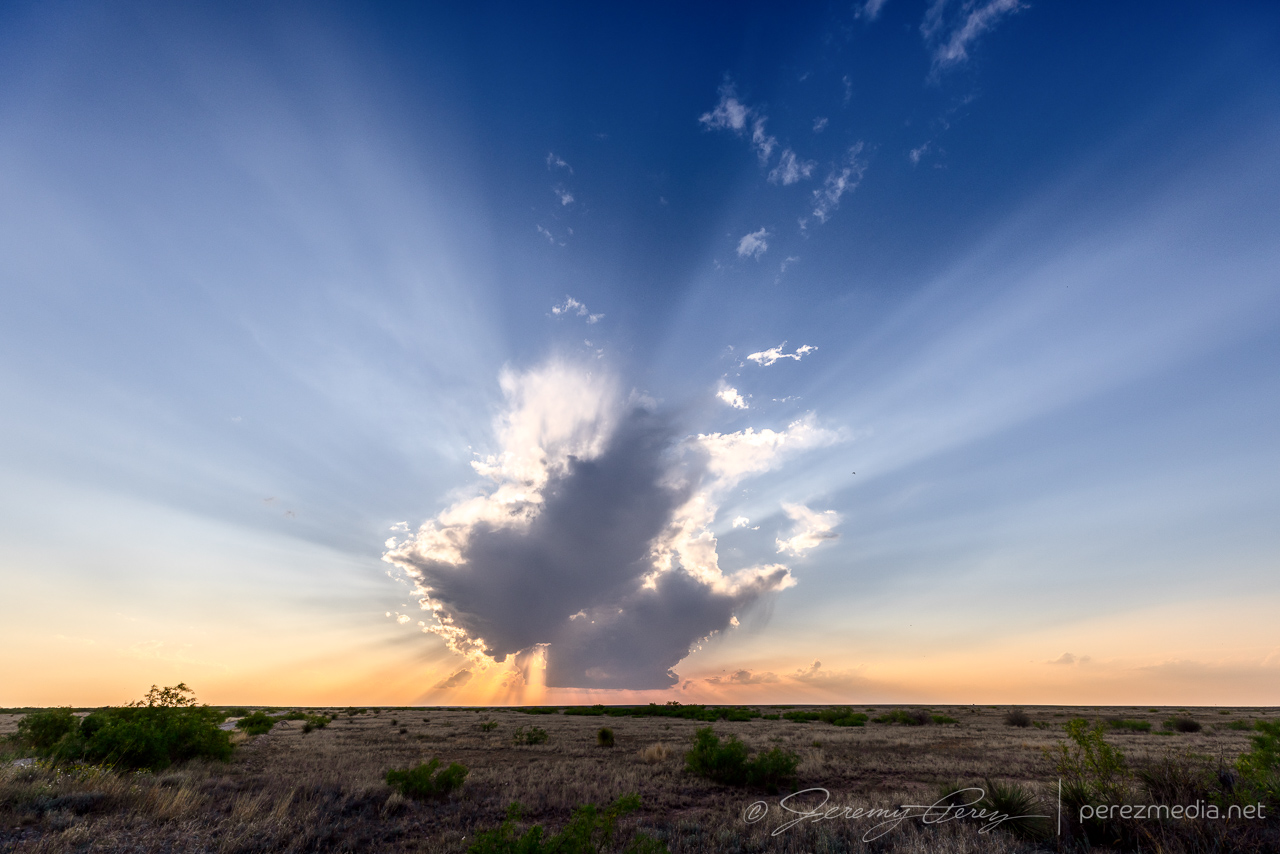
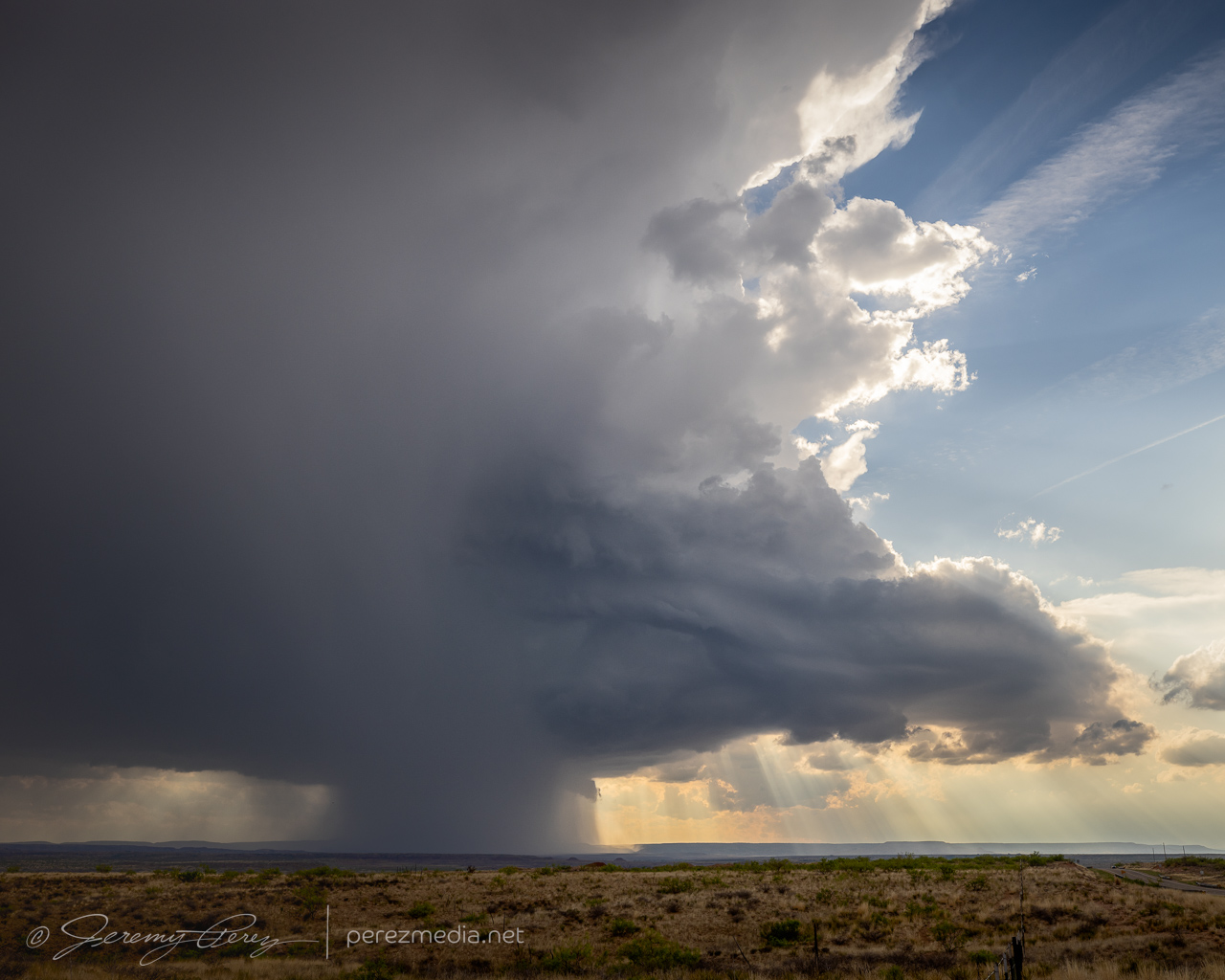
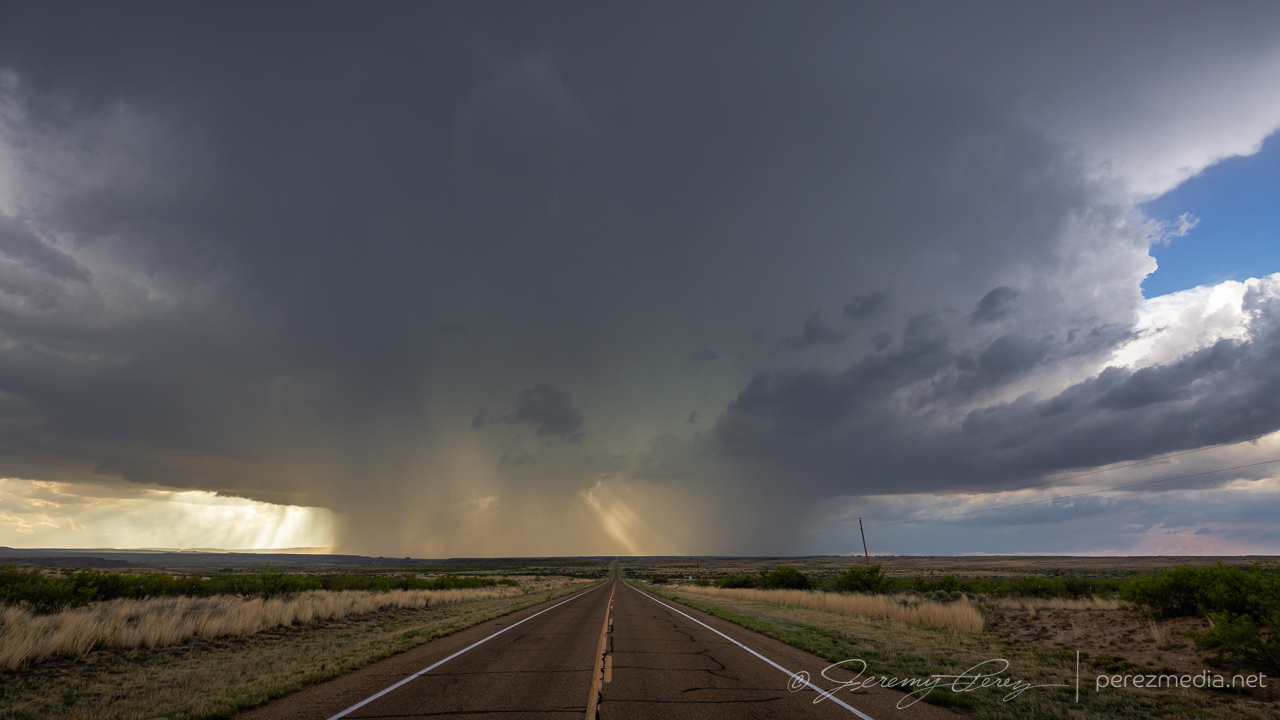
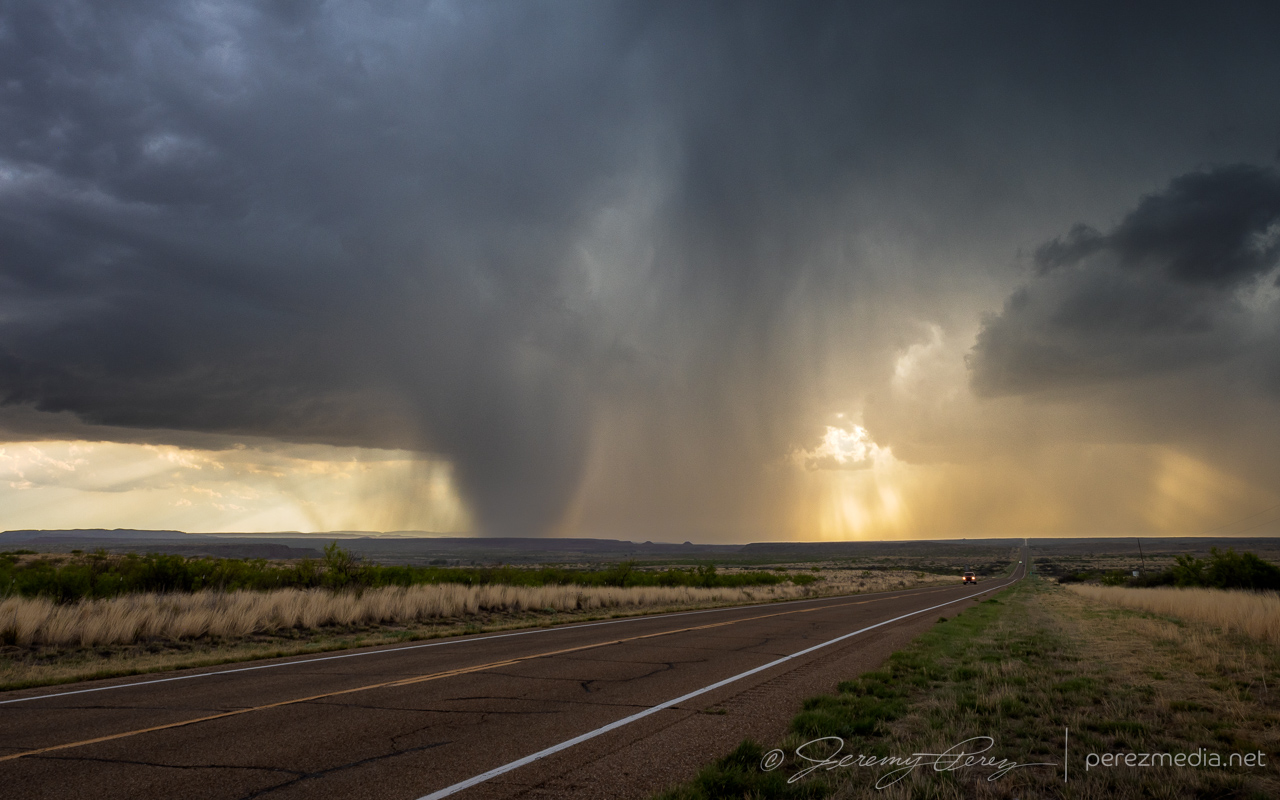
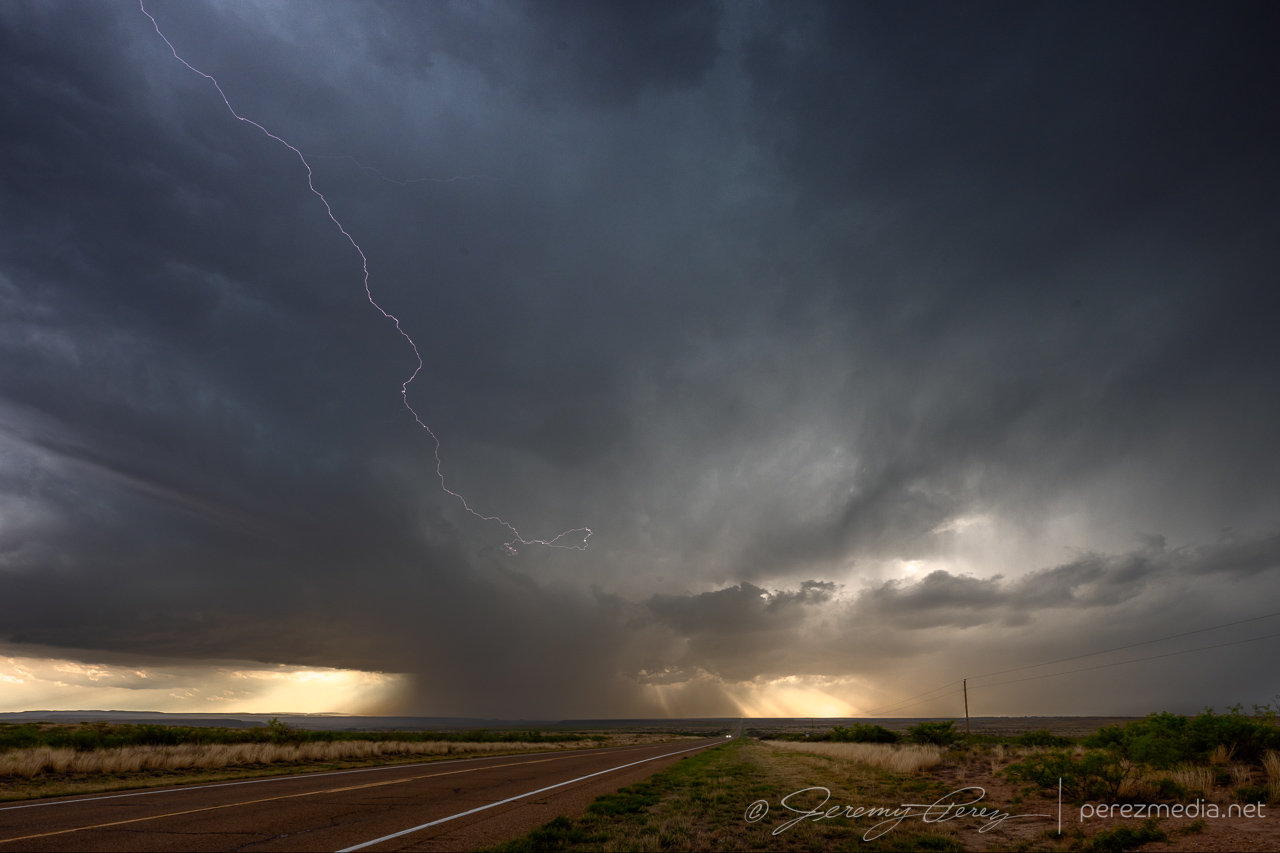
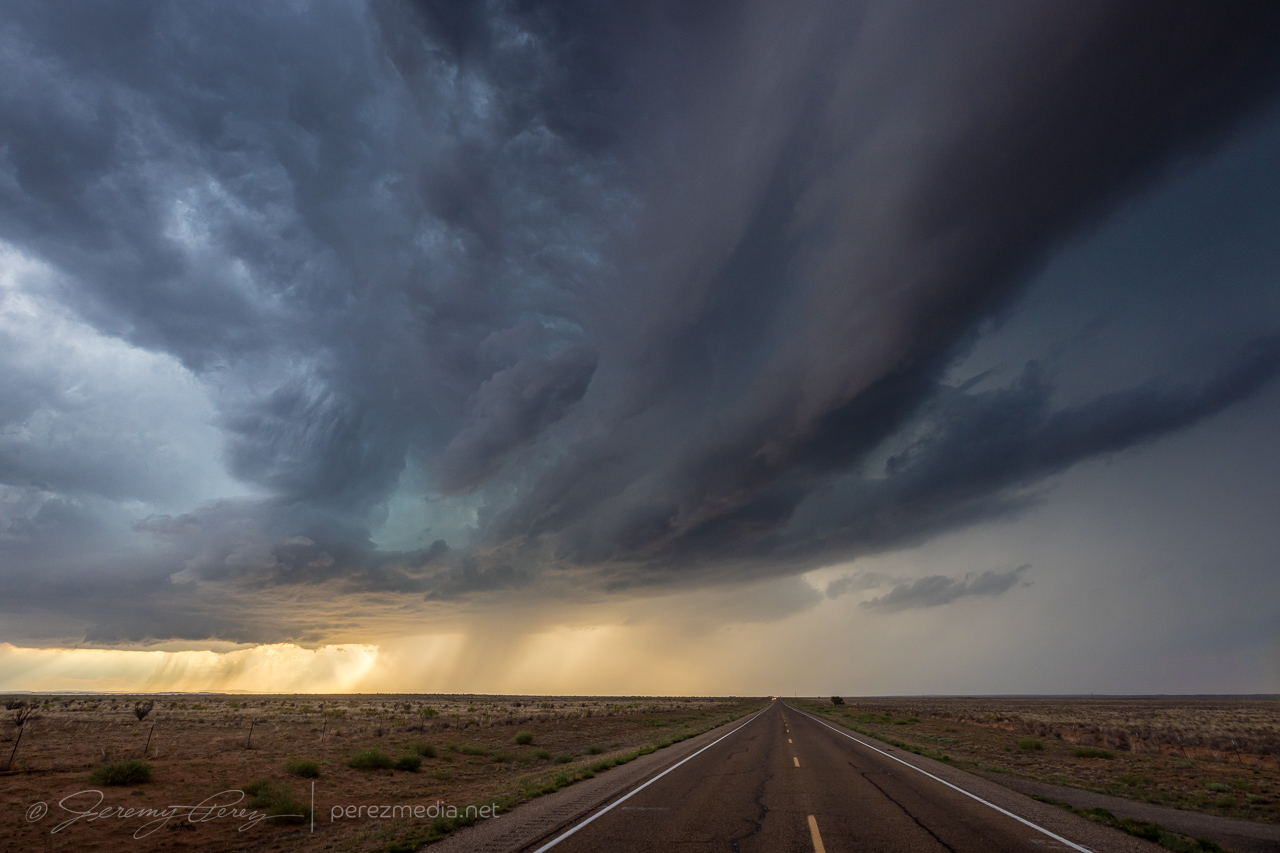
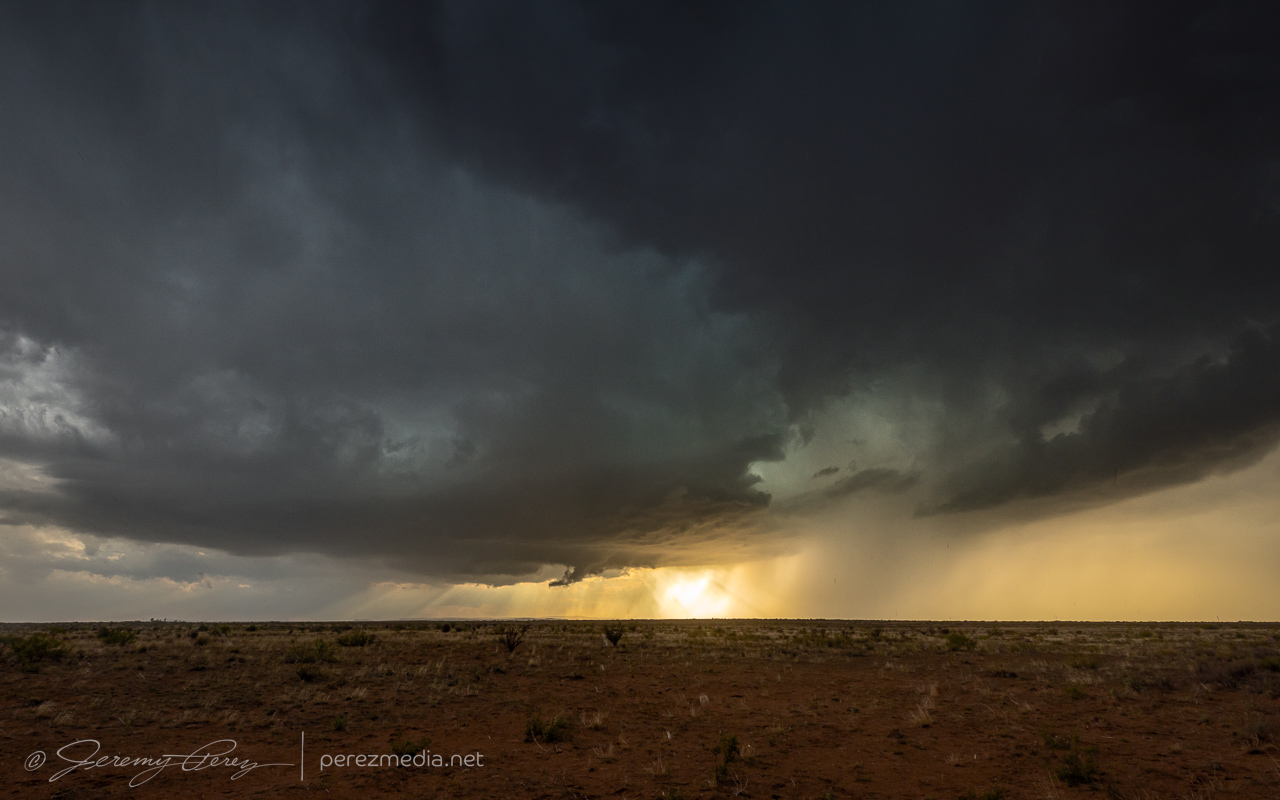
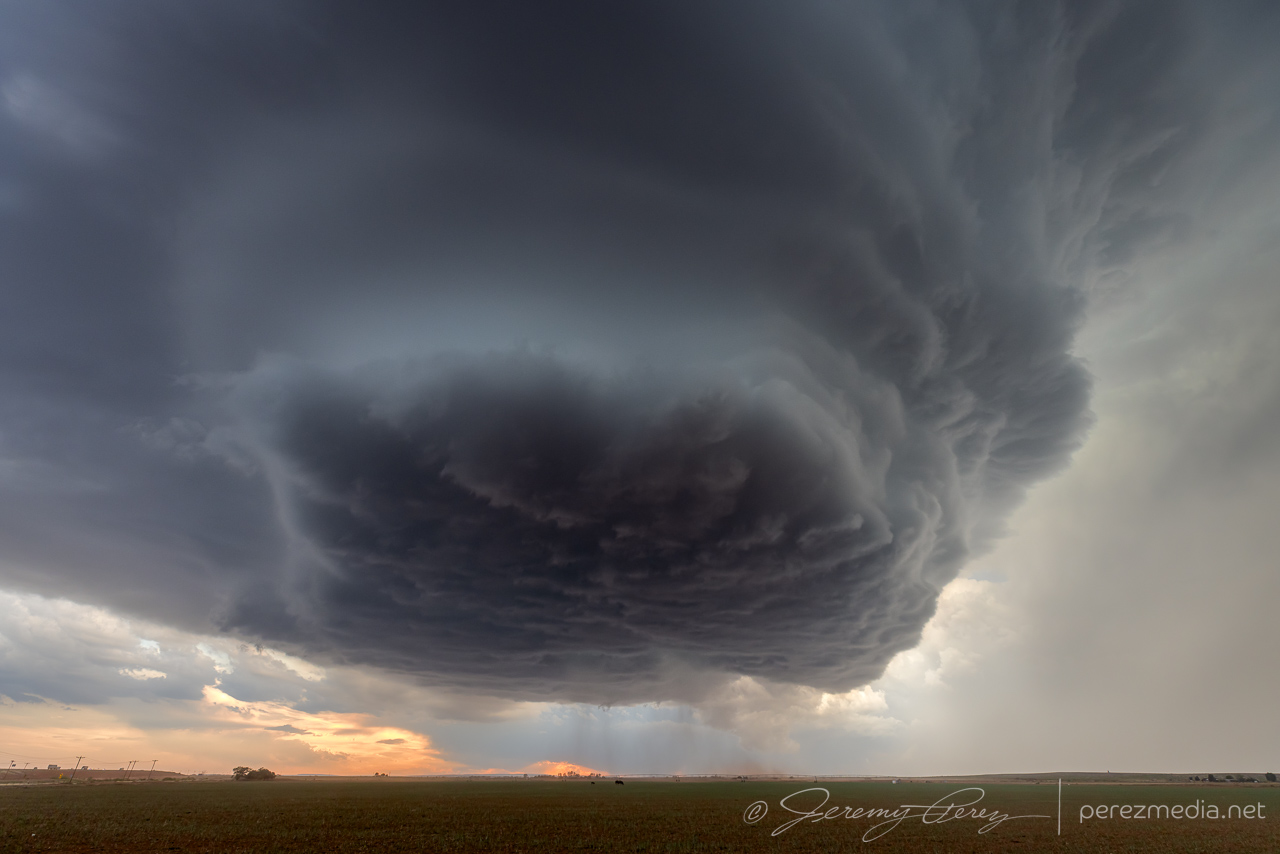
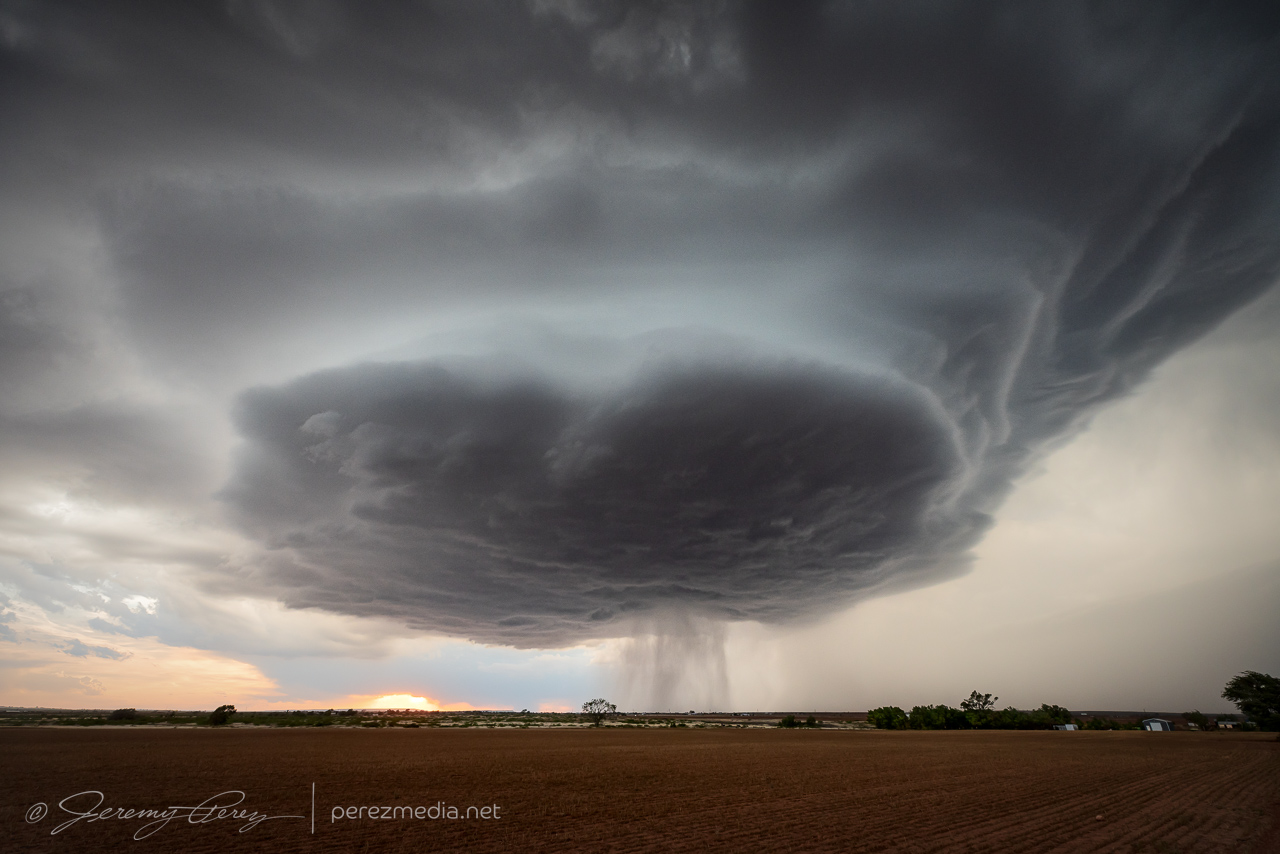
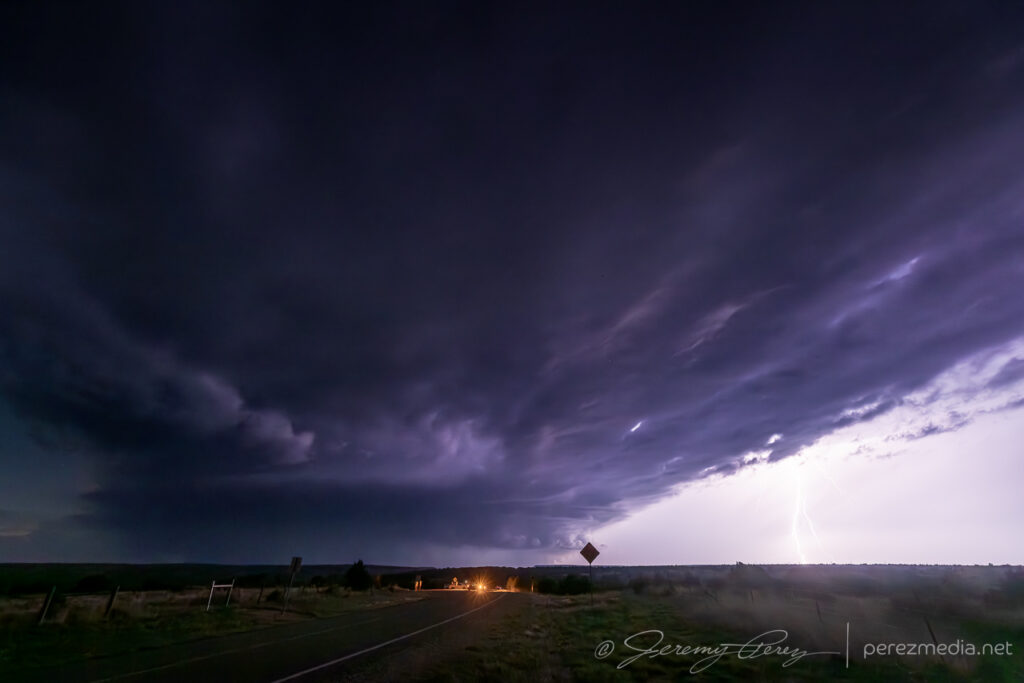
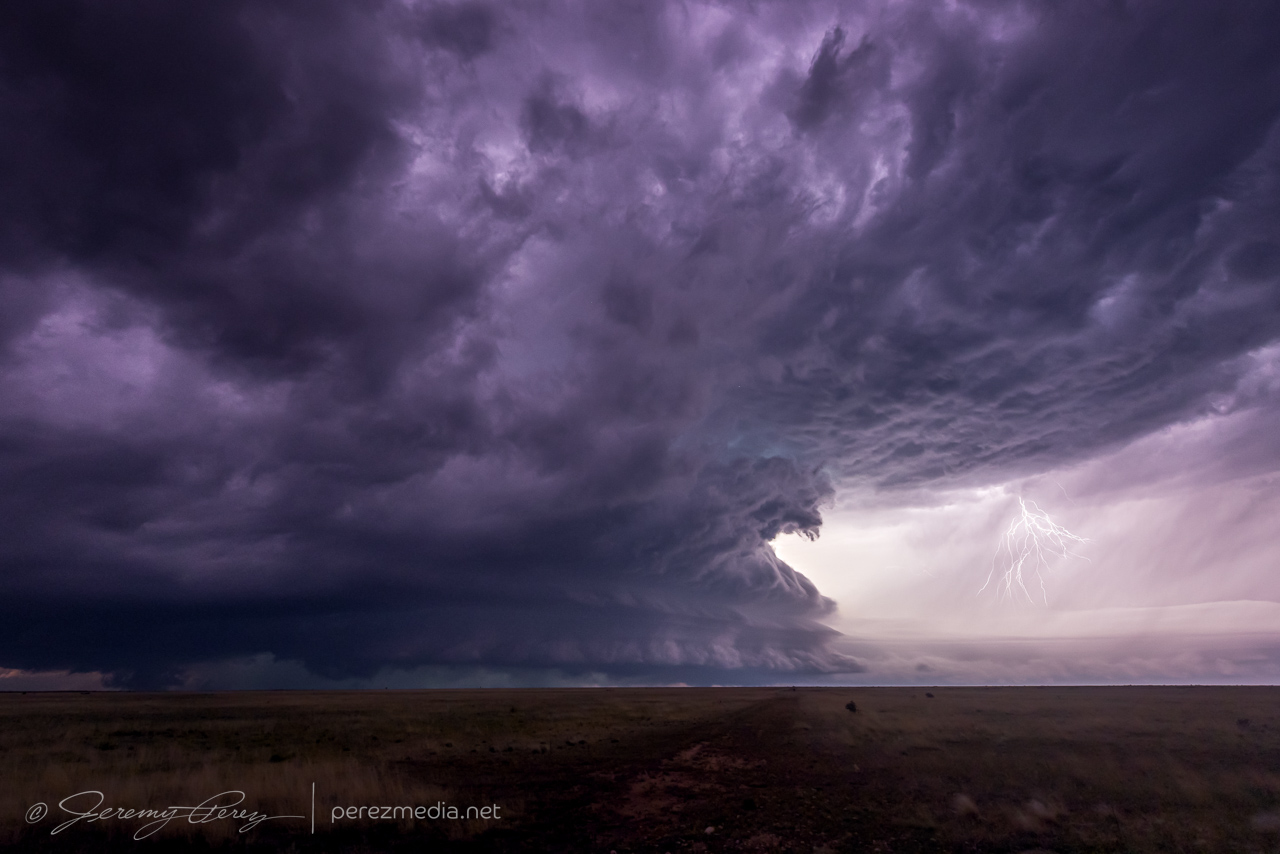
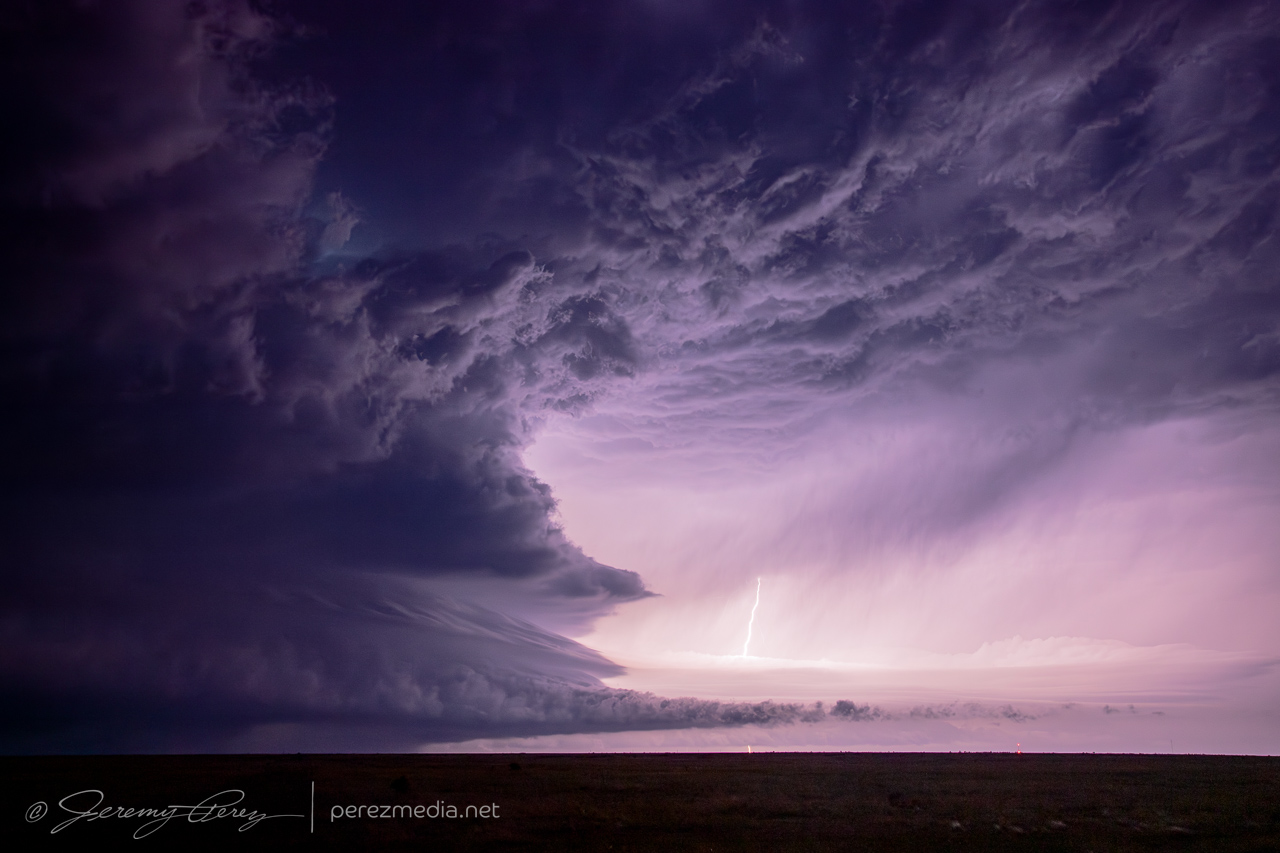
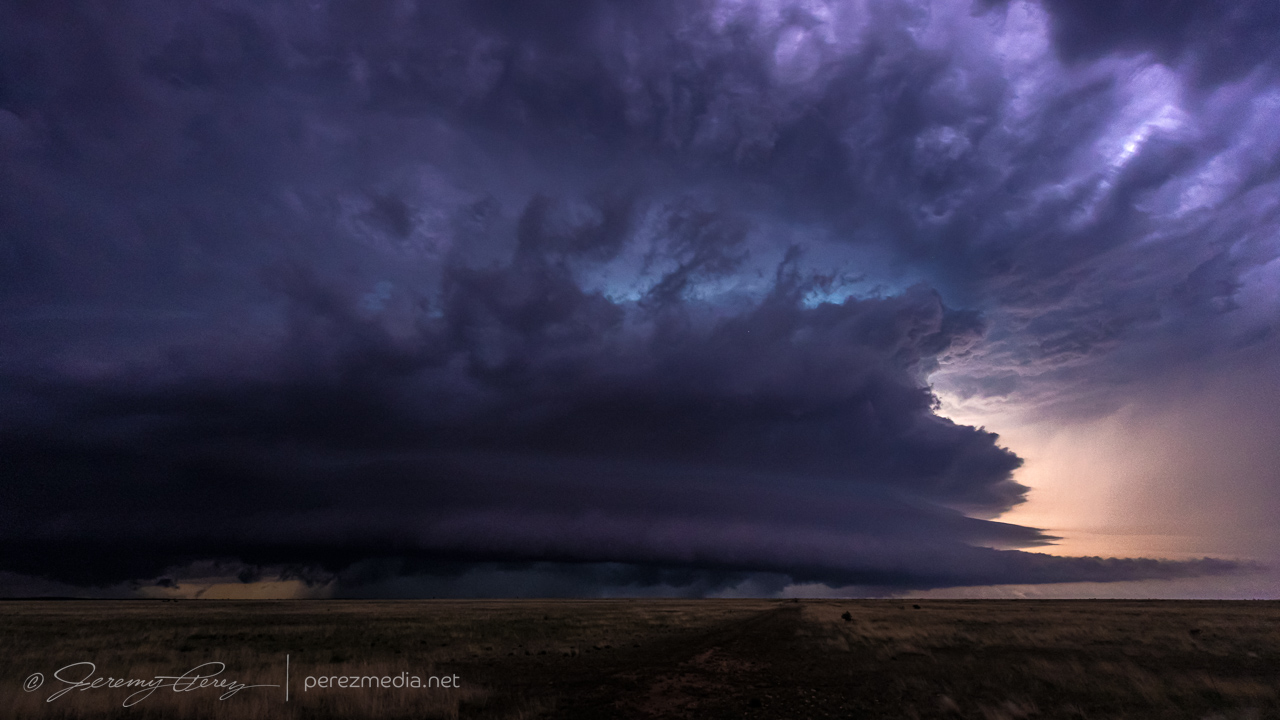
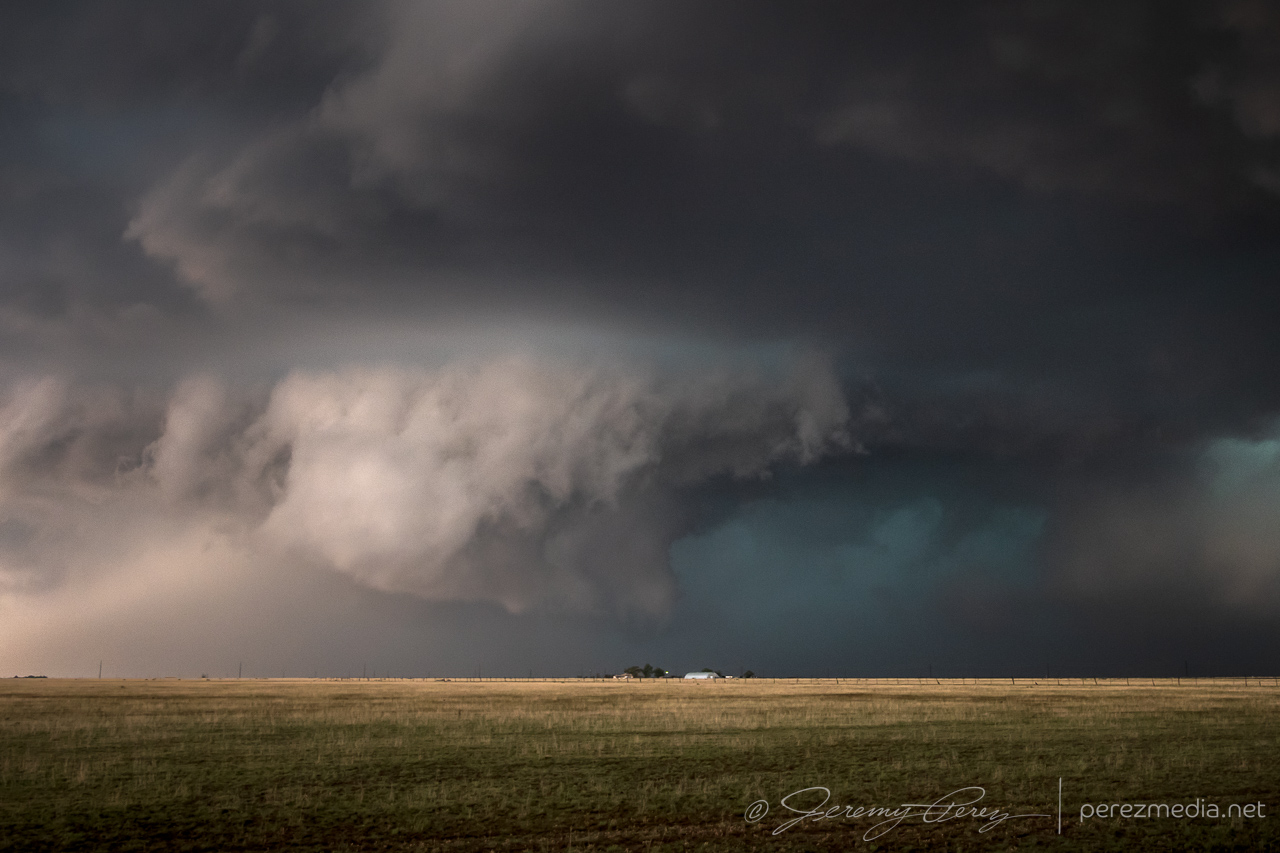
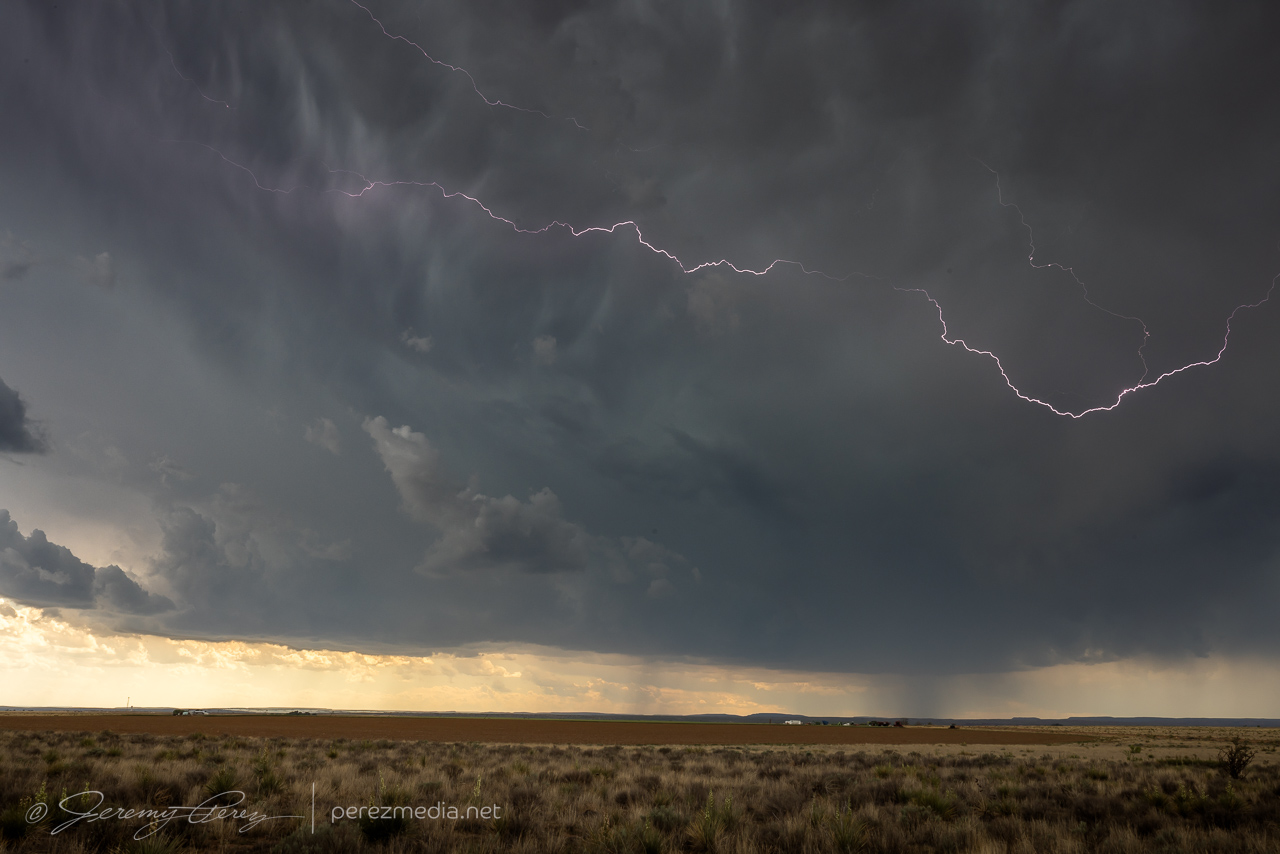
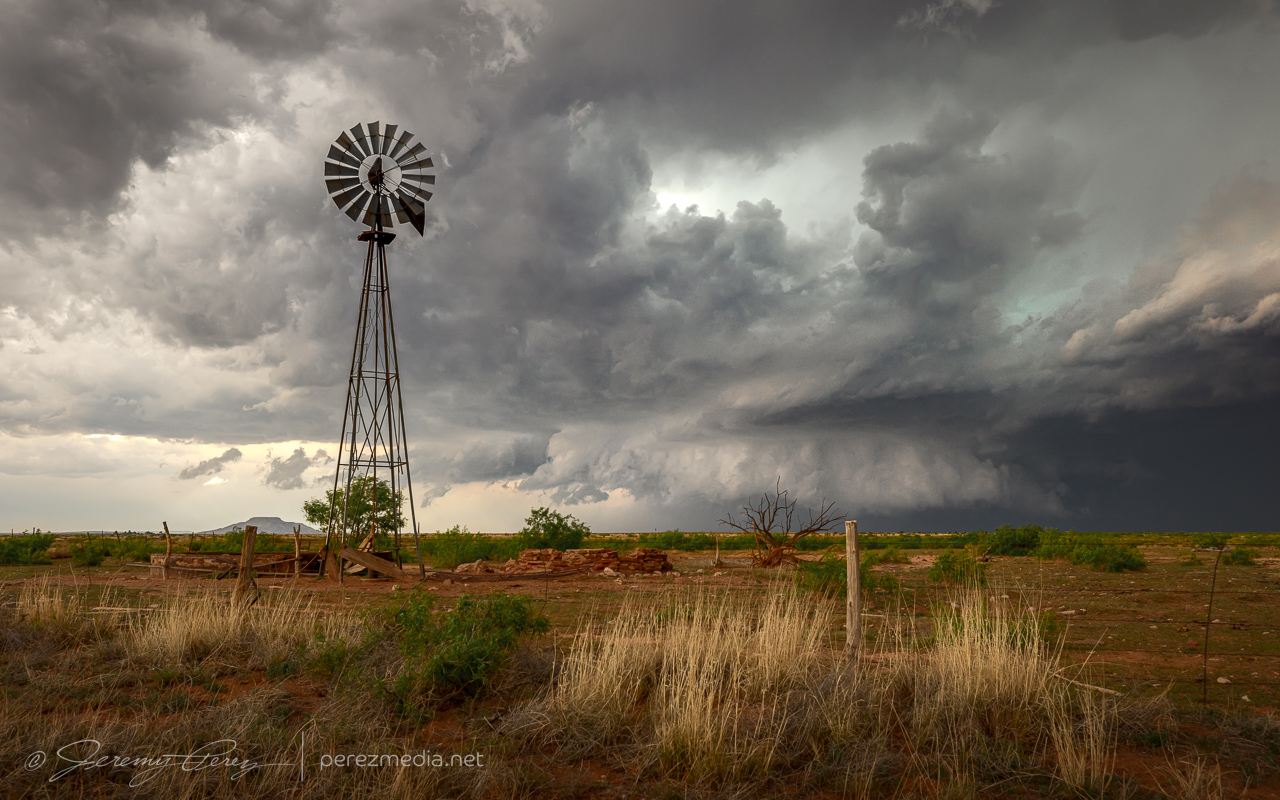
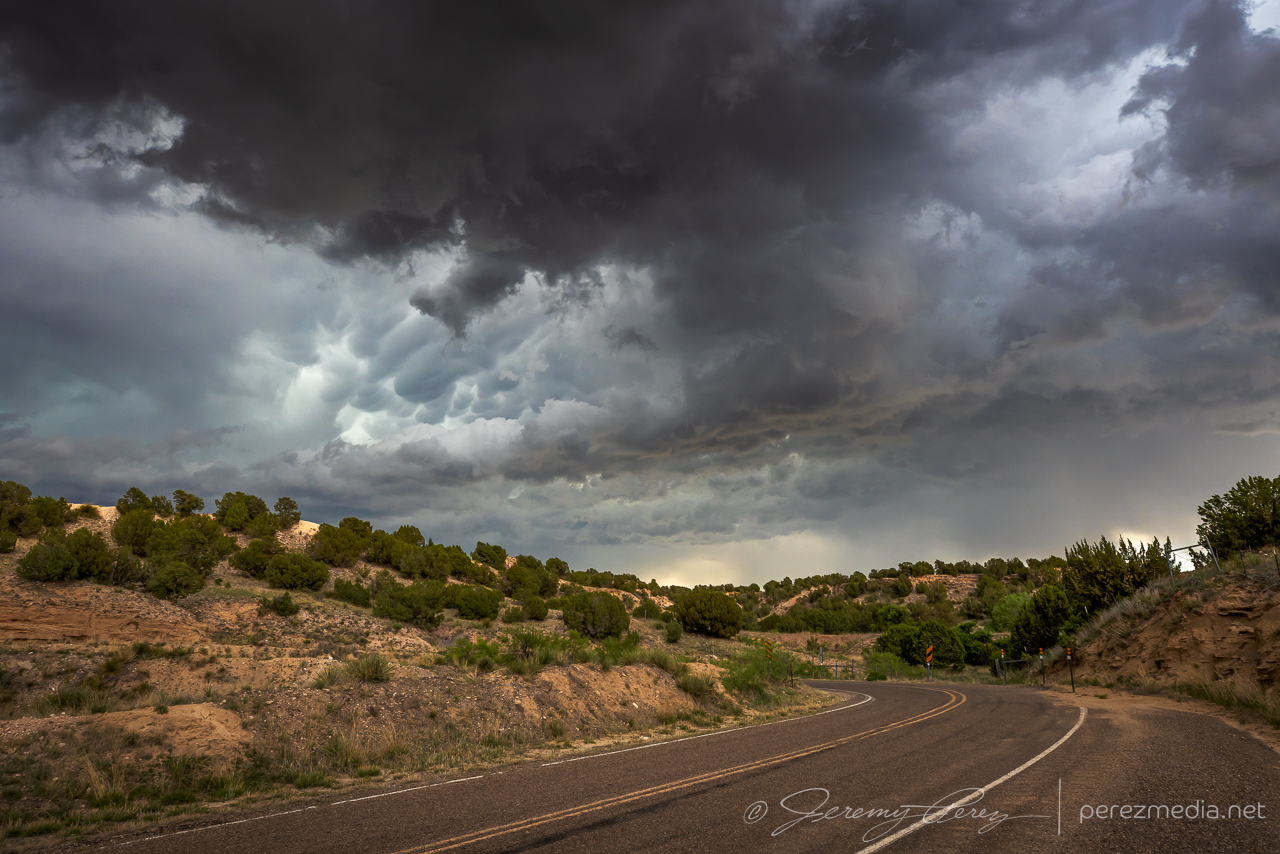
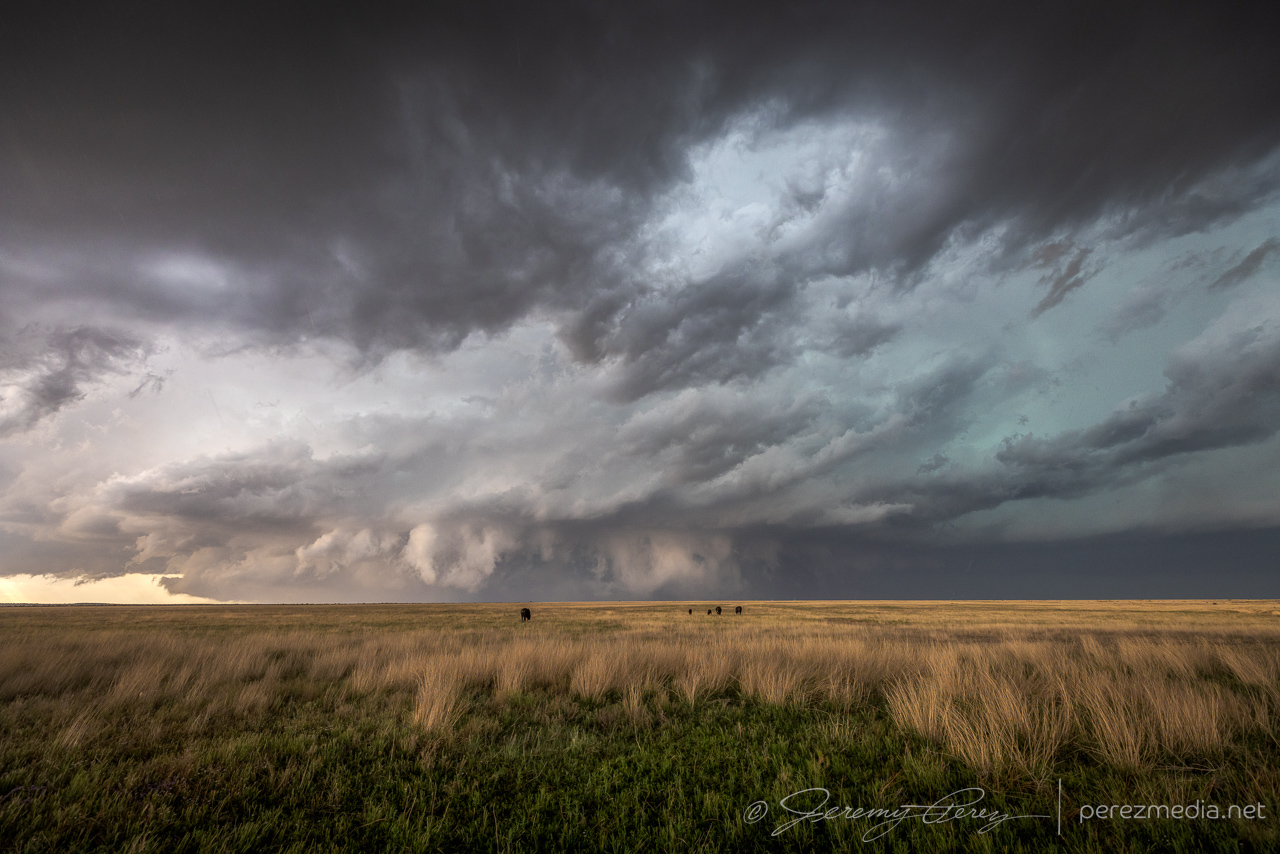
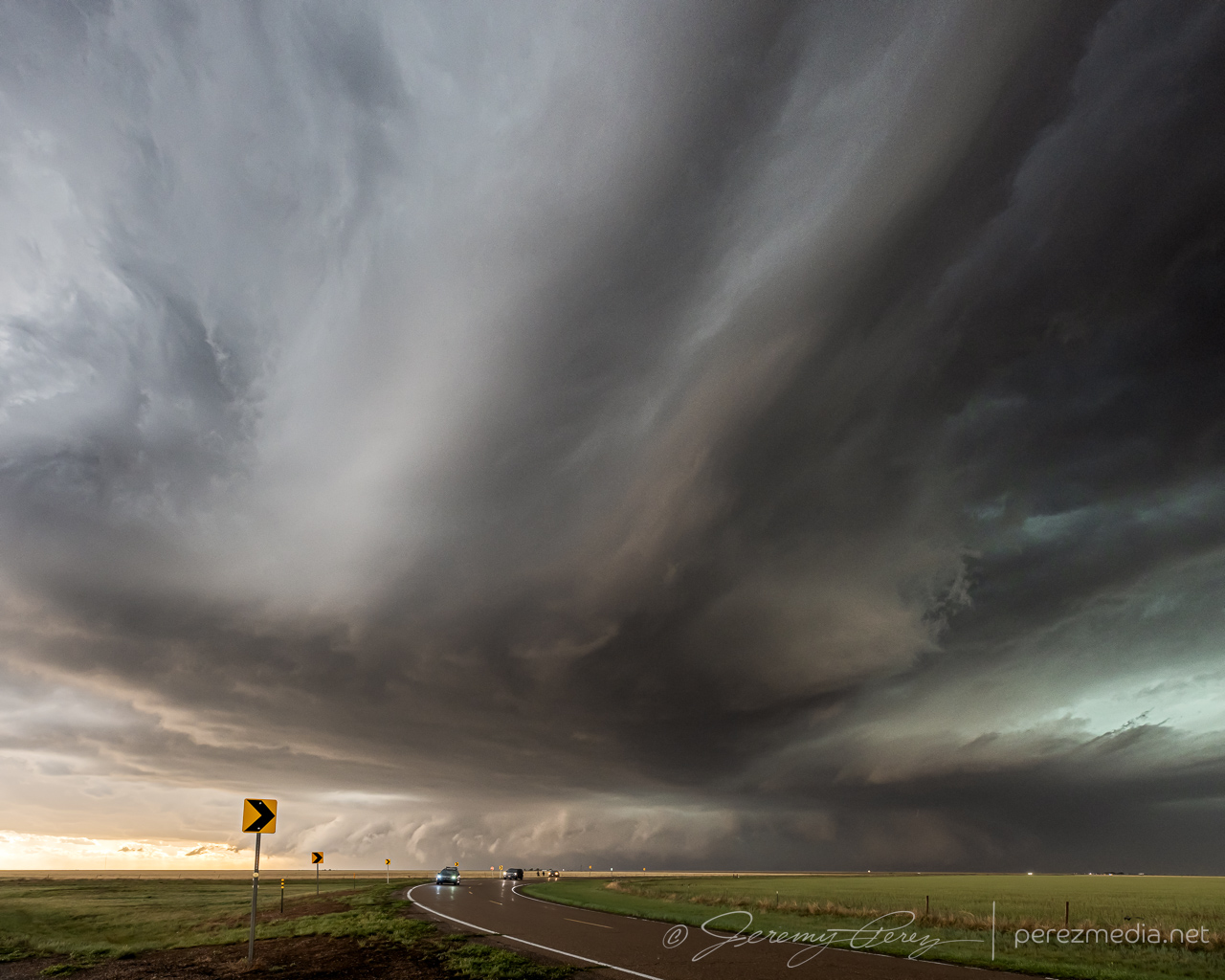
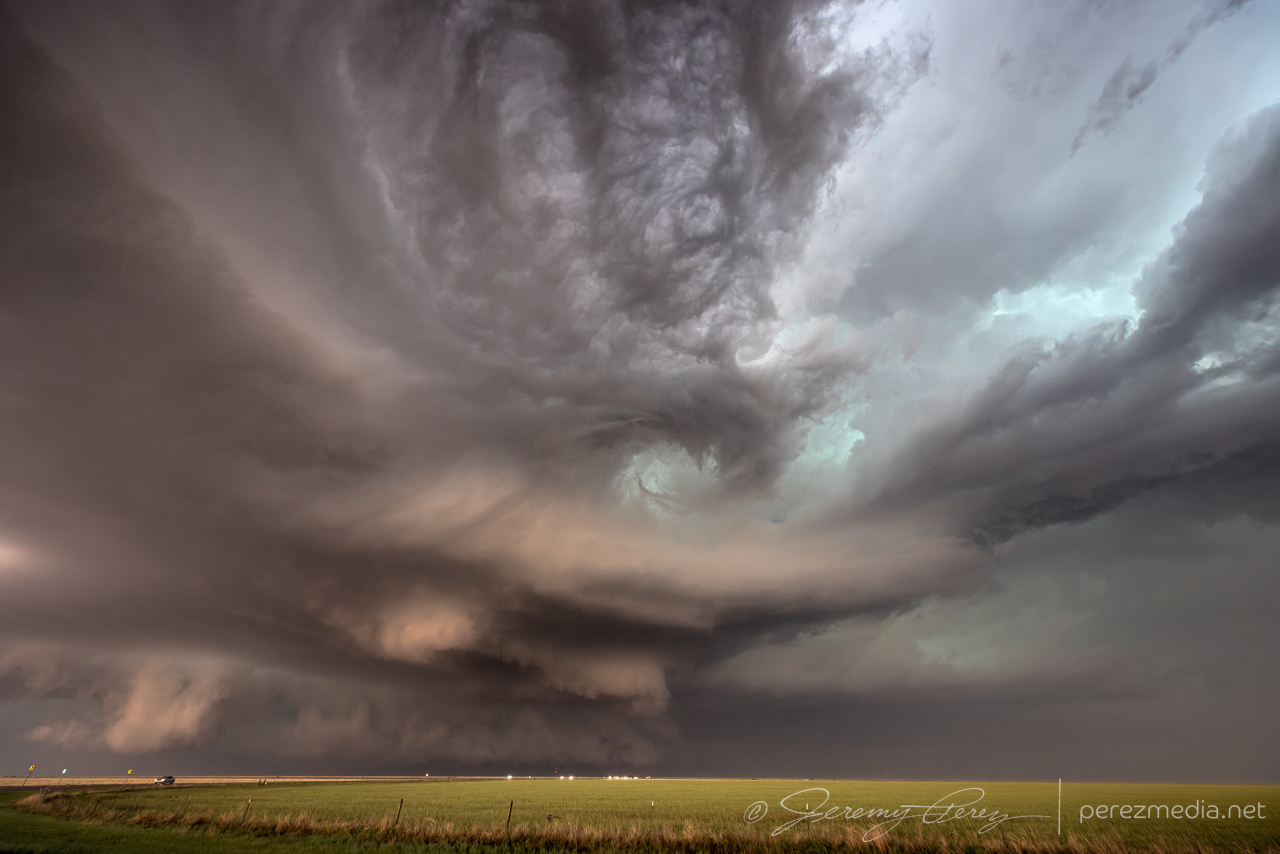
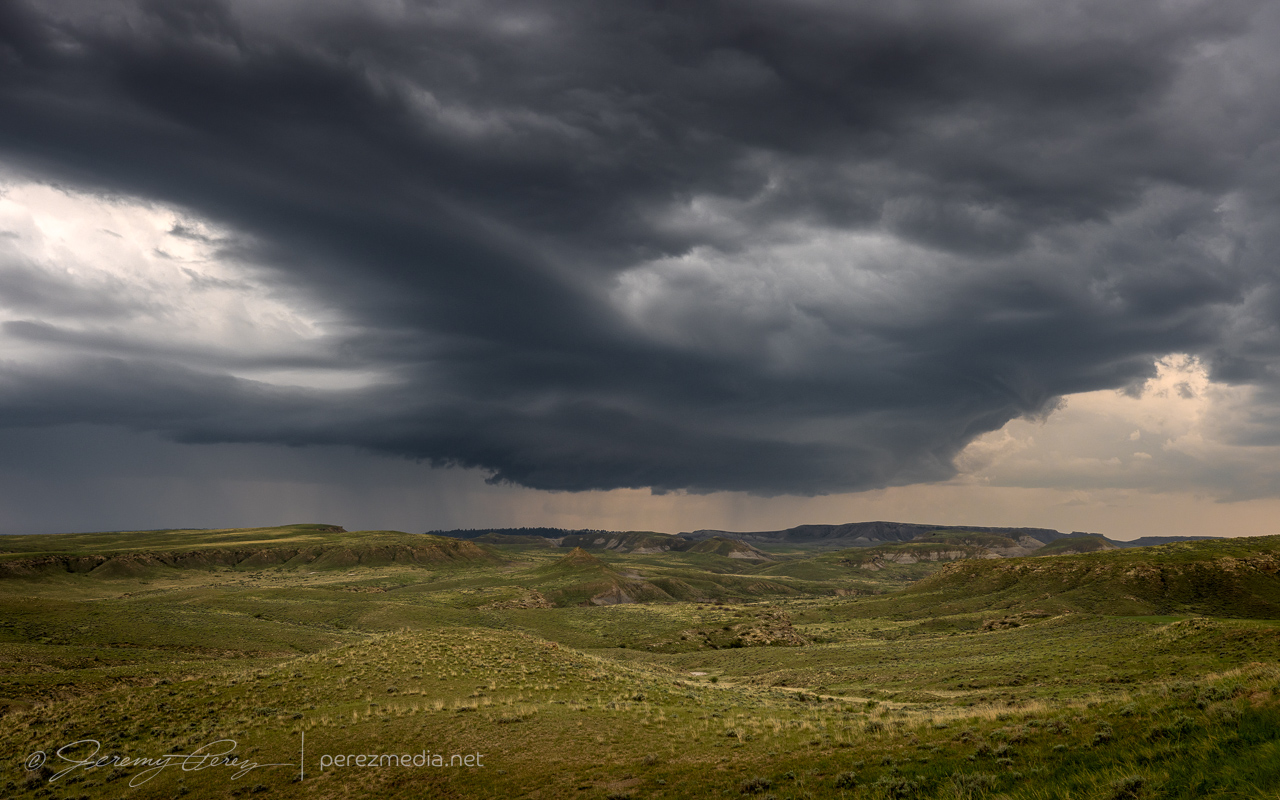
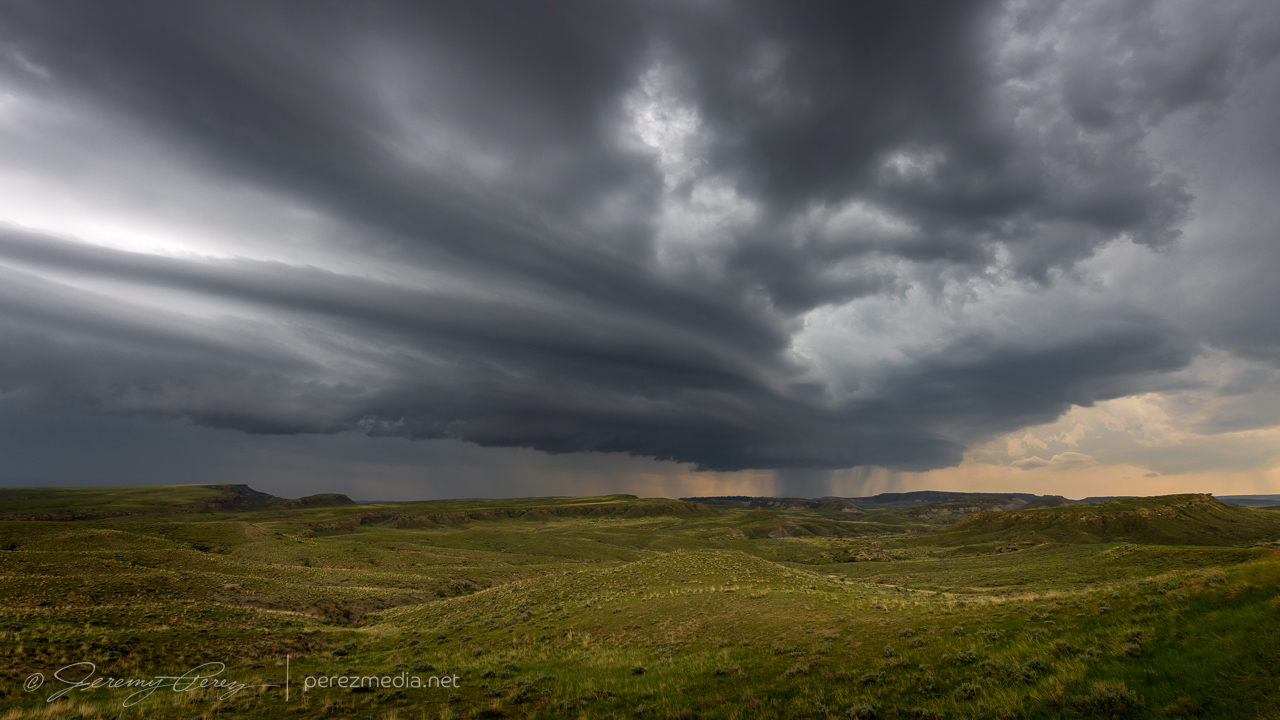
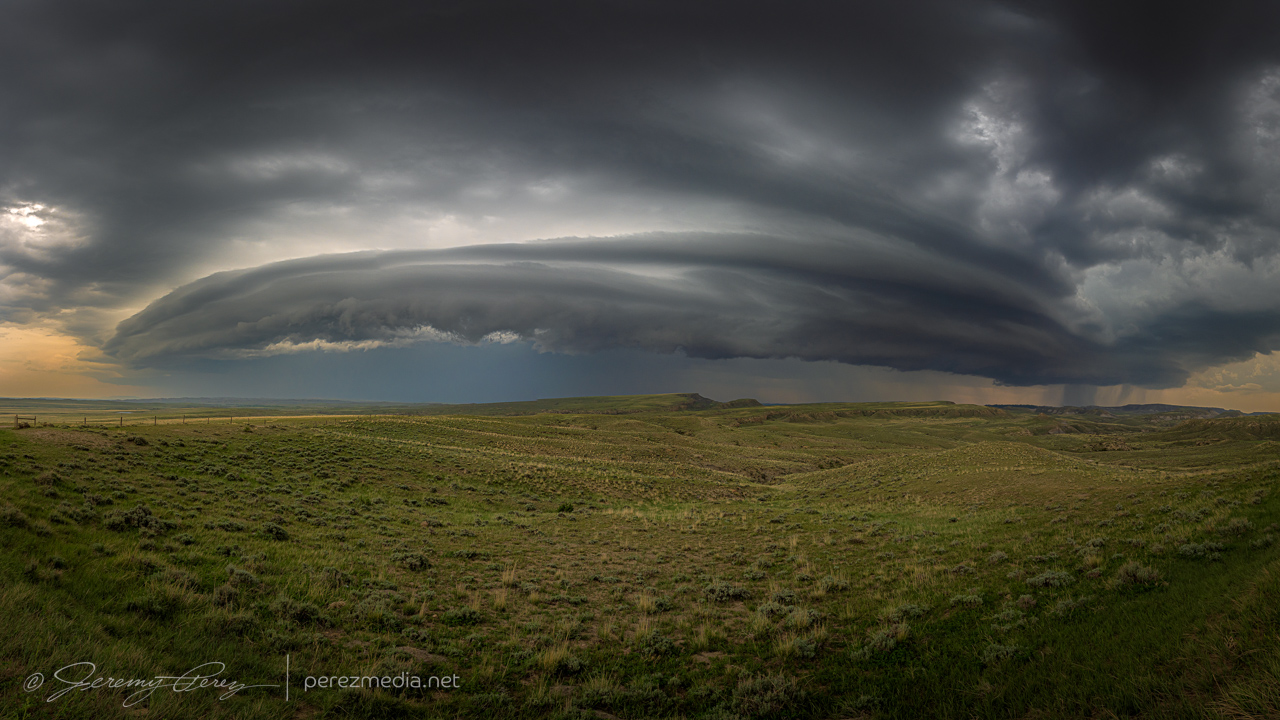
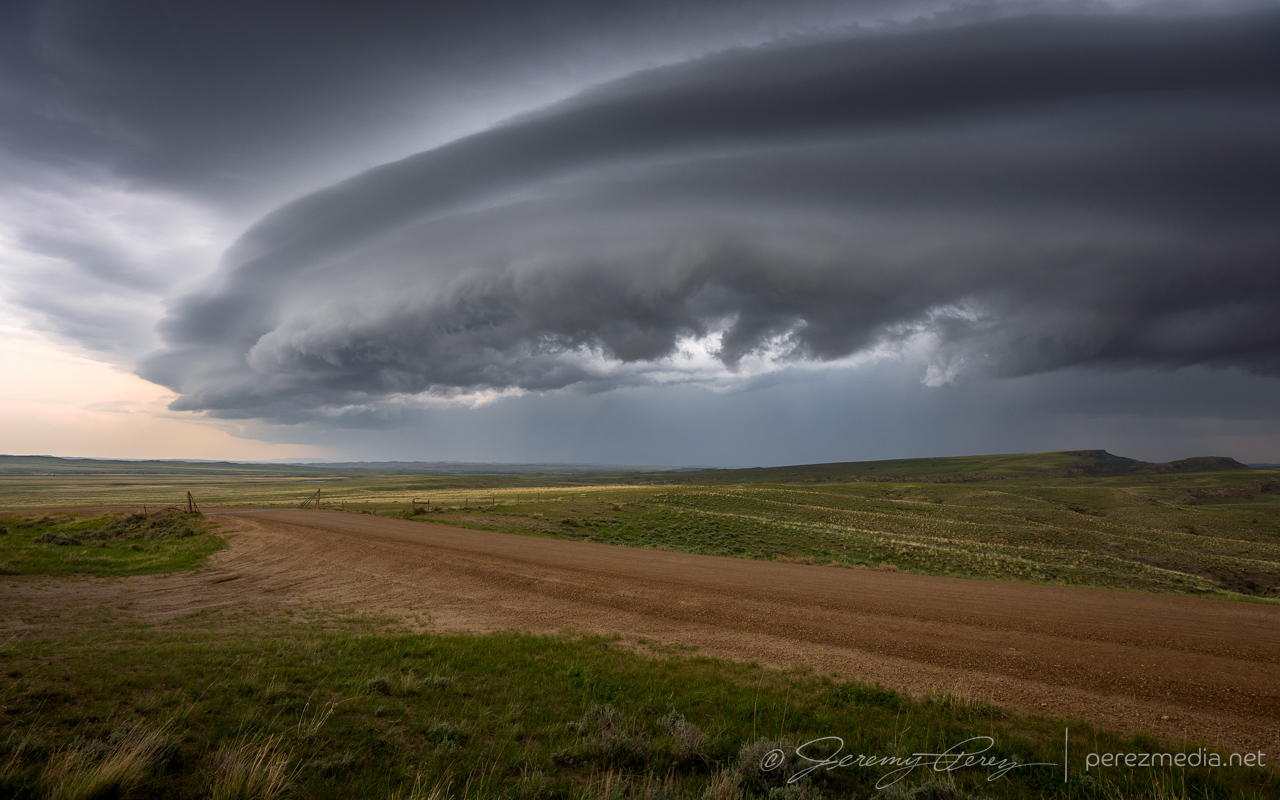
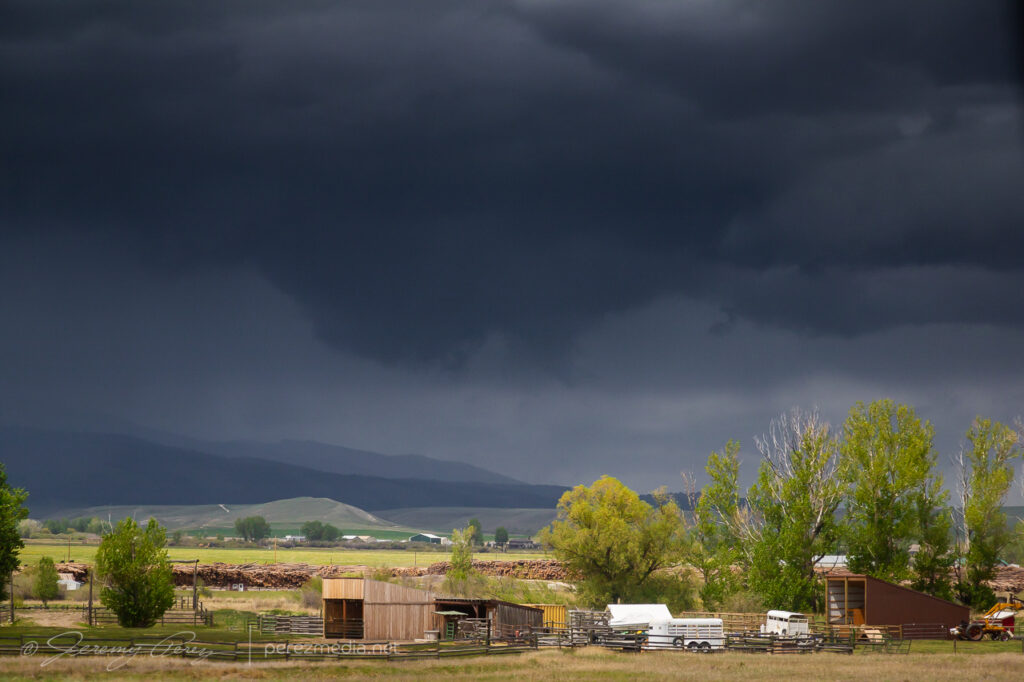
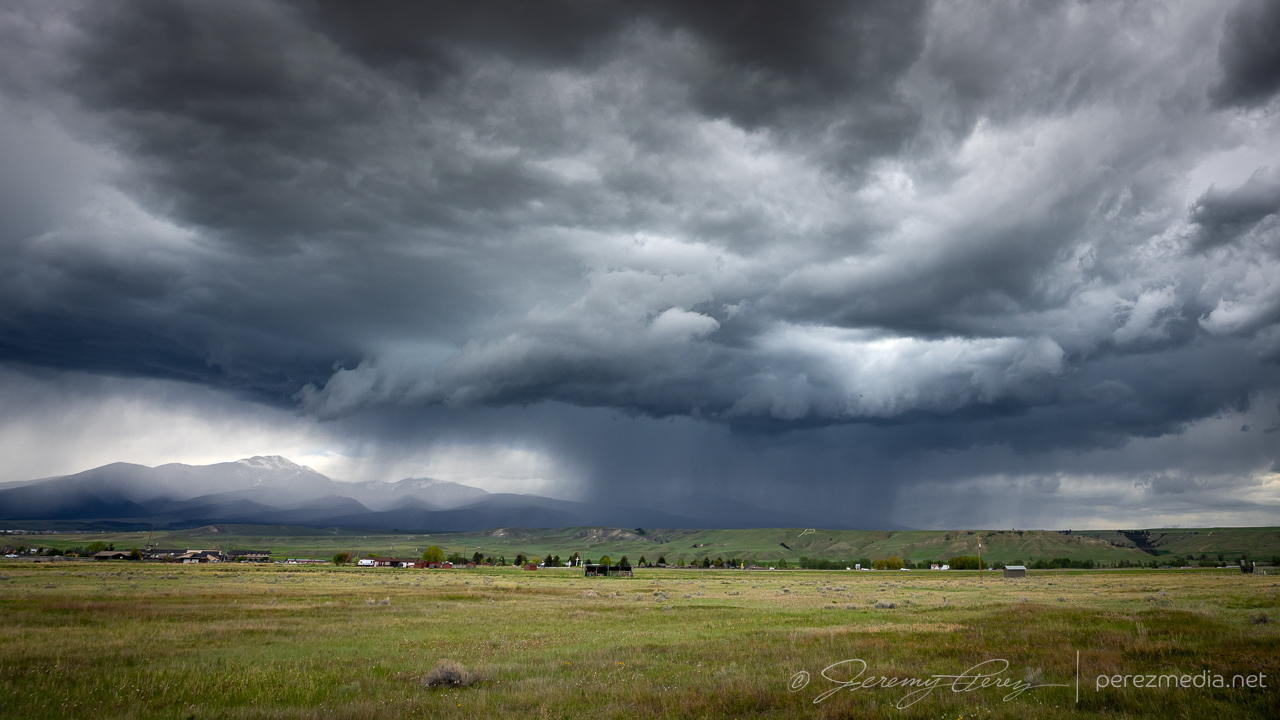
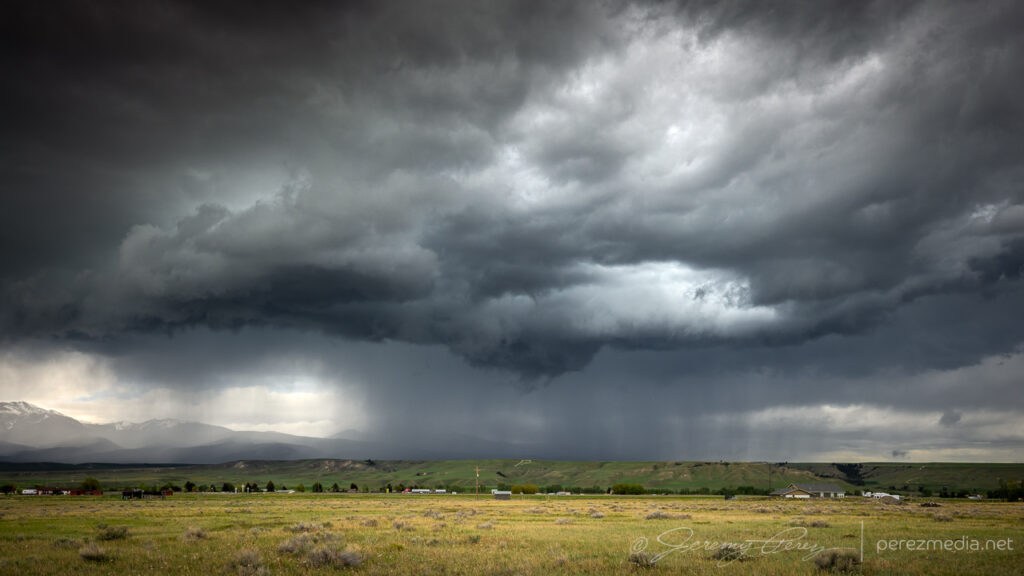
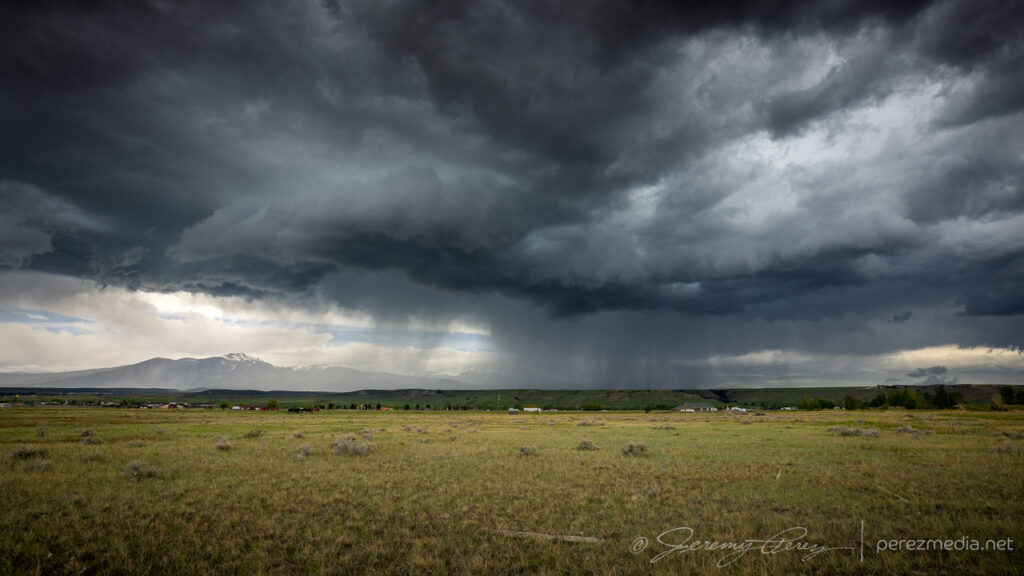
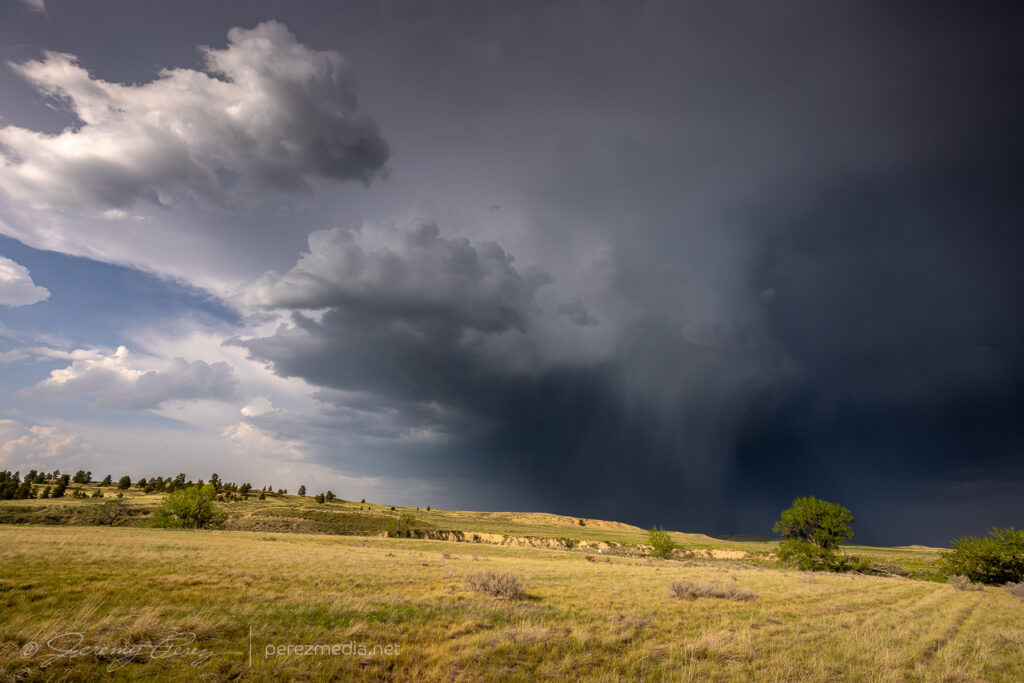
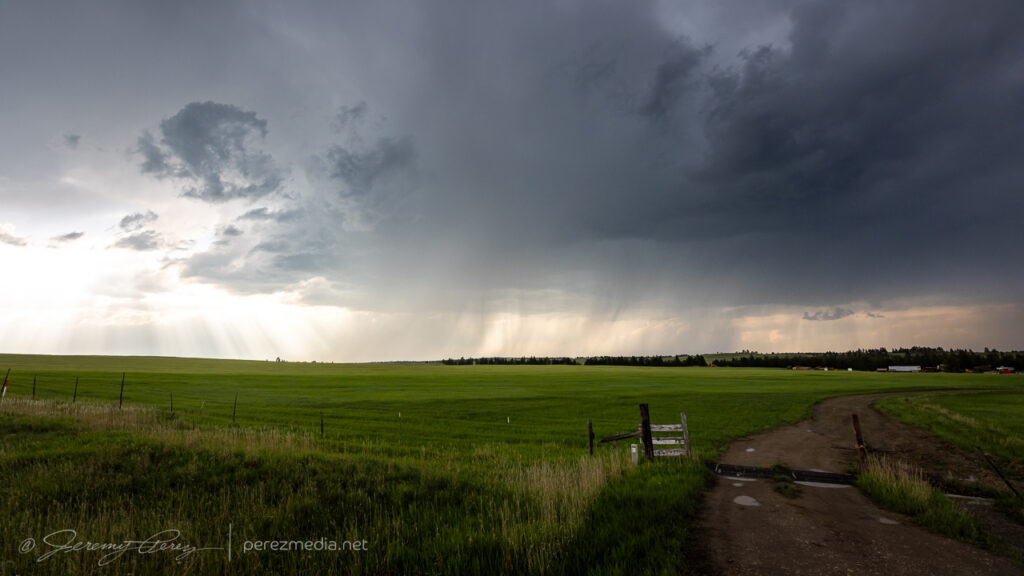
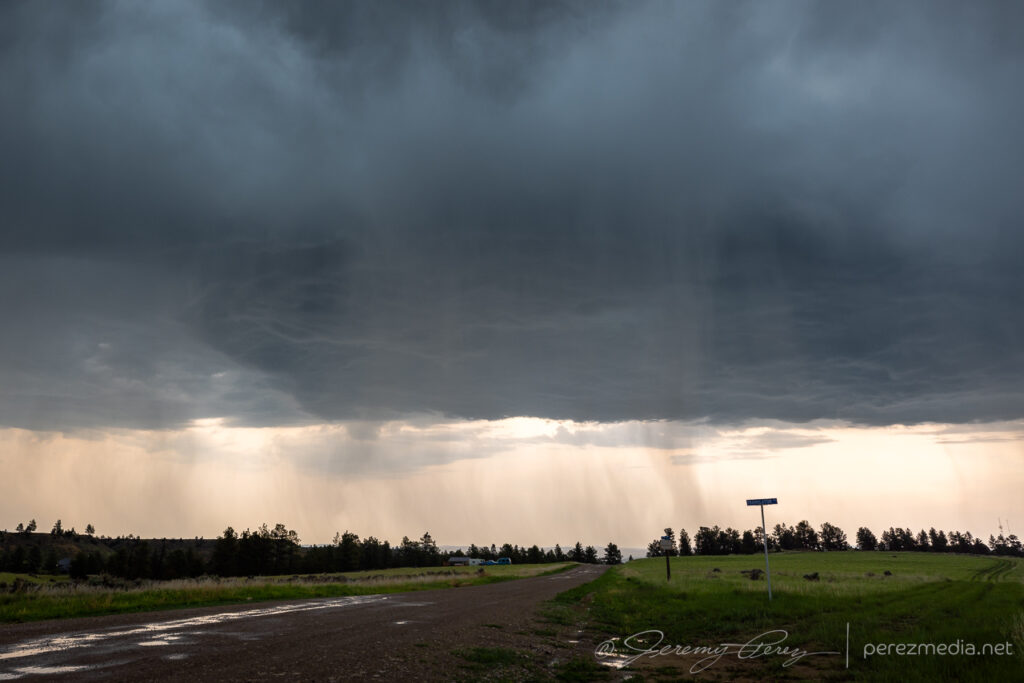
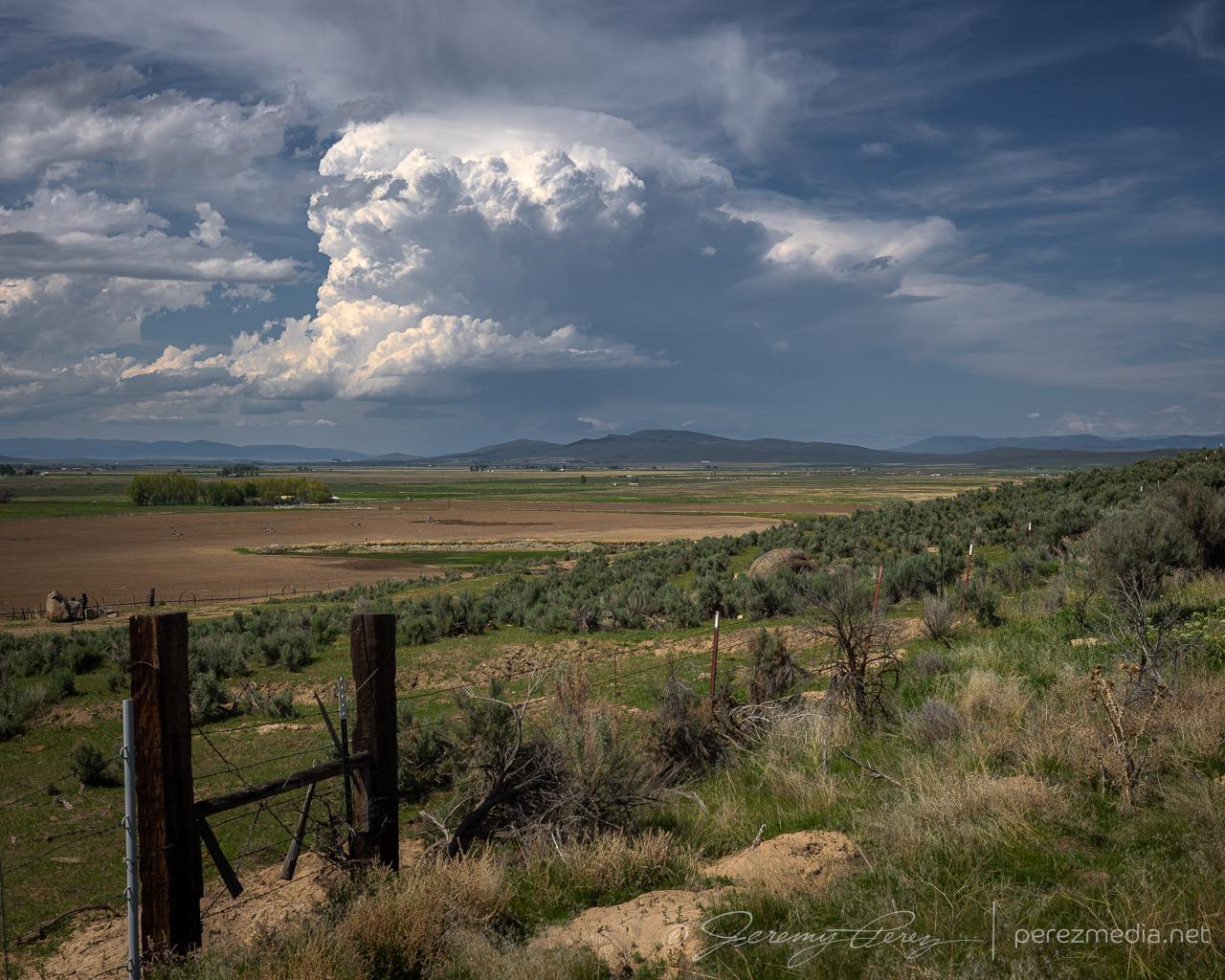
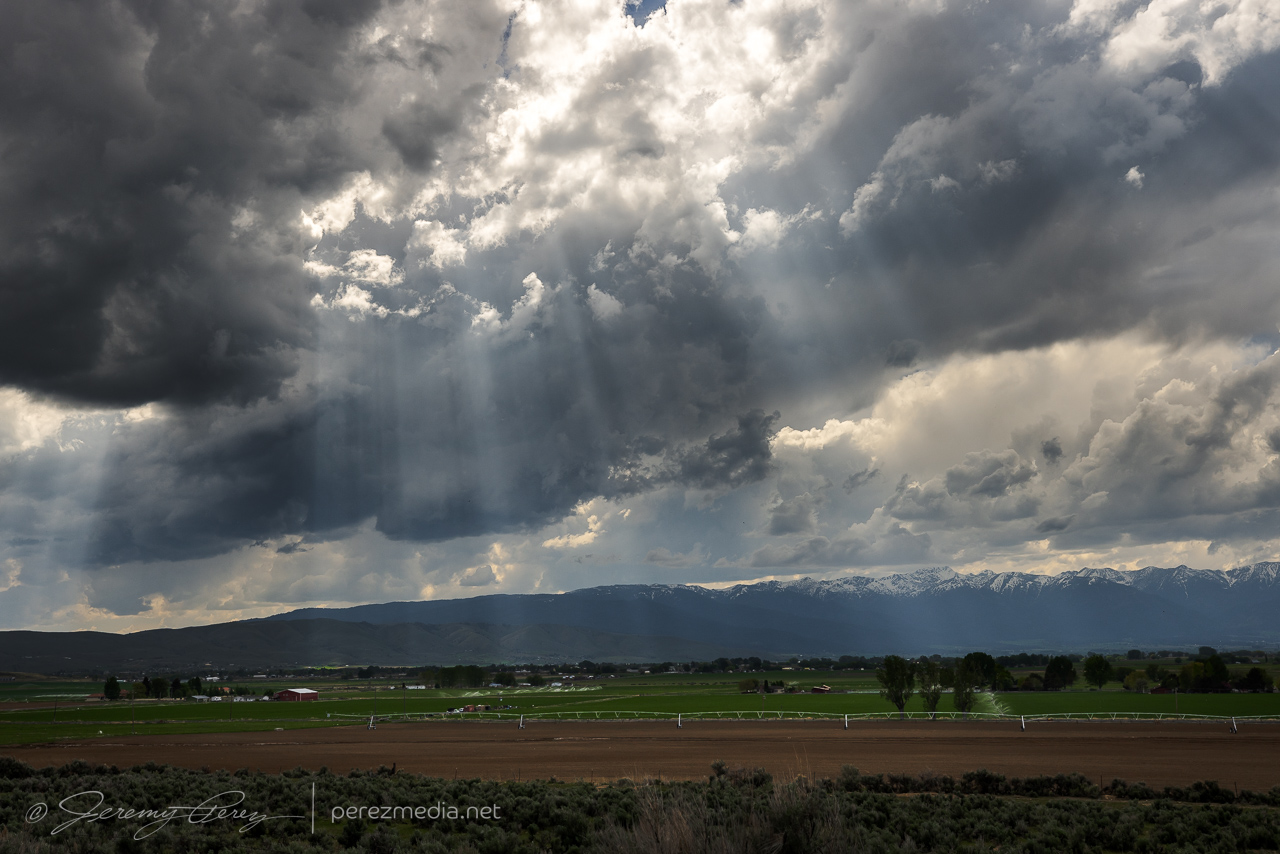
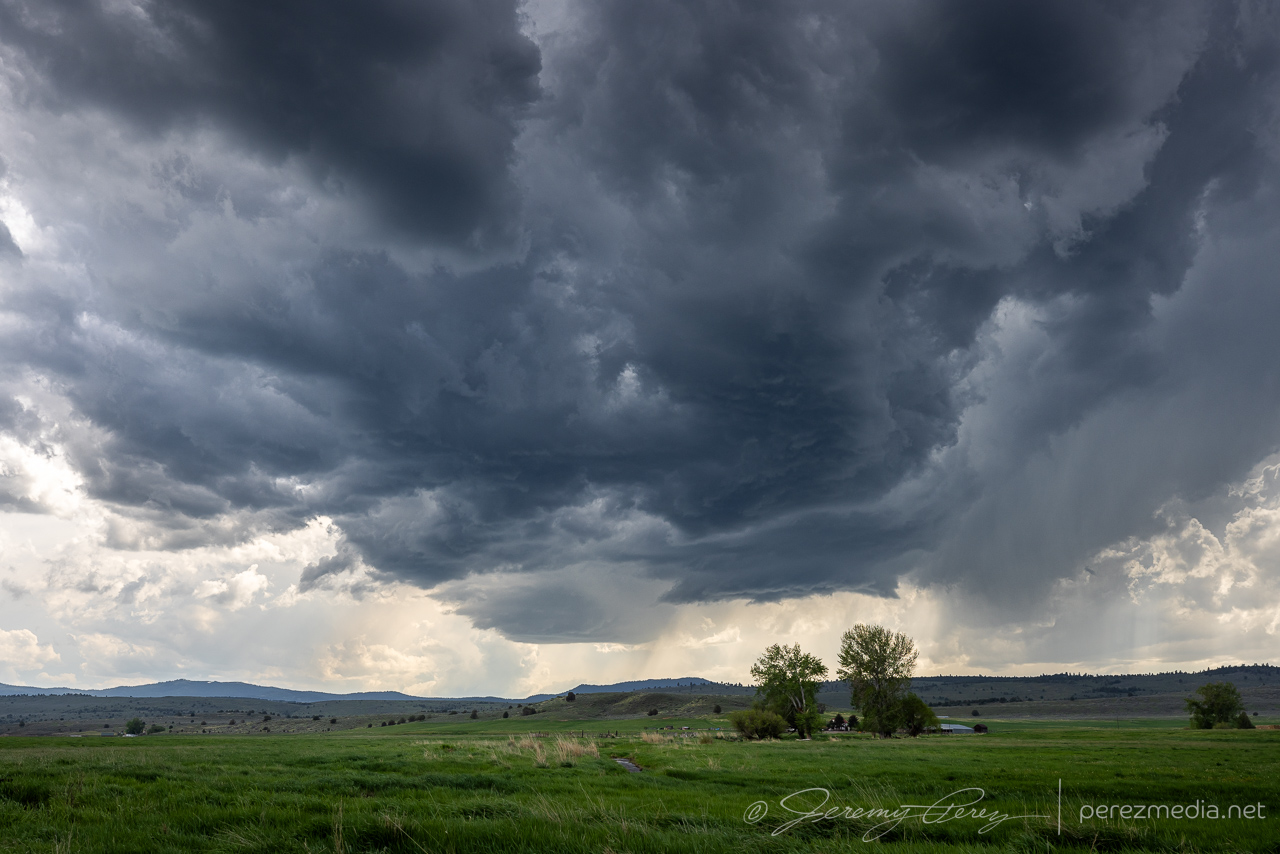
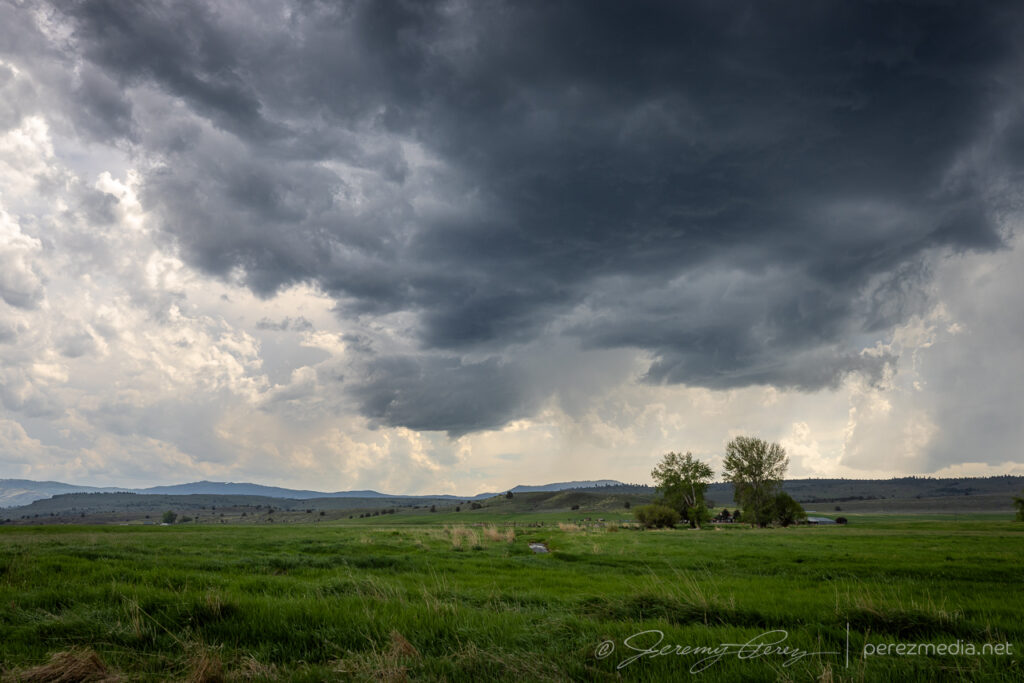
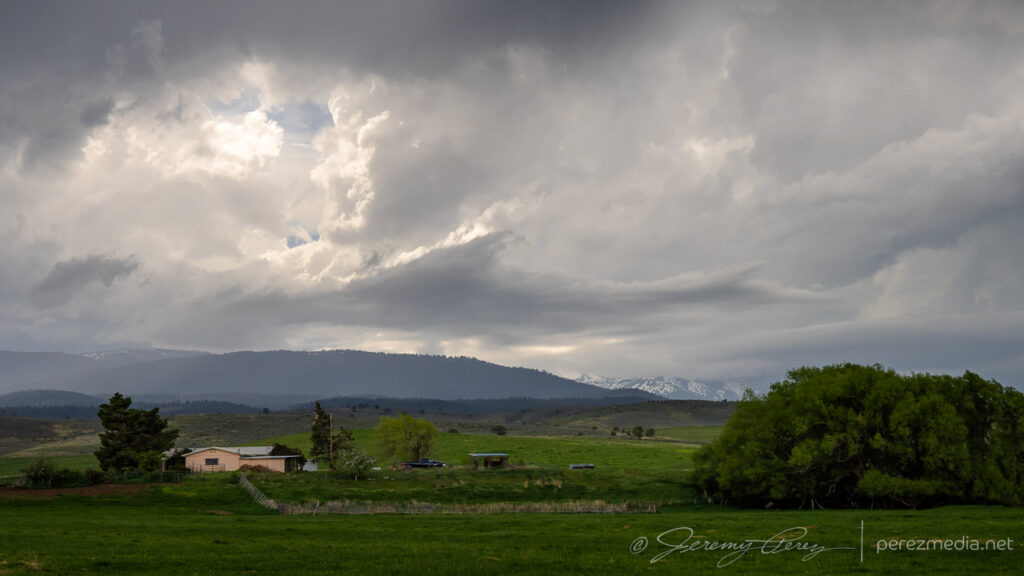
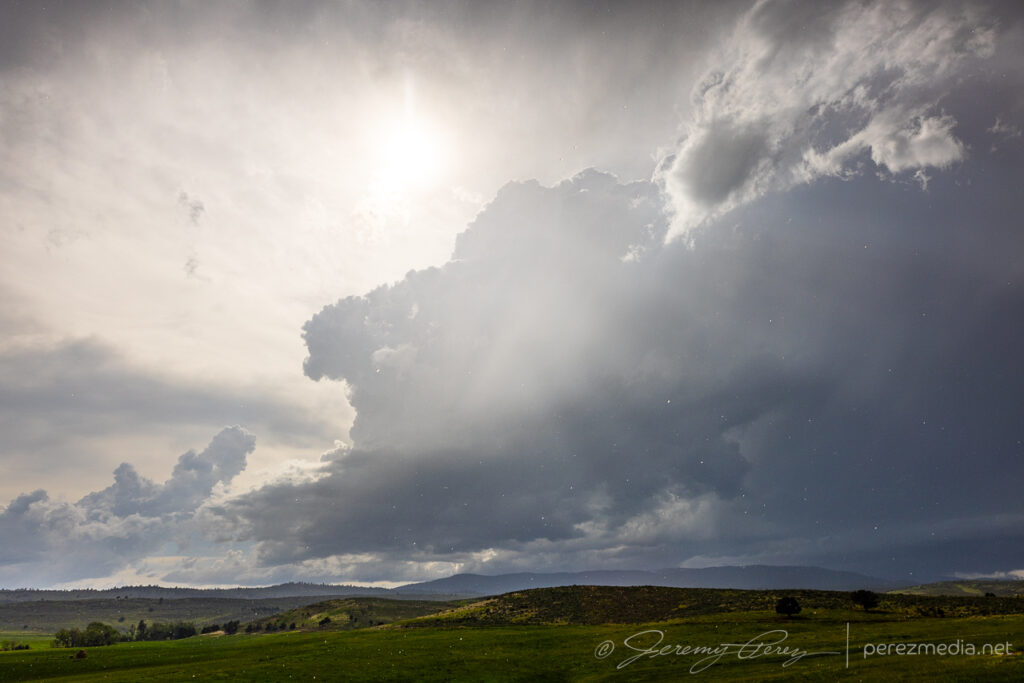
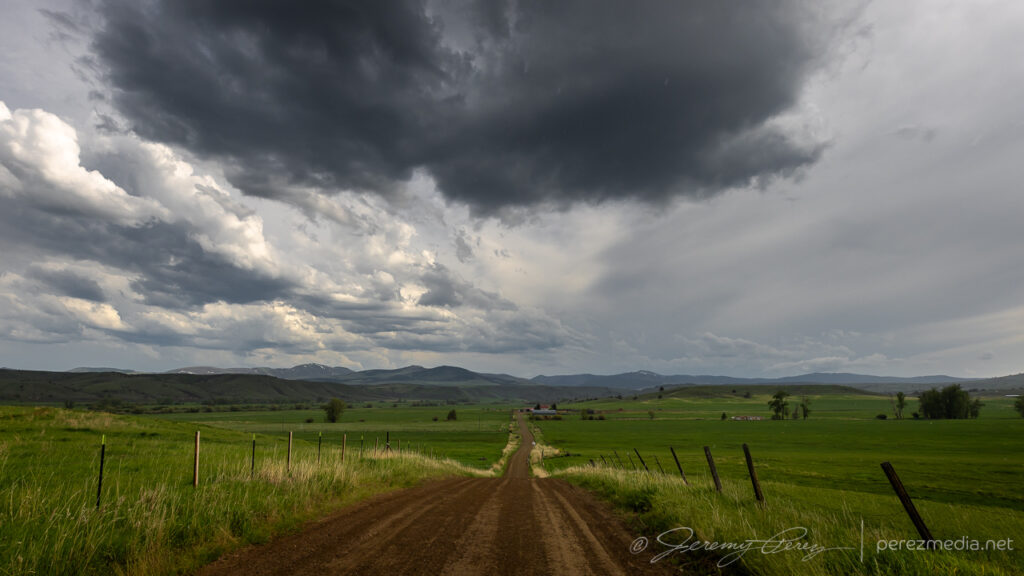
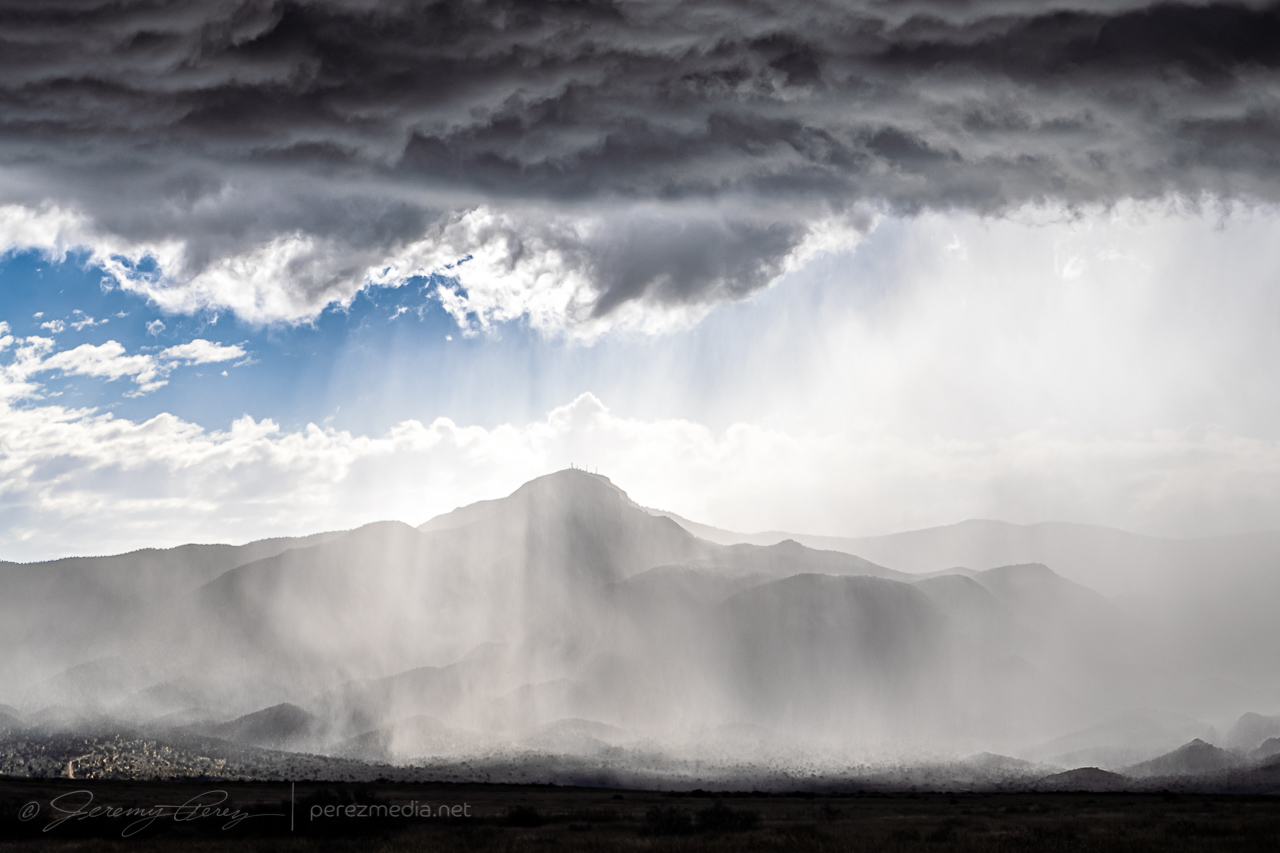
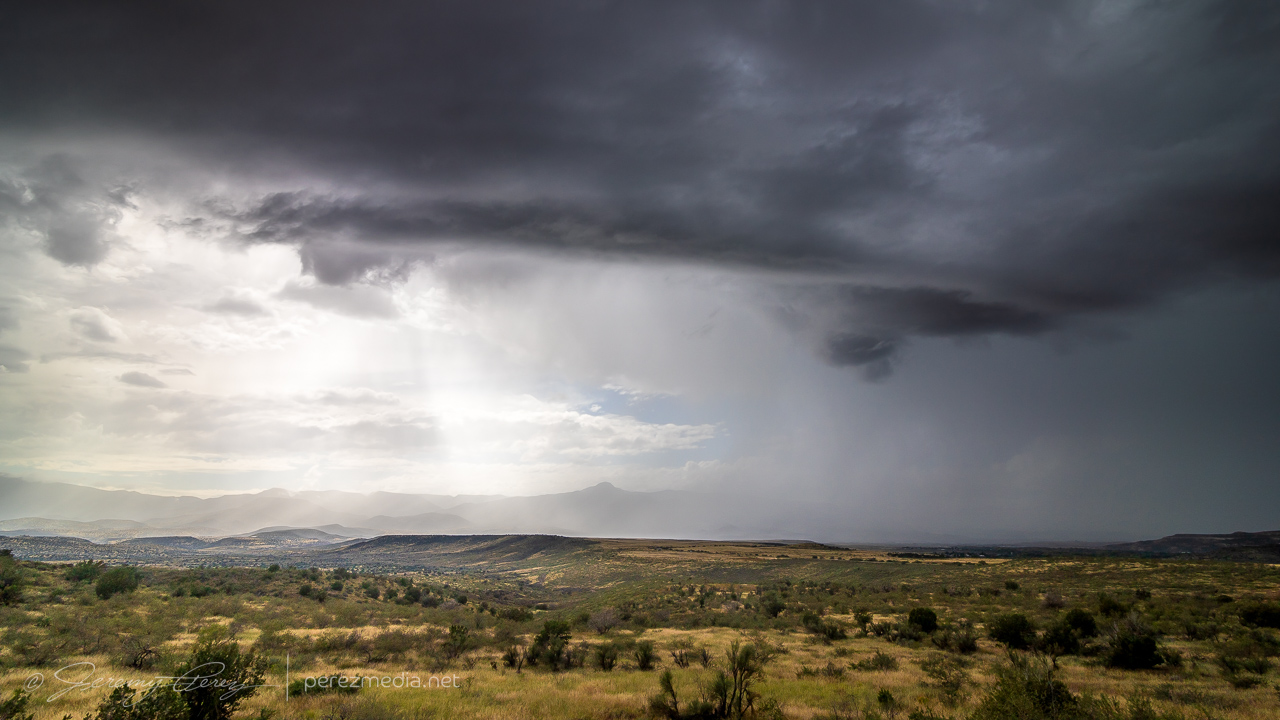
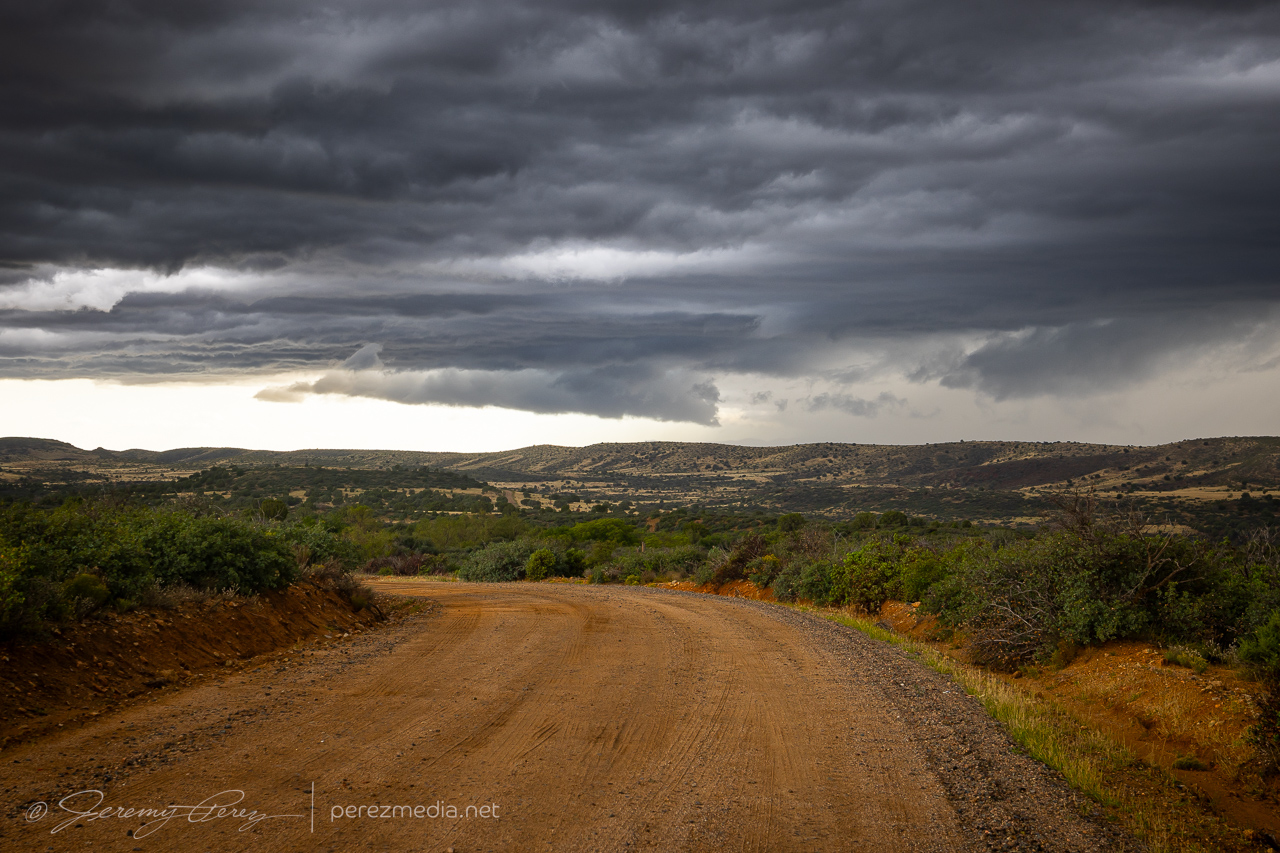
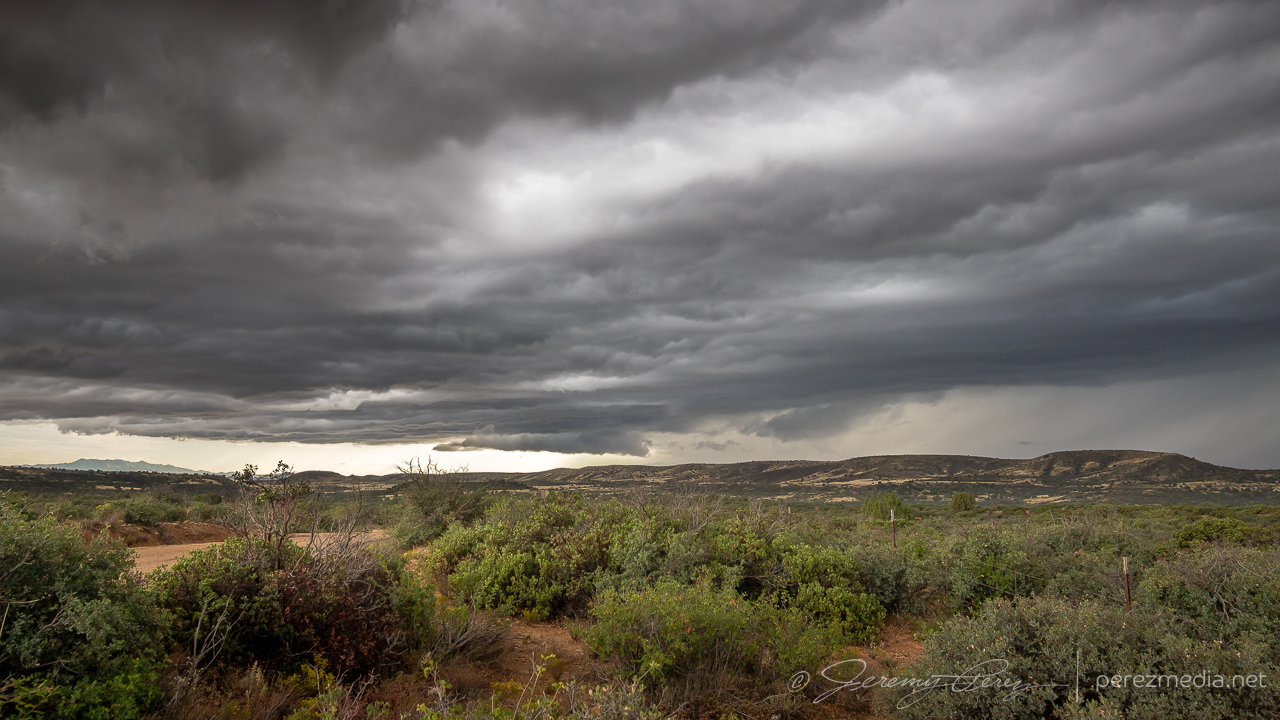
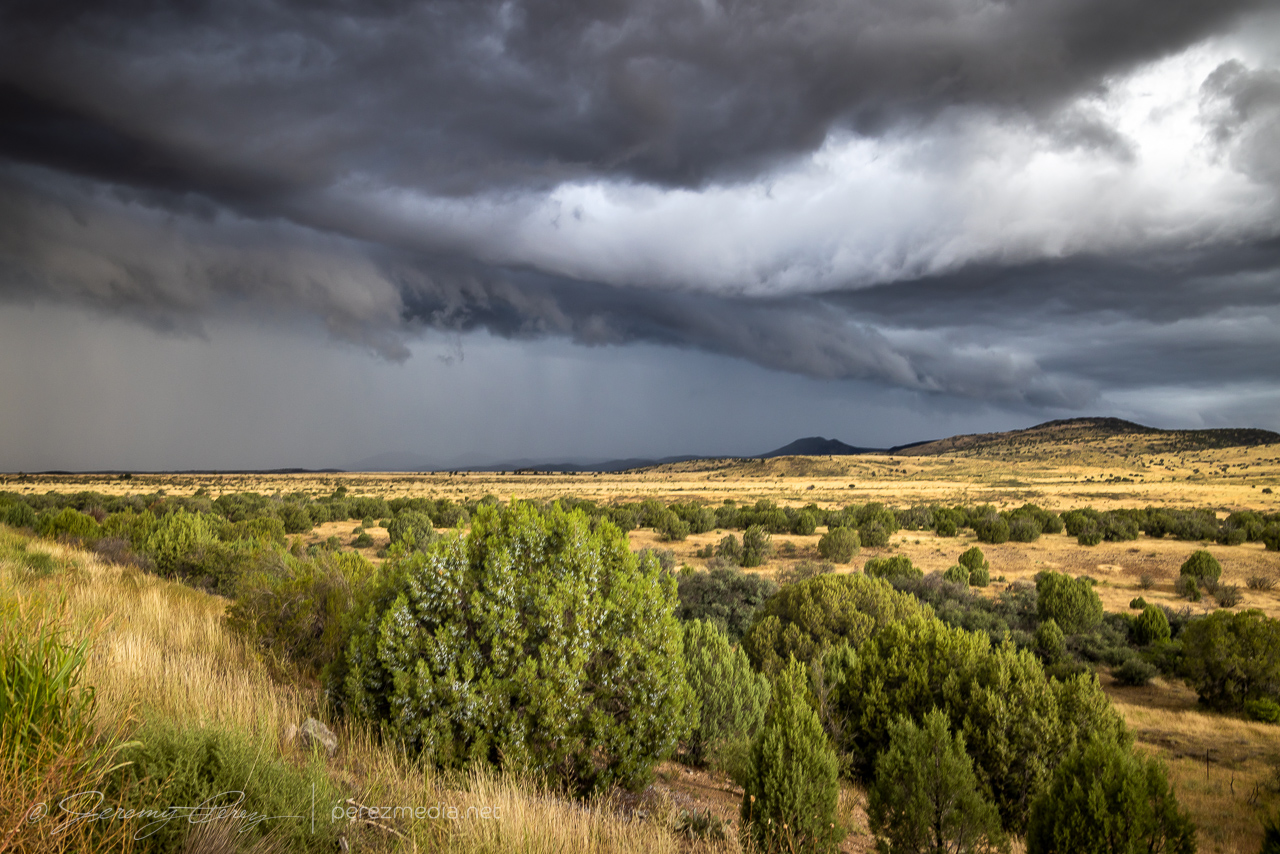
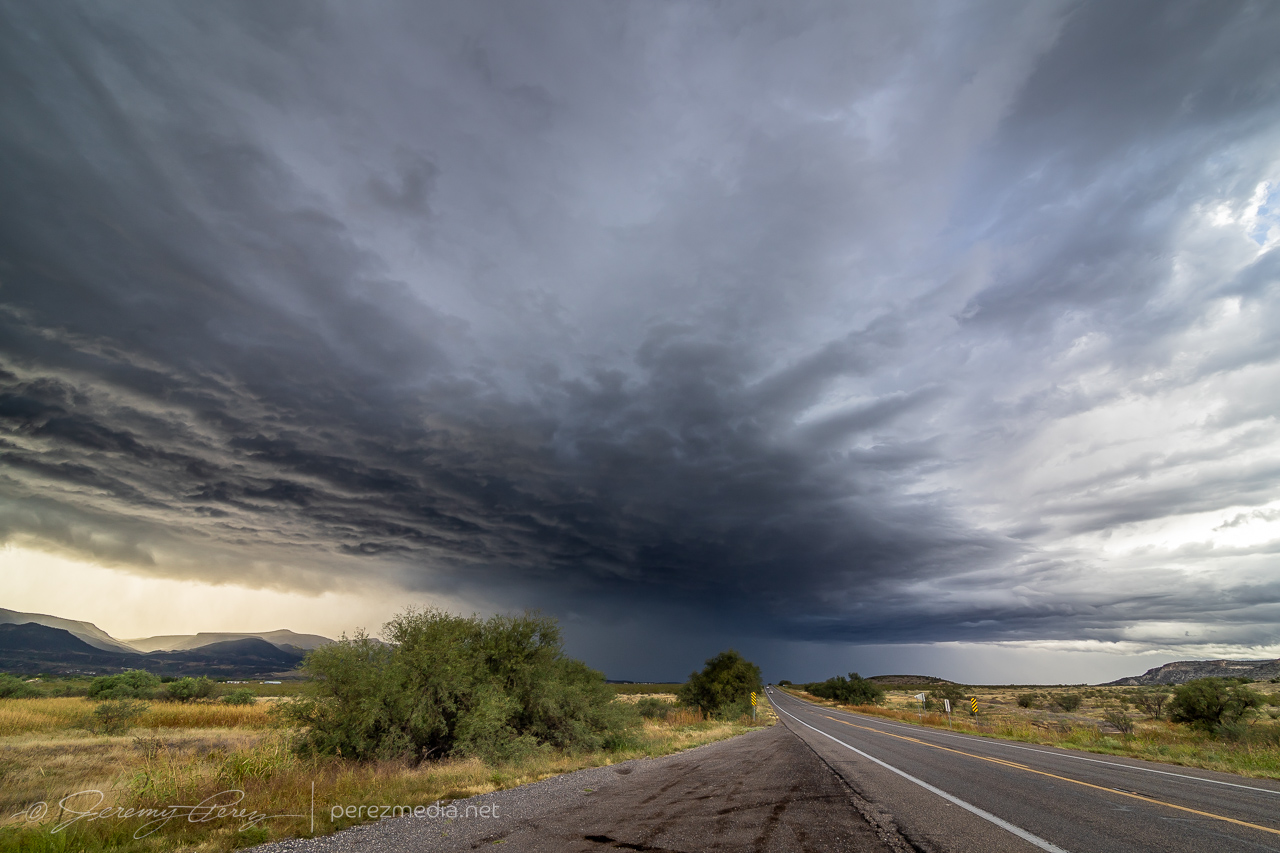
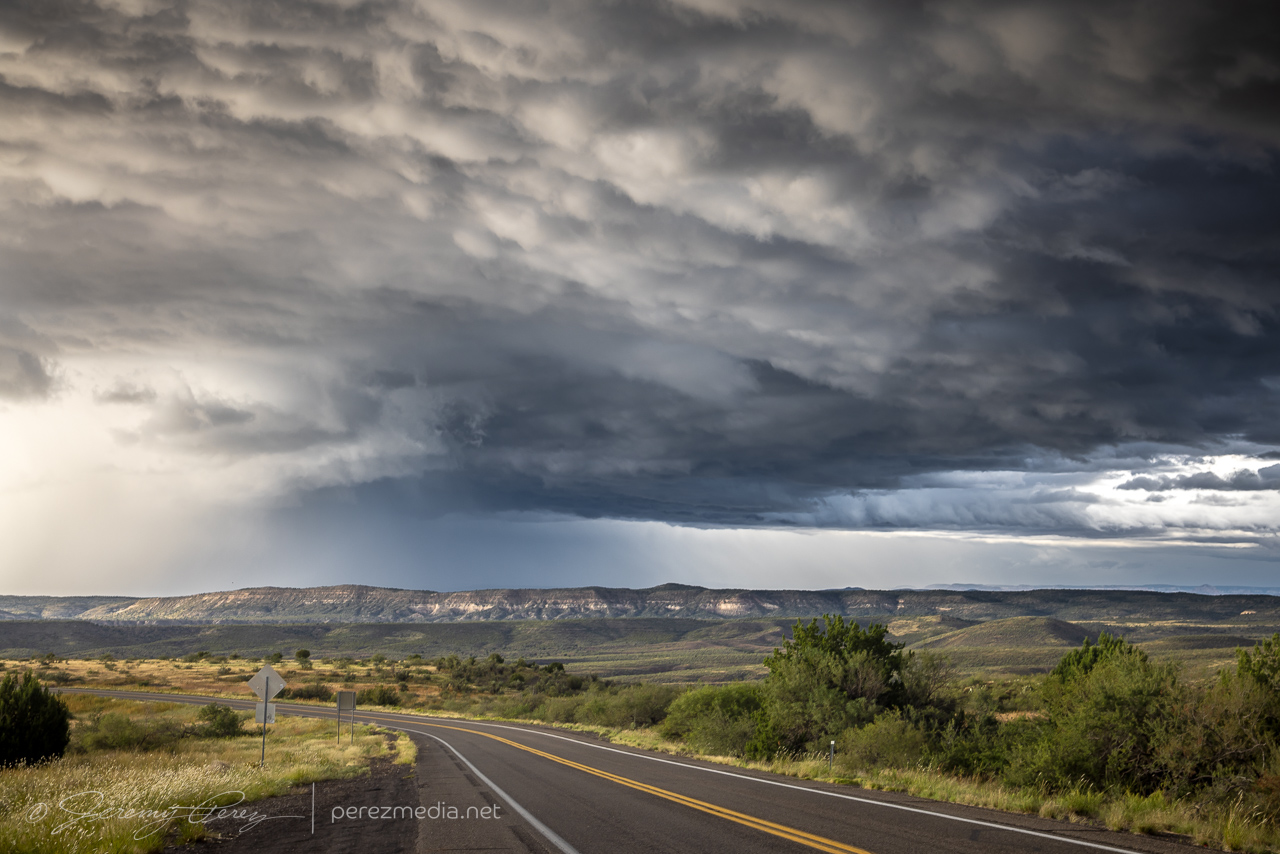
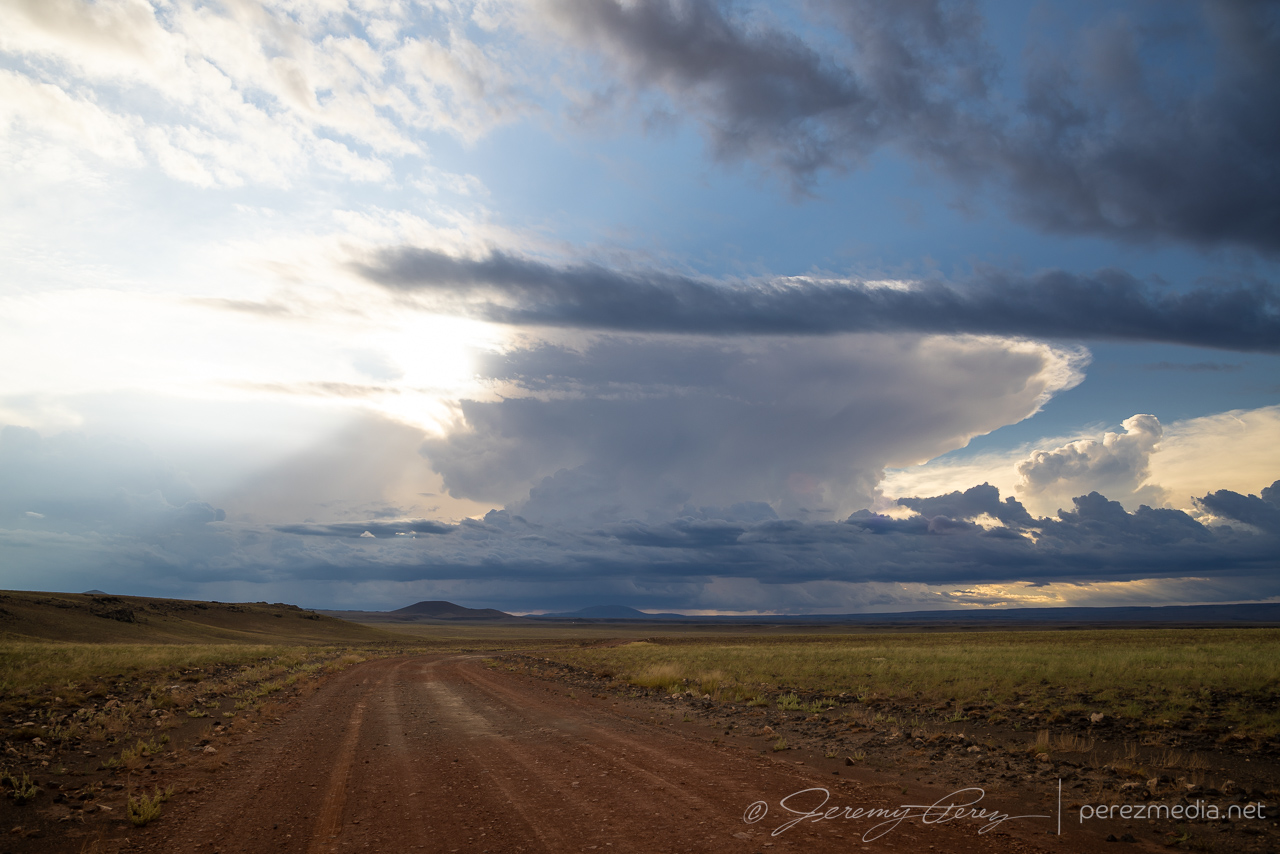
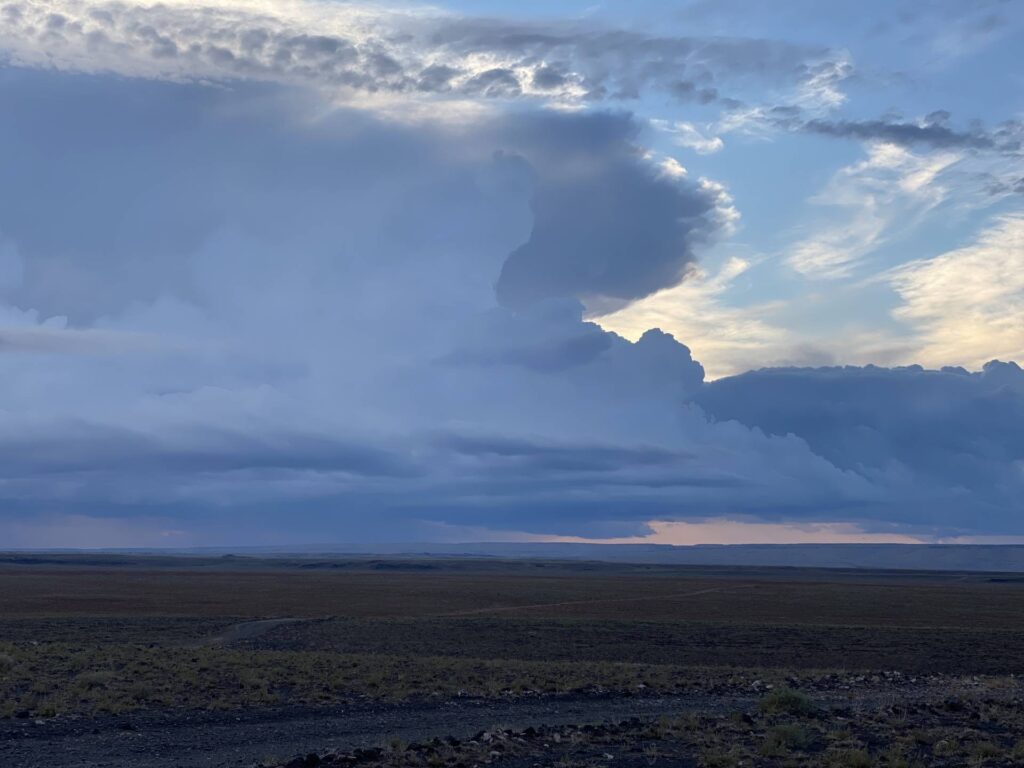
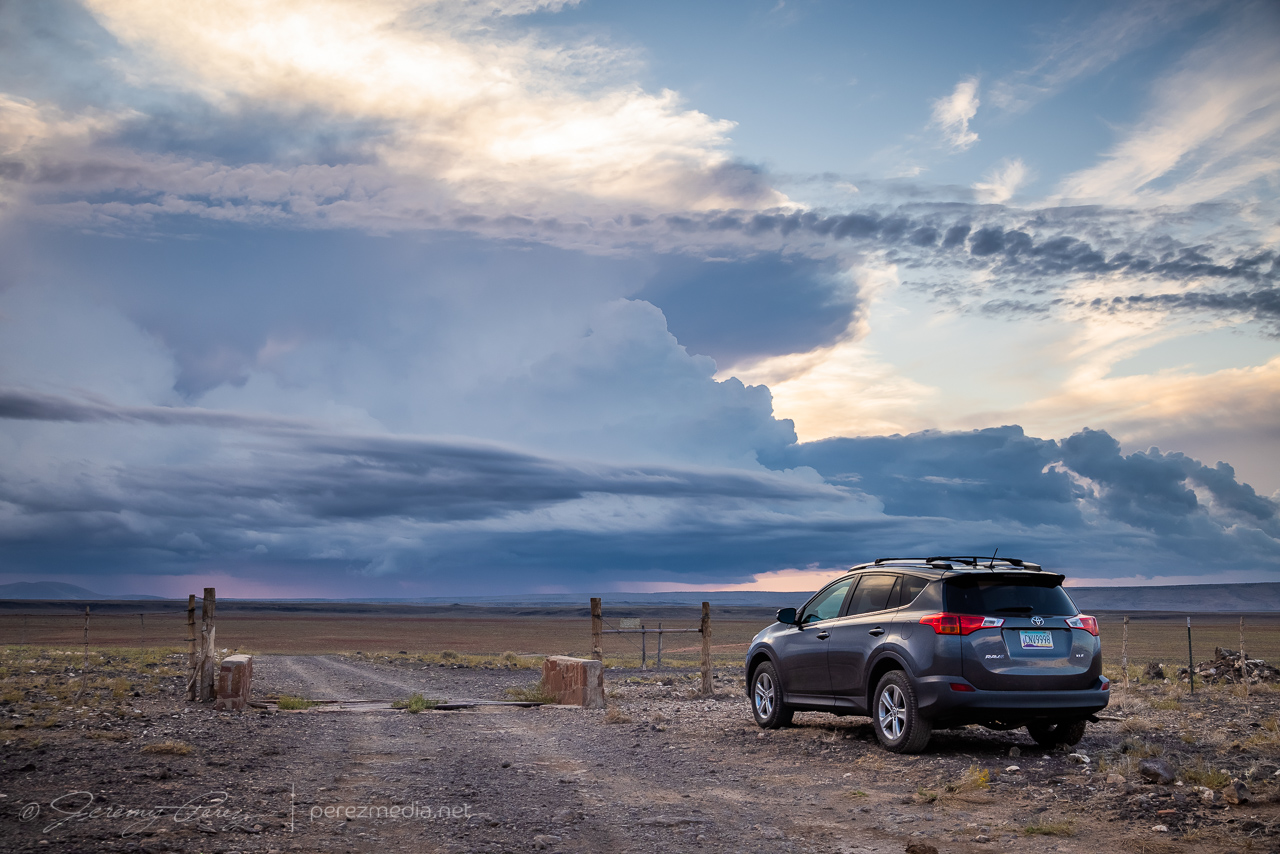
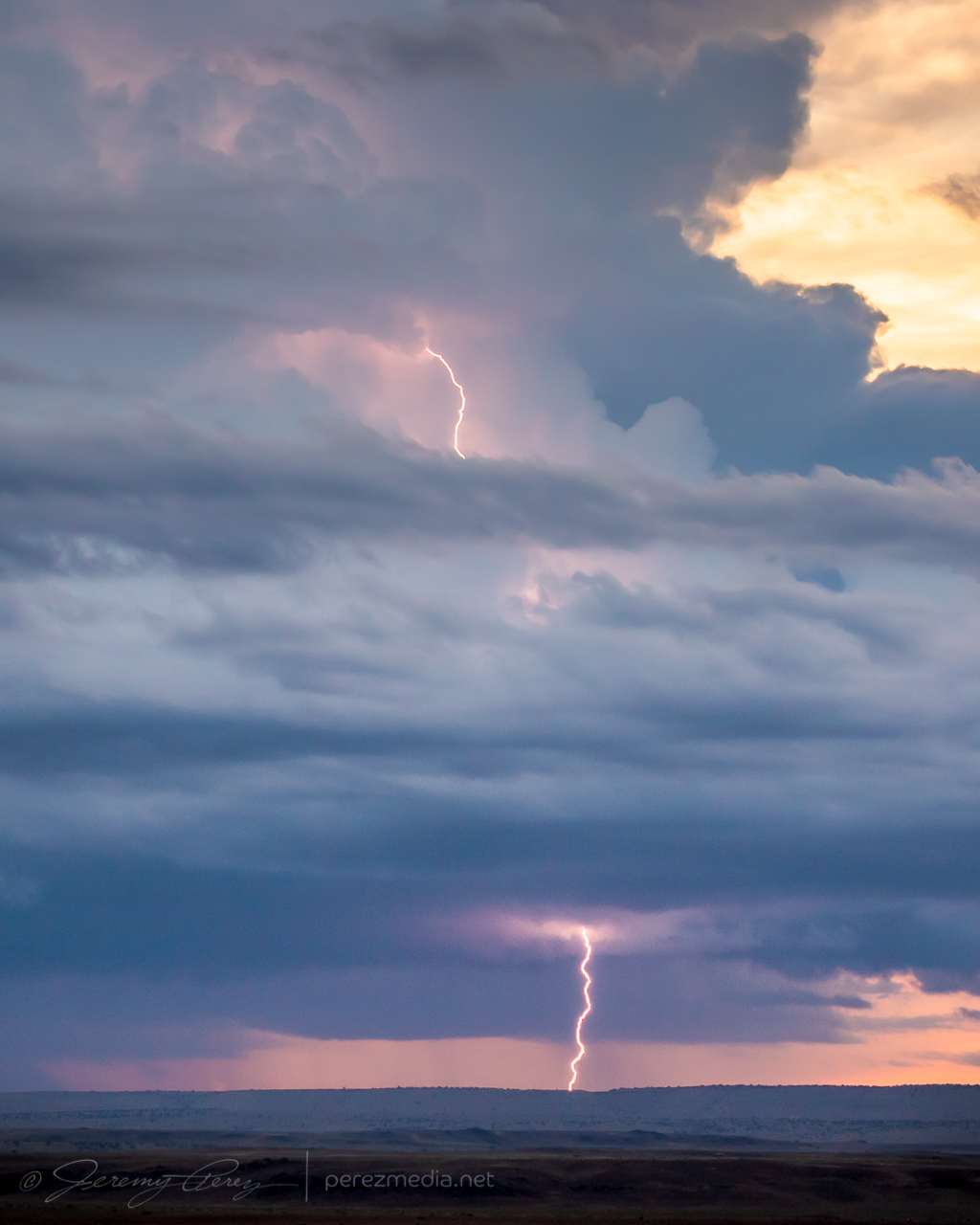
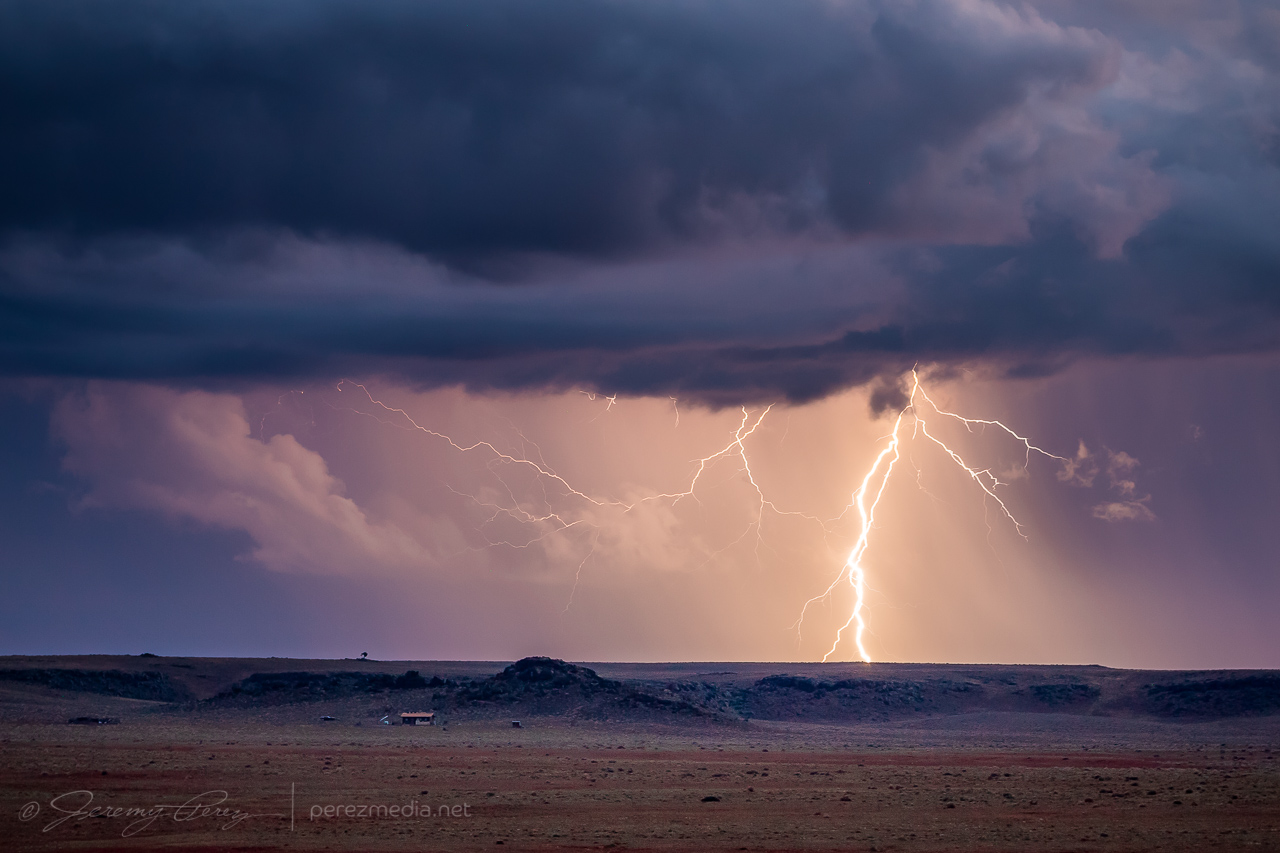
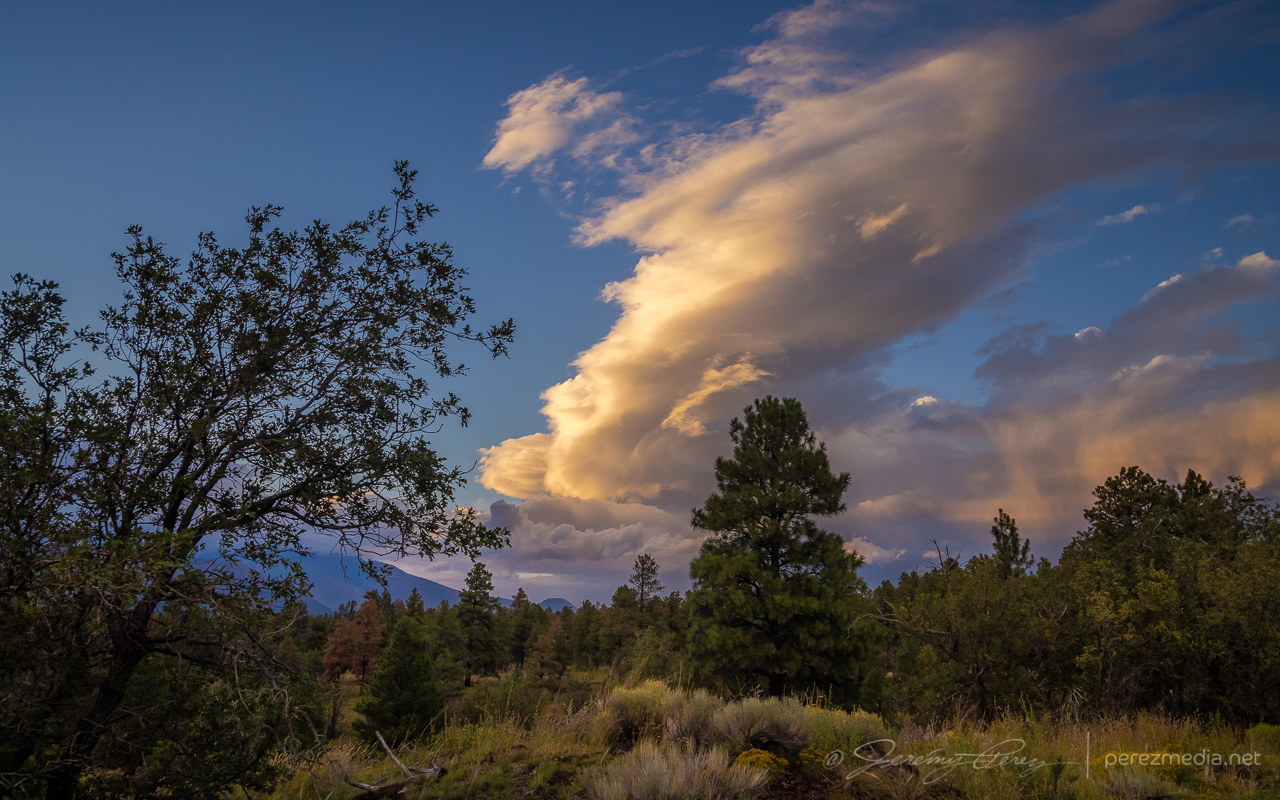
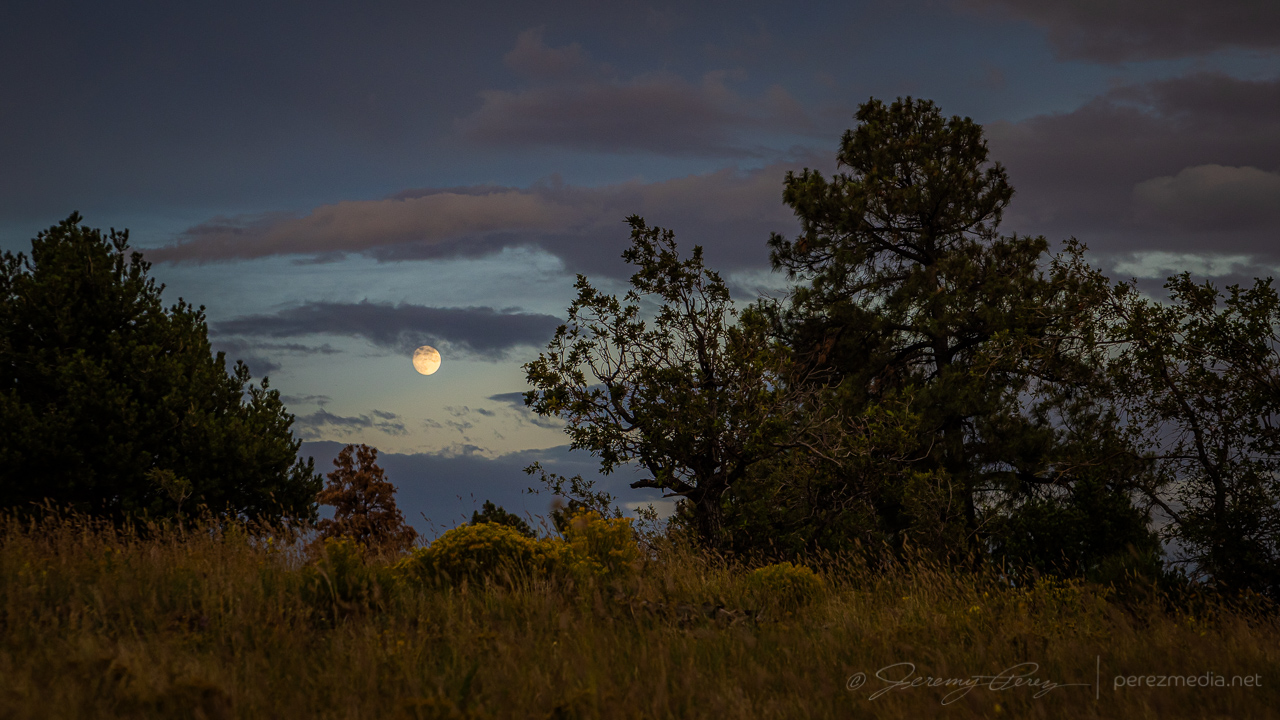
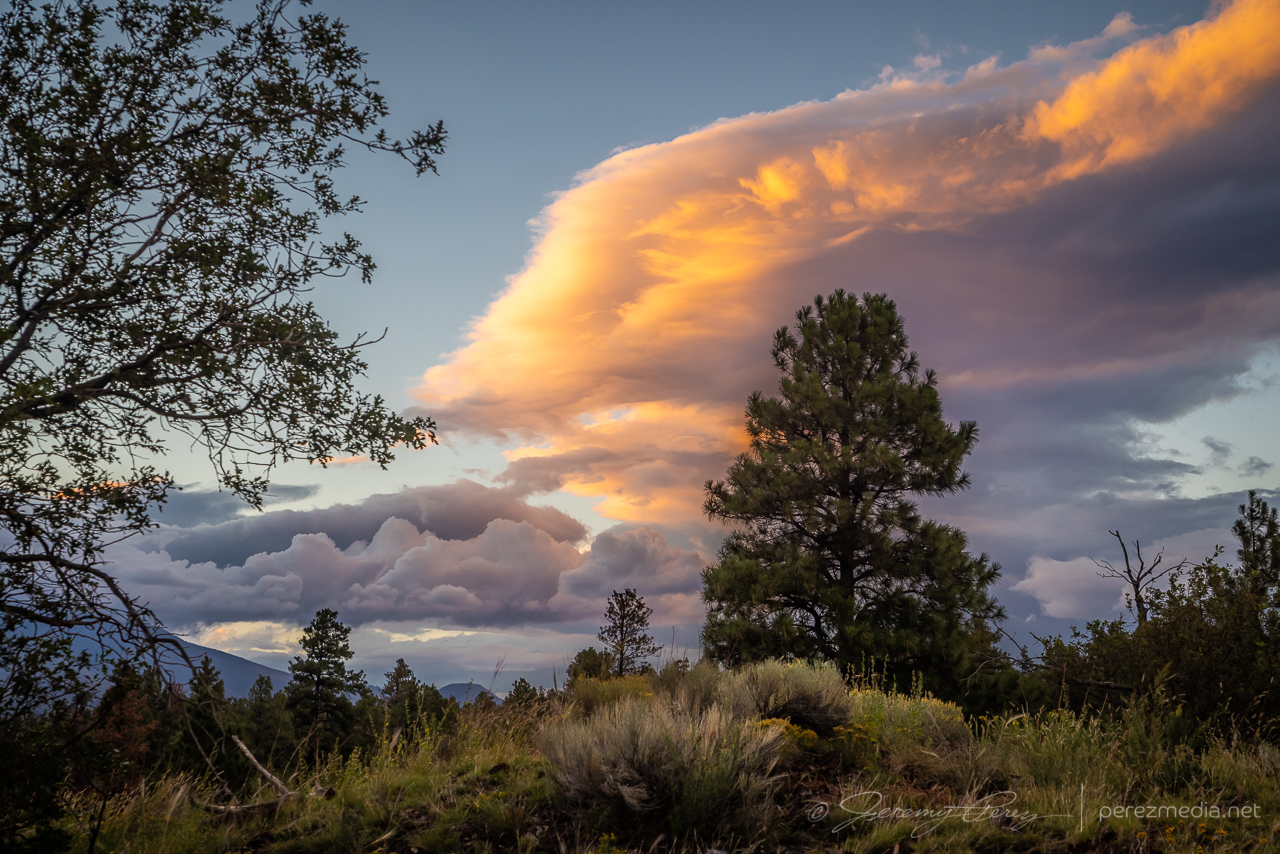
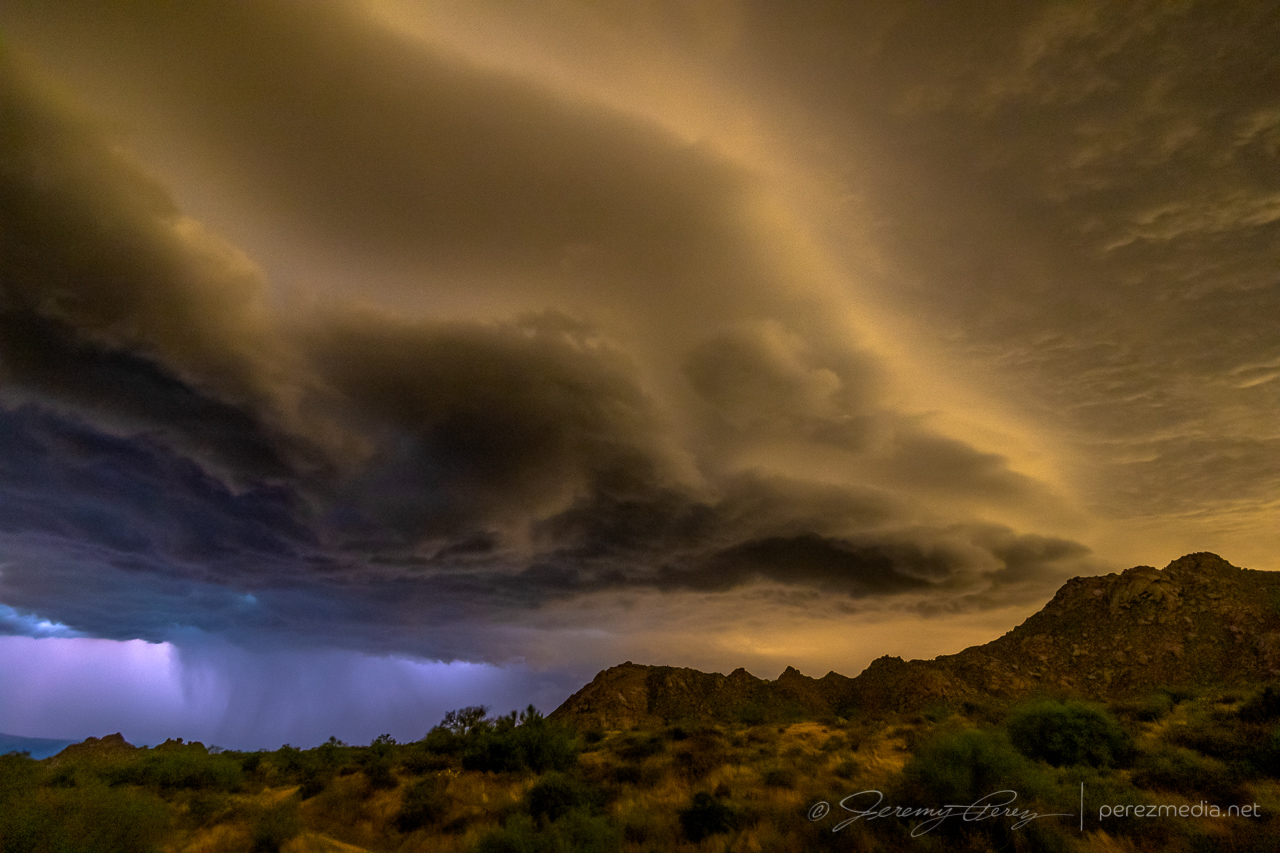
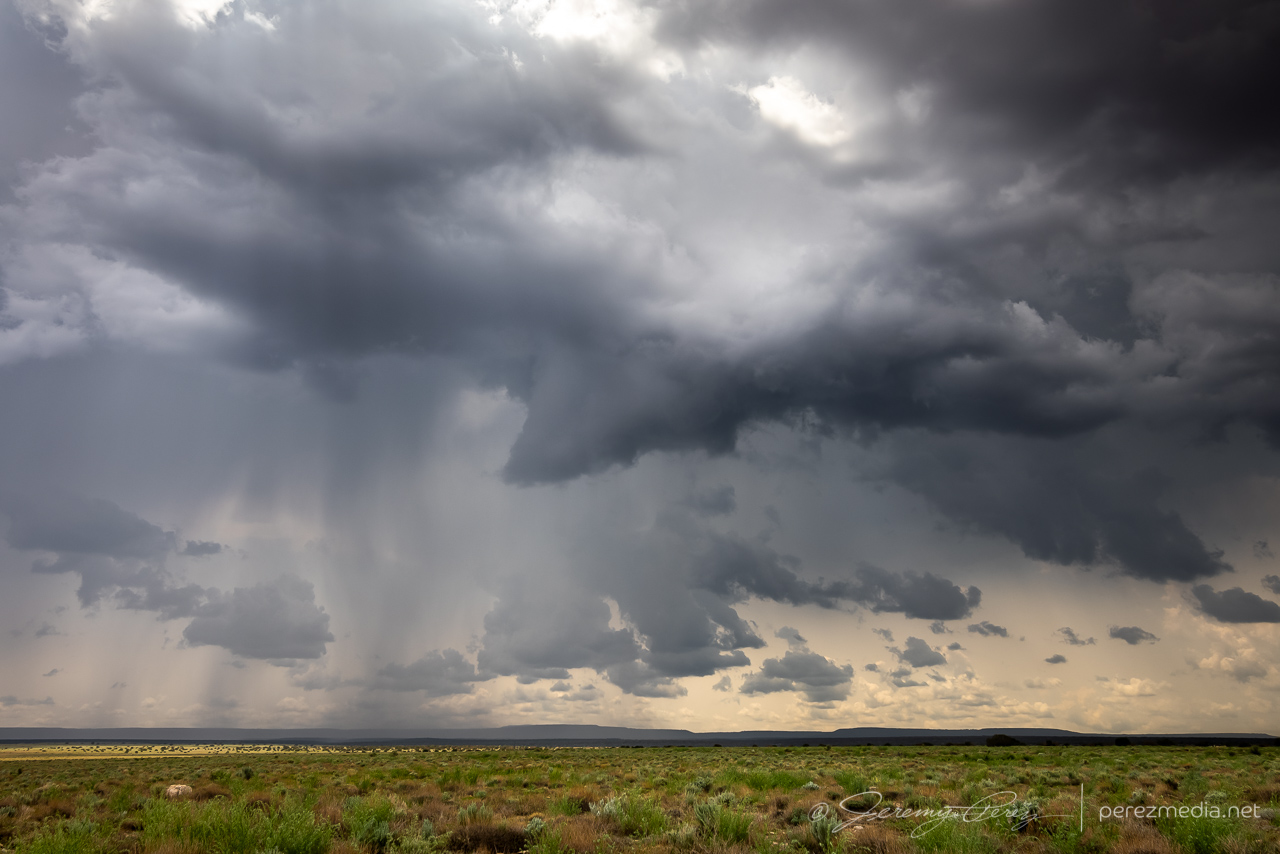
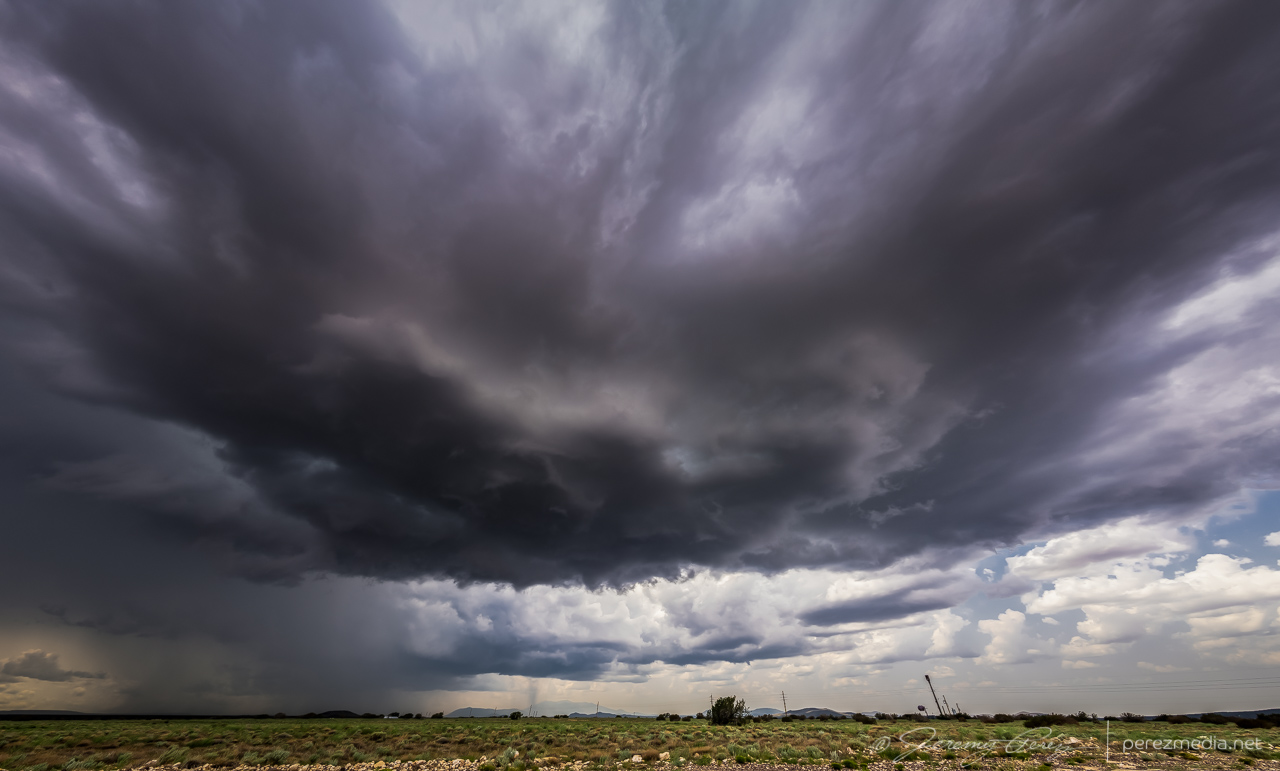
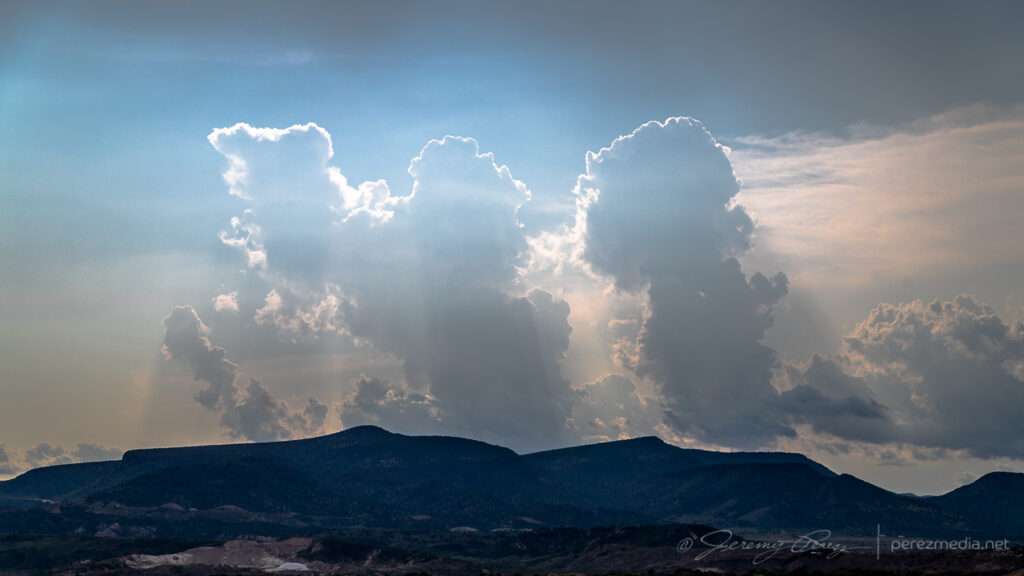
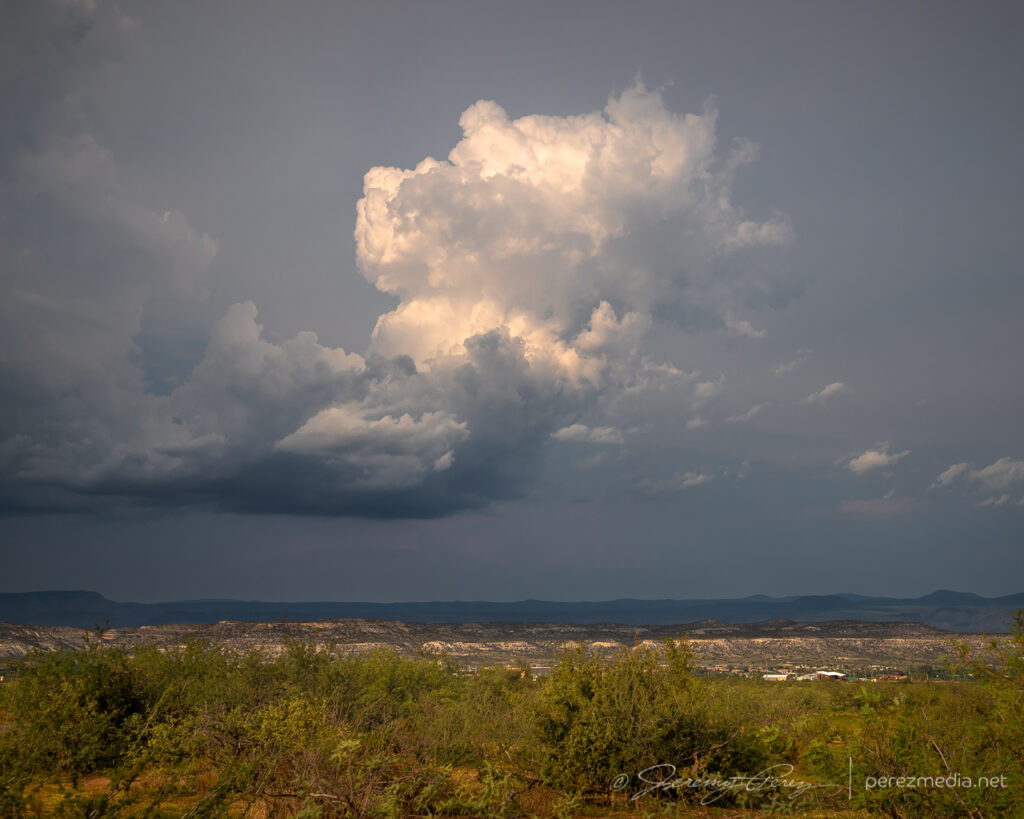
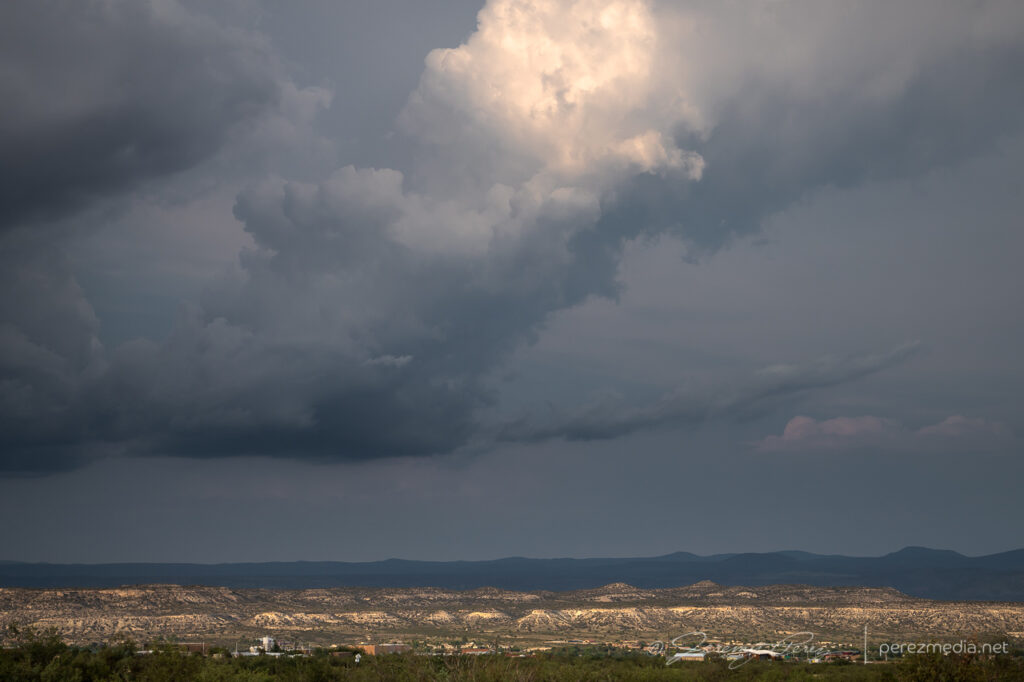
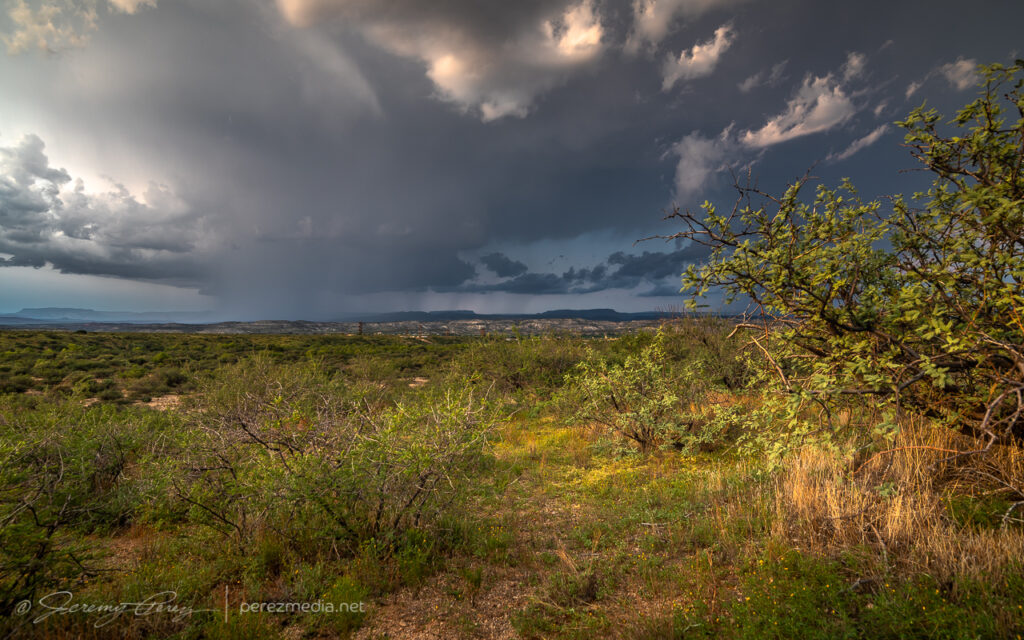
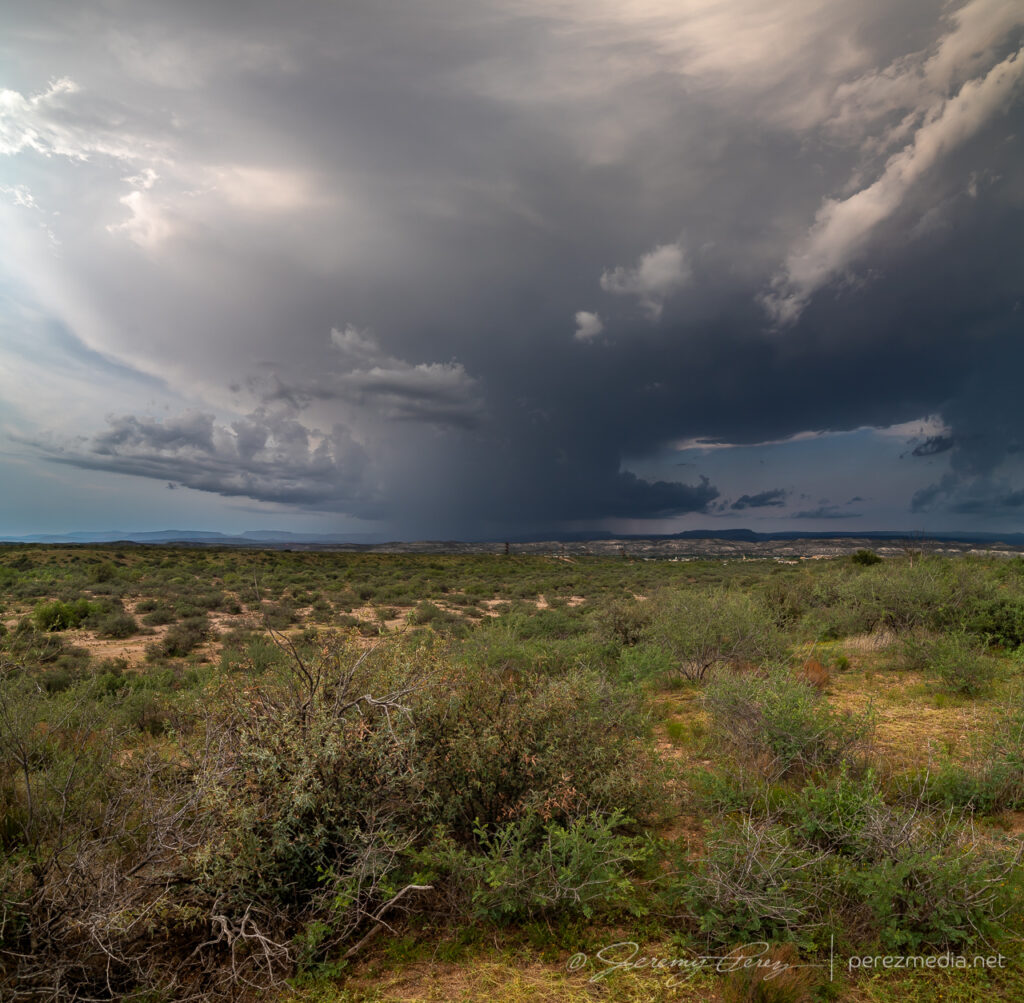
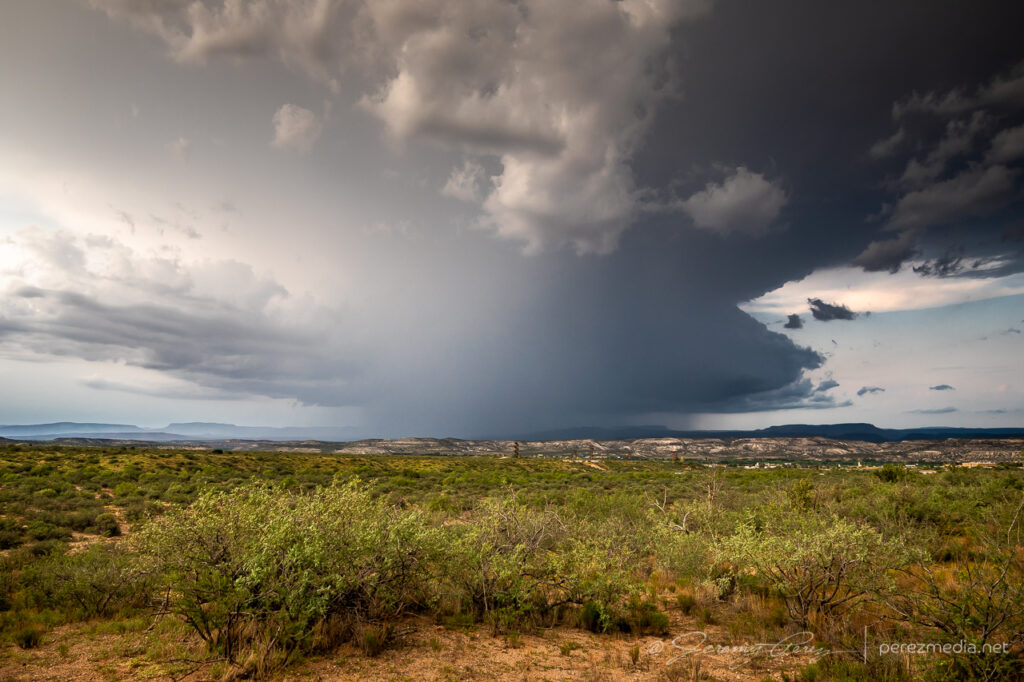
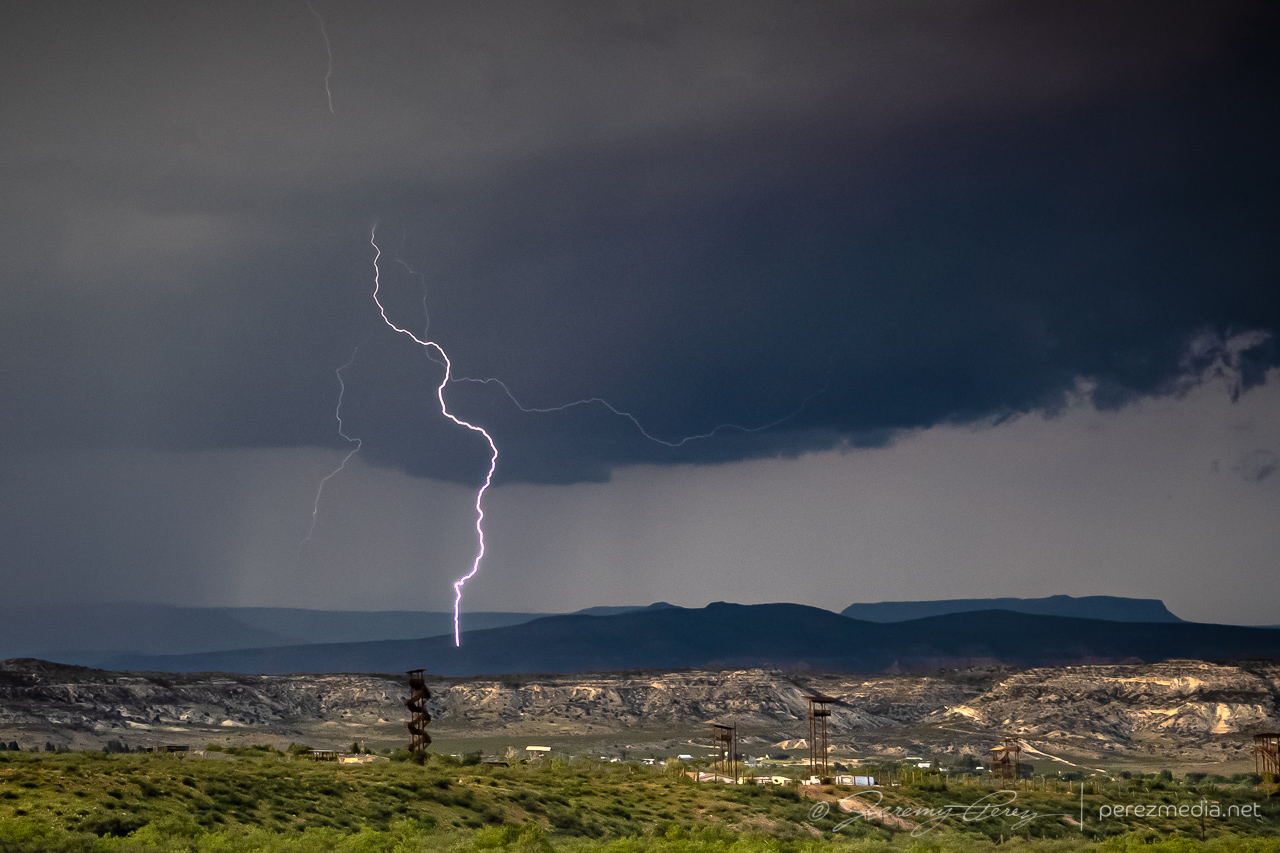
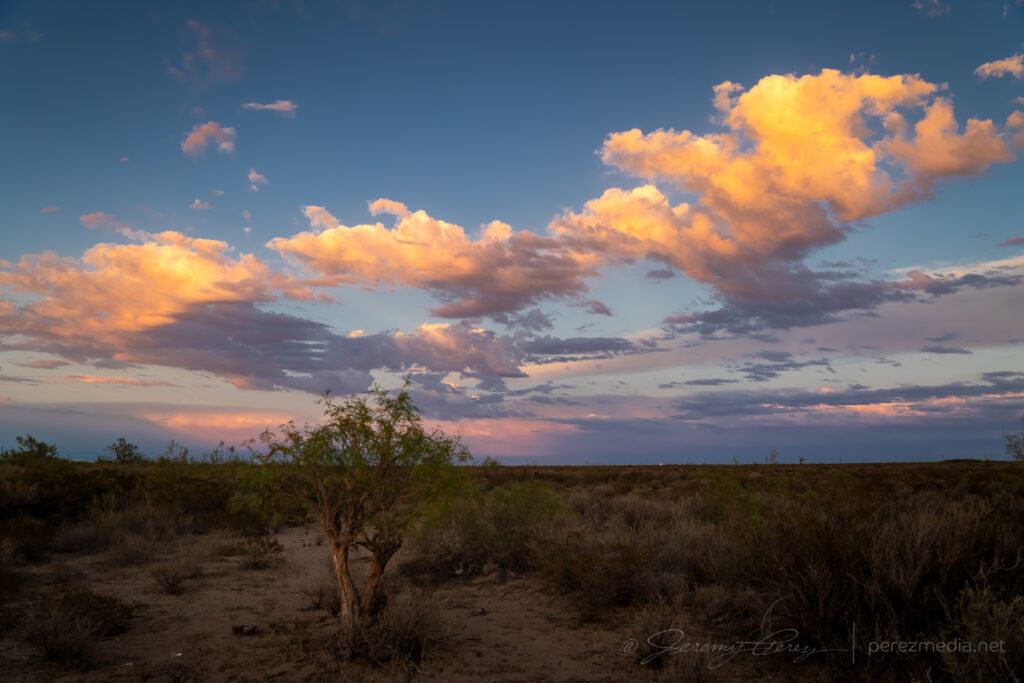
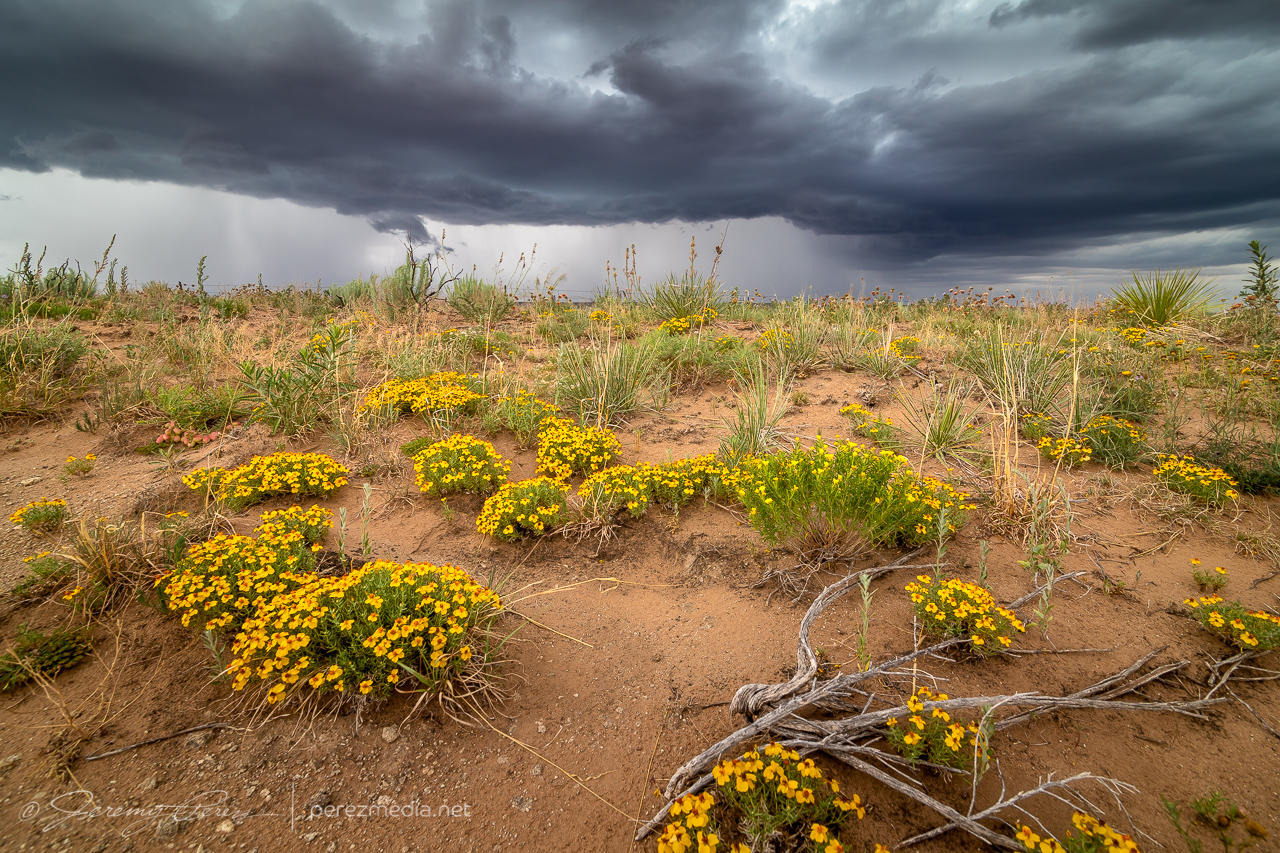
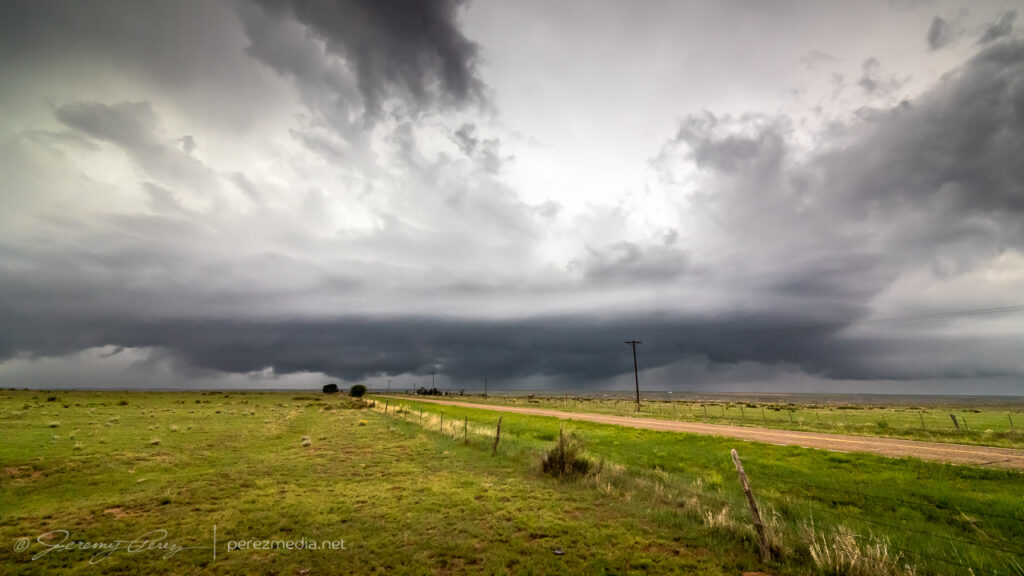
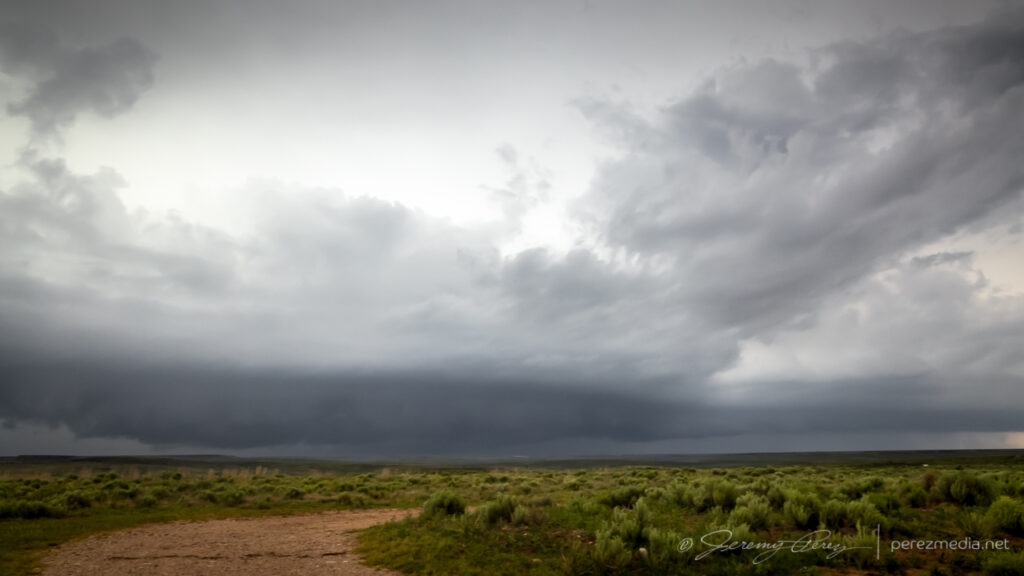
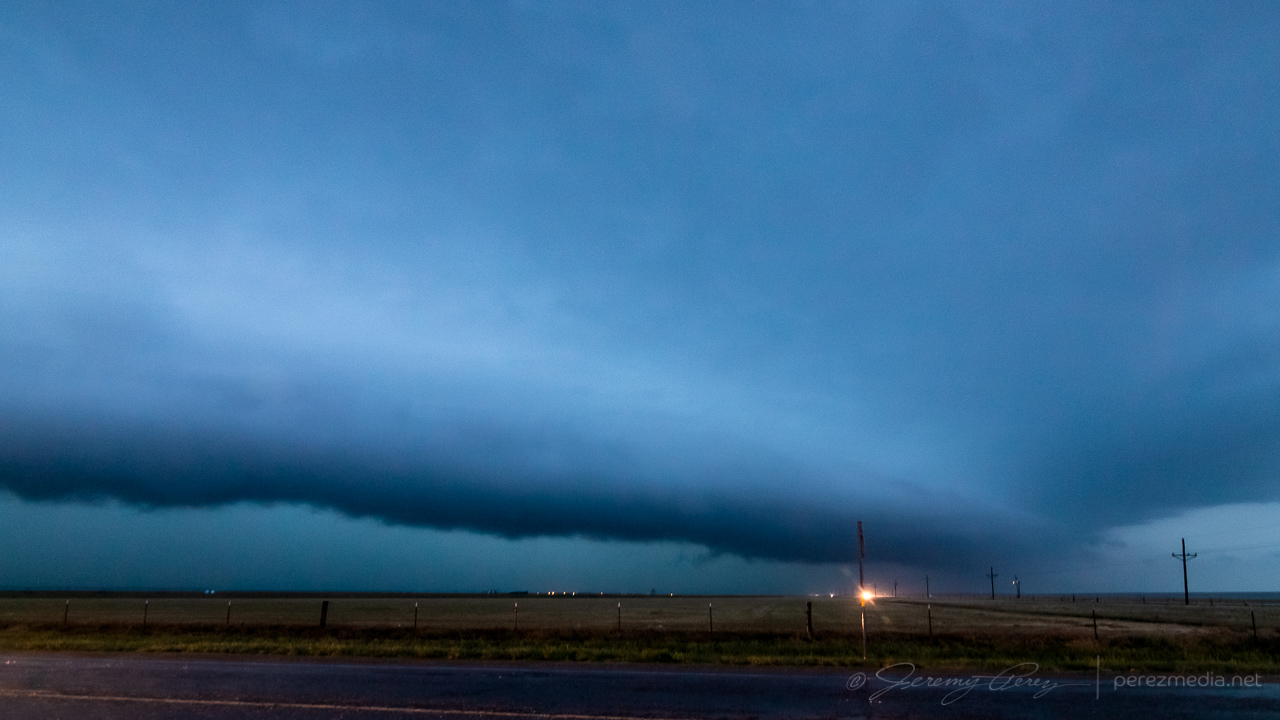
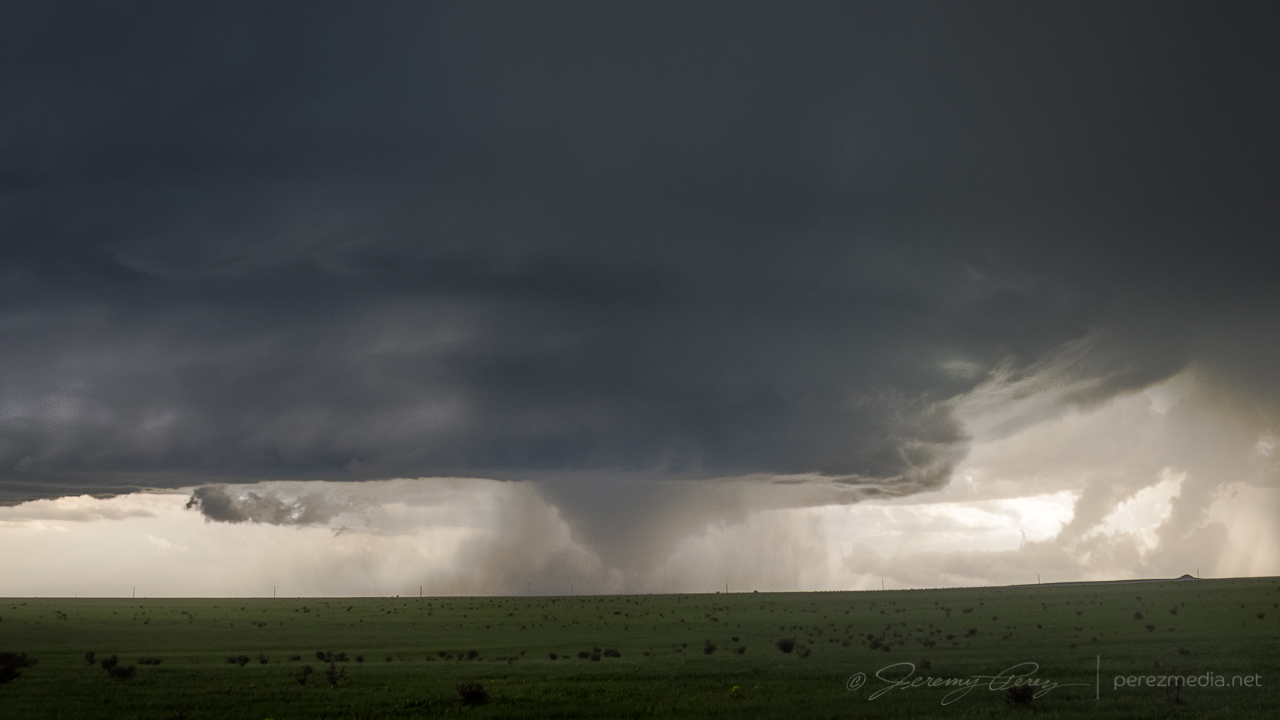
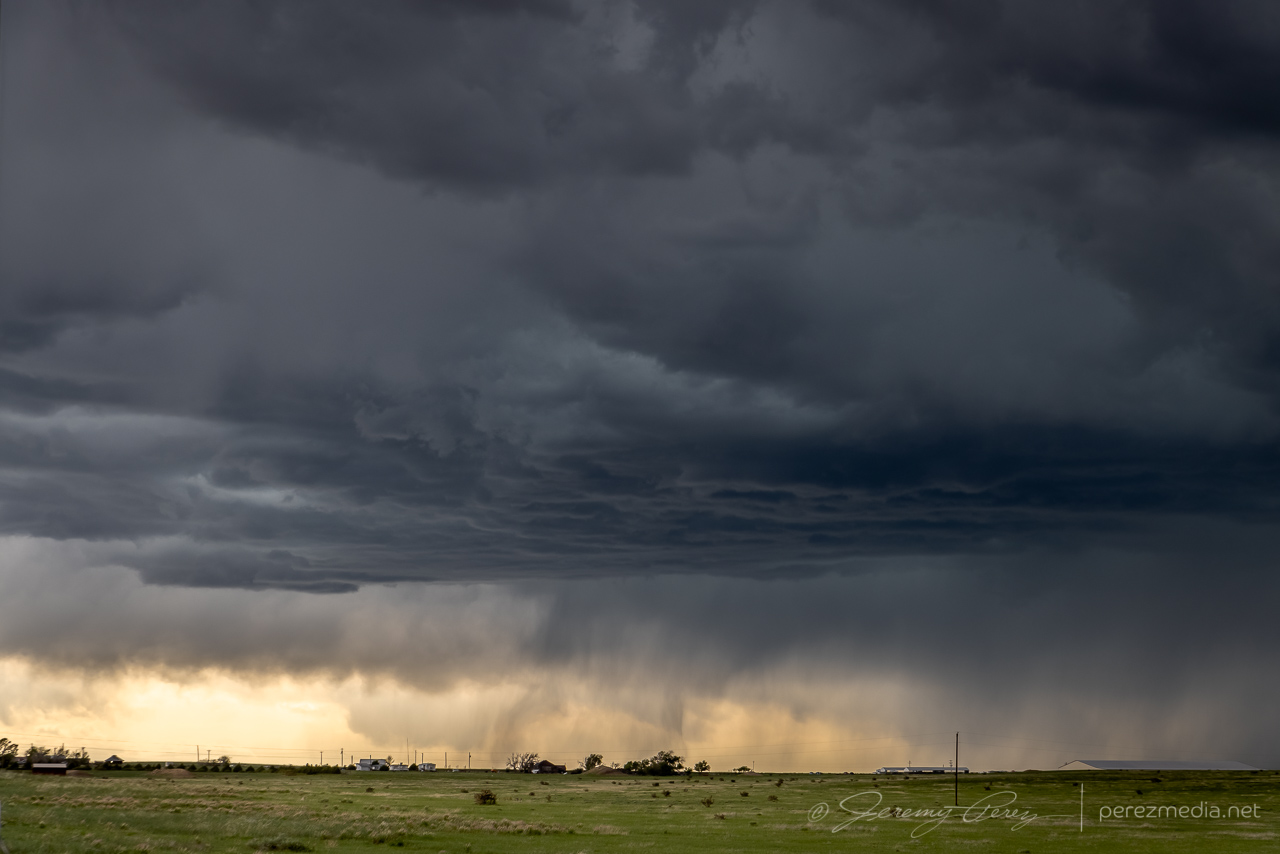
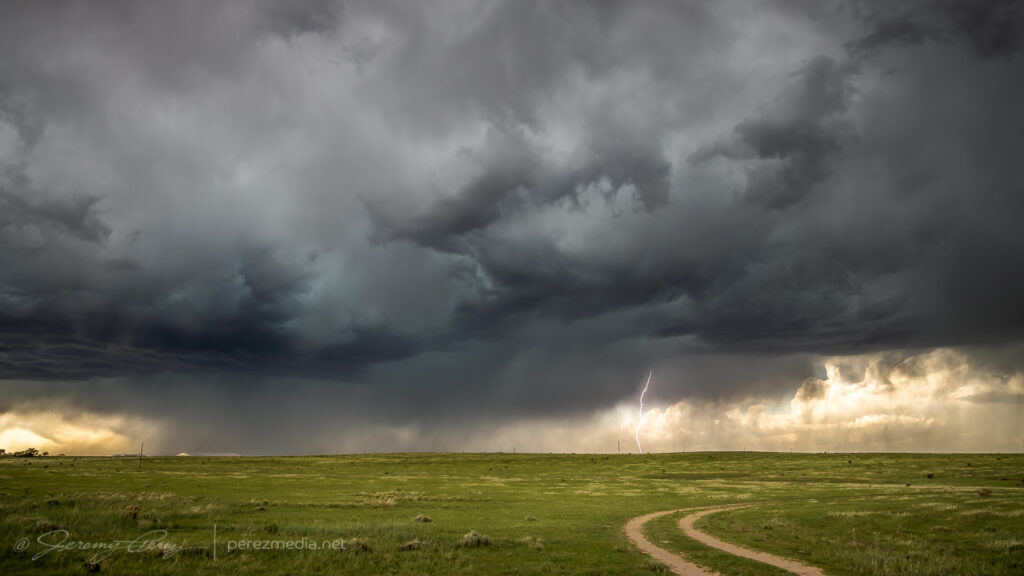
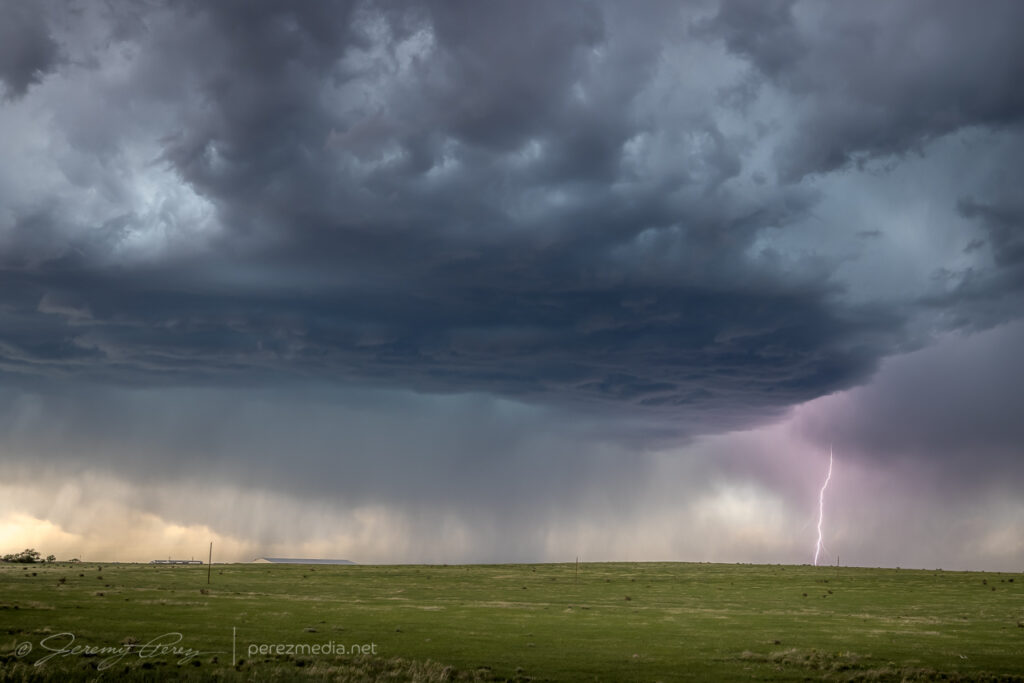
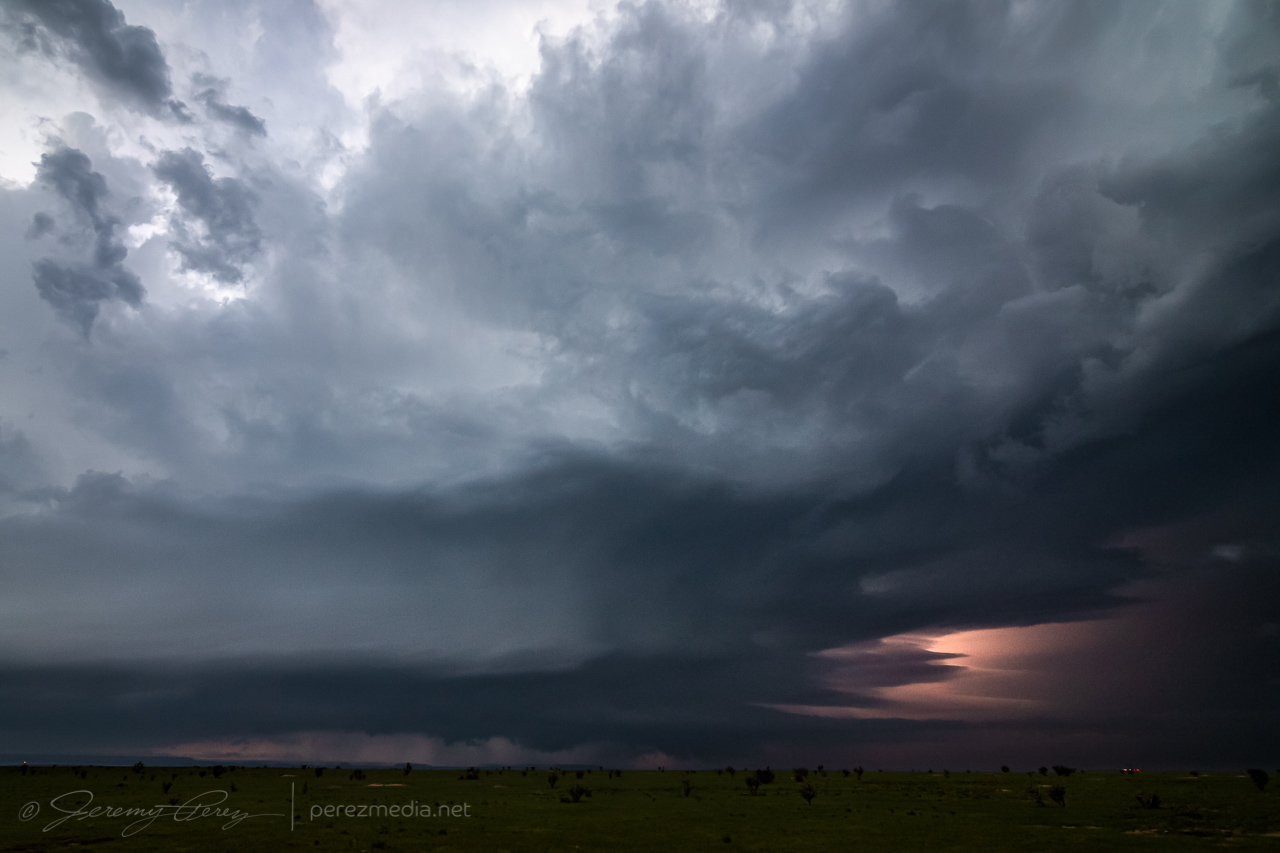
This was a day of bad forecast choices. I liked the enhanced H5 flow, shear and greater instability in the southeast corner of the state and we targeted Roswell and points south/southeast. Convection was firing by early afternoon up near Albuquerque and as 00Z approached, it sounded like fun times up there with social media indicating people bailing on the south option. I decided to hang with it though and we were rewarded with clear skies. Approaching sunset, we did get a short-lived attempt at an updraft and some lovely crepuscular rays near Artesia. But yeah, not really what I was after.
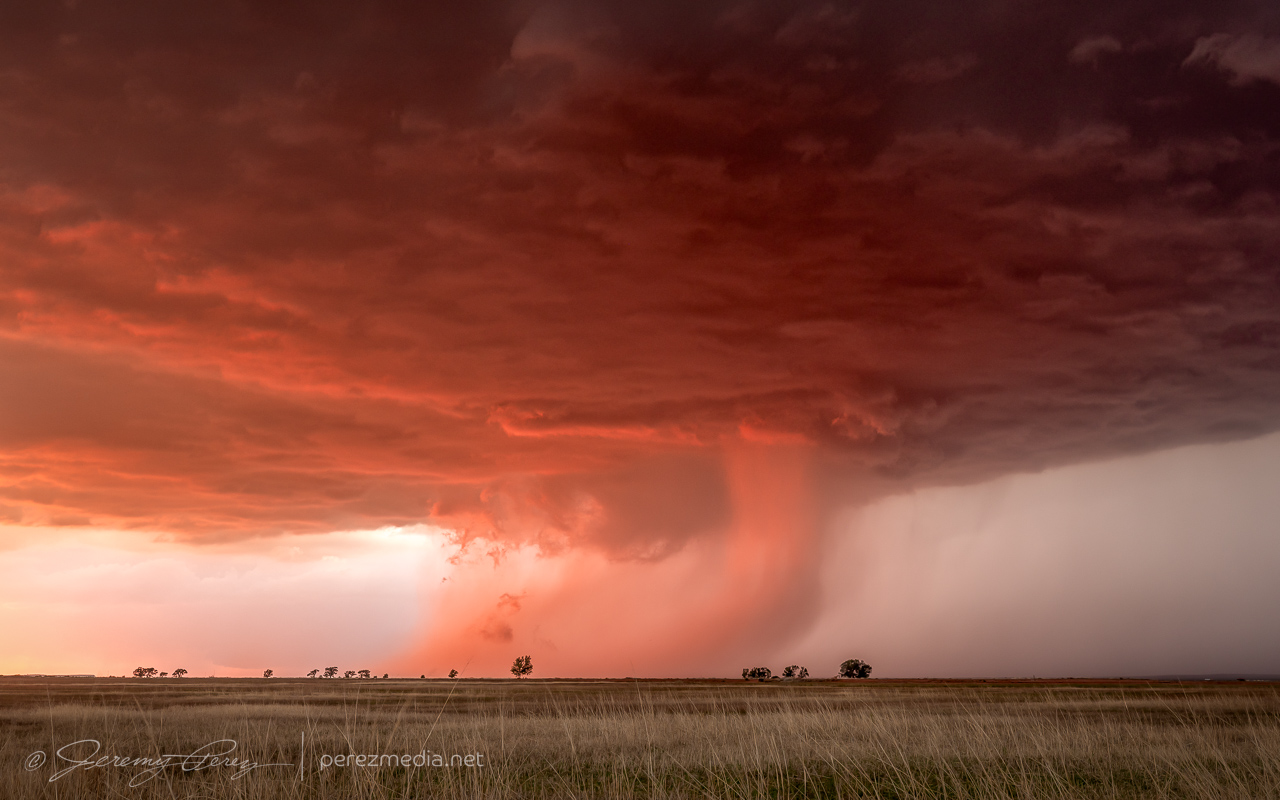
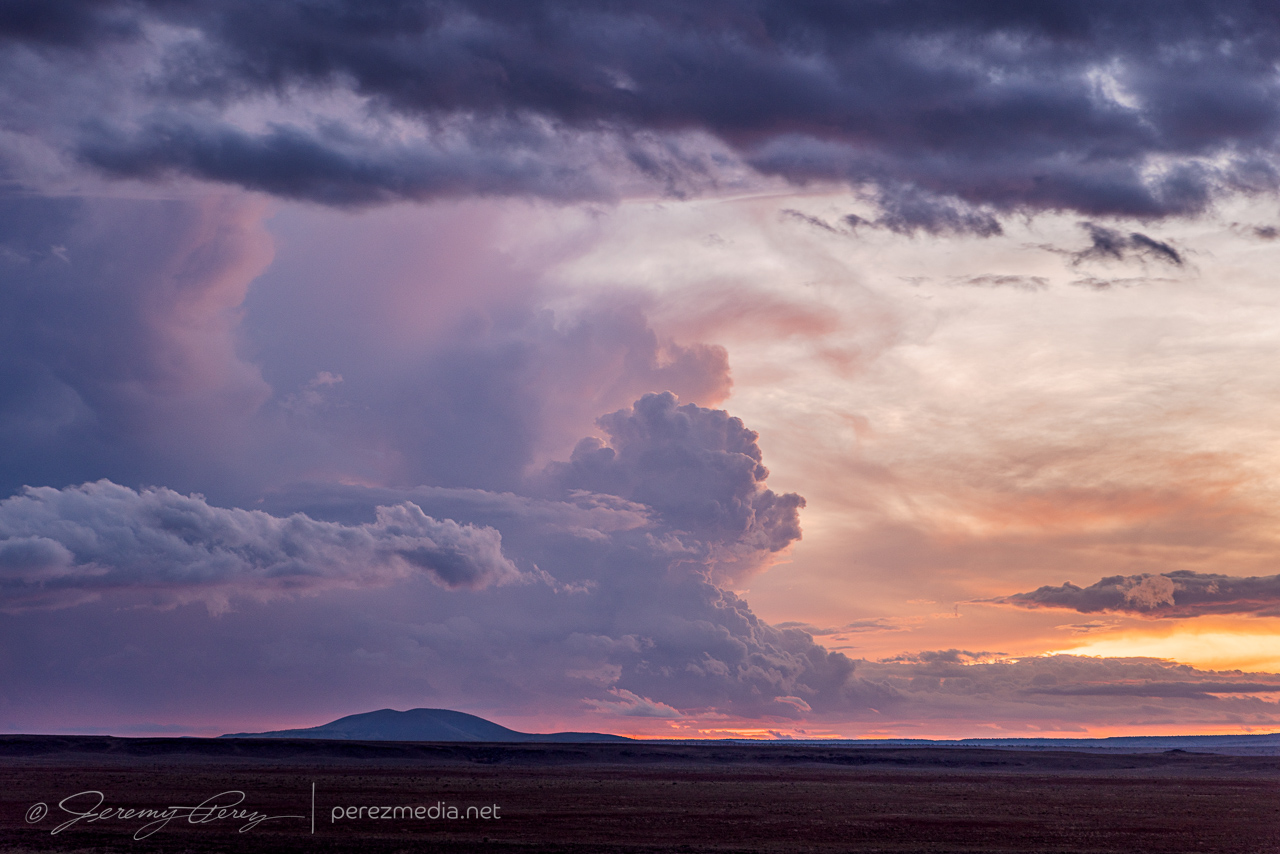
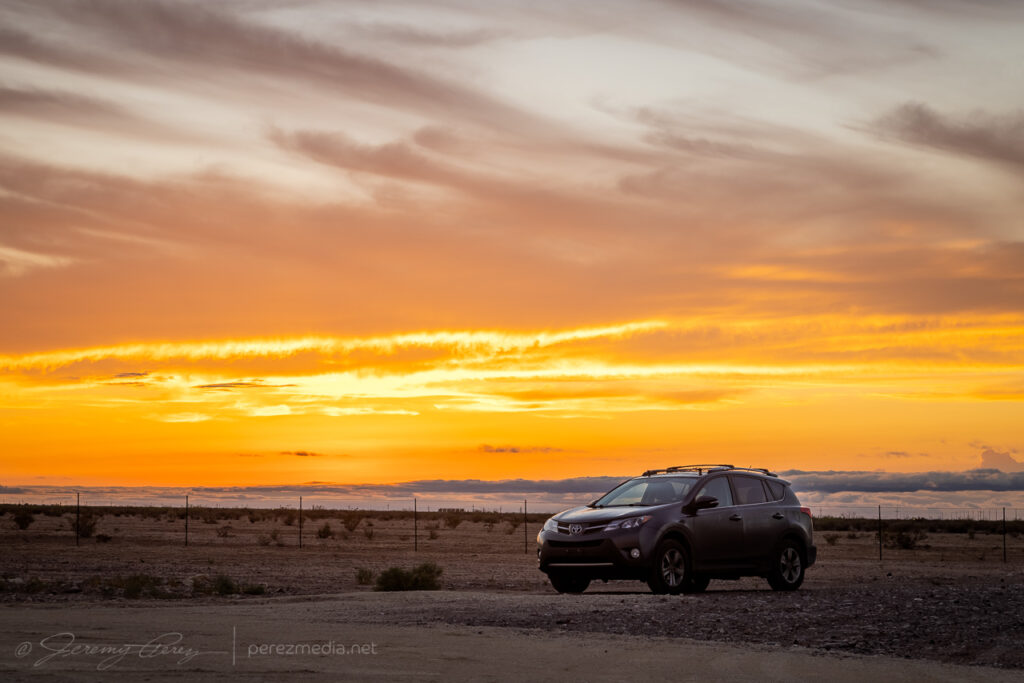
Crepuscular display west of Artesia. 0106Z
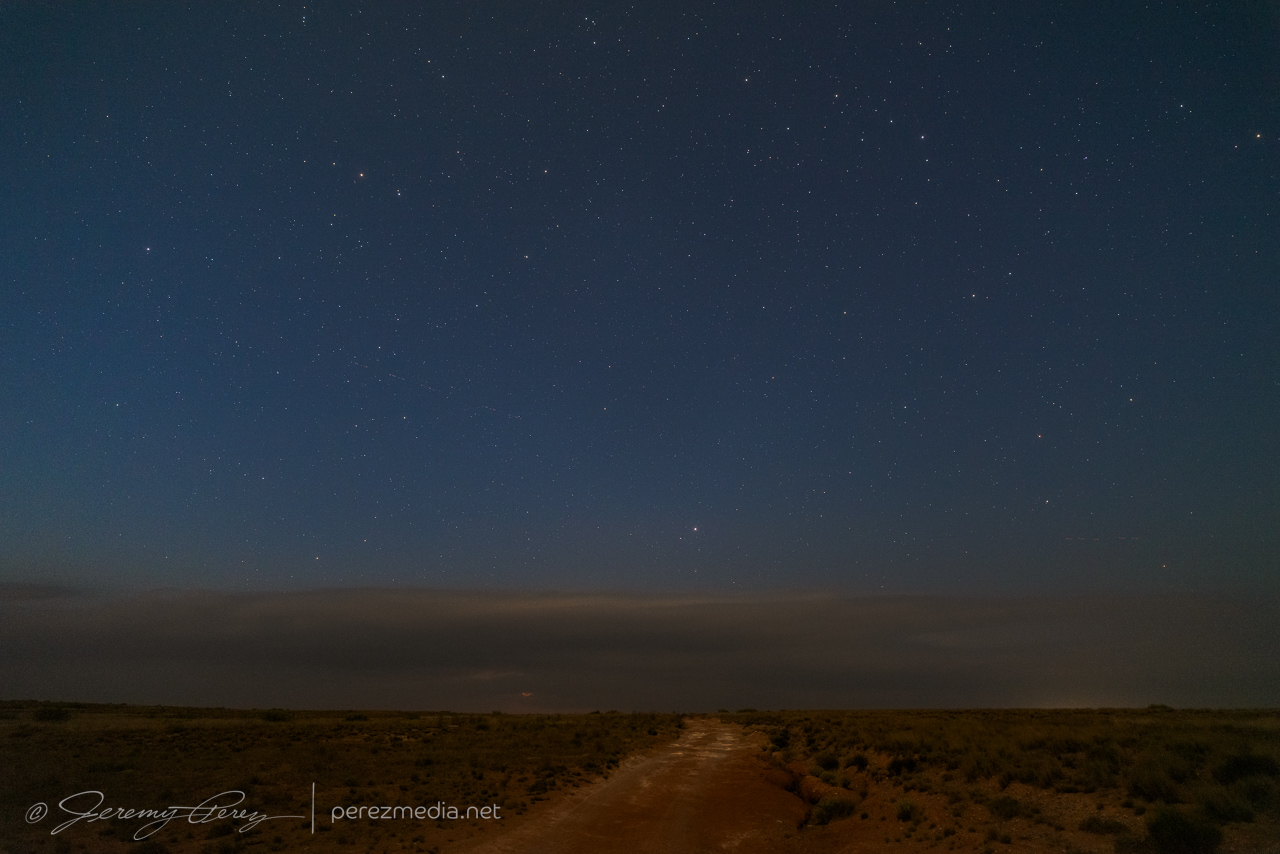
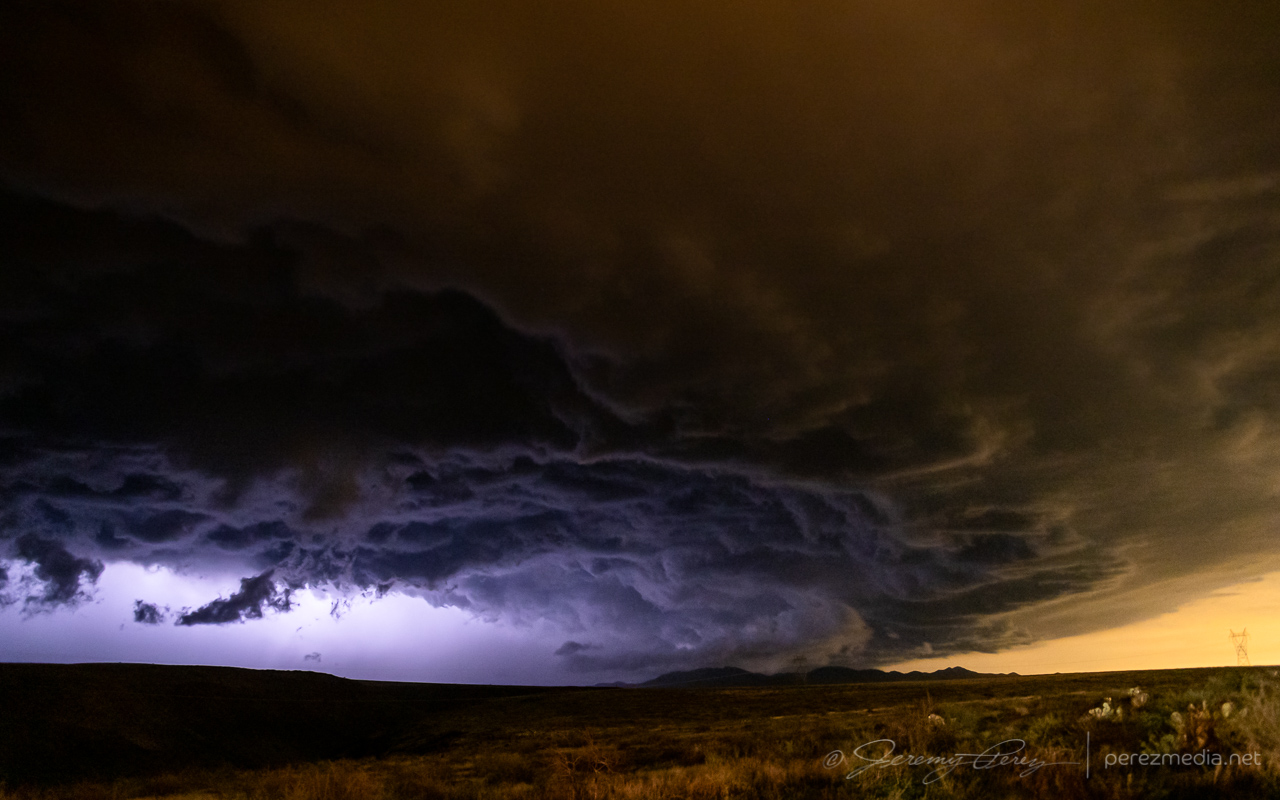
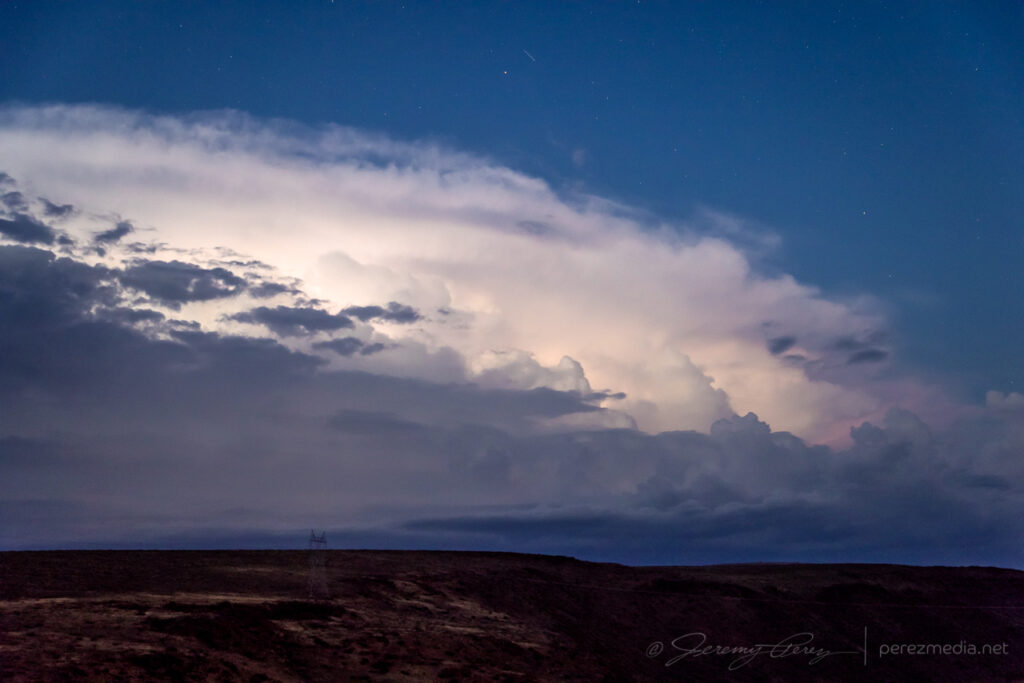
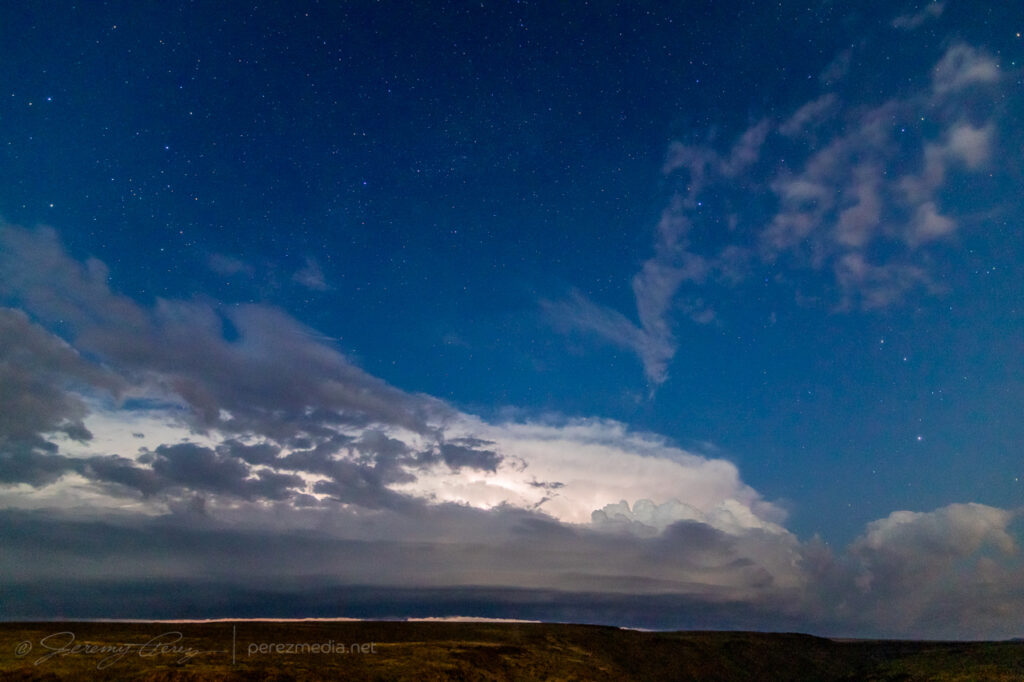
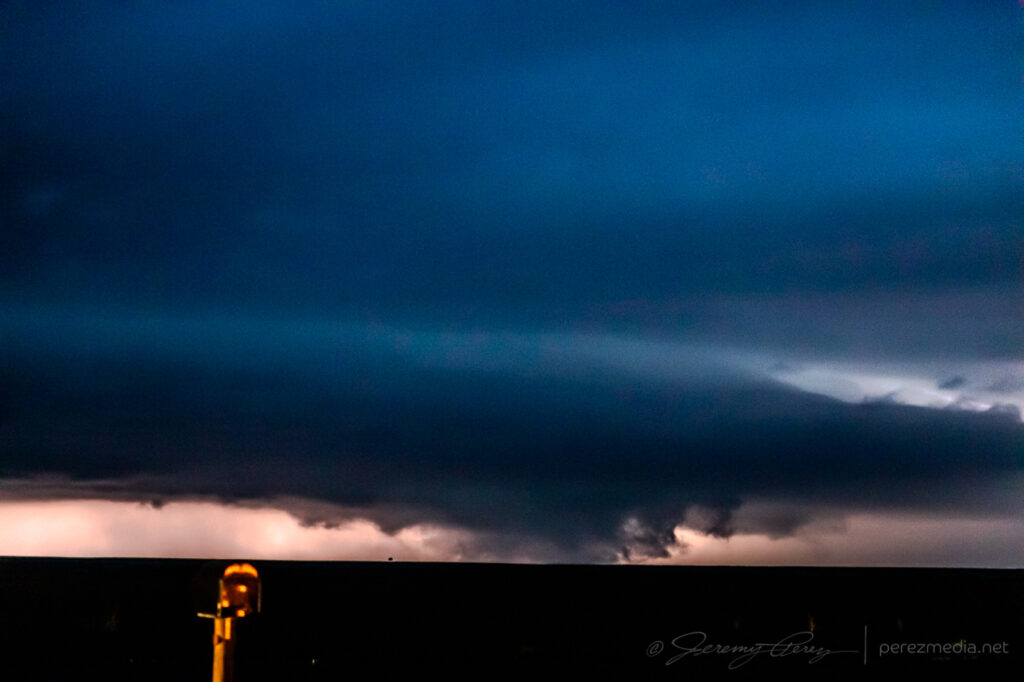
After sunset, we cruised north & east of Roswell and I tried for some sprite photography of a storm 60 or so miles away up near Elida. Bright moonlight made for bad contrast on a storm that probably wasn’t producing those anyway.
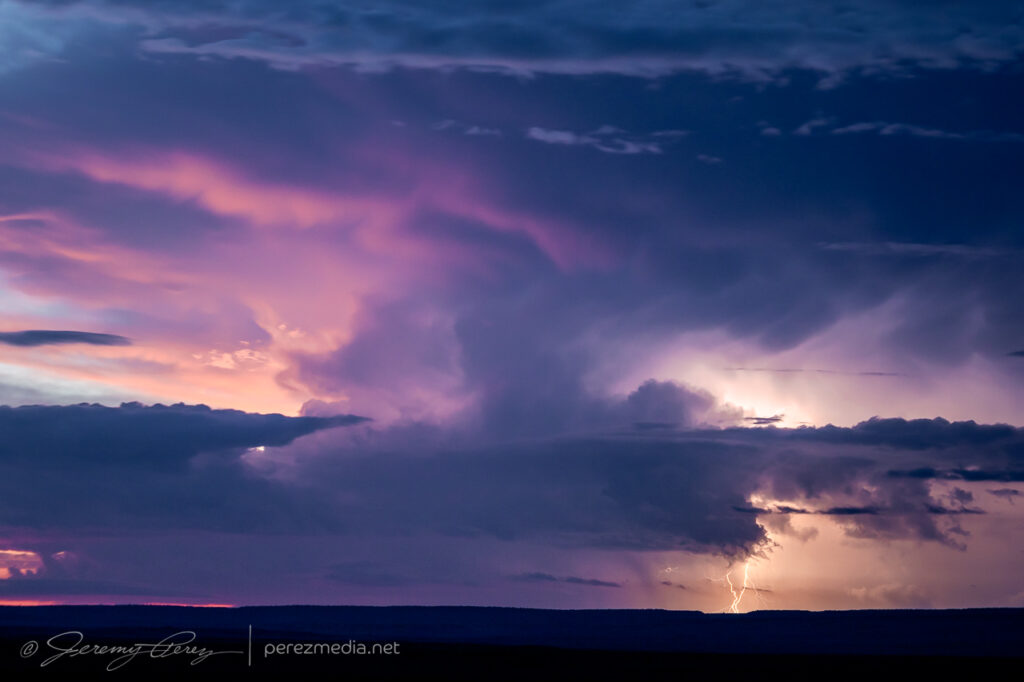
Looking northeast of Roswell, at essentially nothing in terms of sprite action. 0303Z
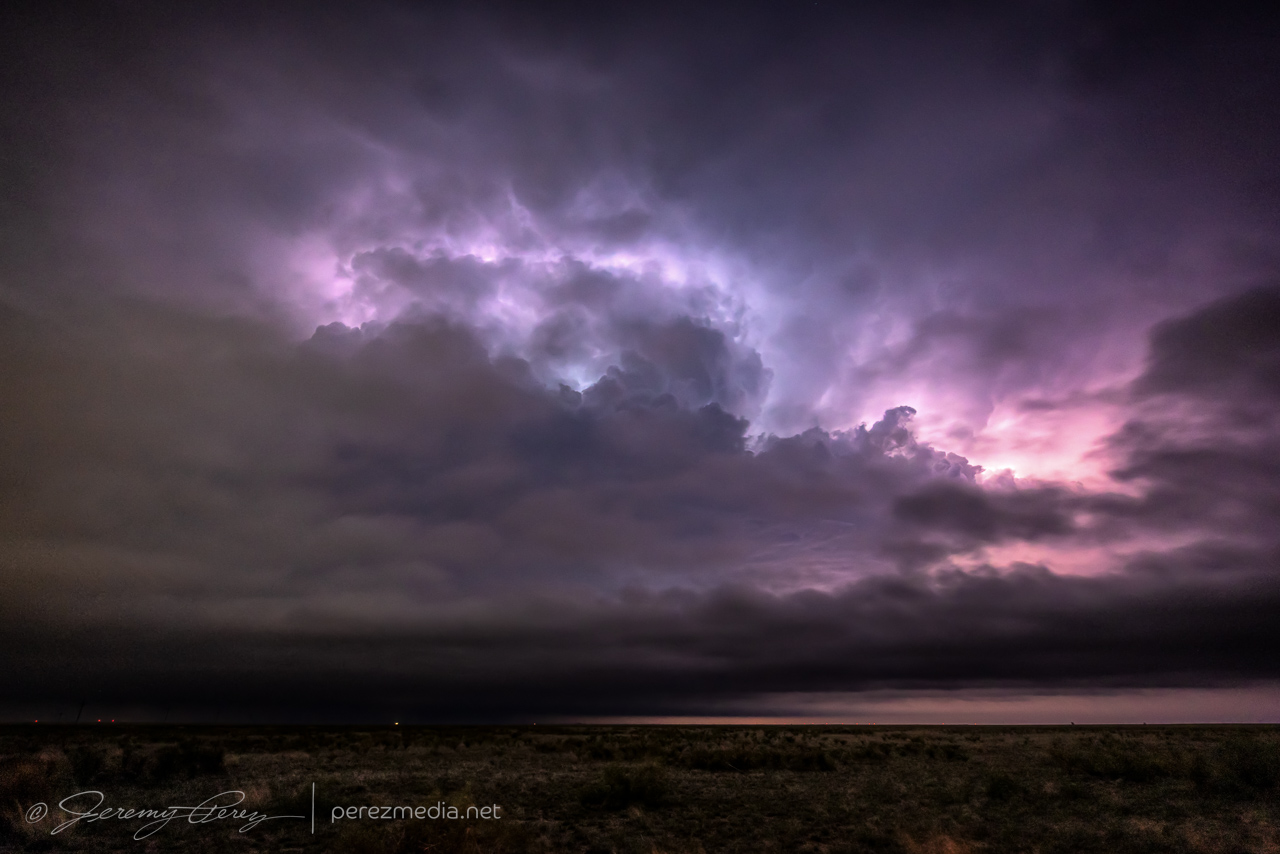
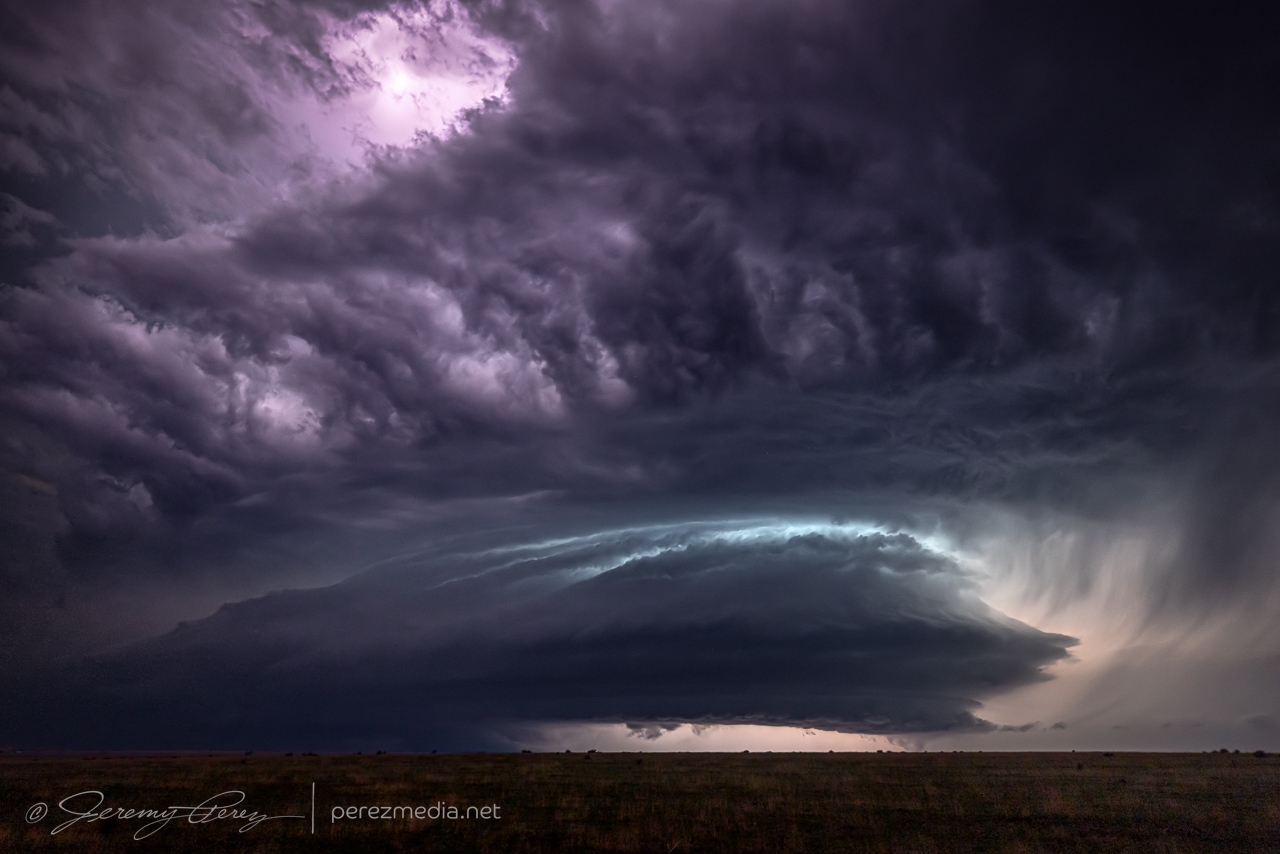
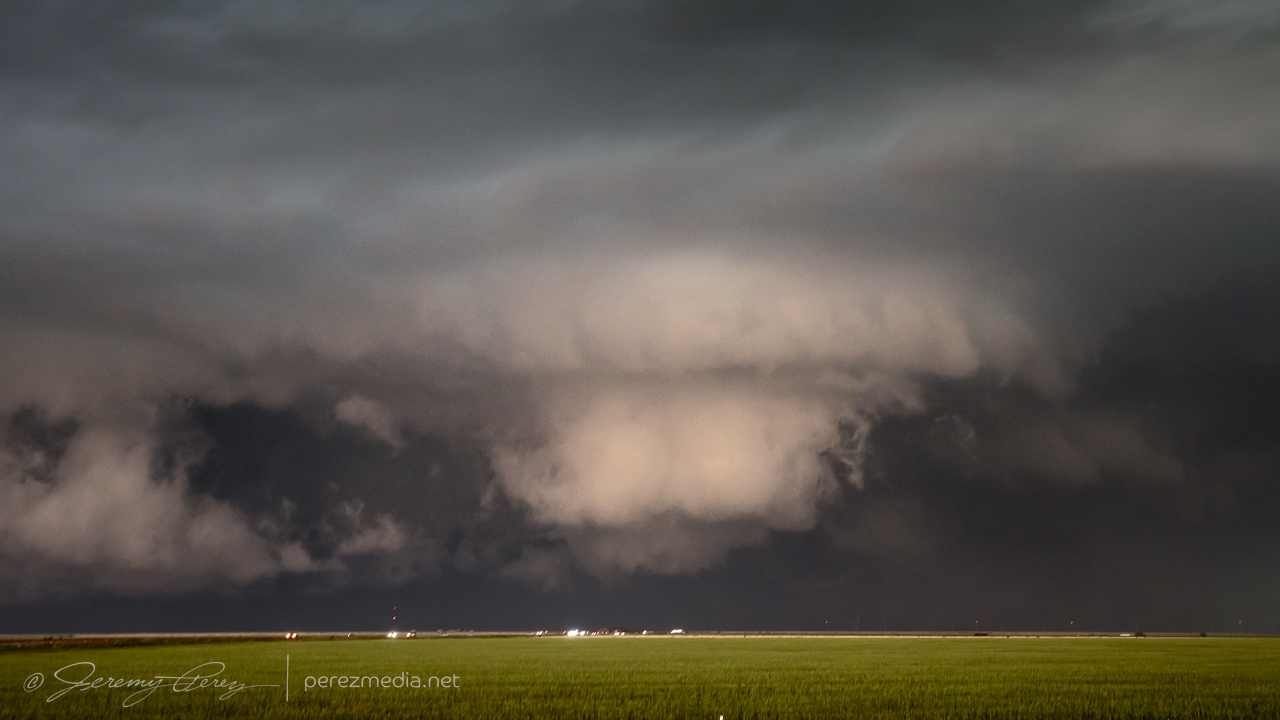
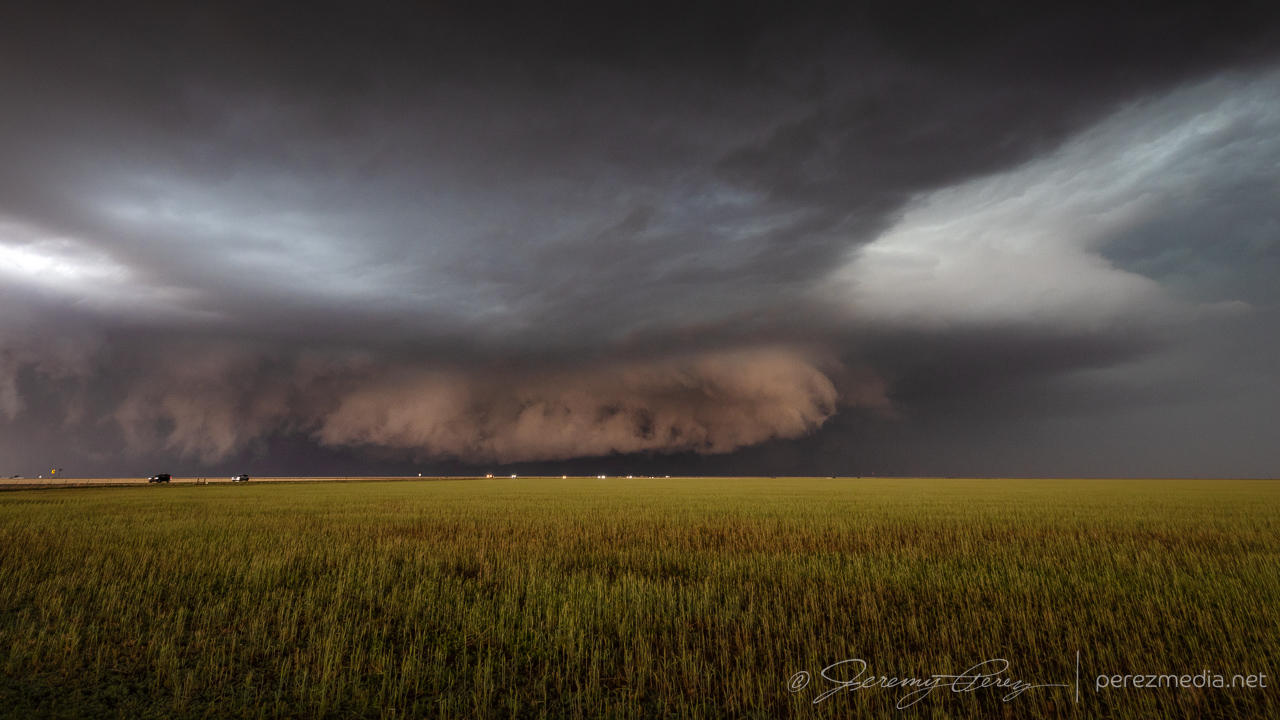
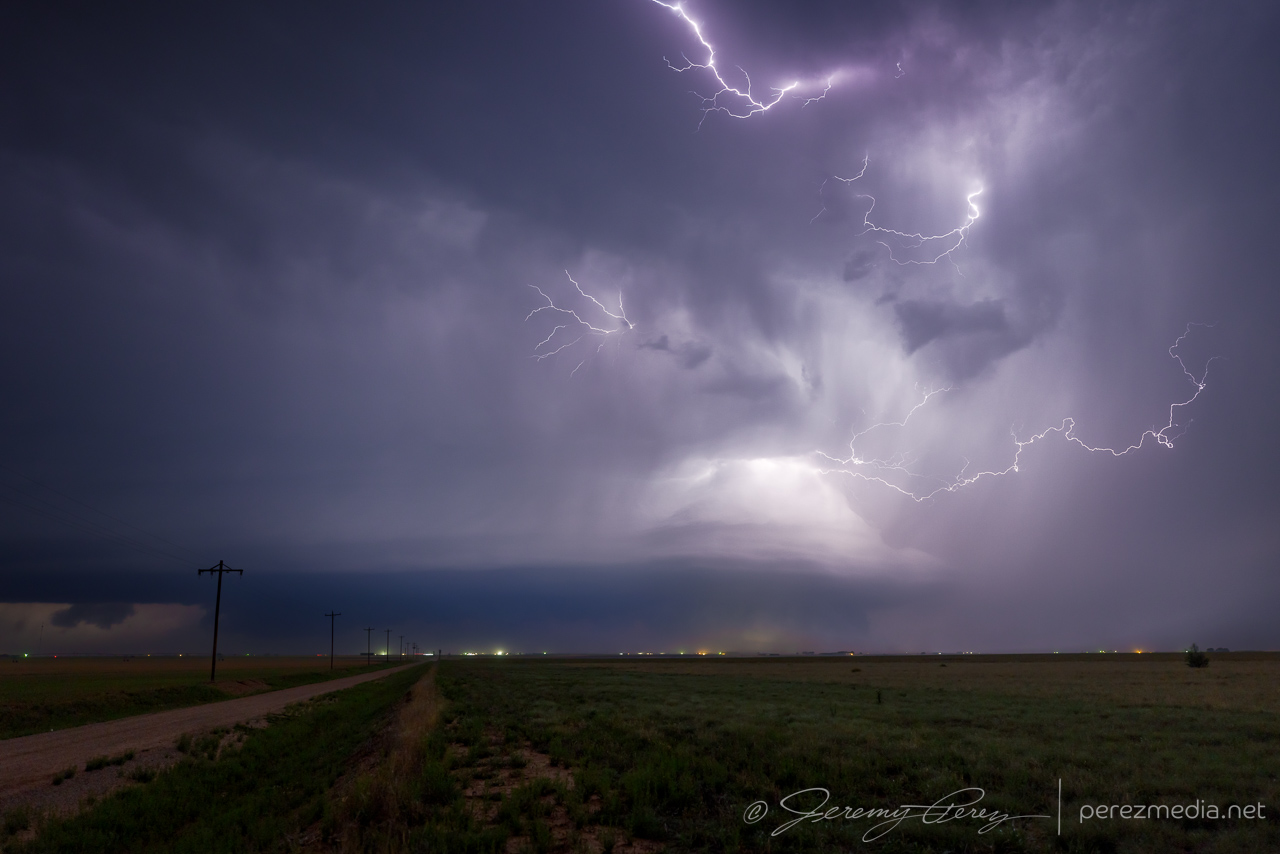
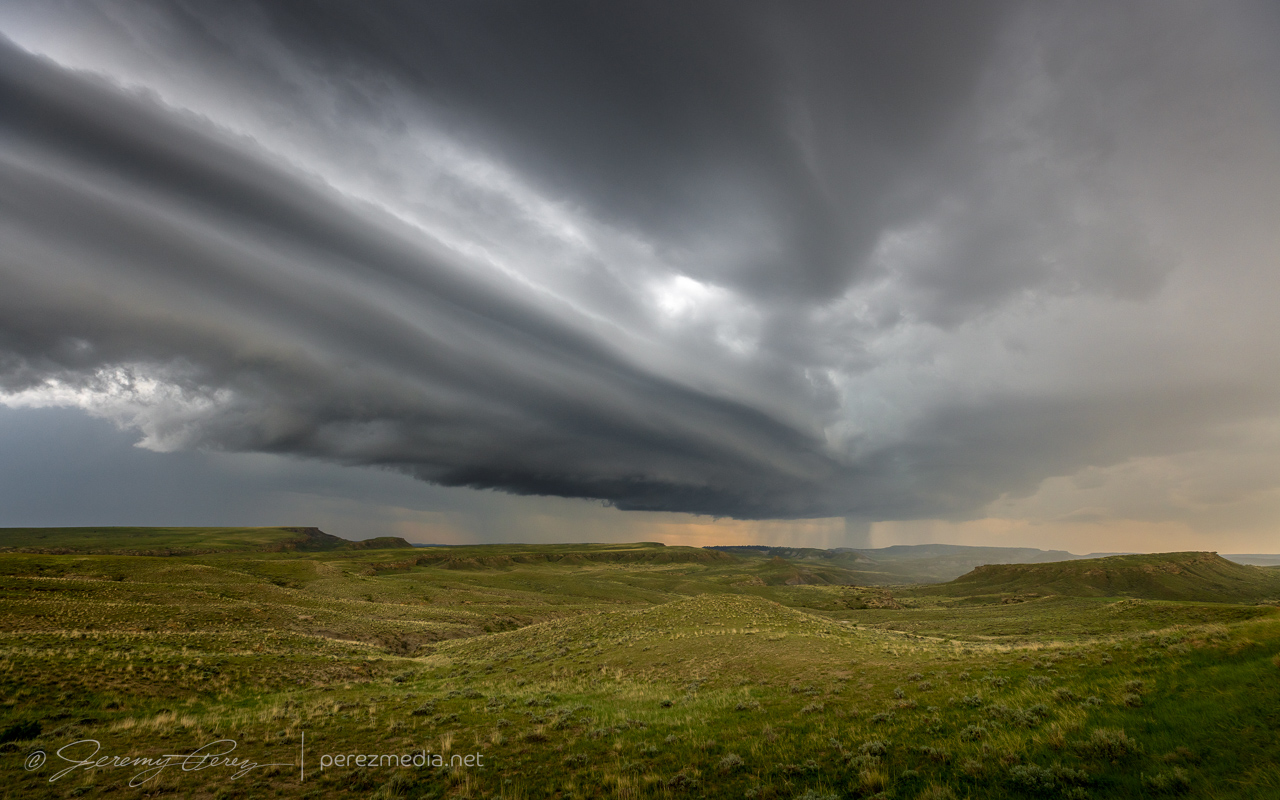
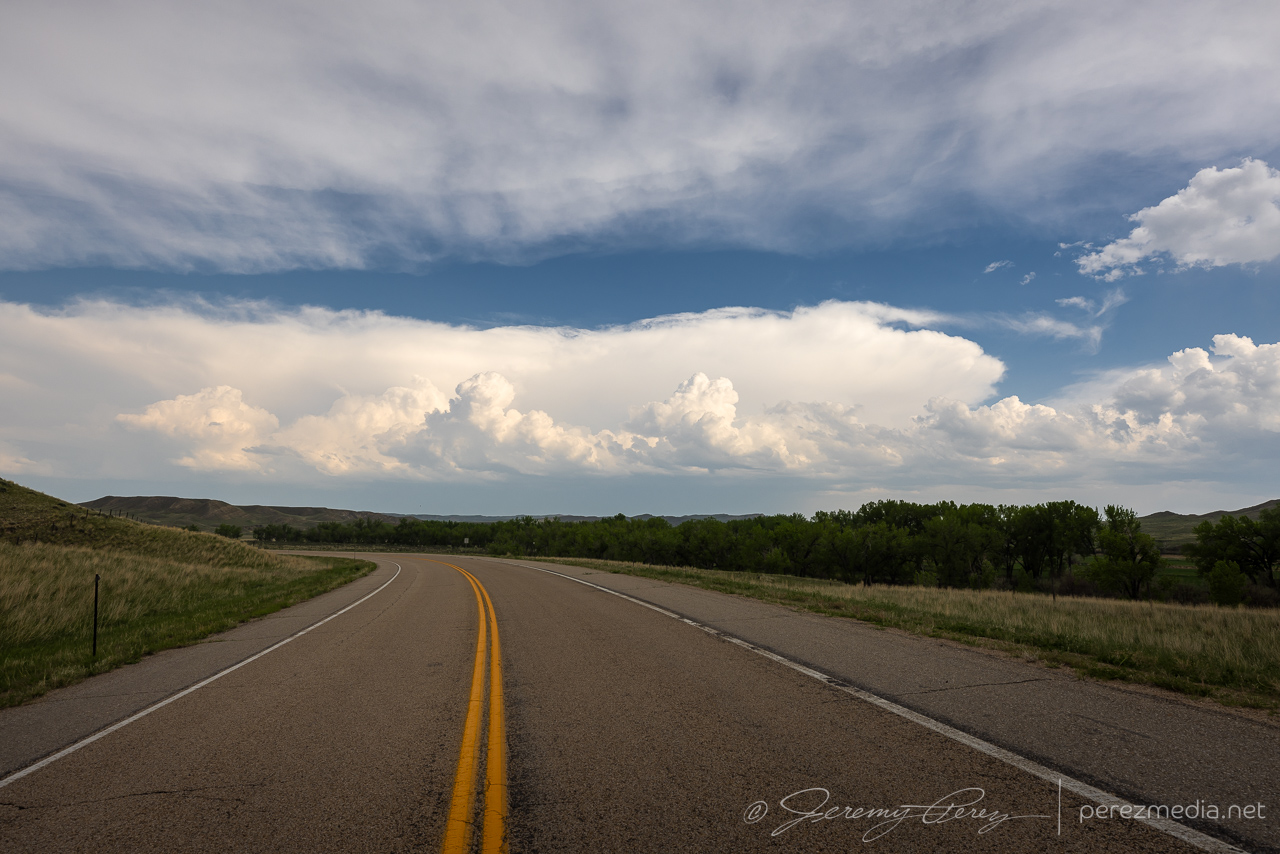
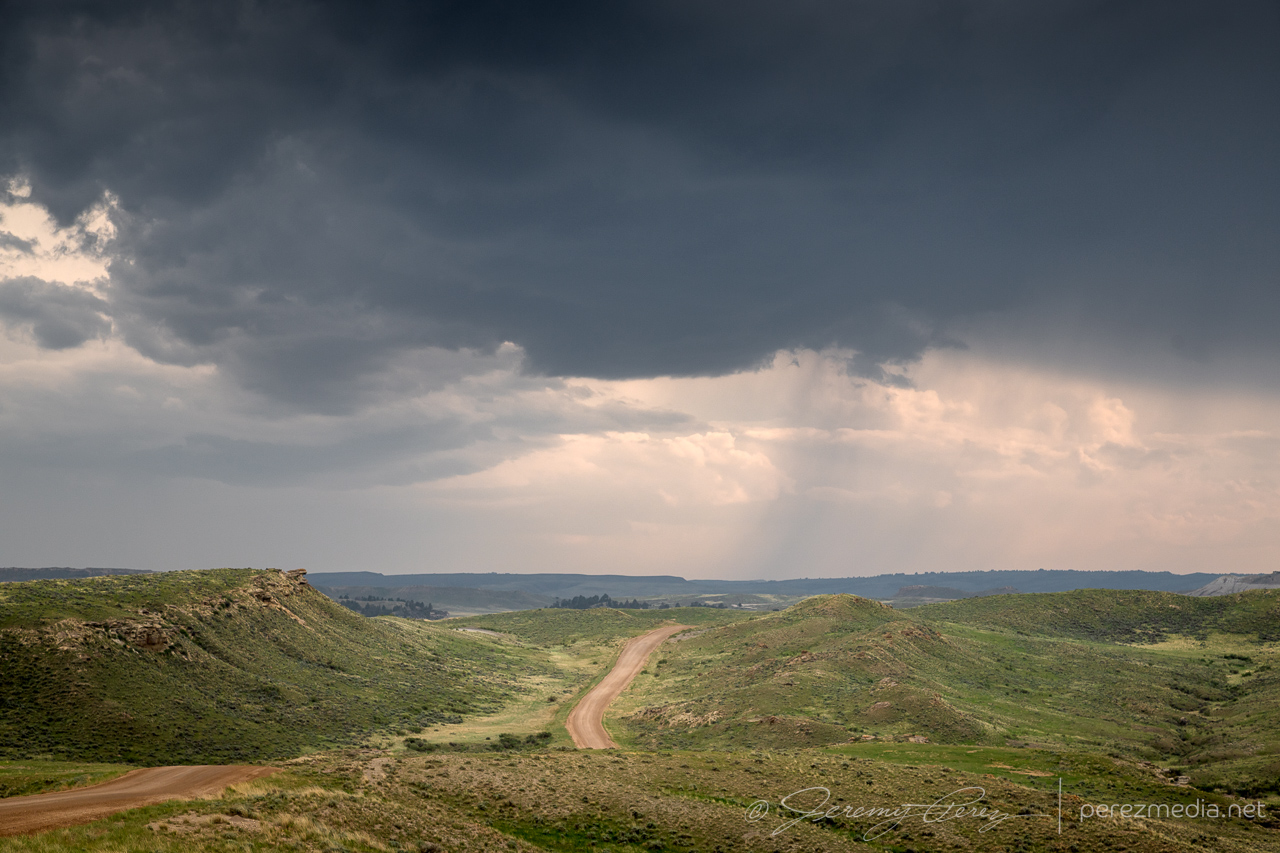
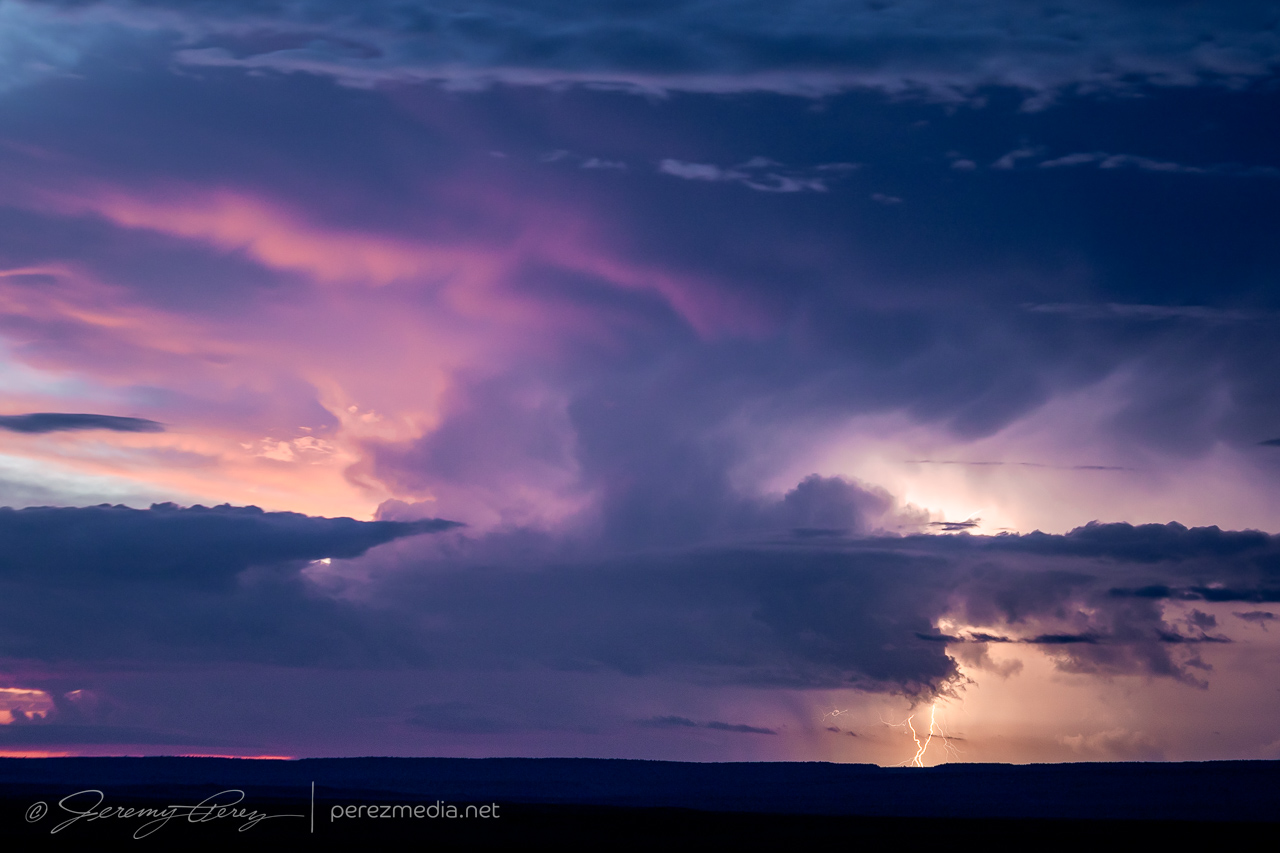
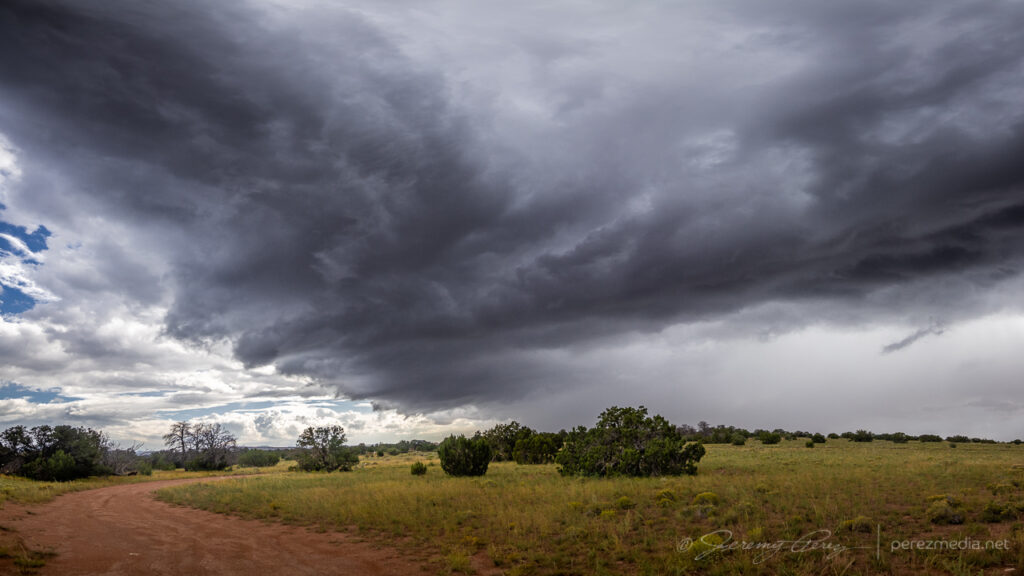
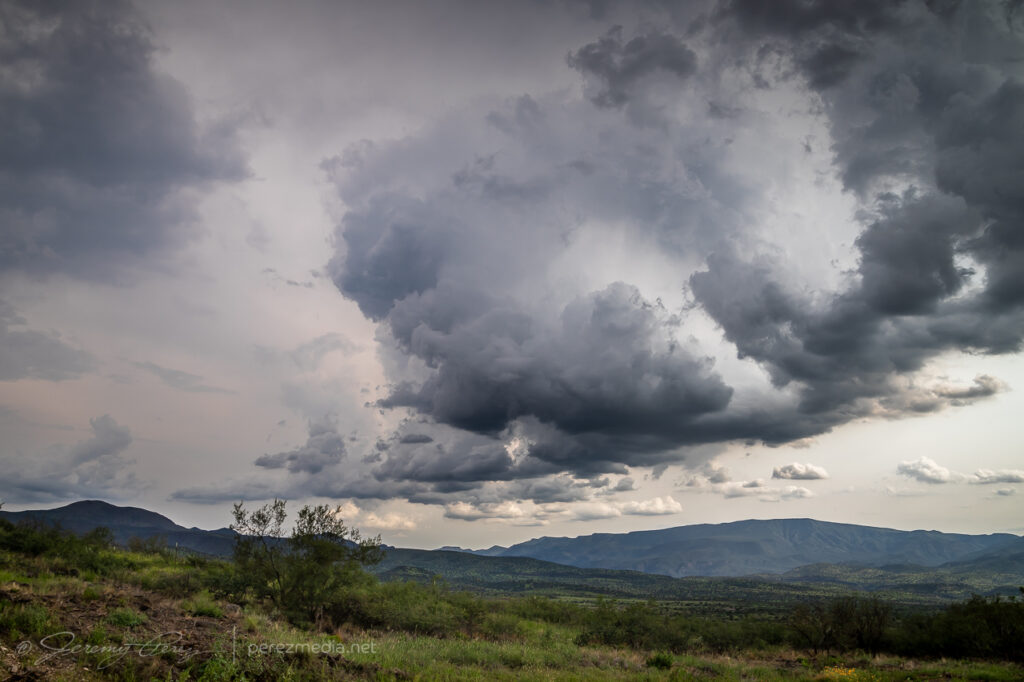
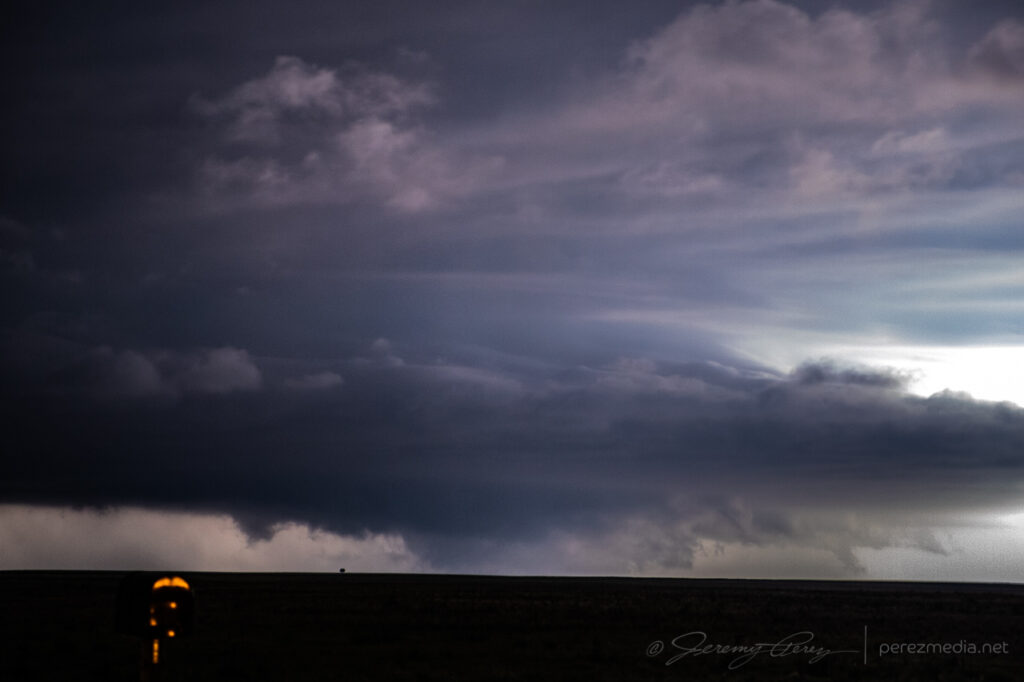
On the chance that cell would survive a while longer, we headed closer and had a look up west of Milnesand. Lots of low level clouds obscured any real structure and after getting a few shots, we called it a day and hoped for better on the 27th.
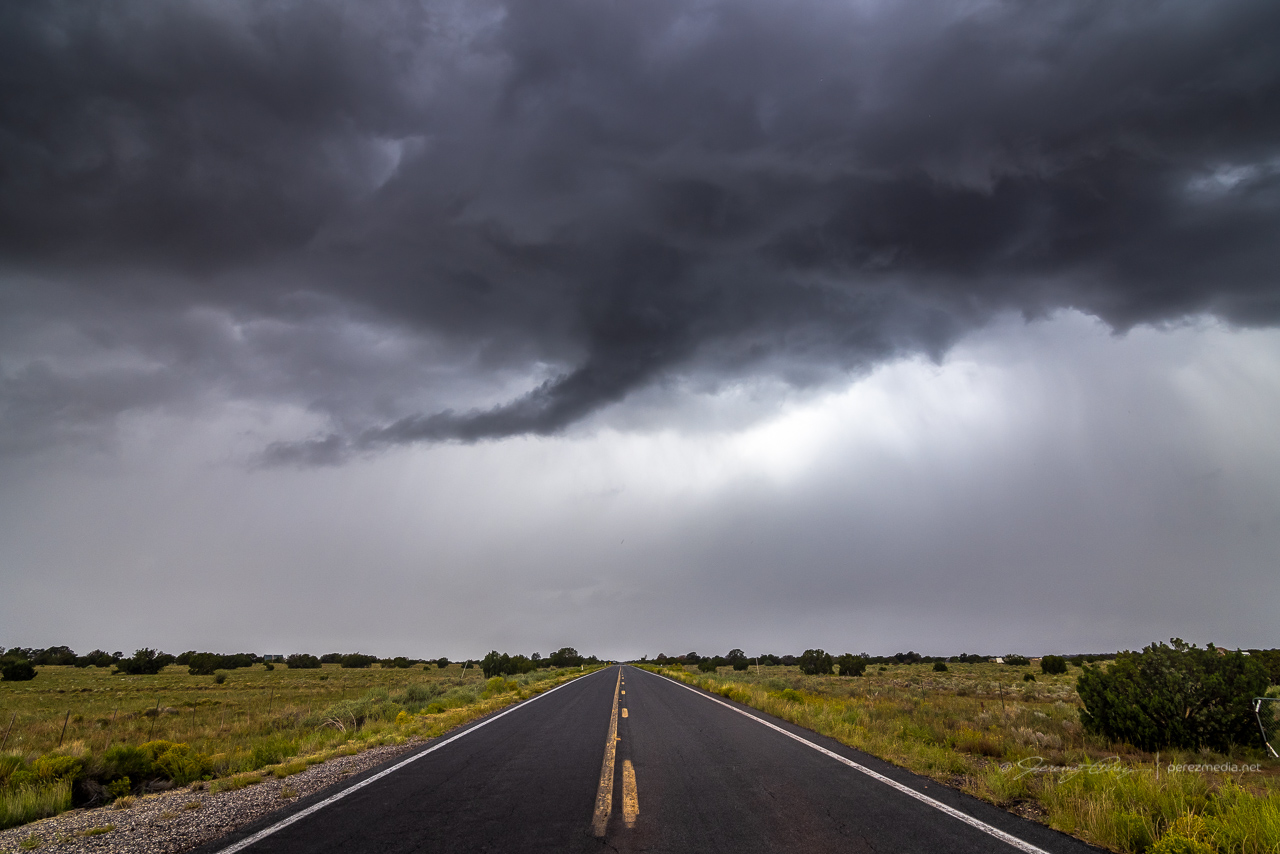
At least we did see a storm before midnight. Mostly obscured supercell NW of Milnesand. 0556Z
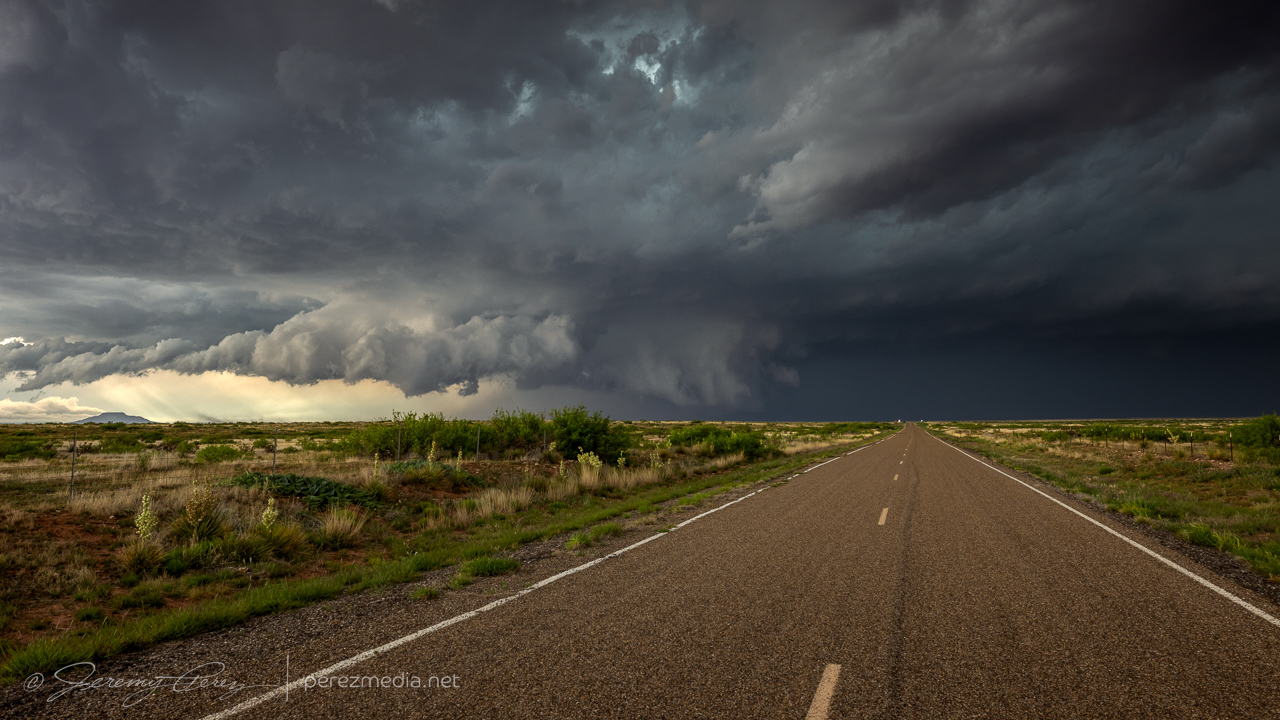
The setup this day was practically a targeting mirror of the day before. We set up again between Logan and Gallegos to watch convection develop on the mesas north of Tucumcari. This time, the developing convection to the west put on a better structure show early on than what we experienced the previous day.
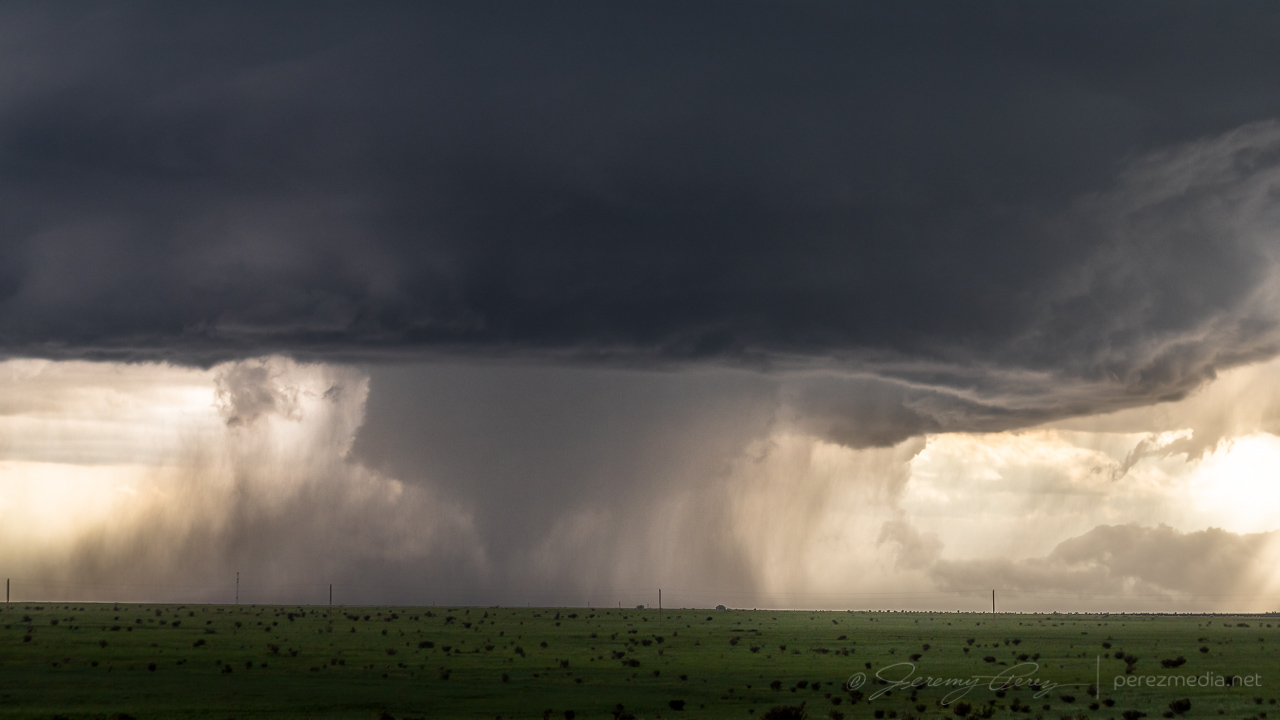
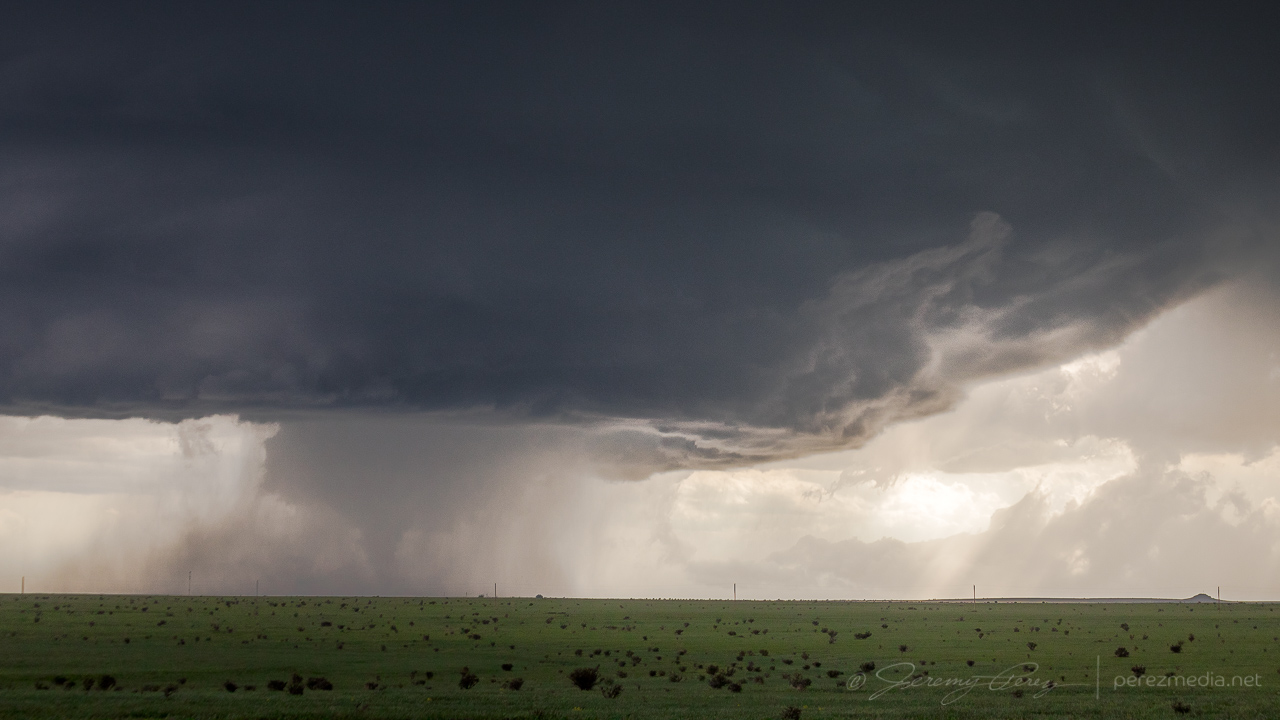
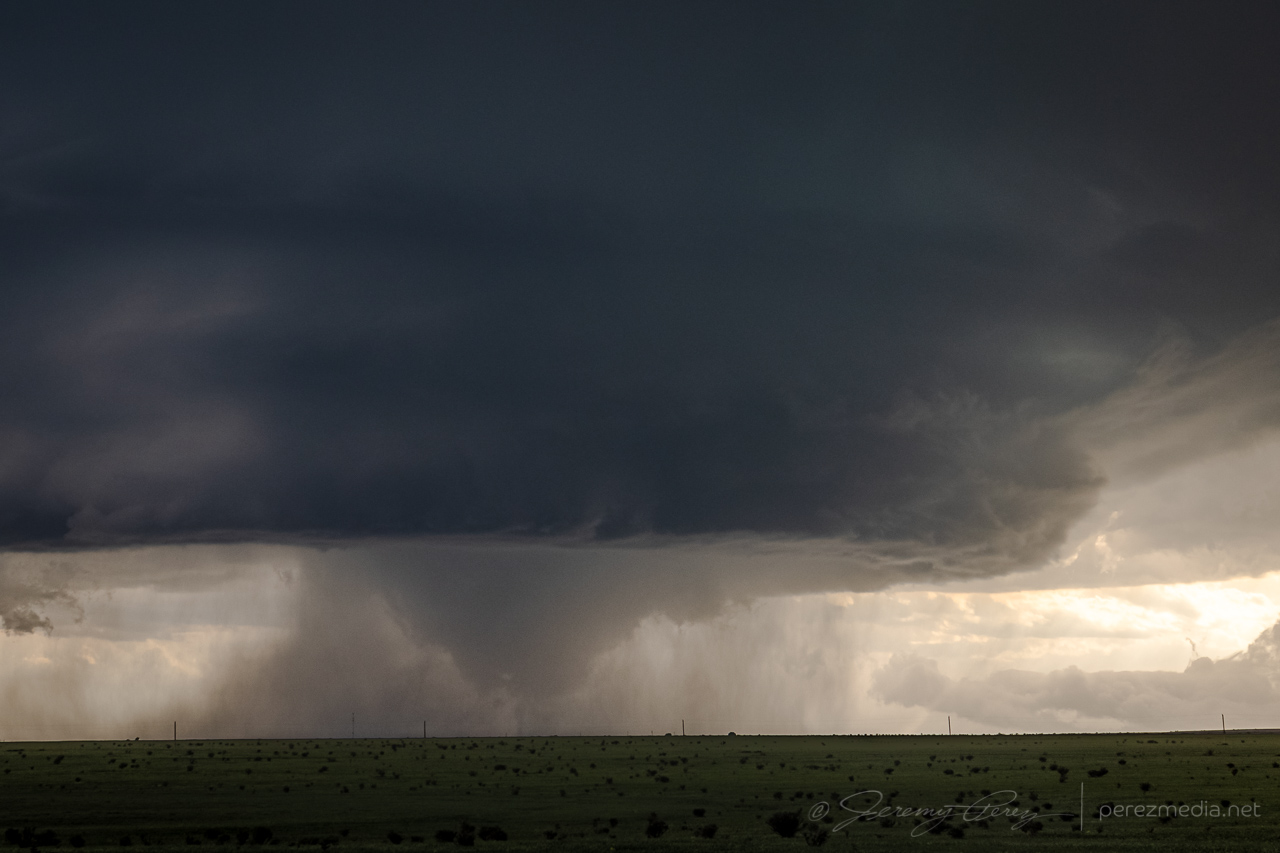
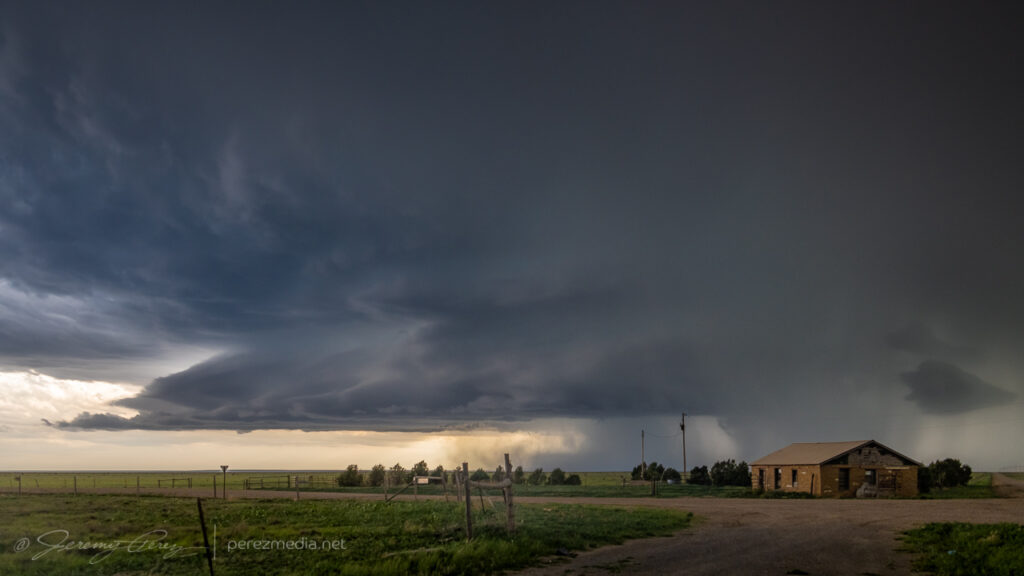
Initial cell northwest of Logan. 0022Z & 0040ZMicroburst dropping. 0045ZAnvil lightning. 0050ZConsolidating updraft base and arcus on recently birthed right split. 0101ZLast view of our right split cell before abandoning it for the newer cell further southwest. 0104Z
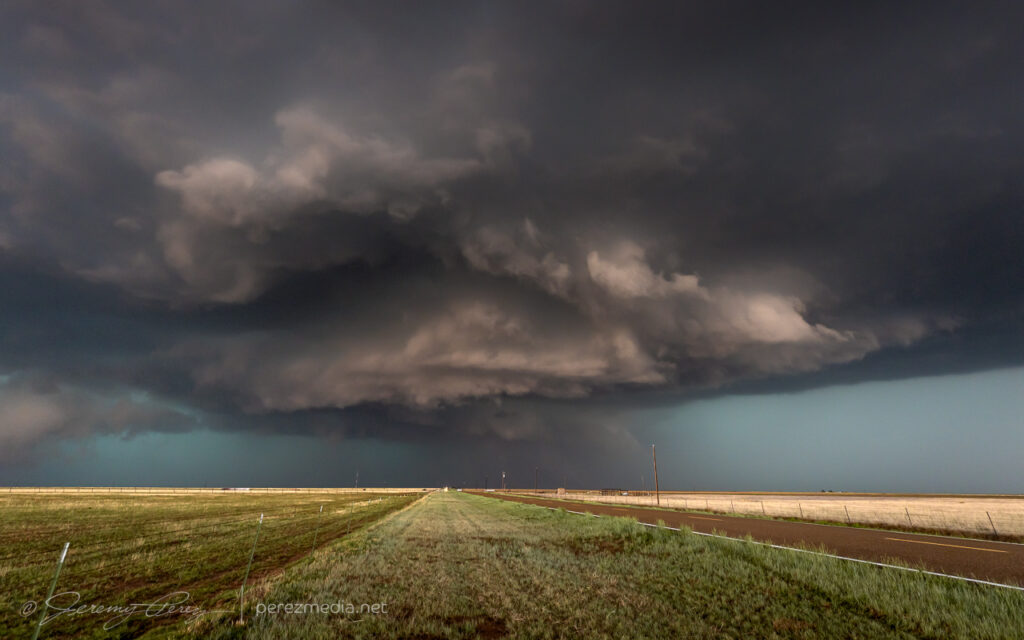
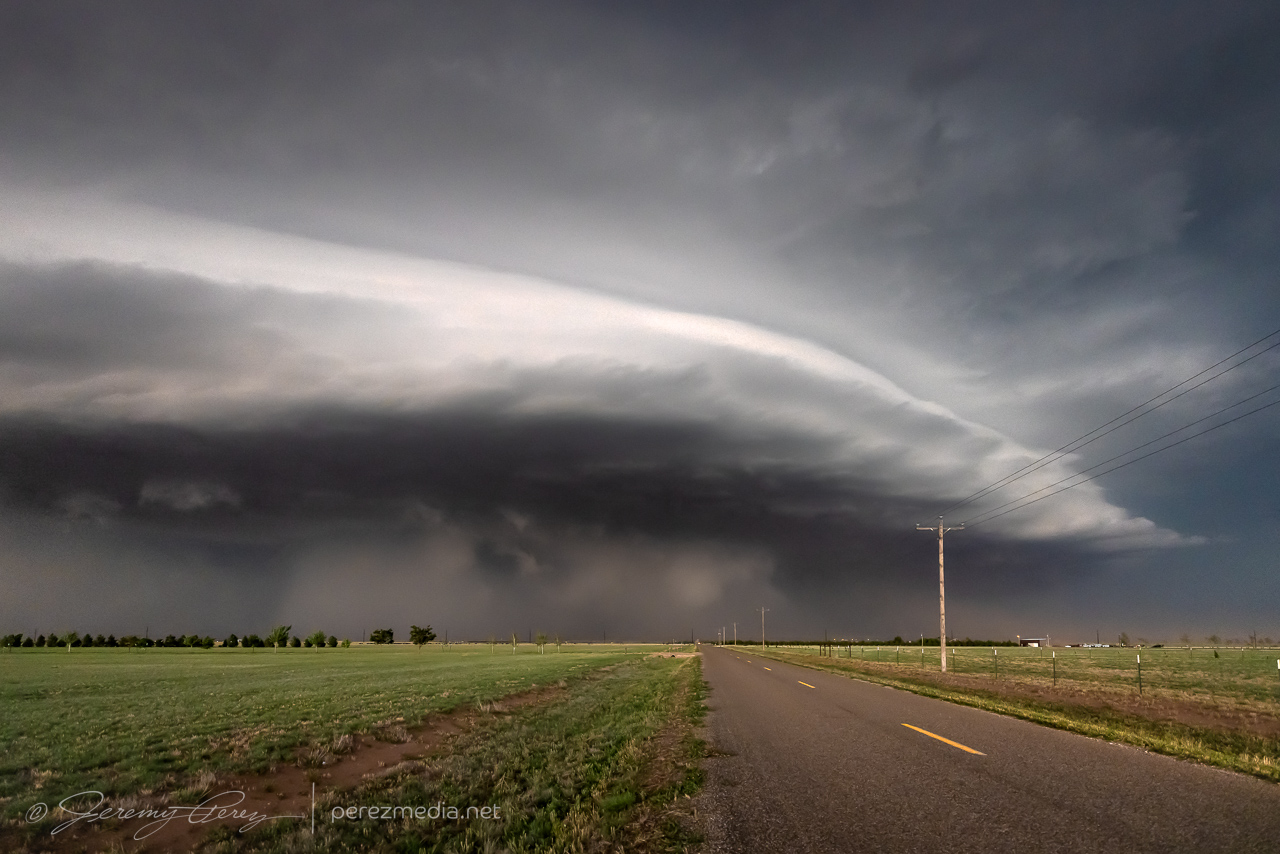
As our storm went through a split, another one, right on the north edge of Tucumcari started building. This was where I was expecting to move with time, so we left our north option and headed south. We had to cut through the developing forward flank on the new cell to get south. I hoped we were early enough to avoid large hail, but figured it was worth the windshield risk. We had maybe quarters at max on the way through and emerged on the other side to a fantastically sculpted, round base. I was beside myself, excited by how perfect it was. And the sun was getting ready to dip down and light it up. I wanted to get a great foreground to compliment it, but time was of the essence and the main priorities had to be No Power Lines™ followed by minimal trashiness. We ran across some decent fields that fit the need.
First view of the sculpted base after clearing the forward flank on the north side of I-40. 0137Z A couple miles further south and slightly better field with RFD getting focused. 0145Z
As the sun dipped below the clouds, it threw beautiful, warm light across a tongue of RFD cutting through the base. After shooting a load of images to grab HDR and panorama options, we repositioned a bit southeast to keep ahead of its slow drift. The base started to elongate as the light softened while RFD and scud painted fanciful forms with the trees and shrubs.
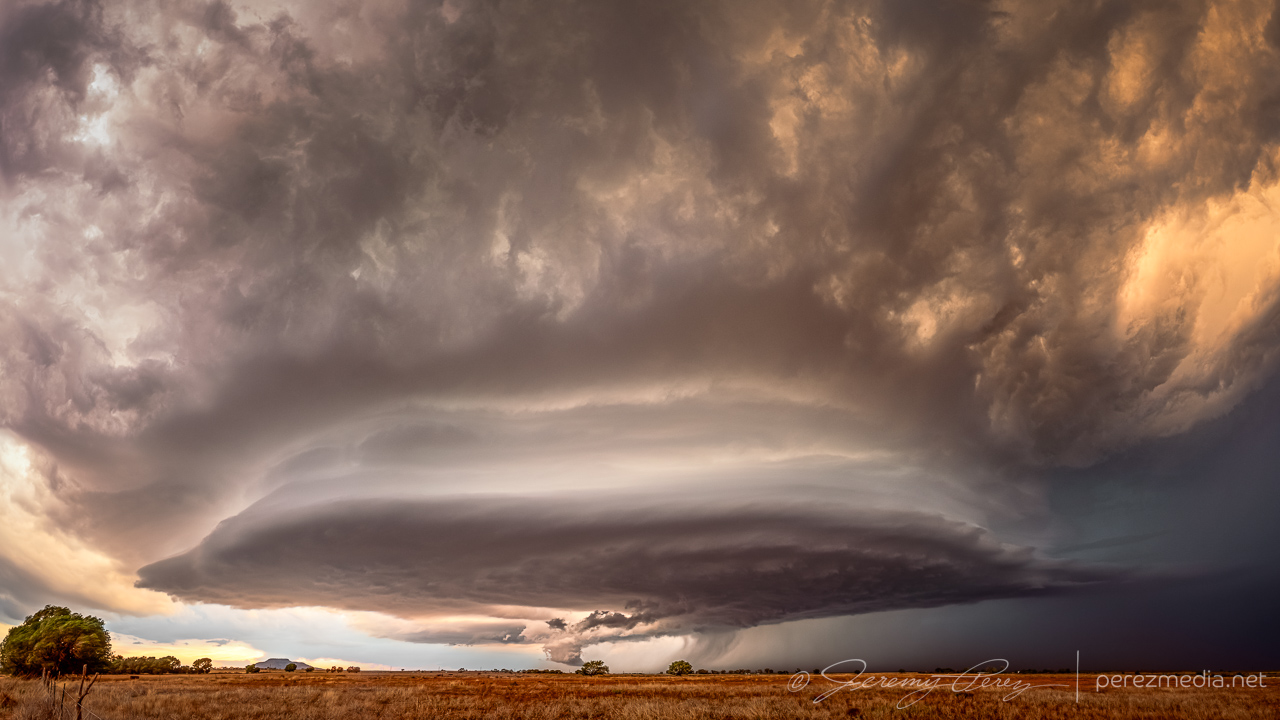
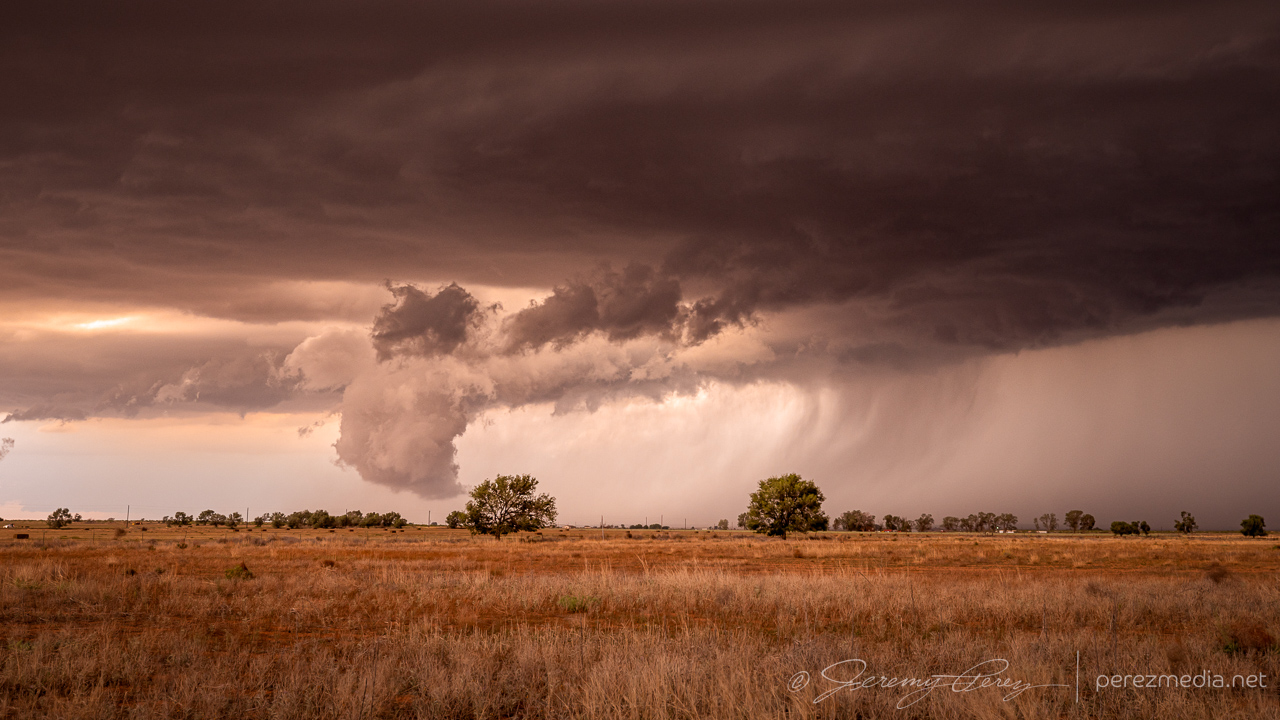
Tongue of RFD lit by the setting sun. 0155ZPanorama mosaic of the underlit base. 0156ZBase elongating and color softening after sunset. 0203ZPrecip and emaciated wall cloud lowering lined up with the trees like calipers. 0204Z
As blue hour deepened, the lightning and color kept throwing out new, stunning views. We made another trip through Apache Canyon after full dark. I tried setting up for shots at the top of the canyon but quickly realized the ongoing traffic and headlights weren’t going to work.
Blue hour lightning further southeast on Rt. 278. 0243ZBlue hour structure and later view from the Caprock southeast of Apache Canyon. 0252Z & 0314Z
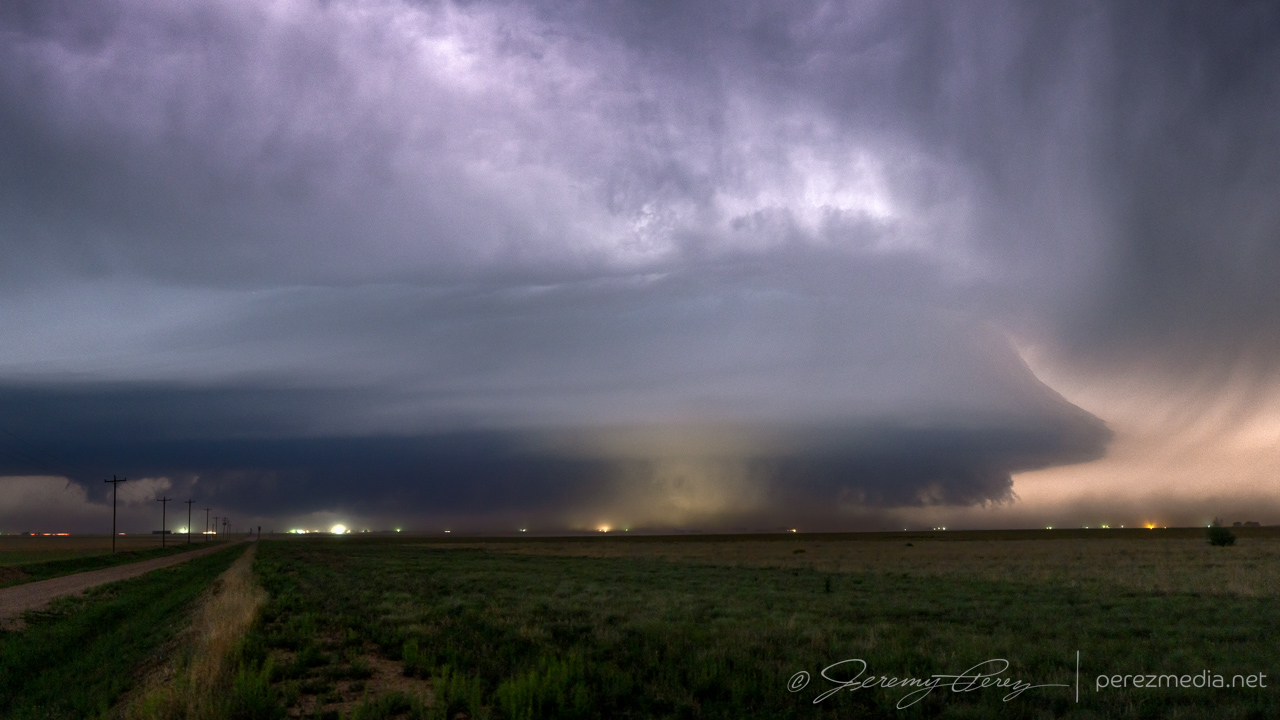
We repositioned further east and watched as the storm flickered away, latching onto a boundary and spinning like a titanic gear. Compared to the menacing beast the day before, this was so slow moving and predictable from a positioning standpoint, it was a treat to just take it easy and take it in. My main regret is that I did not position a couple miles further east to get a better perspective on the tower with less interference from a pesky inflow band. A really a minor gripe though.
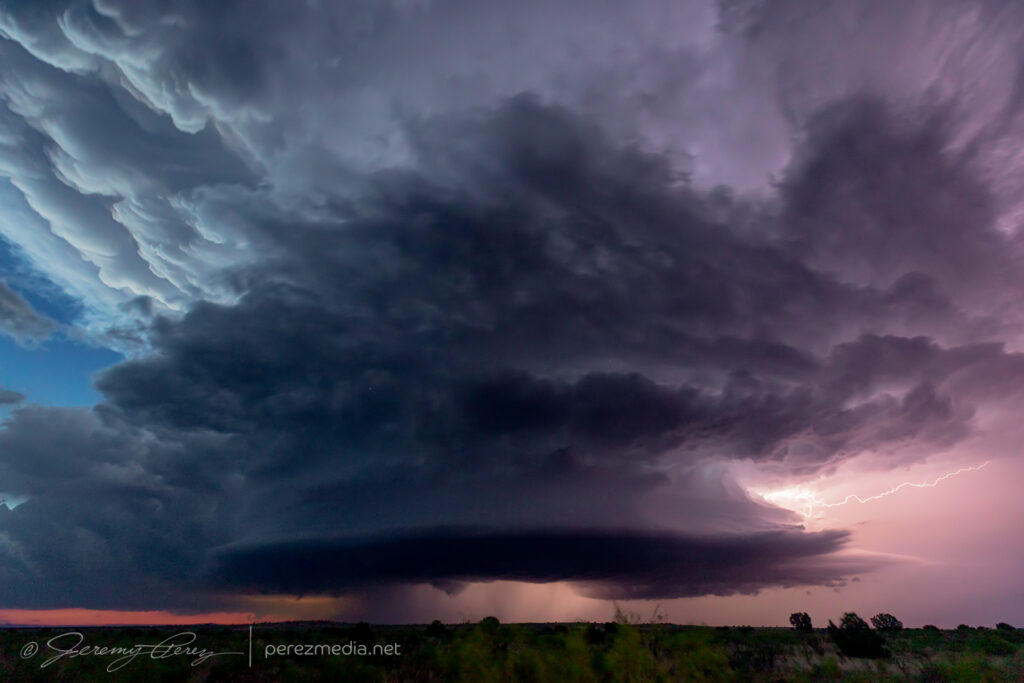
Terraced structure on the nearly stationary supercell from 3.5 miles WSW of Wheatland. 0253Z 0405ZColor variety with internal lightning flashes. 0408Z
After enjoying the seemingly endless light show, we headed back west to rest for the night. On the way, another supercell revealed itself and demanded attention.
After a long travel day on the 23rd, we set up near Logan to watch convection fire off the mesas north of Tucumcari. Even though there wasn’t obvious upper level support, enough shear and instability were in place for a supercell risk. And that’s exactly what we got. In the extreme.
Developing cell north of Tucumcari, throwing out some anvil flickers. 2218Z
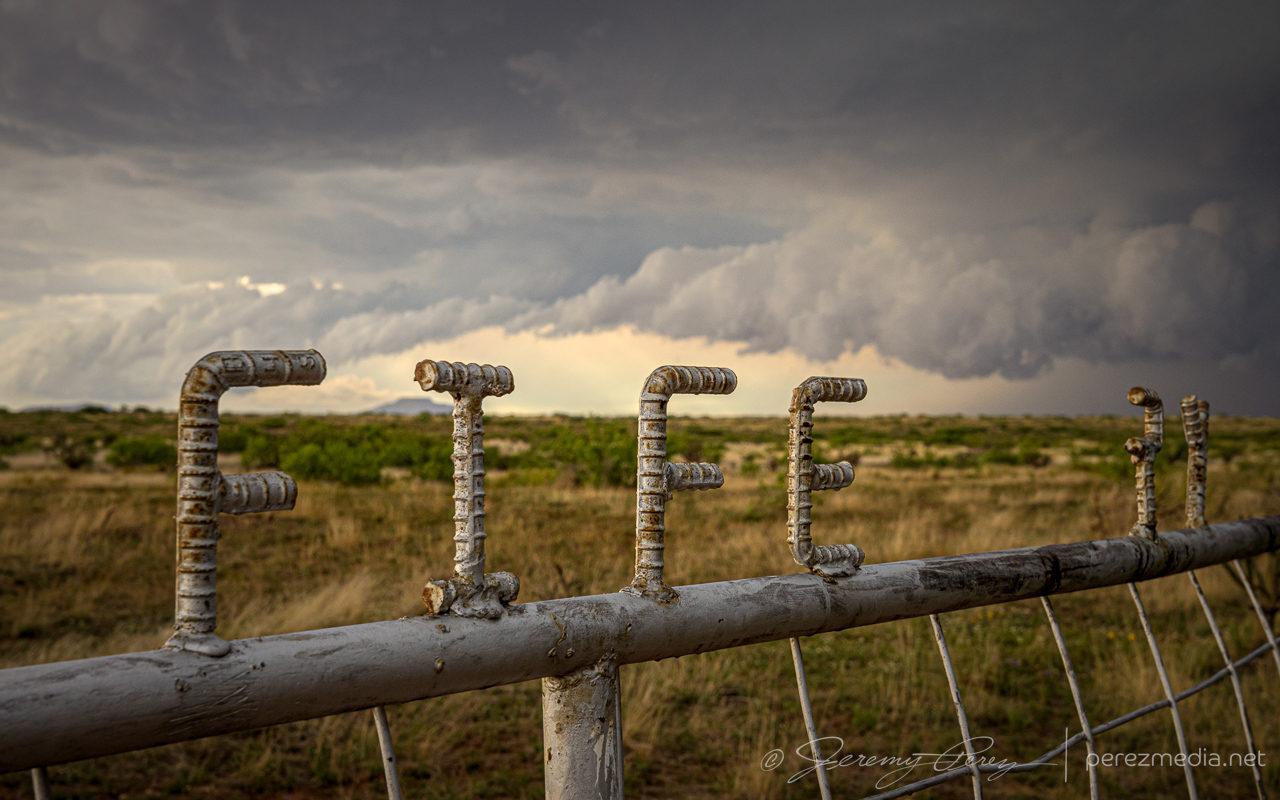
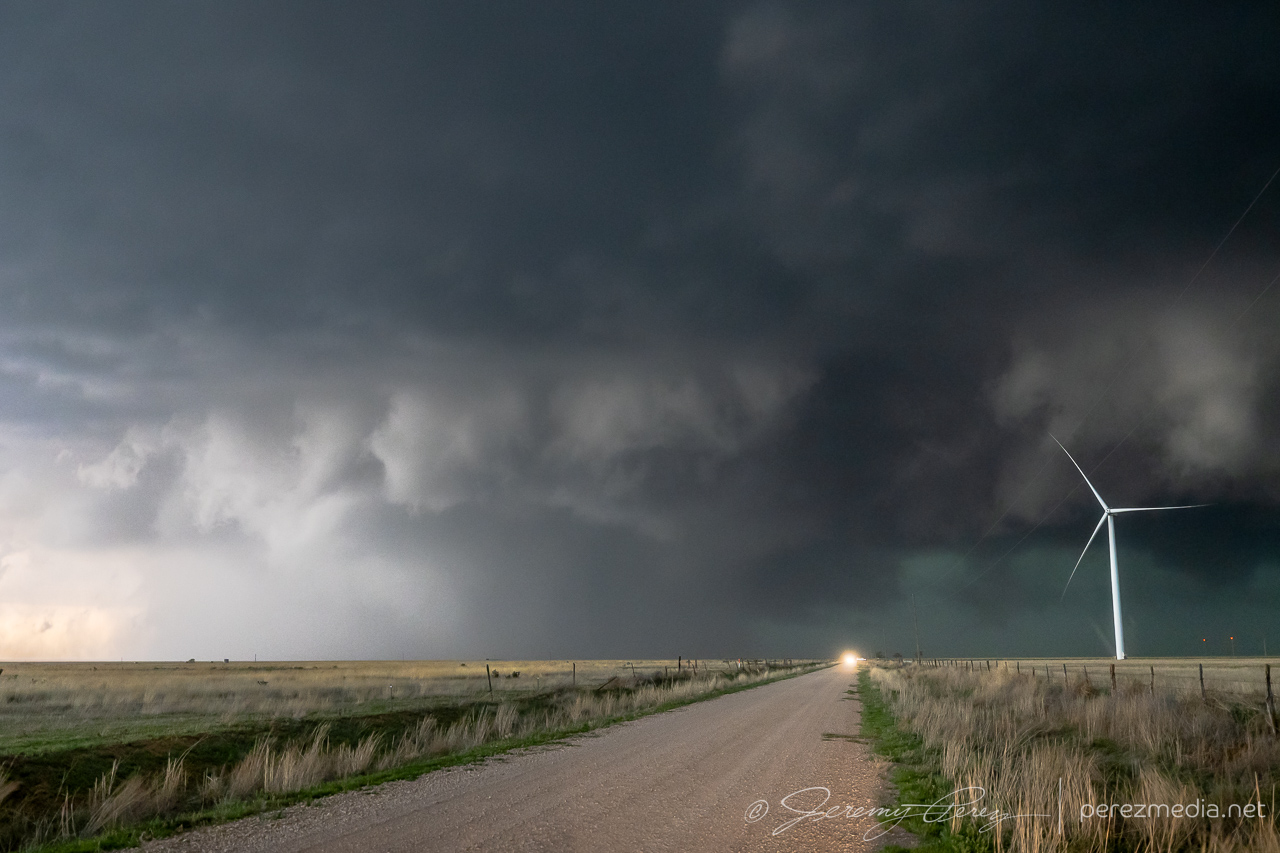
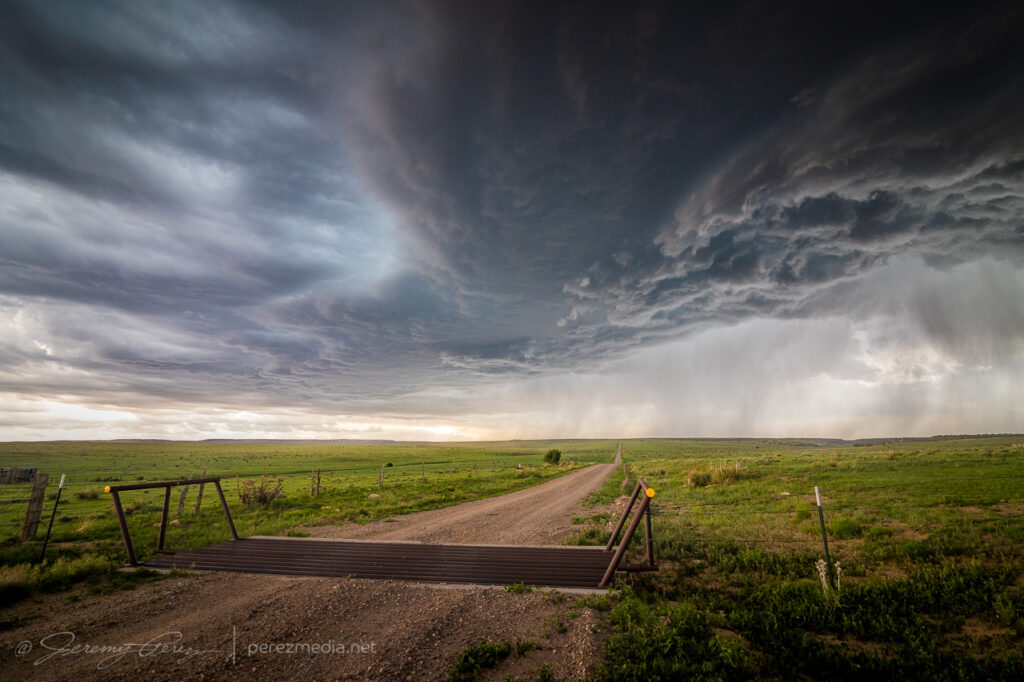
The storm we were watching gradually gathered strength and started drifting southward and we made our way south of I-40 on Rt. 278 to watch the slow-mover on its way down. The morphing wall cloud/RFD shelf was wonderfully chopped with texture.
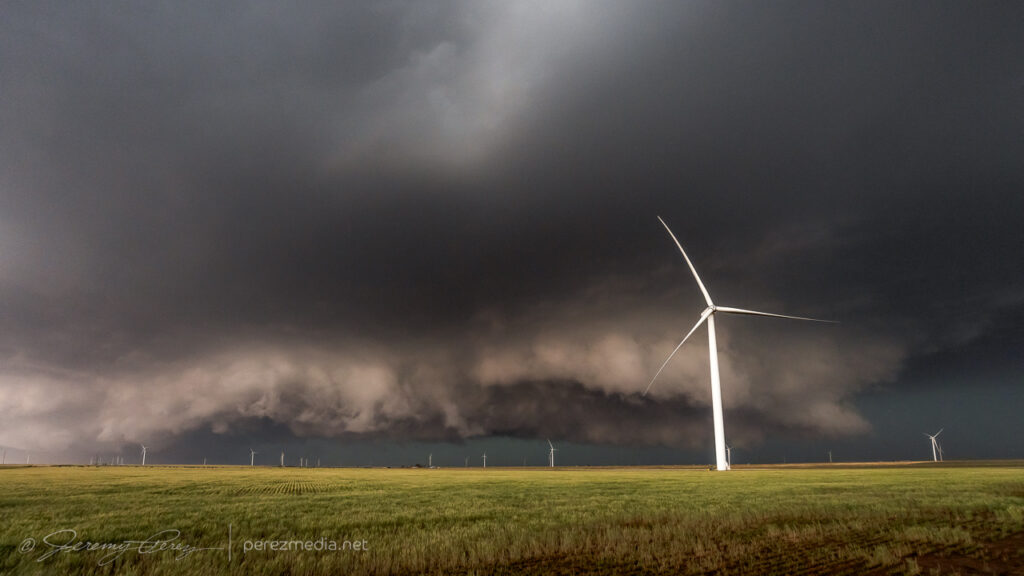
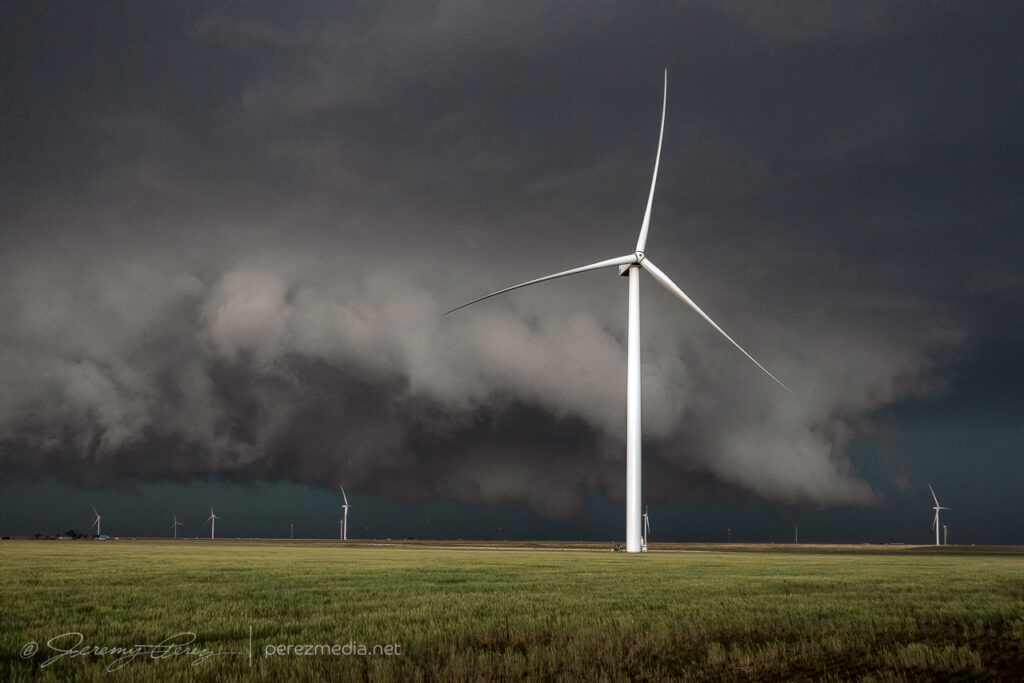
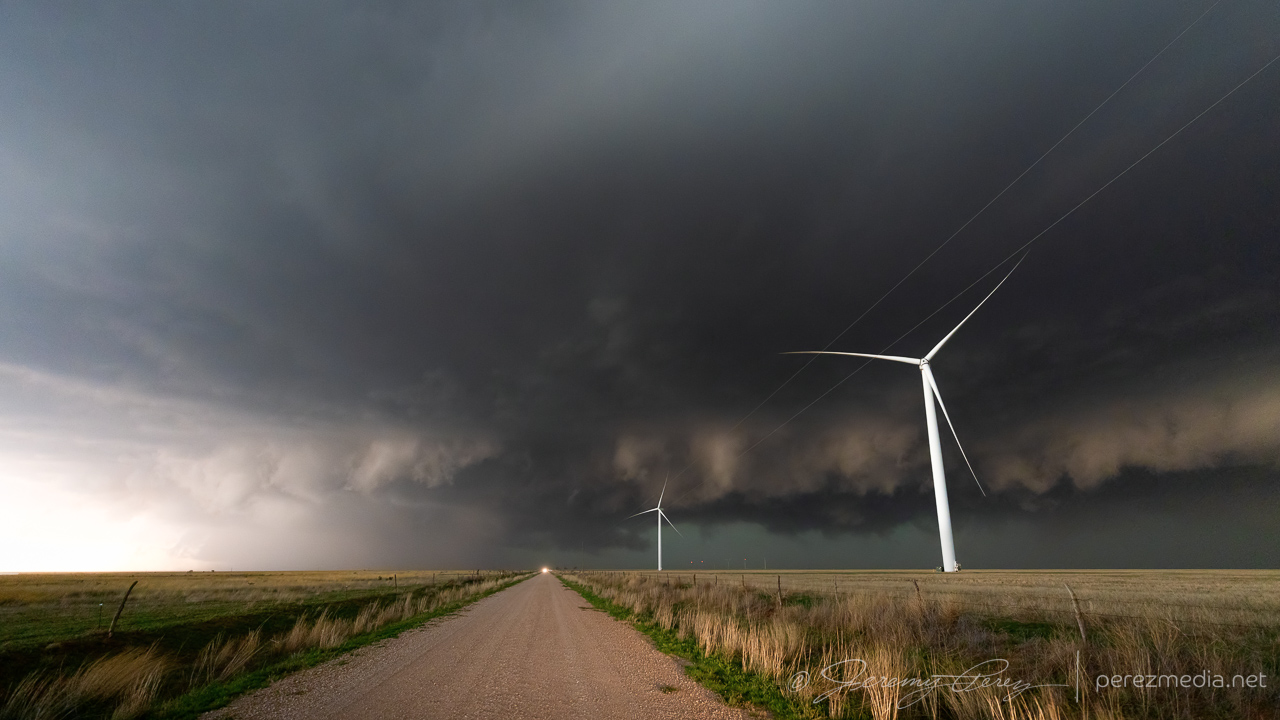
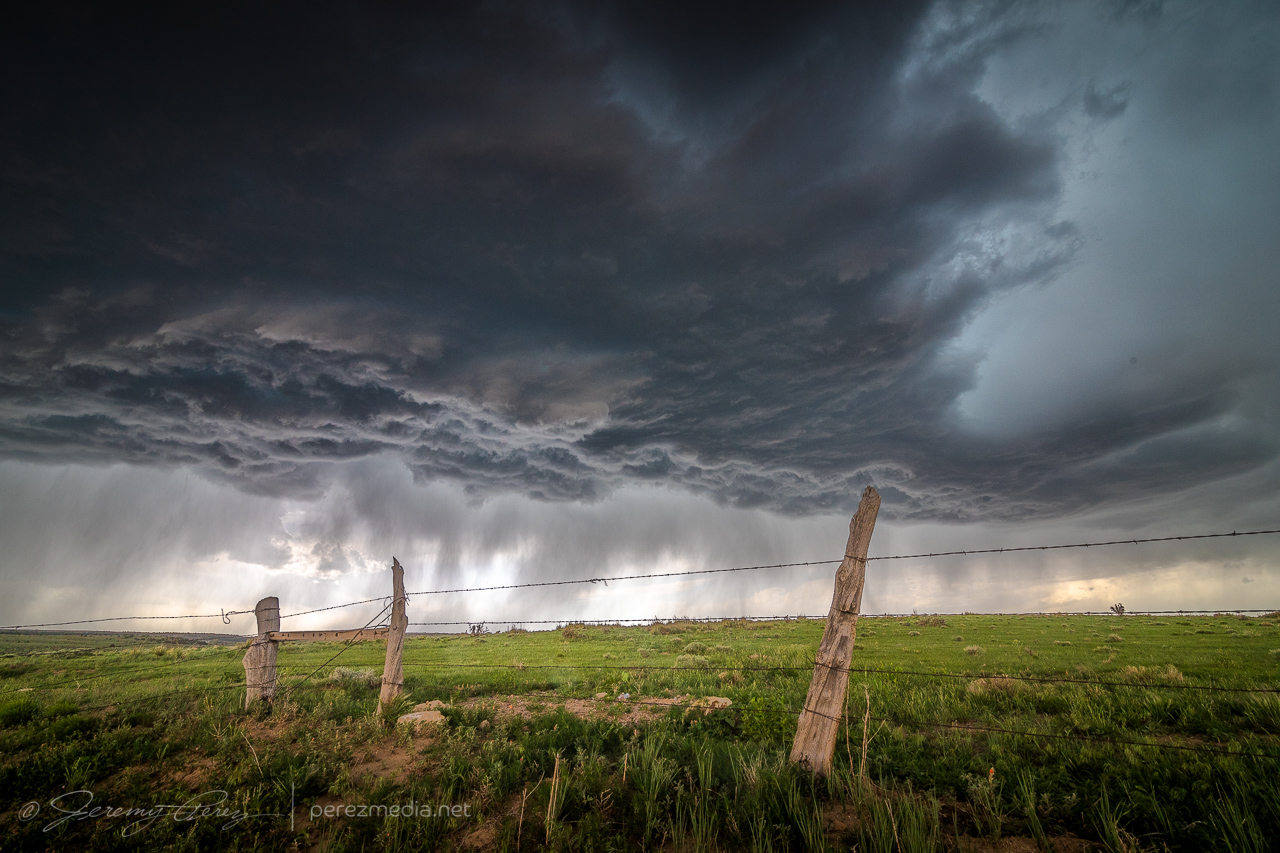
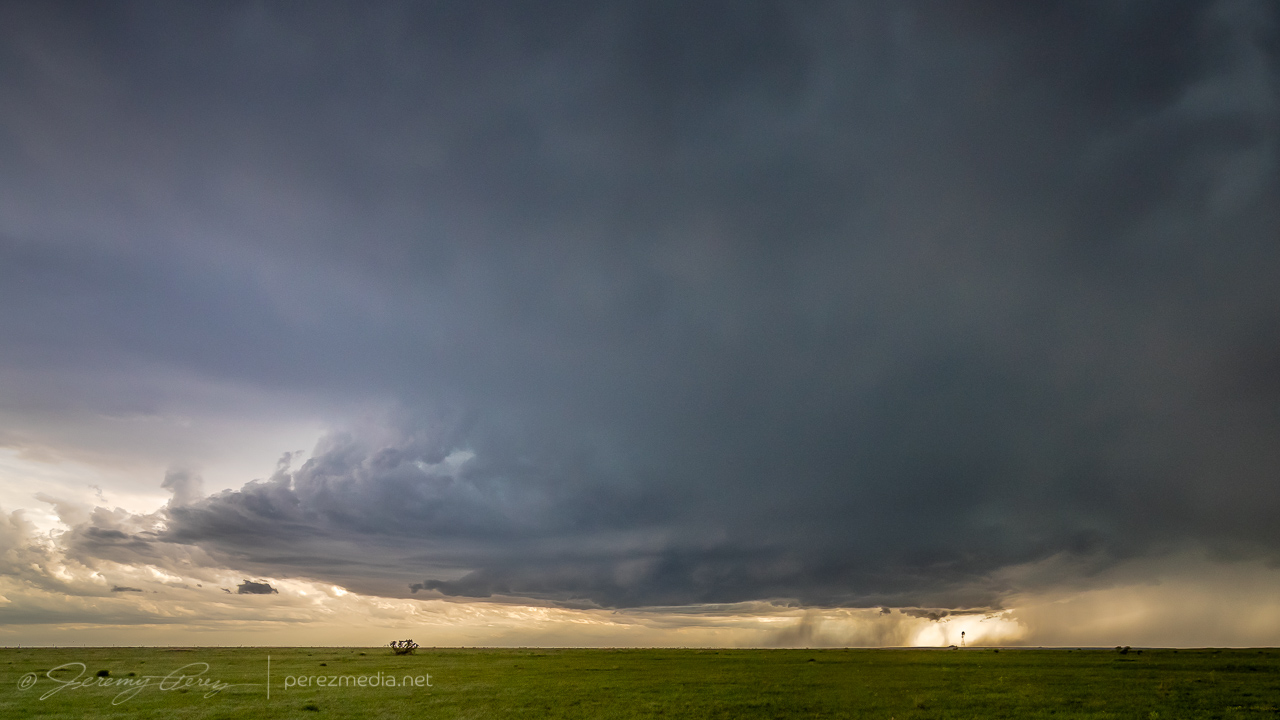
Found the windmill-supercell combo I’d been looking for. 2327ZRanch gate and ground dragging wall cloud with trailing RFD shelf. 2340-2341Z
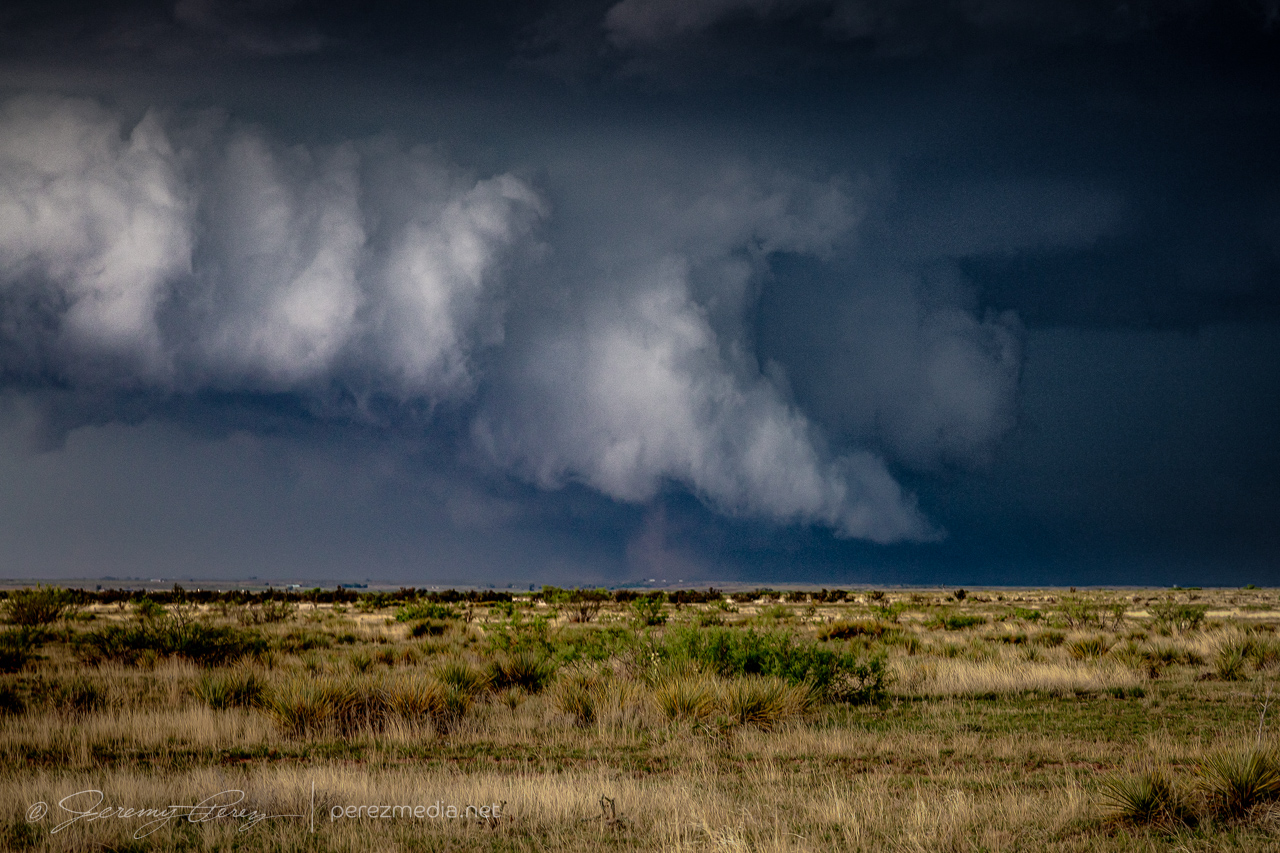
At 2343Z, a column of dust appeared under/north of the RFD shelf/wall cloud as we were repositioning 12 miles south of I-40. We quickly pulled over and I zoomed as tight as I could for photos (no video). The feature lasted about 3 minutes until 2346Z. I think the base of the storm was just south of the interstate at that point. As far away as we were, it was difficult to tell whether we were seeing a coincident gustnado, or if it might be a hybrid circulation in contact with the cloud base under the wall cloud. So far I haven’t seen clear images from other chasers at that time who were closer.
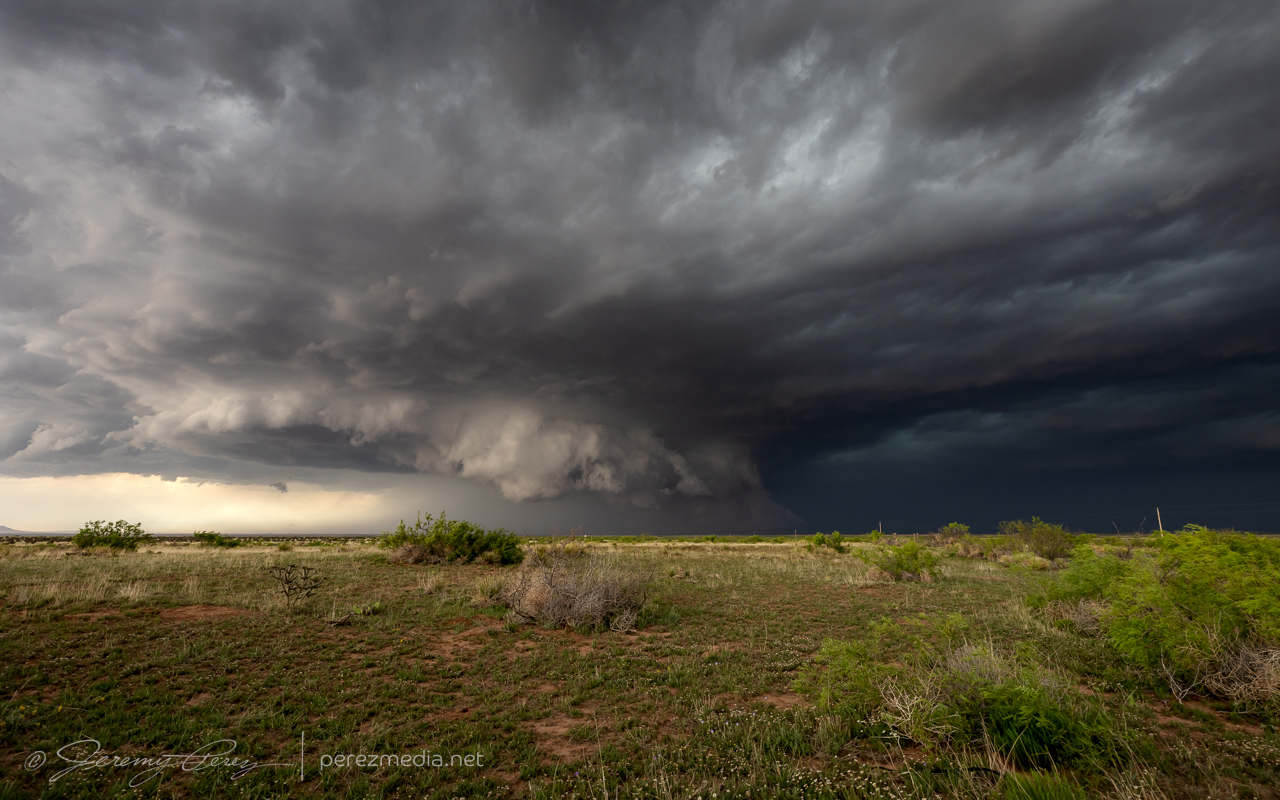
Gustnado or possibly hybrid circulation roughly near I-40, 11-12 miles north of us. 2344ZLast moments of the base looking easily decipherable. 2354ZChaotic sky as we repositioned through Apache Canyon. 0008ZWatching from the caprock as the storm approaches the higher terrain. 0015Z
I anticipated the need to head off new cells popping off to the south. CAMs suggested this would be a likely evolution, but it didn’t quite work out that way. Convection did try initiating further south of our main storm and it encouraged me to stay well ahead so I wouldn’t get caught behind any new hail cores. But each new strong updraft got ingested northward into the dominant cell, like a long distance flanking line, and making a beautiful mess in the process.
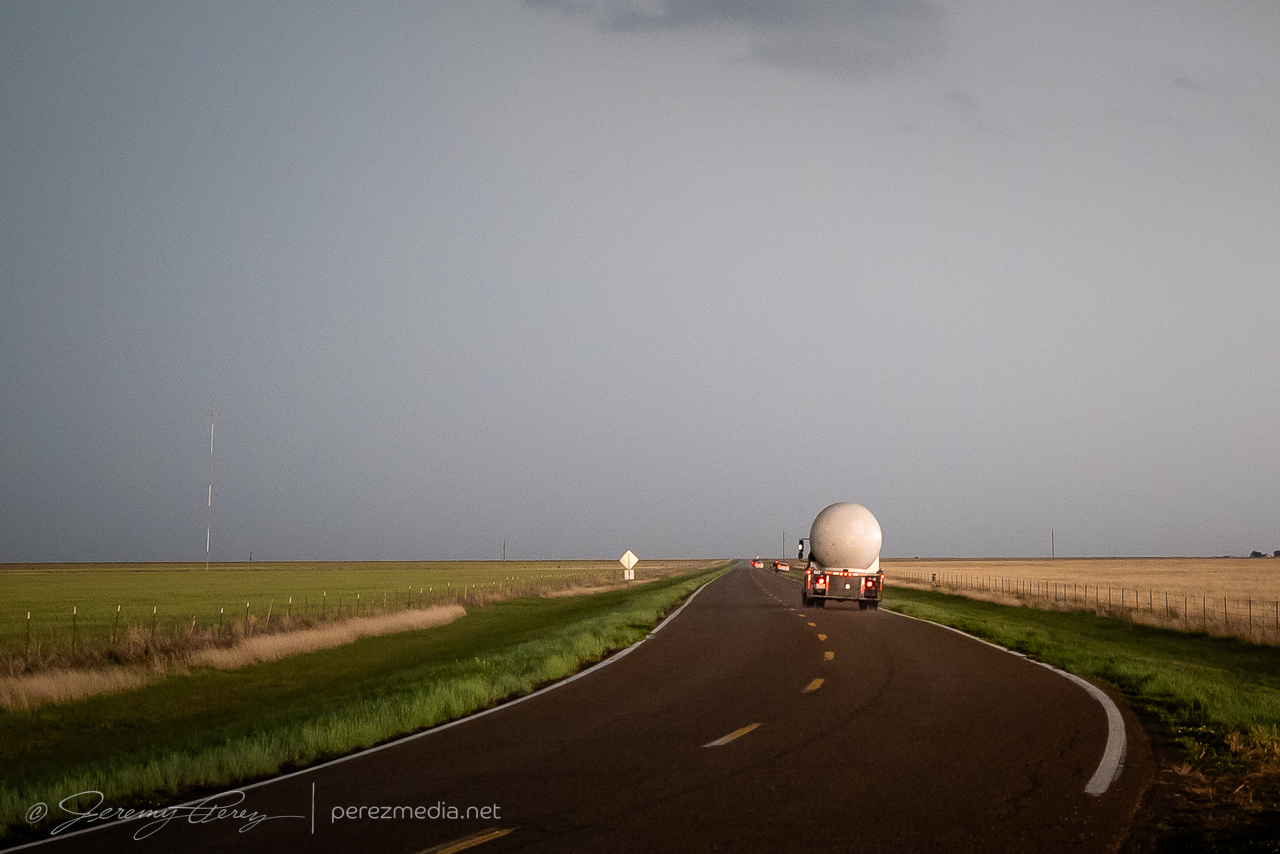
New updraft getting rapidly ingested northward into the dominent cell. 0023ZVorticity and sculpting as cells start to merge. 0027ZWall cloud-esque lowering as the cells complete their merger. 0031ZImpressive color variation as the lowering/wall cloud/RFD shelf elongates. 0032ZDoppler truck hustling to stay ahead of the storm. 0035Z
As the storm lofted up onto the Caprock, it got stronger, while the base was constantly adorned with a mix of lowerings, scud tags, shelf teeth and transient wall cloud features. It was chaotic enough to recommend maintaining a respectable distance.
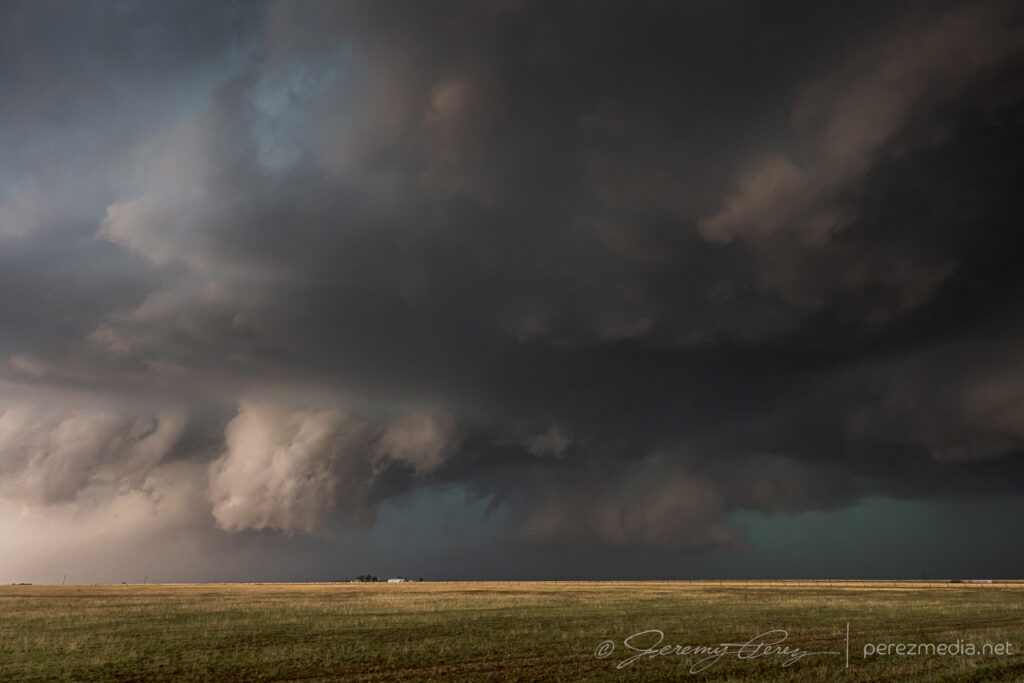
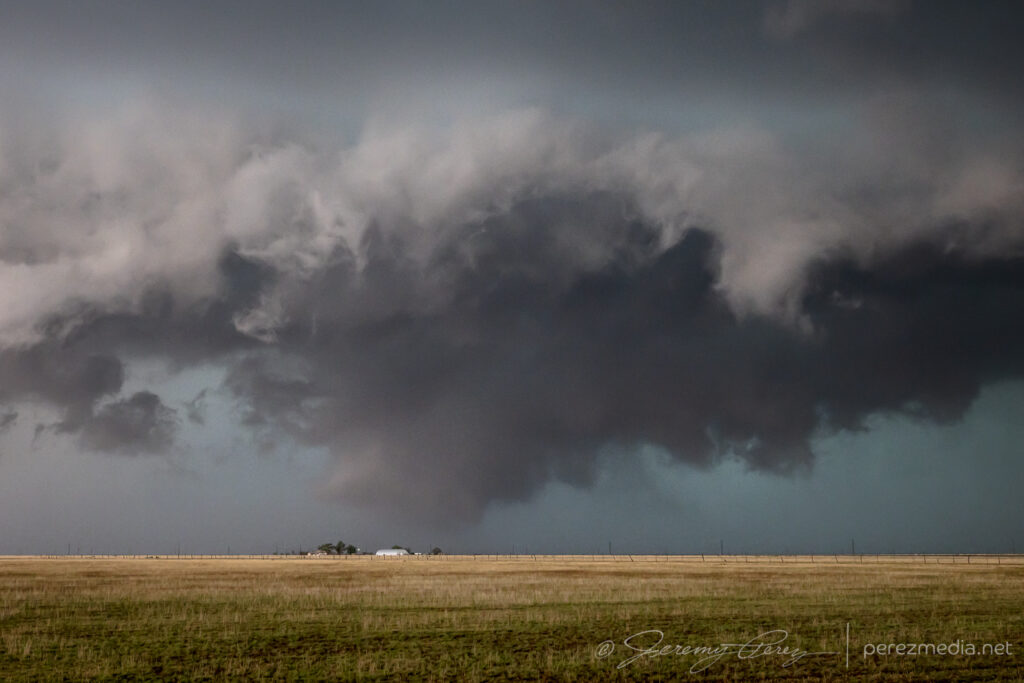
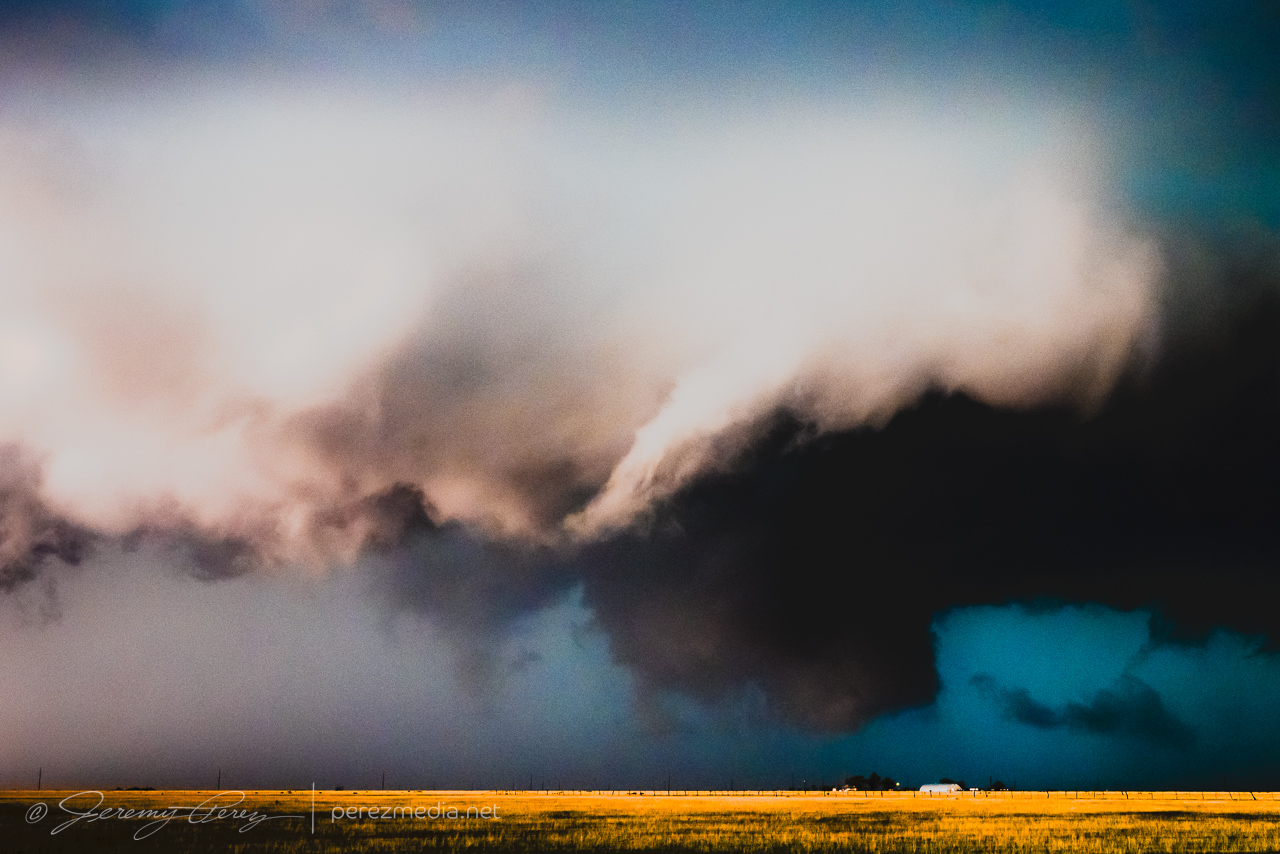
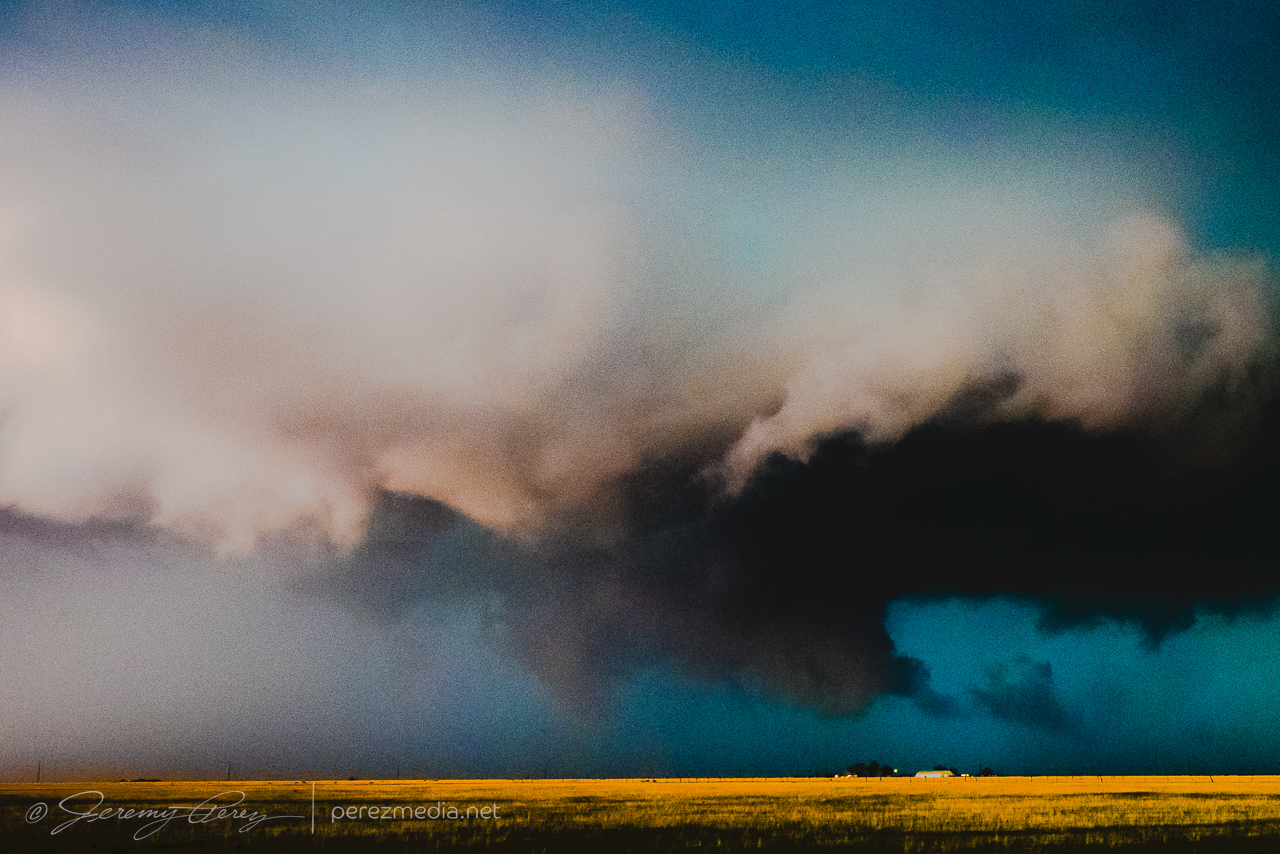
Looking northwest from north of Grady as a lowering reached out to a homestead. 0044ZChaotic base as the storm lofts onto the Caprock. 0044-0048Z
—
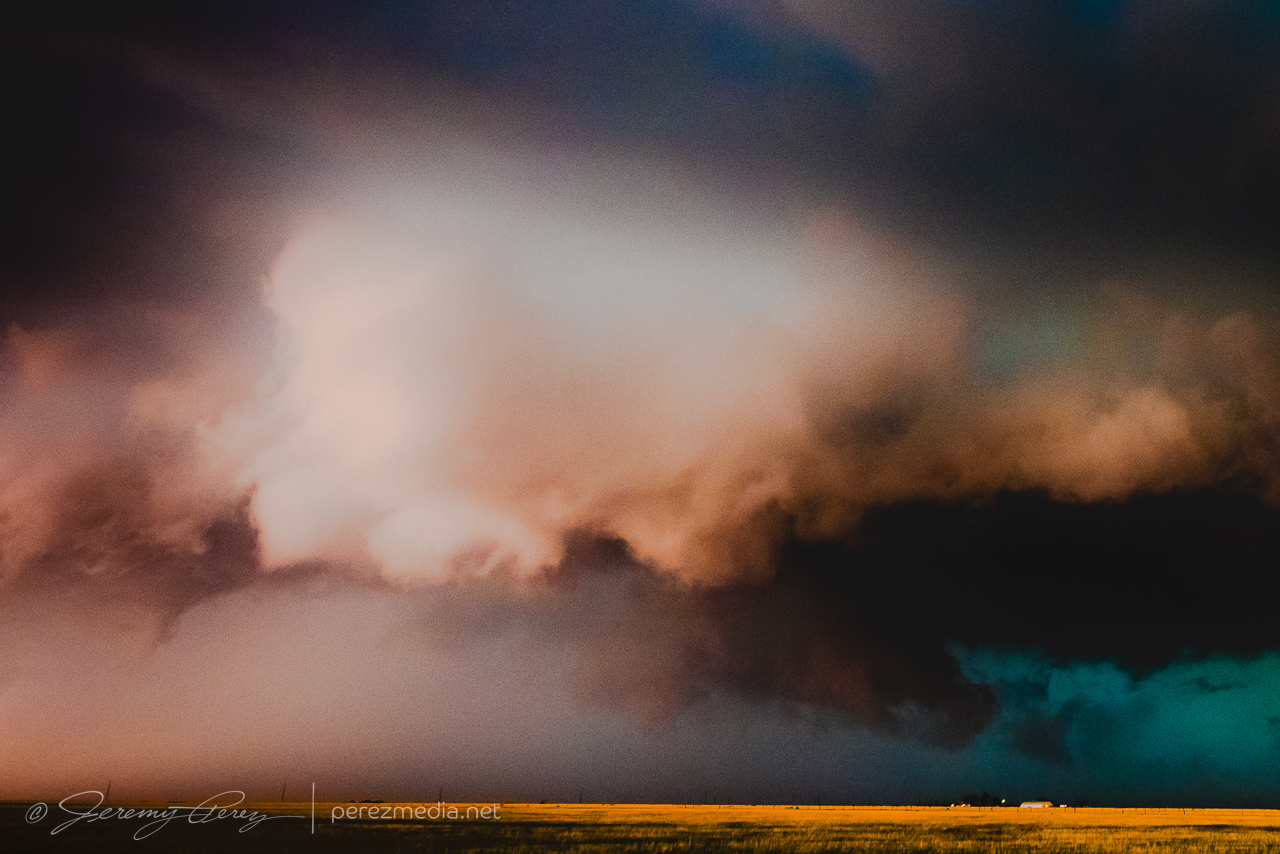
Contrast enhanced shots taken at the time of a chaser-reported tornado, plotted by SPC just behind and to the left of the homestead. 0049Z
We repositioned on Rt. 209 south of Broadview as the storm rapidly intensified.
Looking northwest from 1.5 miles south of Broadview on Rt. 209. 0603Z
We then drove down Rt. 209 to CR33, six miles south of Broadview, and spent a couple minutes taking shots as the storm loomed over the wind farm. At this point, it was pulling incredibly intense inflow—car-door breaking strong—a lot of effort needed to carefully get out for pics. The streamwise vorticity current was flying right-to-left into the rain wrapped base. The RFD precip hid a developing monster. I knew something had to be happening in there, but without contrast-enhancing eyeballs, I couldn’t make it out. However, even with photo editing, it’s still inconclusive visually, whether the lowering in there is tornadic.
Streamwise vorticity current on right side of image racing right-to-left into the updraft. 0117ZPossible tornadic lowering behind the RFD core from Rt. 209 & CR33. 0118Z
Repositioning southward was a white-knuckles experience with the enhanced traffic load and I’m glad we got moving when we did, especially thinking about the traffic that was clogged up 3-4 miles further back in that line. Dense traffic or no, I feel that SVC surfing on HP beasts is definitely not for me.
Rear dashcam view, rounding into the Rt. 209 curve north of Clovis as chaser conga line advances south.
After that memorable experience, I stayed a lot further out to destress and attempted shots through growing inflow dust. Thankfully the next day’s chase would be in the same vicinity, so we grabbed a motel and got some much needed rest.
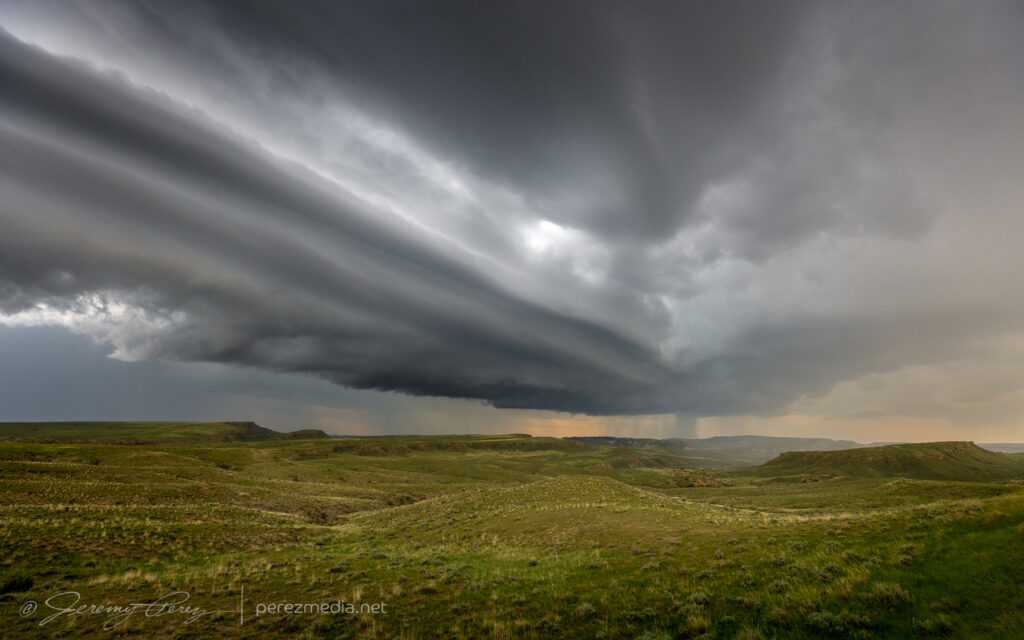
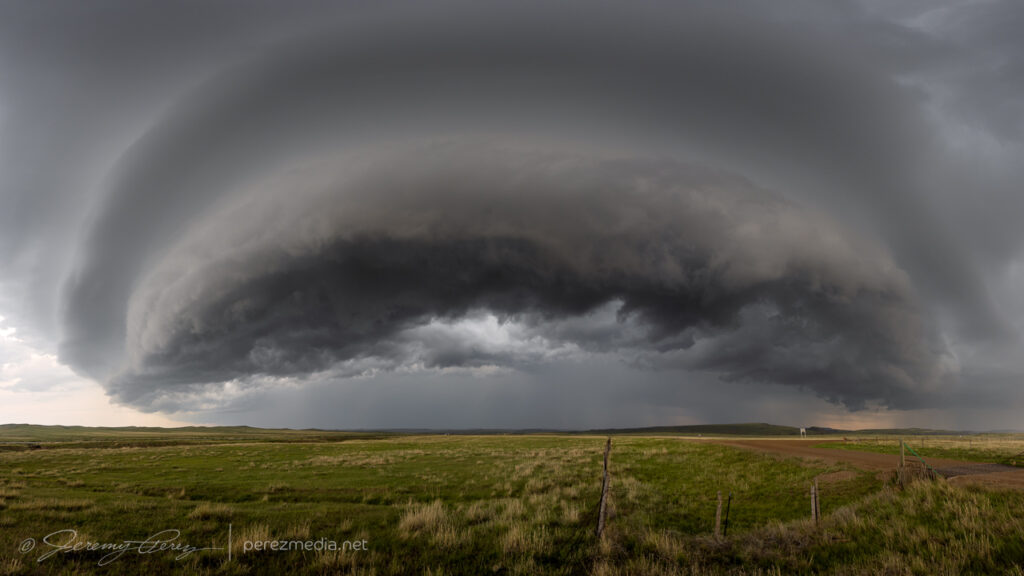
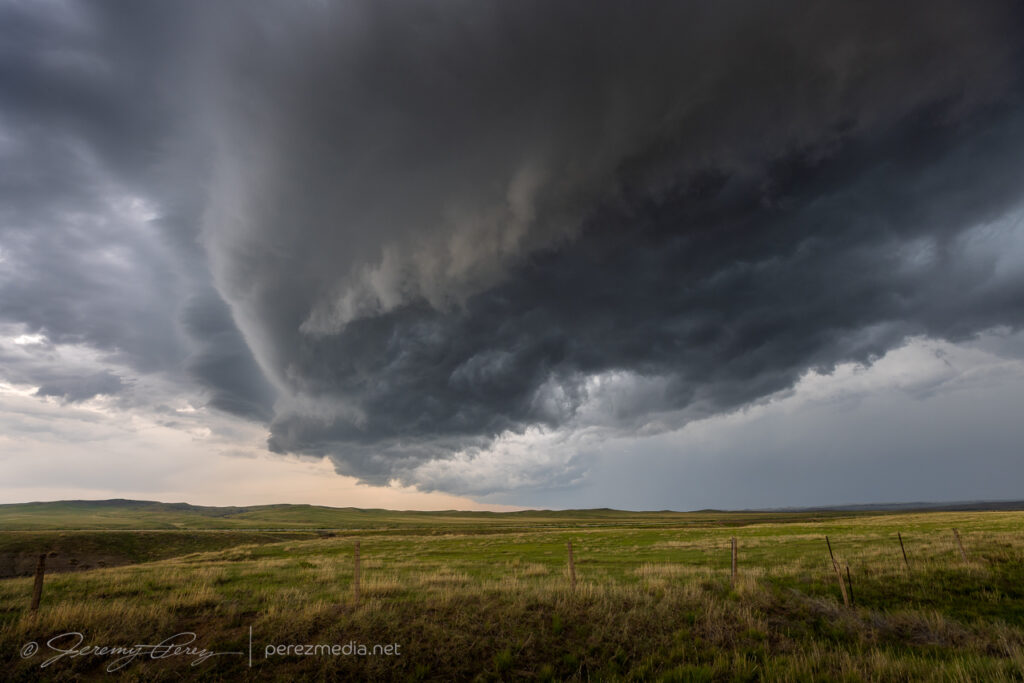
May 23rd was a travel day, getting from central Montana down into New Mexico for the next batch of setups. On the way down, we encountered a few storms. One rotating cell had its structure shrouded by rain as we approached from the north on I-25. It managed to dissipate just as we were about to flank it along Rt. 192. But other storms were popping up in the area and southward along our route.
We pulled off on TTT Ranch Road south of Kaycee to watch one of them gather itself.
Looking south along TTT Ranch Road. 2335ZSome sweeping structure flowing in as it strengthens a bit. 2349ZEncroaching gust front begining to build a shelf on the north edge of the cell. 2356ZWide pano as the gust front approaches. 2357ZShelf mirroring the road. 0001Z0001-0010Z
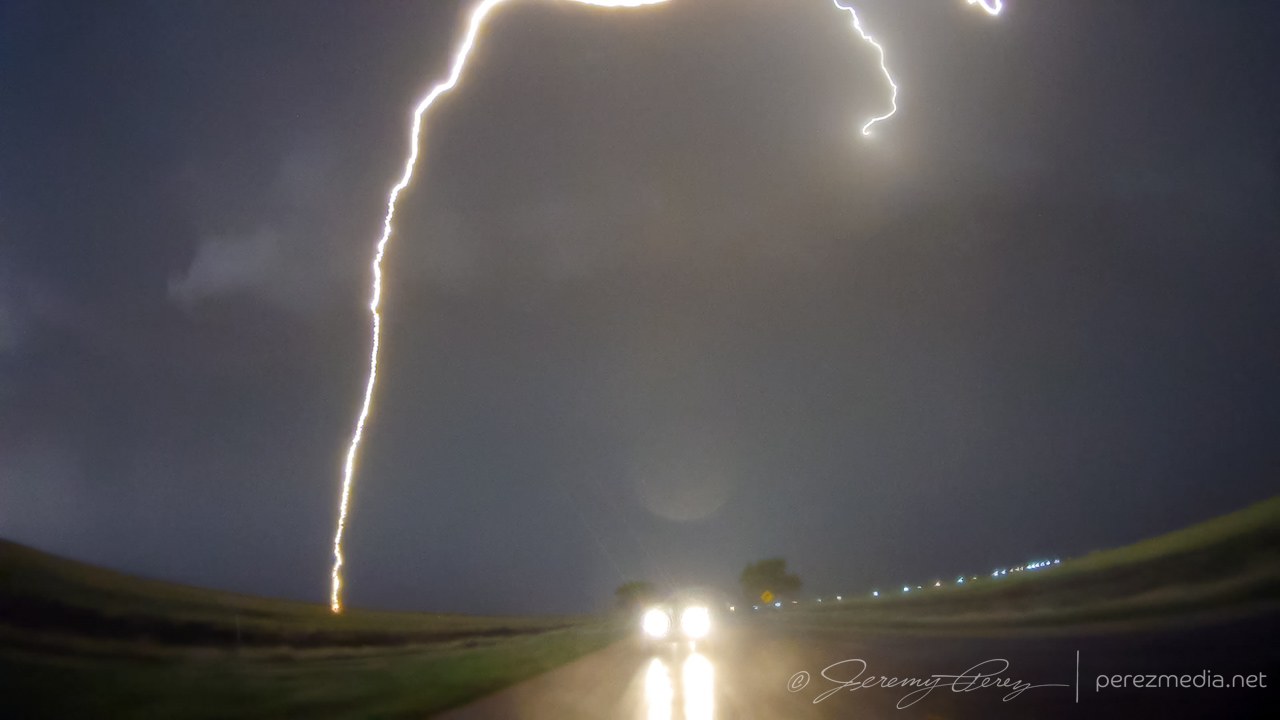
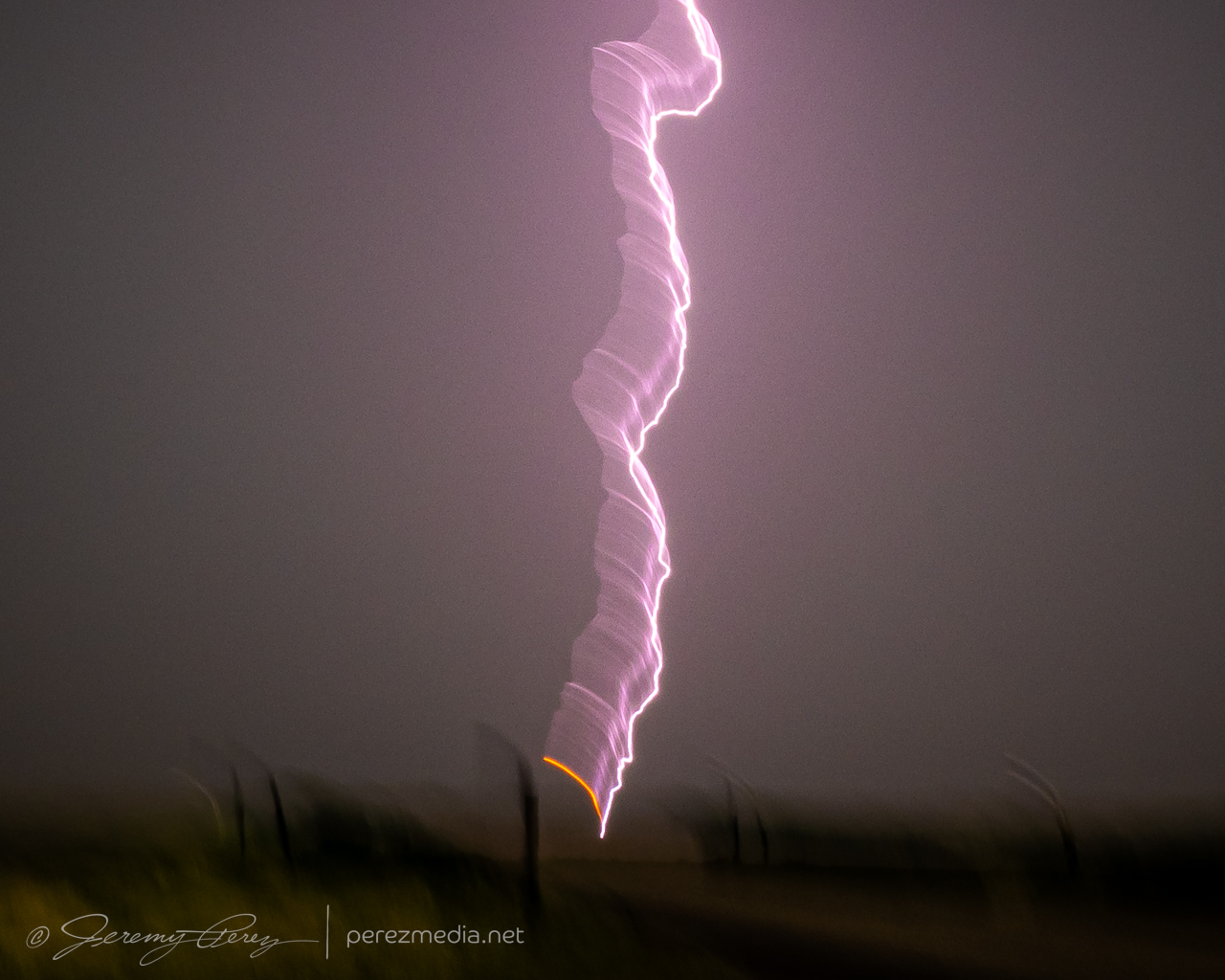
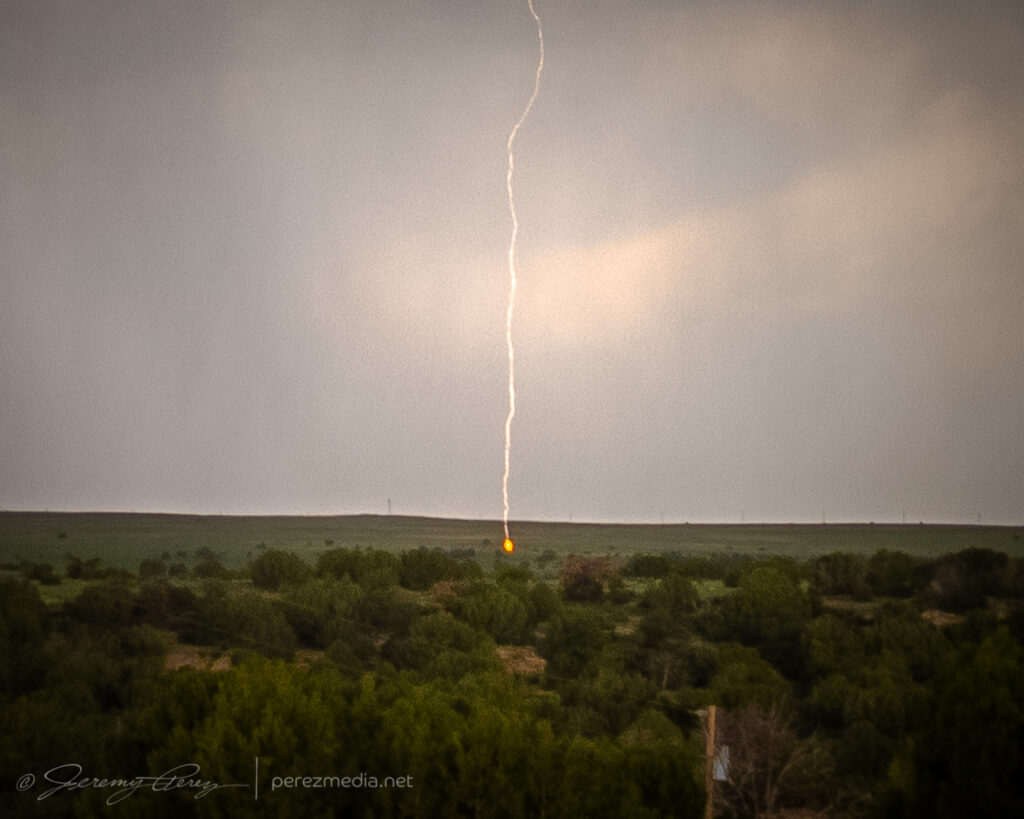
As the outflow flew by, I made some totally futile attempts to shoot some of the lightning happening inside all the flying rain. And just because of the way things work, most in-the-thick-of-it lightning will be firing in a direction that flings rain straight into the car and camera. Which means window mounting the camera is no good. So I sometimes try hand-holding the camera further back away from the window. There are pretty low odds of getting something good that way, although it’s worked out a few times so I’m always tempted to give it a shot. Anyway, this last image was of the one strike I did manage to catch, in all it’s motion-blurred glory. It landed ever so close and for whatever it’s worth, the extreme motion blur highlighted the orange plasma at the landing point really well.
Next stop was eastern New Mexico for our chase day on the 24th.
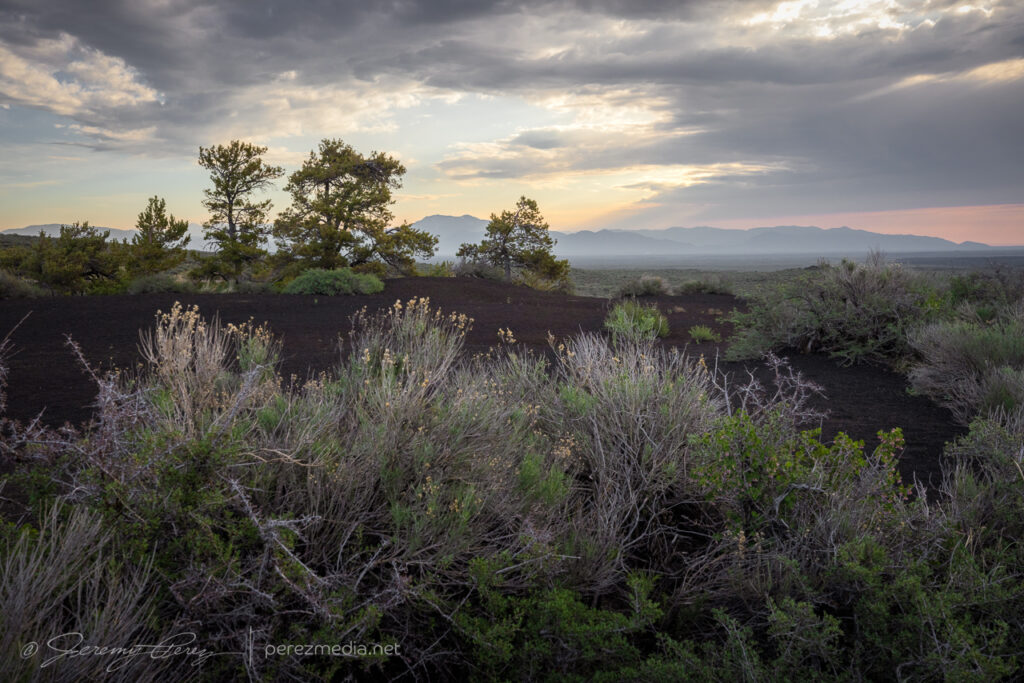
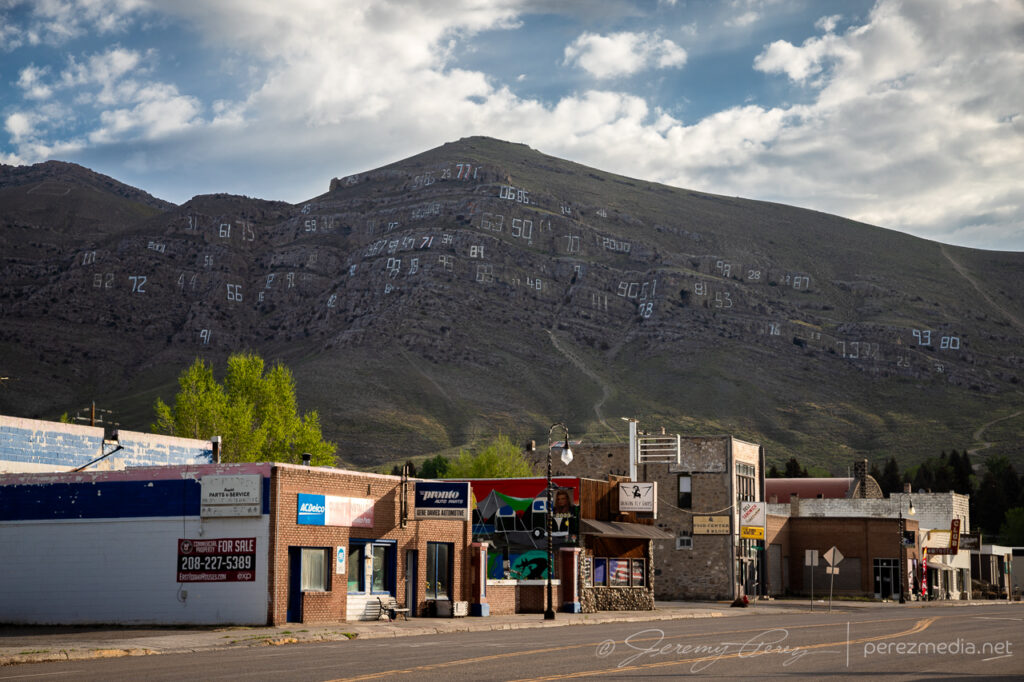
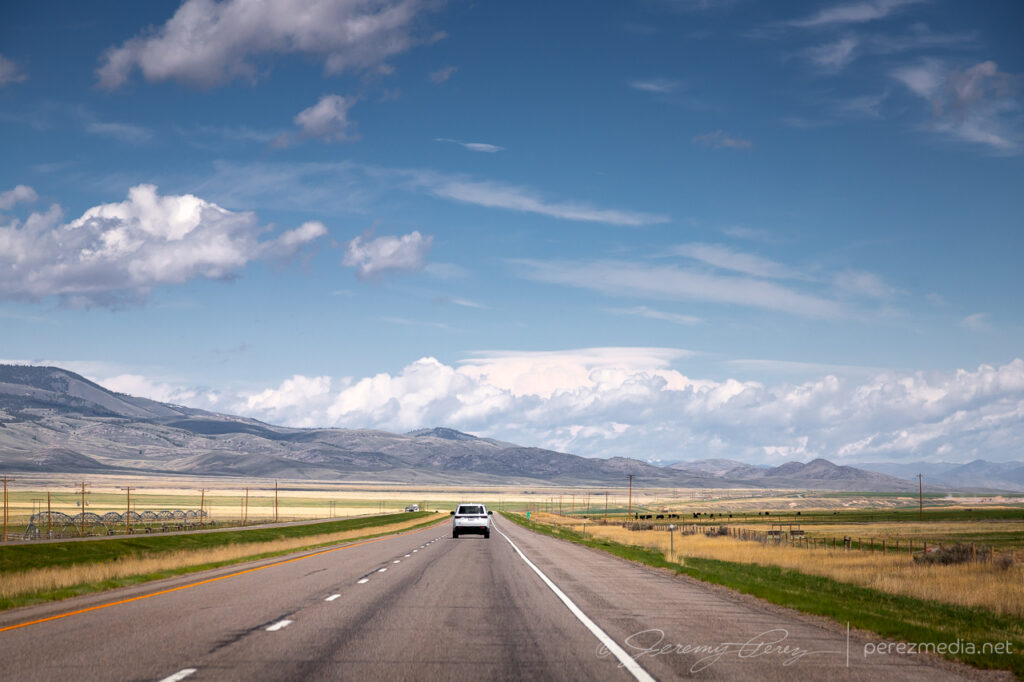
After chasing a few storms in eastern Oregon the day before, we made the 8+ hour drive south around the Sawtooth Mountains to get to try and meet storms swinging out of the Bitterroot Range. After some roadside and truck stop napping, we took a couple quick breaks in Idaho at Craters of the Moon National Park and Numbers Hill in Arco.
We couldn’t stop long anywhere, since timing was going to be tight trying to get to the target area ahead of convection. Sure enough, by the time we were aimed north on I-15, convection was already lighting up in the distance. As we got neared Deer Lodge, one cell had picked up a lowering but didn’t otherwise look particularly determined. (1704Z & 1843Z below)
We roamed around town just a bit, looking for some views as disorganized convection surged across beautiful terrain. (1847-1851Z below)
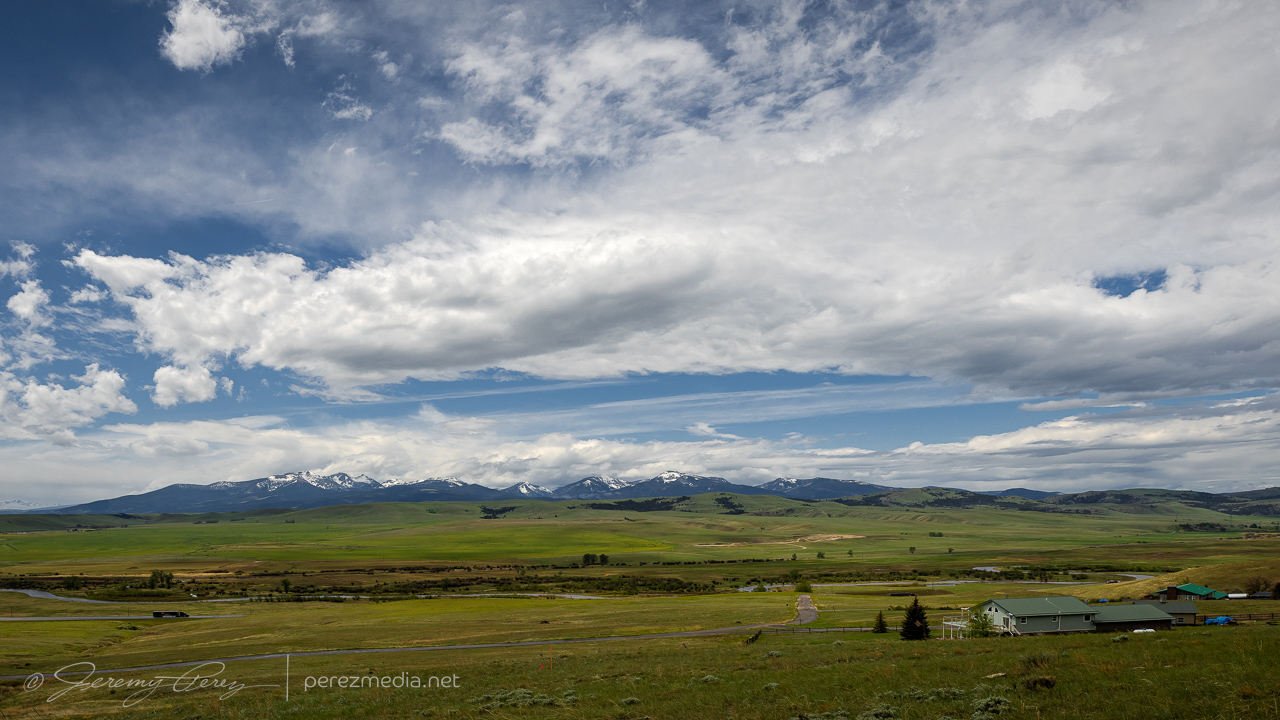
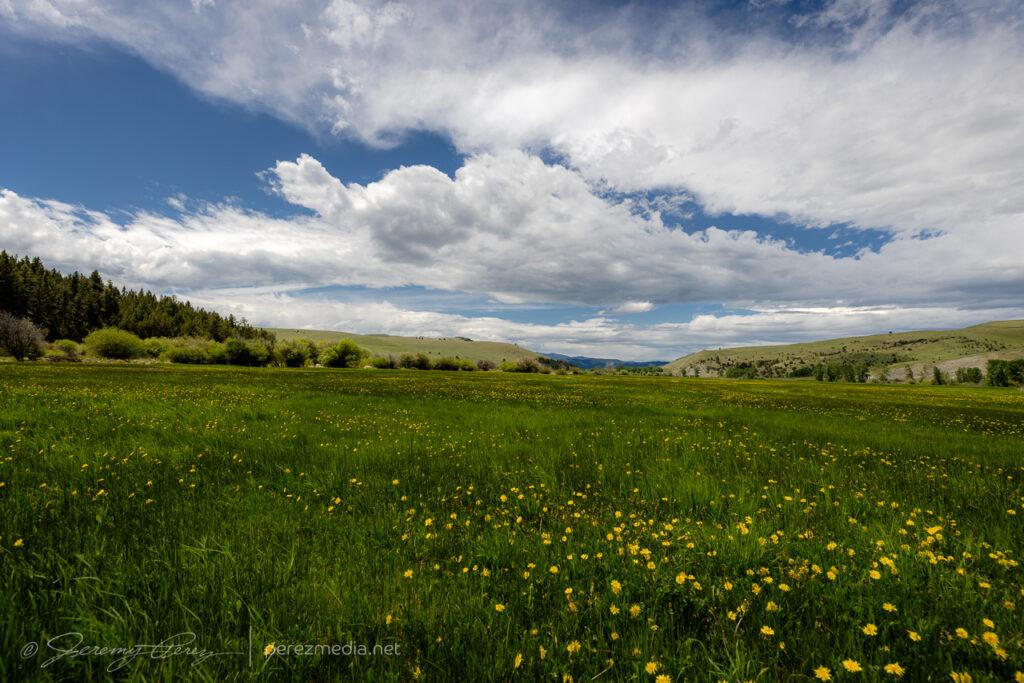
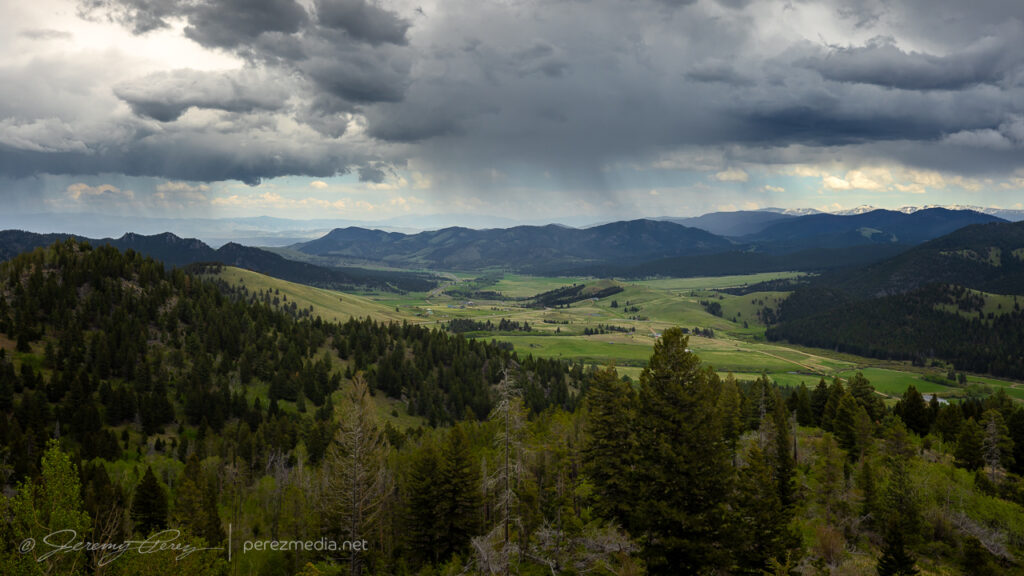
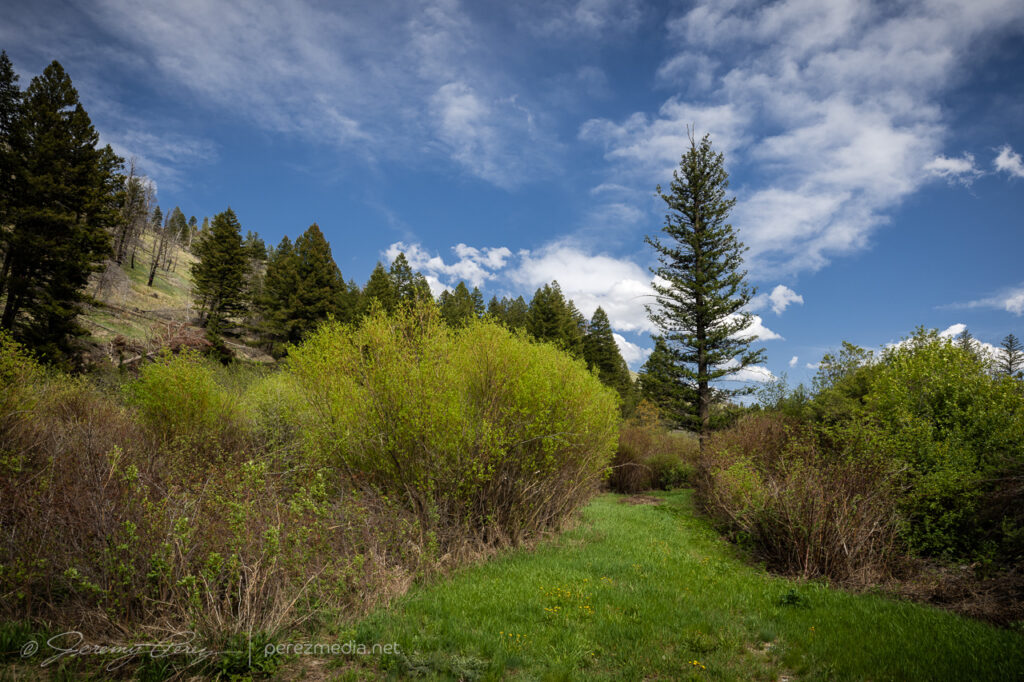
The storms didn’t wind up more promising than that, so we headed east to get out on the rolling plains beyond the Little Belt and Crazy Mountains for hopefully some new rounds of convection. Gorgeous scenery demanded more stops along the way.
Pikes Peak Ridge from east of Garrison.Prairie & dandelions east of Garrison | Mountain pass west of Helena | Along Hwy 12 east of Townsend
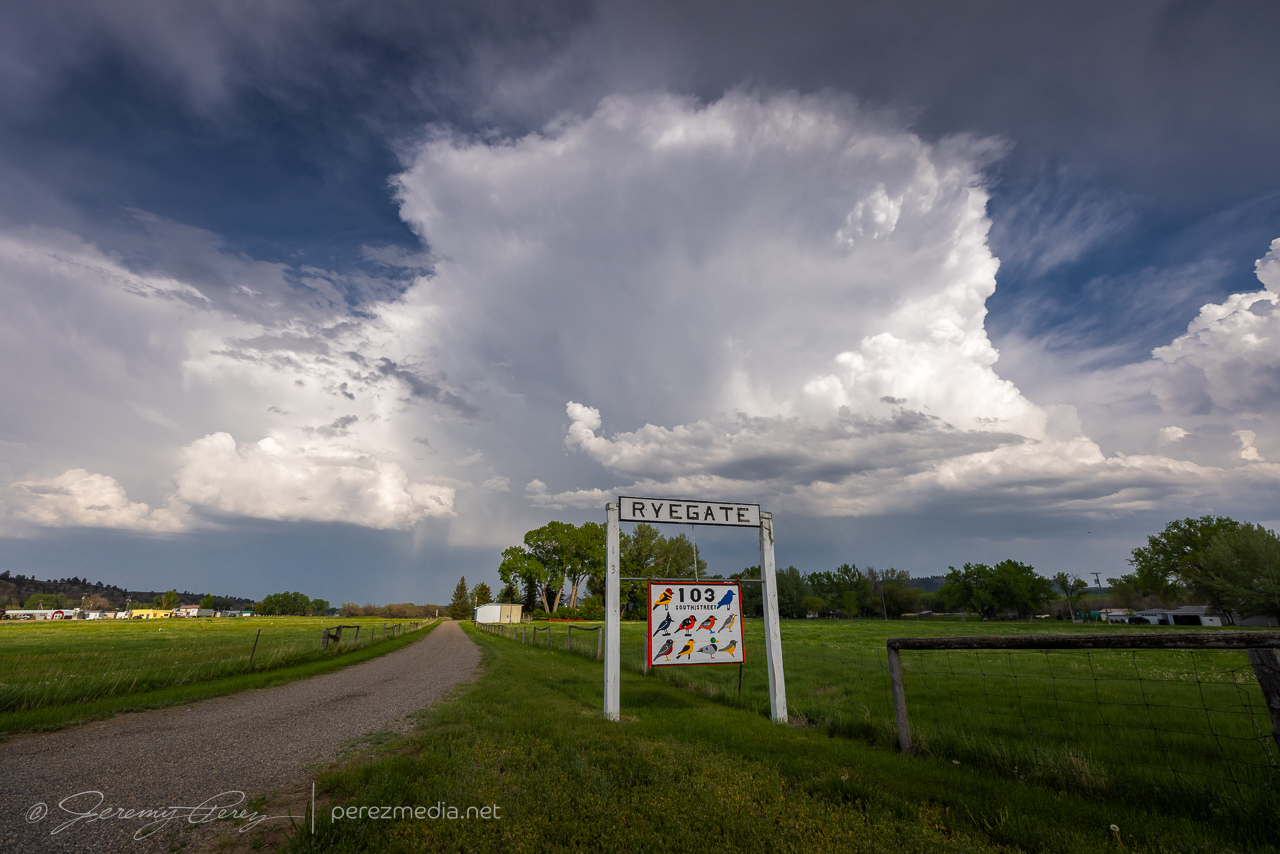
East of the mountains, we dropped down into familiar territory between Ryegate and Roundup. My son and I chased along that stretch back in 2018. Storms weren’t as hefty this time around and I was really struggling to capture lightning. The terrain, overall scenery and accomplishment of running after convection in the mountains and hills of Montana made up for the mild down sides.
Tower blossoming east of Ryegate. 2351ZConvection between Cushman and Roundup. 0007-0111Z
With that fun intro chapter wrapped up, it was time to dive south into the proper plains for the rest of the chase and hope that subtle disturbances would make up for the lack of strong upper level support.
I was really hoping to kick of the 2023 chase season in some new territory. During my scheduled vacation, upper level flow over the central and southern plains wasn’t looking promising at all. But it did look like there would be some help from the jet over the northwestern US — at least for the first couple days. So my daughter and I took off from Flagstaff on May 20th and cruised across Nevada through the night for our first option in Oregon on the 21st. We headed up to Baker and found an elevated spot to watch an early round of convection over the peaks of Umatilla National Forest. Depending on how that turned out, I thought we could later head southwest toward Burns for another round of initiation off the cold front.
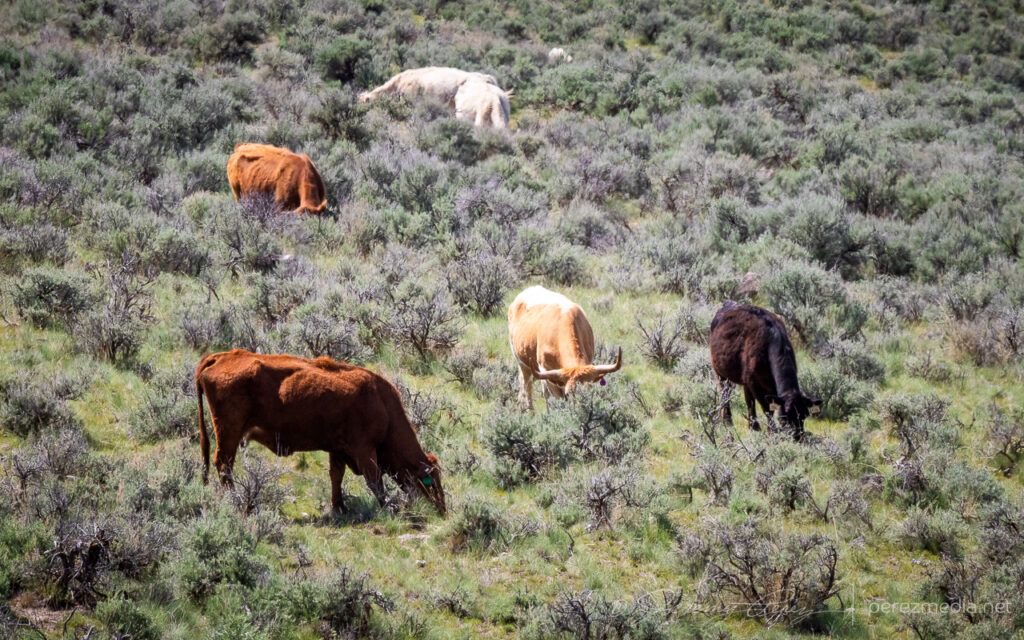
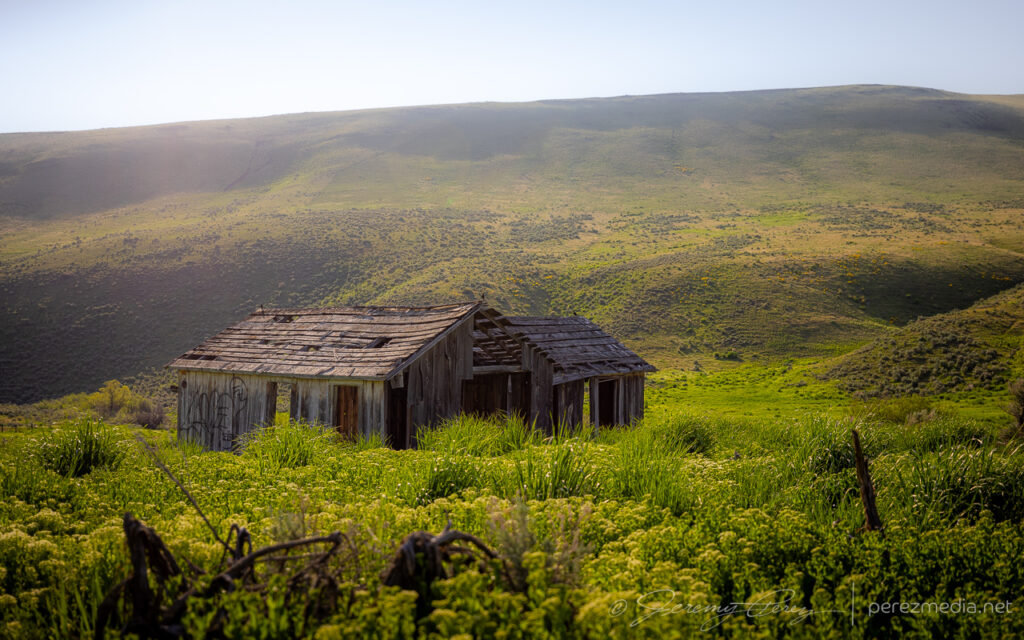
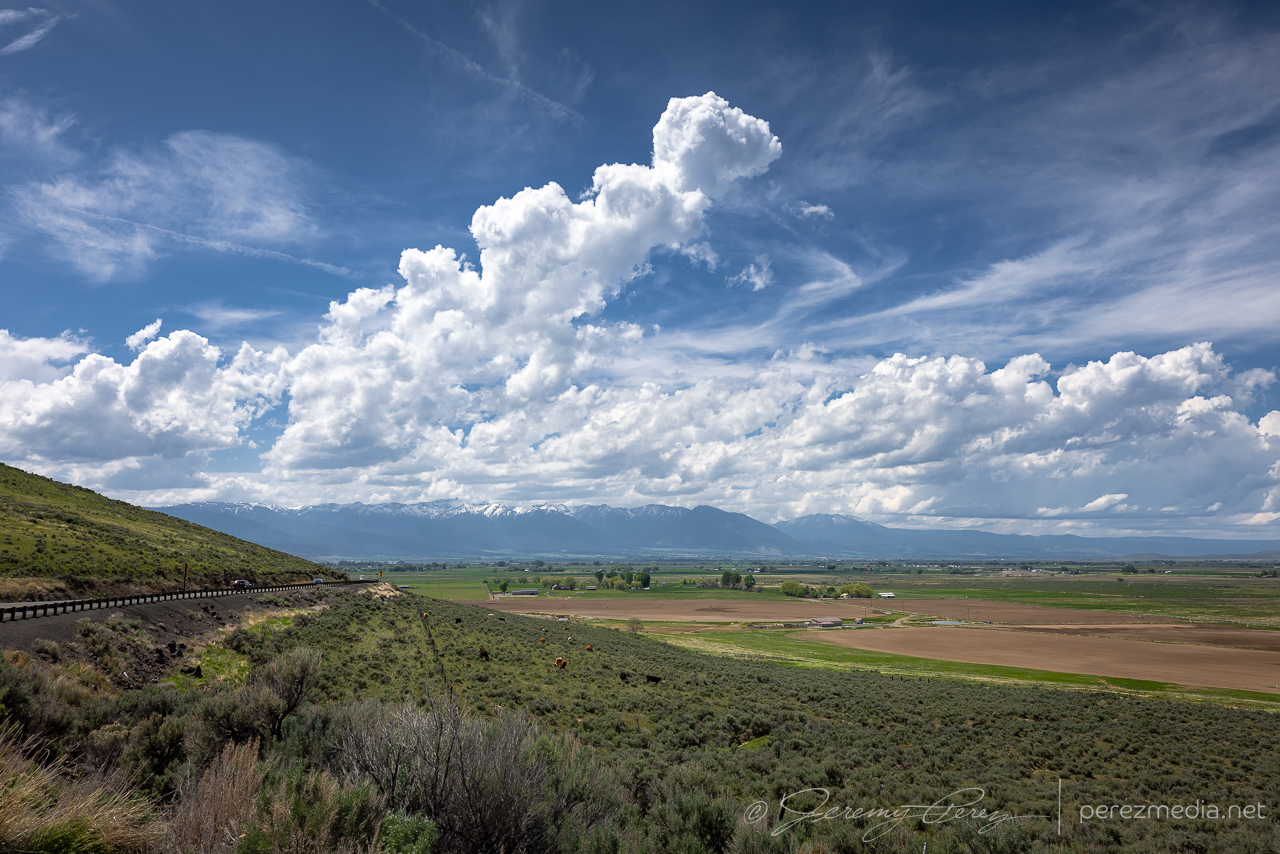
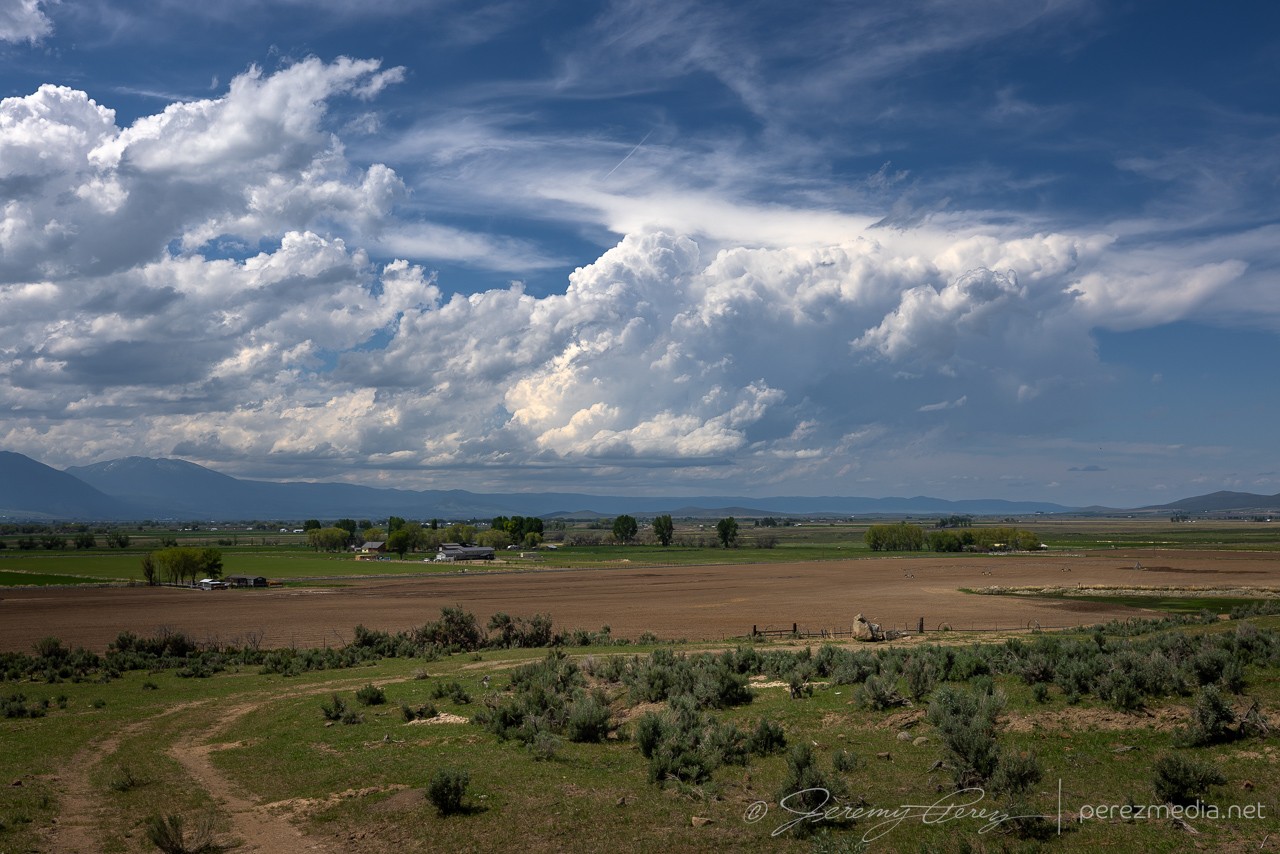
We took in some landscapes and livestockscapes on the way to our target area.
From Rt 86 northeast of Baker, turkey towers finally started kicking off over the mountains. 2058ZTowers started thickening up near La Grande. 2116ZConvective initiation got underway to the north and started drifting into the Blue Mountains. 2147Z
I opted not to get committed to the road network up that way and watched from our spot as the cell gradually withered away.
Other orographic attempts that were better suited to the road network didn’t manage to do much. 2214Z
I finally gave up on that spot as new convection to the southwest appeared to be strengthening. The road network, as expected, didn’t give us a good intercept, but we cruised south of Baker City and picked up some garden variety cells over beautiful terrain.
Meadows and disorganized updrafts. 2312Z
The storms I was able to catch sight of weren’t intense, but the landscape gave me what I wanted: convective skies over gorgeous terrain. After calling the chase, we headed east toward western Montana for the next day’s chase.
Firing over Verde Valley earlier than I expected. May not see best parameters taken advantage of in my target area.East of Verde Valley on Rt. 260. 2052ZCell moving over Spring Valley. 2238ZWider view. 2240ZThin shelf near Flower Pot Tank along I-17 southwest of Camp Verde. 2255ZBack on Rt. 260 east of Camp Verde. 2312ZPrecip and funnel over the Black Hills. 2319ZParting view behind the gust front on Rt. 260. 2324Z
Watching to see what happens in the volcanic field north of Flagstaff. 0000ZNicely sculpted even if lightning is scarce.Holding short of the Navajo Reservation boundary. 0101ZSunset lightning was scarce, but a few CGs made it through. 0106ZSunset was hot! Not a bad lowering either. 0115ZZoomed in at 130mm worked out for at least one strike. 0135ZAnother multicell pulse against the sunset. 0144ZGood twilight color as the next south-moving cell lit up the horizon. 0152Z & 0159Z
A trough was forecast to nudge through northern Arizona and draw up enough moisture for a chance at a few marginally organized storms. I made my way northwest of Flagstaff on Highway 180 toward Valle to see if anything interesting would drift by. Stronger storms were ongoing further to the west, but a few were starting to fire nearby as I reached Valle. Transient velocity couplets were showing up on radar with these, but there was nothing particularly interesting about them visually…except for a bold, false funnel peeling away from some outflow.
2159ZFalse funnel — 2200Z
Outflow from the passing cells led to an emaciated arcus that was punctuated against a blob of convection as it surged by.
2211Z
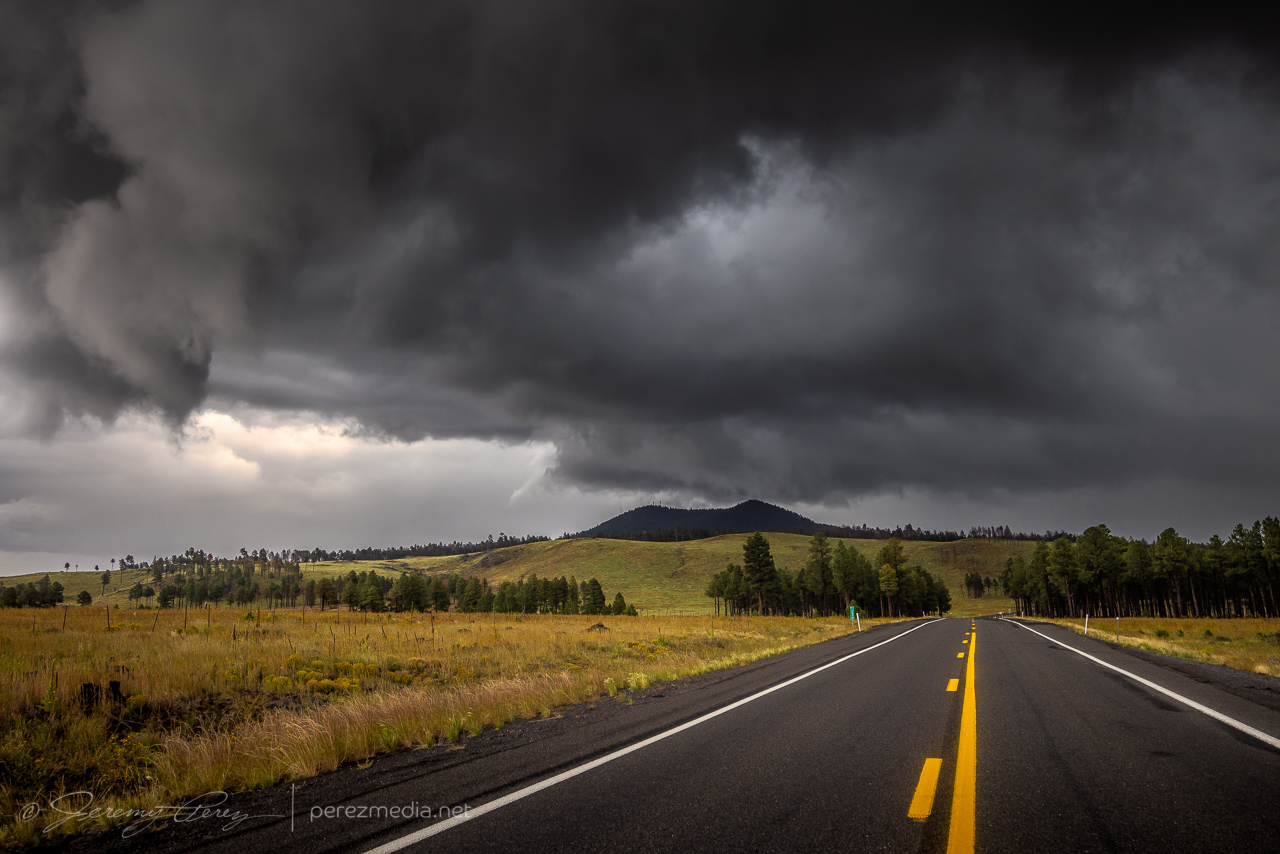
I was taking my time with it all, just waiting to see what showed up. Further south of Interstate 40, a short line of storms was lofting northward. It was weakening, but seemed like it still might shove a shelf cloud my way. So I headed back south to see if I could get a look at it from one of the prairies in that direction.
Approaching a darker line of convection to the south — 2312Z
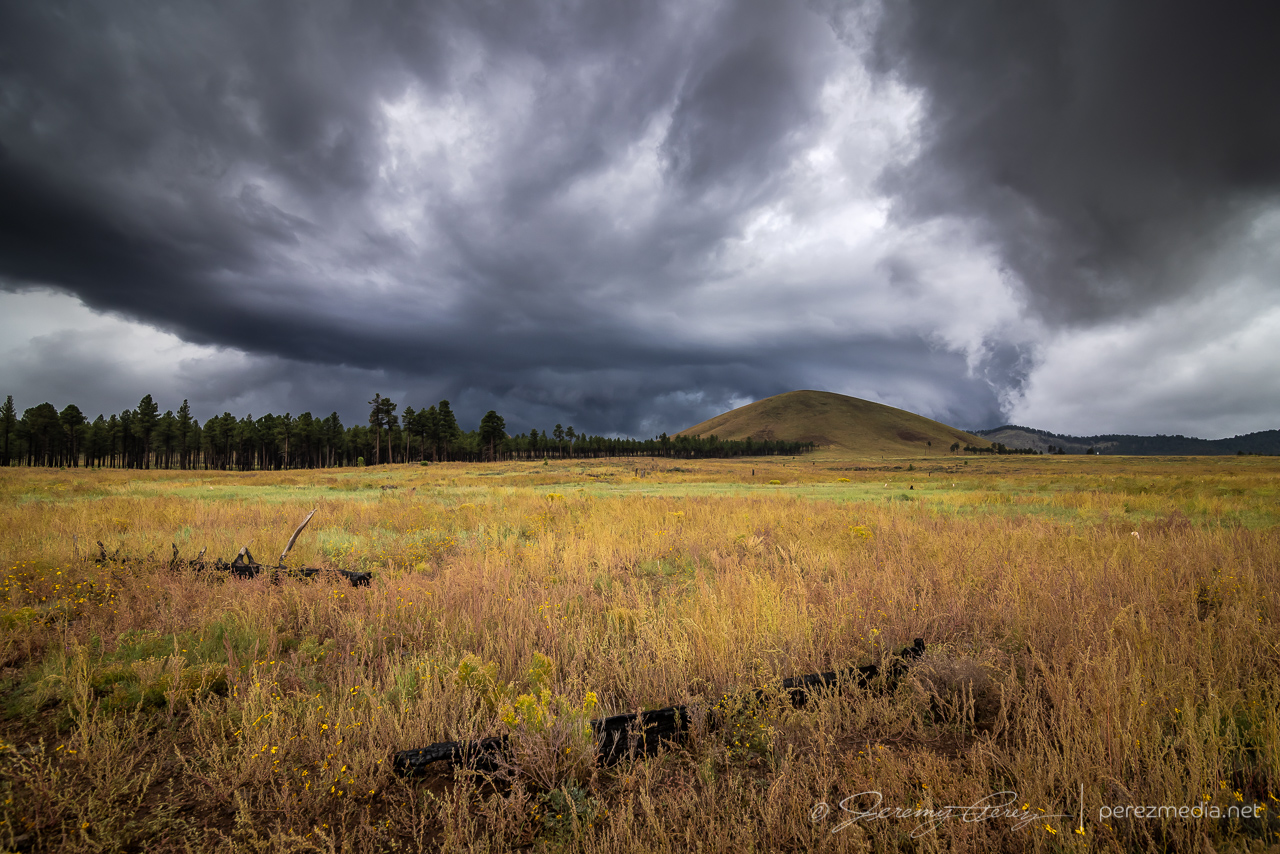
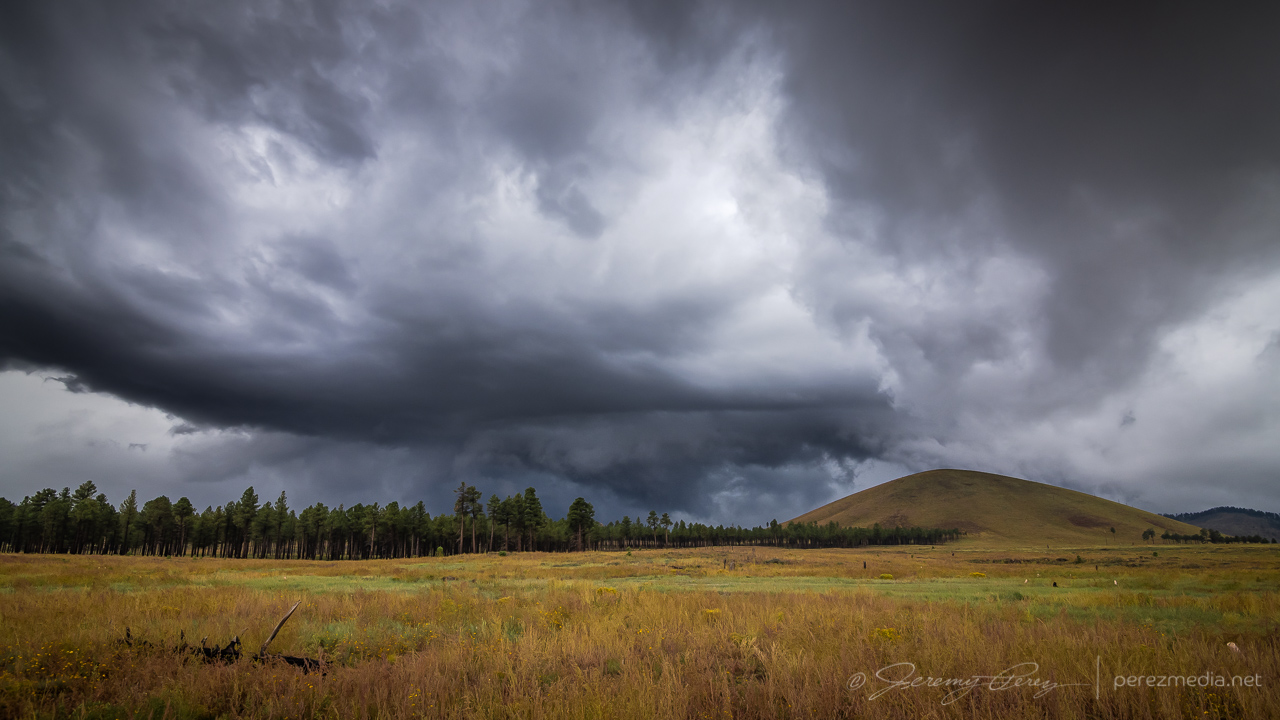
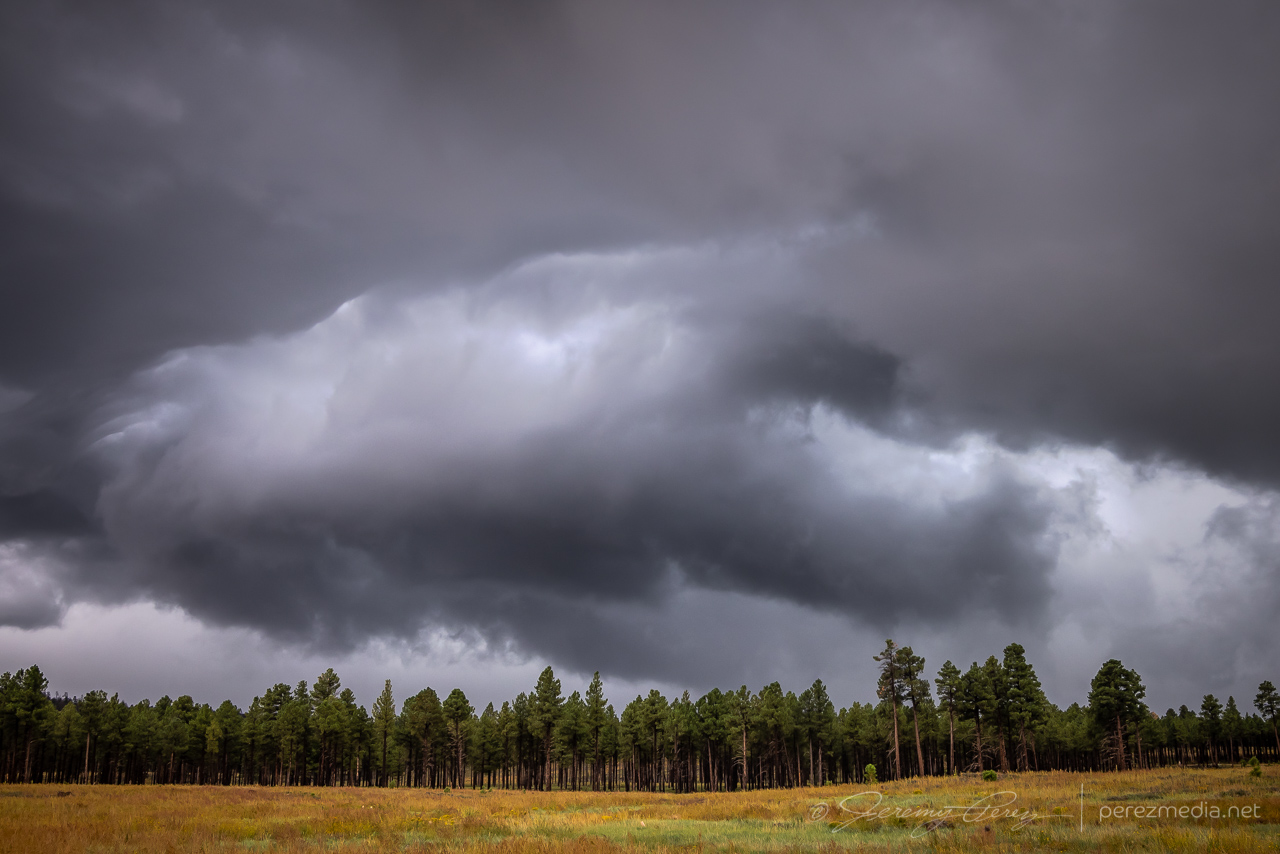
I found a good spot just north of Kendrick Park and watched the shelf drift in over the forest, wildflowers and a nameless cinder cone.
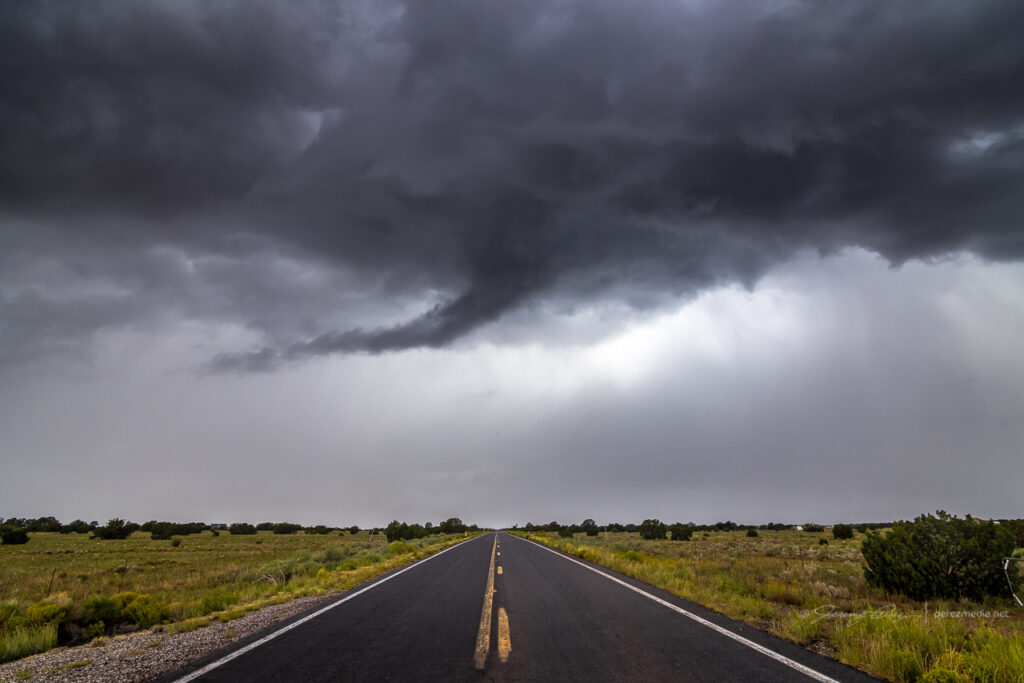
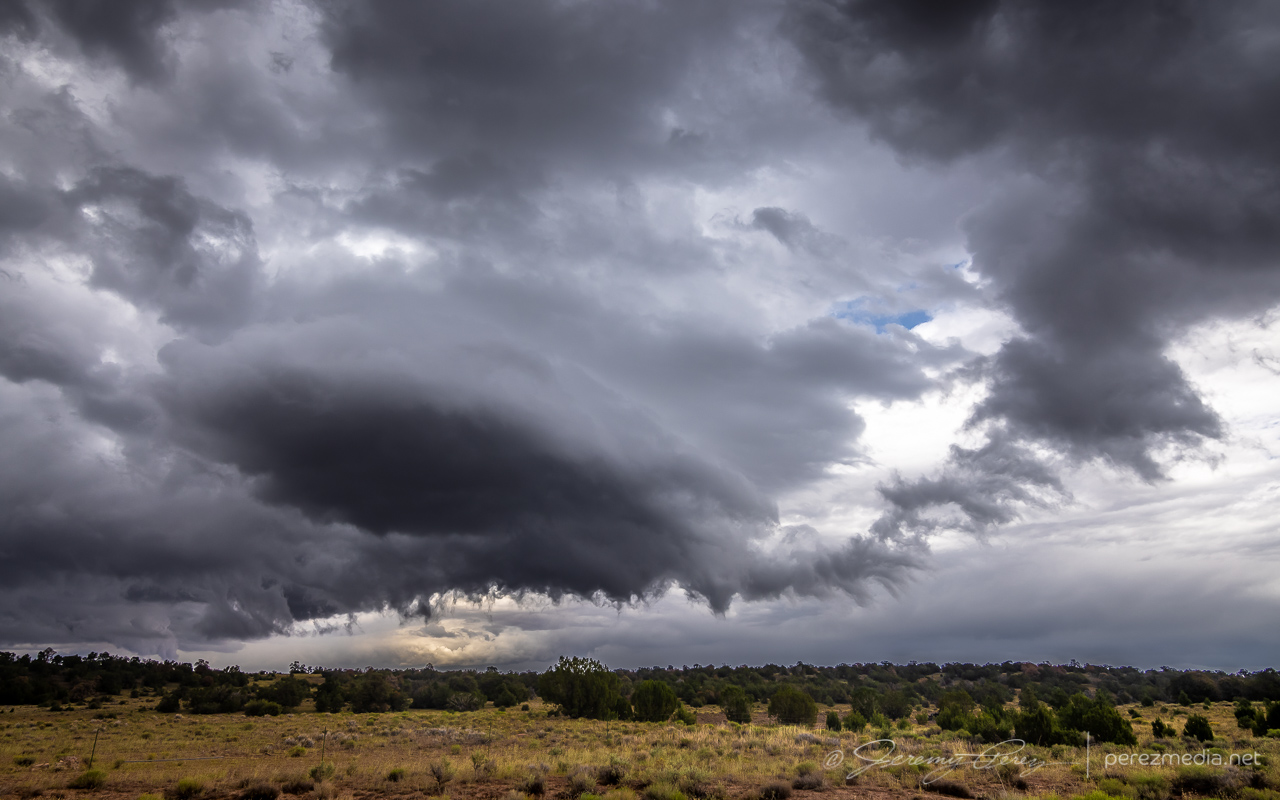
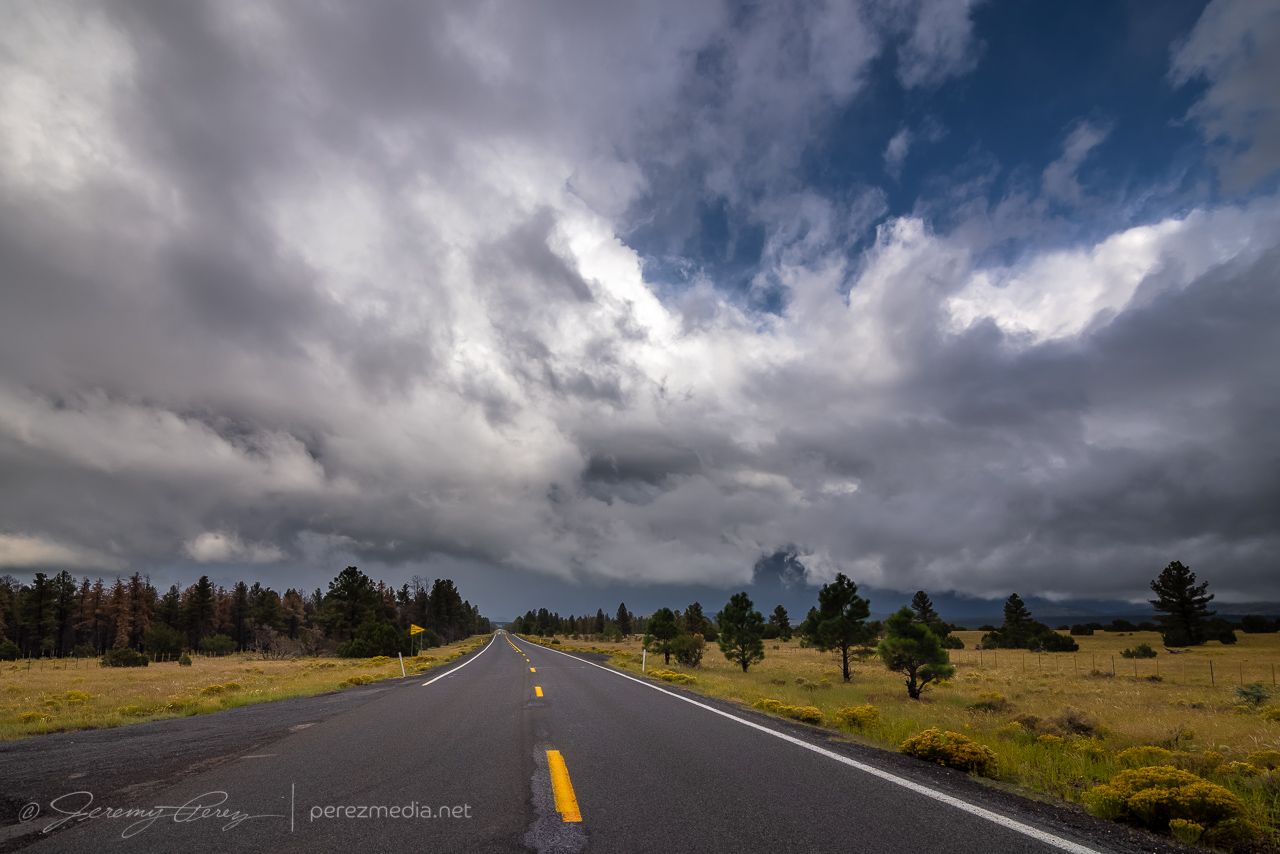
Approaching shelf cloud north of Kendrick Park — 2319Z2320Z2323Z
As it passed, I sat tight, let the rain soak in, and pondered whether any other decent views might be had. This seemed to be the end of the show as far as anything structural was concerned. So I headed back to Flagstaff.
Storms crossing the highway just before the rain dump — 2325Z
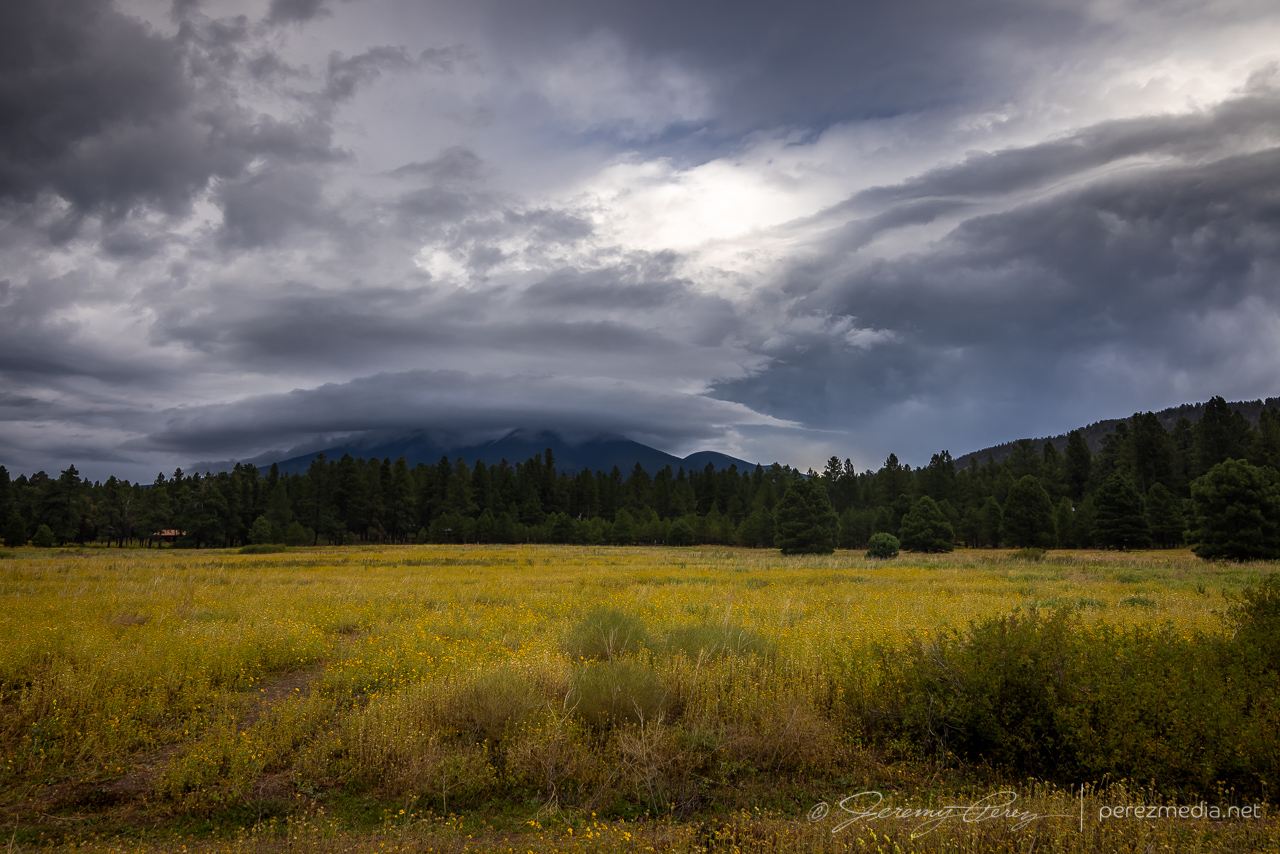
As I reached the outskirts of Flagstaff, I could see a bit of a cap on top of the San Francisco Peaks, so I stopped to grab some shots of that for a few minutes.
0018Z
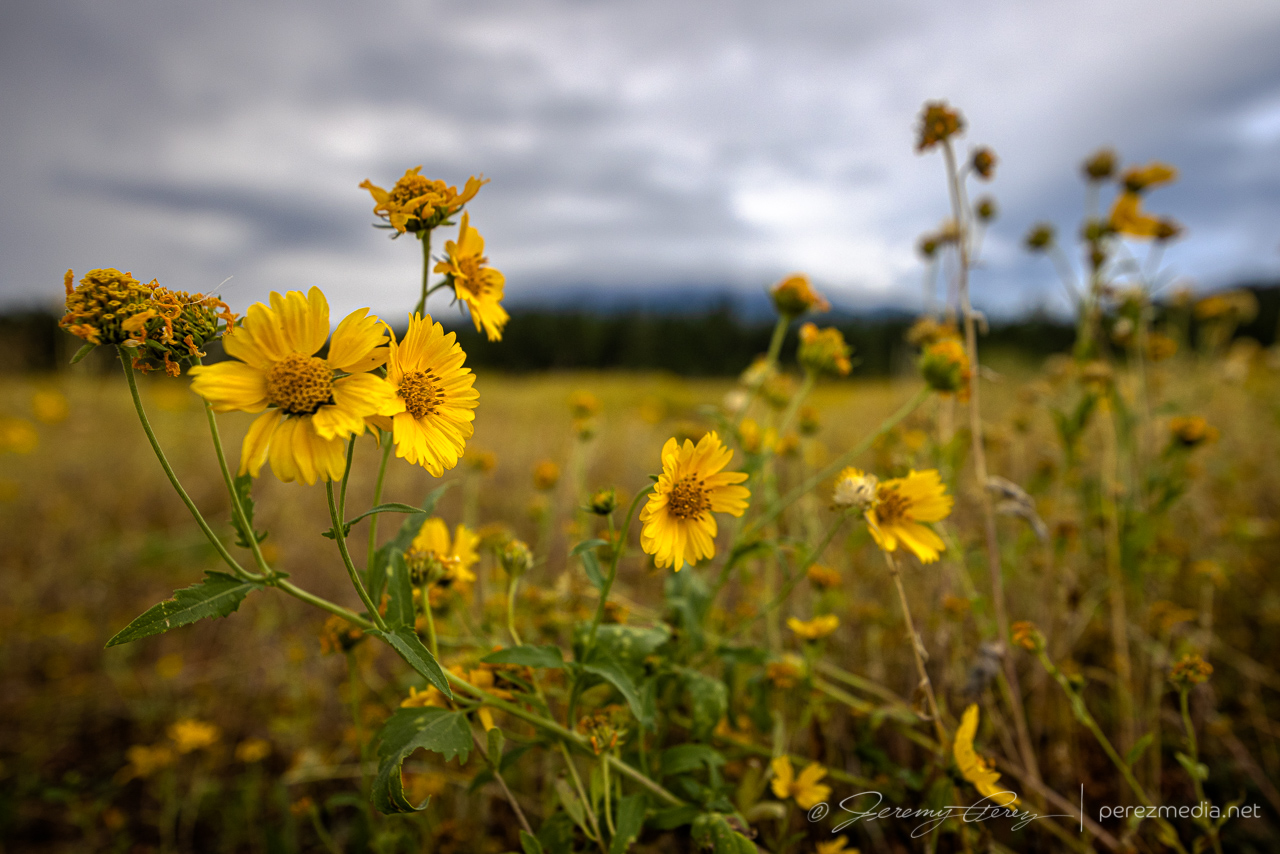
Wildflowers have been going nuts, so I snagged some of those while I was at it.
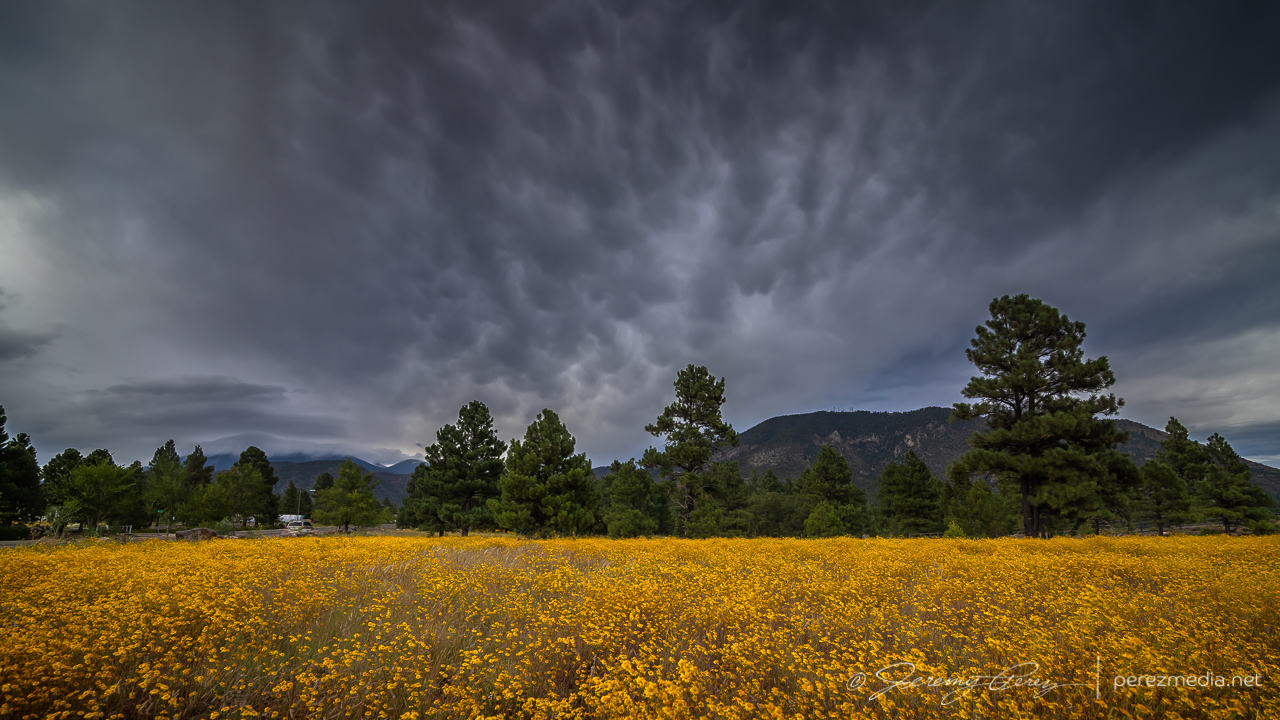
Cruising through midtown, a bit of mammatus was drifting above the wildflowers near Buffalo Park, so another stop was made.
0040Z
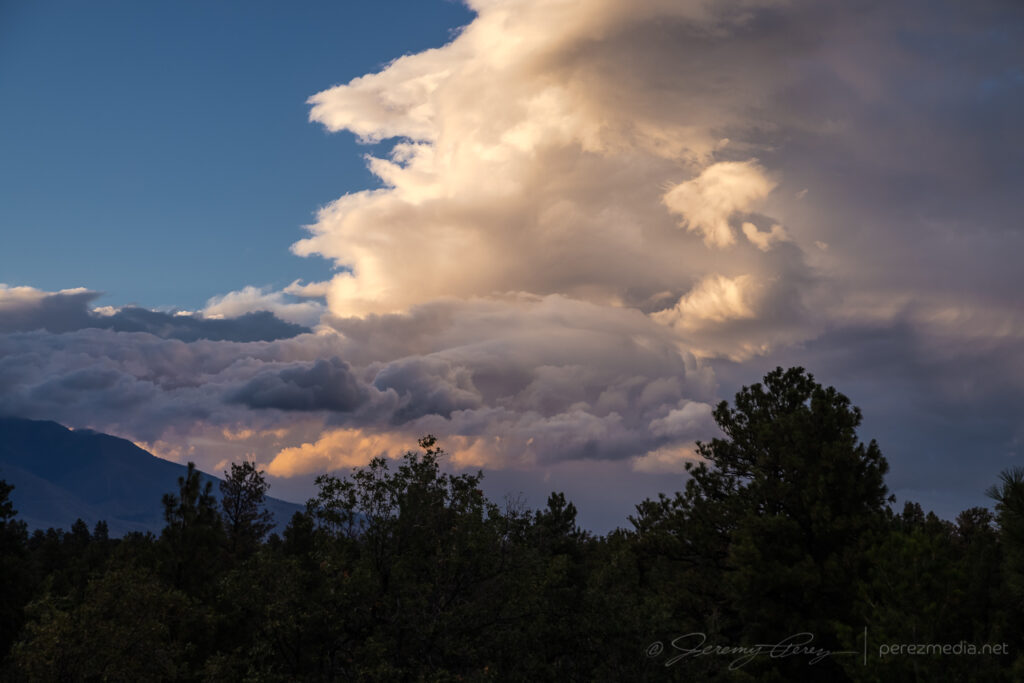
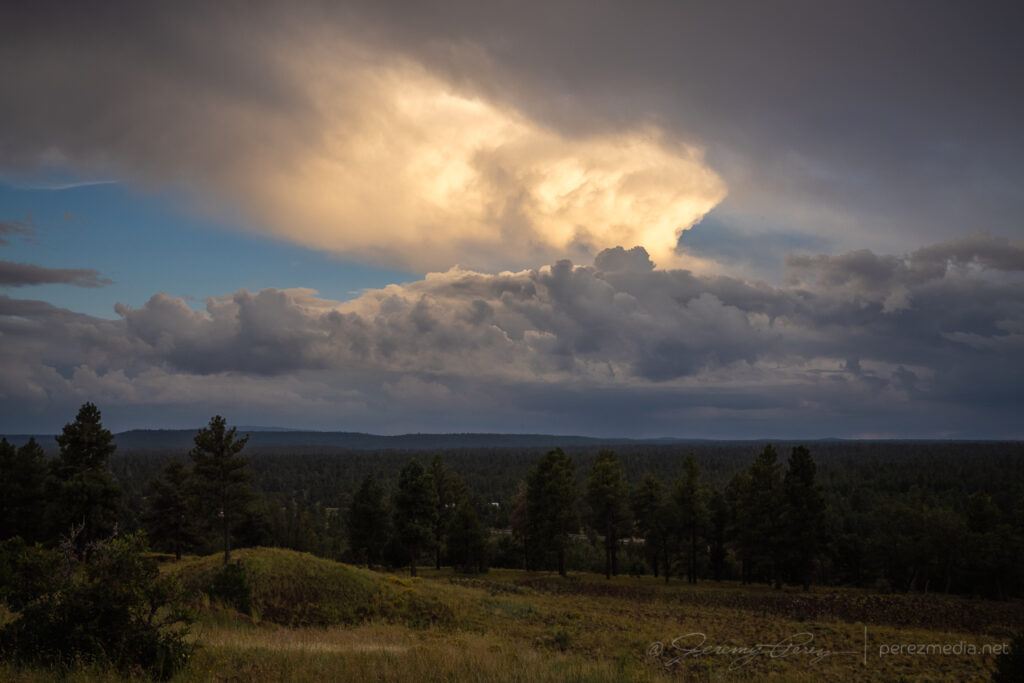
As I made my way home on the east side of town, I made another detour to finish things off with sunset on the remaining scraps of convection and debris clouds.
Dwindling convection and debris clouds from east Flagstaf — 0116Z0120ZMoonrise — 0125Z0129Z
It wasn’t a hearty transition event, at least for the area I chased, but the chase was loaded with great scenery and gorgeous skies. It was good to be out running with the weather for this one.
Early observations this day were in agreement with models that an organized line of storms would descend into the desert around Phoenix that evening and would be preceded by a couple rounds of potentially strong but more isolated storms in the northern part of the state. I started the chase off near Twin Arrows, south of Interstate 40. Storms were popping up by the time I got there and updrafts strong enough to get some photogenic bases, lowerings and downdrafts.
South of Twin Arrows — 2001Z
A couple cells strengthened west of my location. The one closest to Flagstaff developed a velocity couplet and picked up a severe warning, while the one closer to me seemed to be struggling but also developing transient areas of rotation. I decided to stick with it, since my plan was to keep a lead on developing storms eastward then south toward Phoenix. I do wish I had gotten a better look at that stronger cell though.
Rain free base near Twin Arrows with stronger cell further in the background — 2014Z
As that cell moved overhead, it displayed some beautiful vorticity in the updraft before I had to move to get out of the rain. After that, I headed to Winslow and dropped south on Route 87. The idea was to ride new development moving off the Rim into Verde Valley. However, things didn’t ignite the way I hoped. A line of storms went severe warned off to my east, but were too far off for any decent views.
Storm warned for golf ball size hail looking east from 30 miles southwest of Winslow — 2152Z
So I dropped on down to a hillside vantage on the east side of the Camp Verde and took a conference call while waiting for some activity. Storms gradually started popping again in the general area.
Convective attempt south of Camp Verde — 2350ZConvective attempts west of Camp Vende — 2359Z
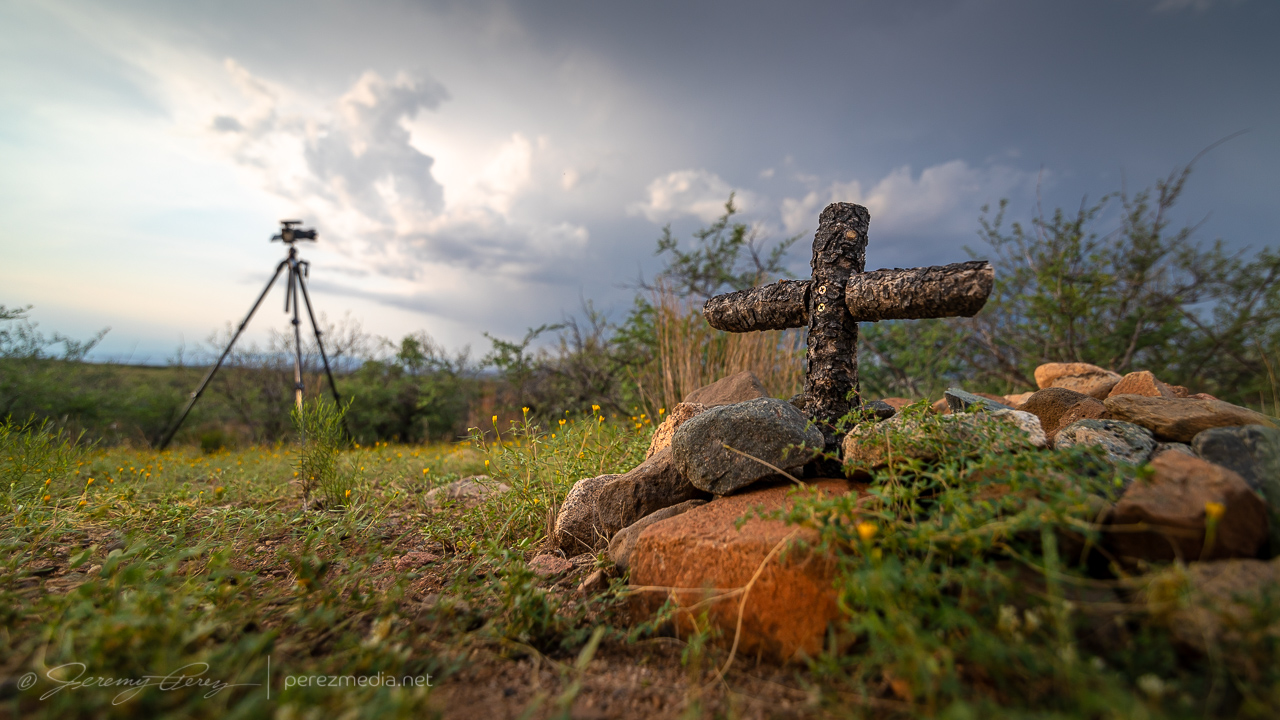
Finally it looked like something might be strengthening to the north, so I headed to a vantage on the west side of Camp Verde. As the northern cell strengthened, I scouted around for a good spot to tripod some attempts at lightning triggering. Someone else apparently likes the views in that area and had buried a couple beloved pets in that spot. The general vicinity looked like it had been periodically weed-whacked & kept up.
Unsuccessful convective attempt northeast of Camp VerdeFractured attempt at a tail cloud as the cap pinched it off.
The cell to the north continued to strengthen, picked up a velocity couplet and a severe warning as it gathered what was probably some decent structure on the other side of the precipitation.
Thankfully, I did manage to snag one CG strike out of that one before I had to head further south.
Lightning strike in the hills north of Camp Verde — 0124Z
As I made my way onto the desert floor and headed east, storms over the Sierra Ancha were growing as expected and it looked like I’d be in good position to set up at a site I had scouted on Google Maps just north of Rio Verde. As I approached, lightning was illuminating the tops of the storms and I was hopeful for some good photo ops. But within a mile of my vantage, I saw that my road was closed due to being washed out by flooding over the last few days. I tried to find another nearby spot with a view over the treetops, but failed on that. So I backtracked several miles to another scouted spot and made my way to Tom’s Thumb Trailhead. It was a just-in-time setup, as the storms were quickly rushing into town and were almost on me.
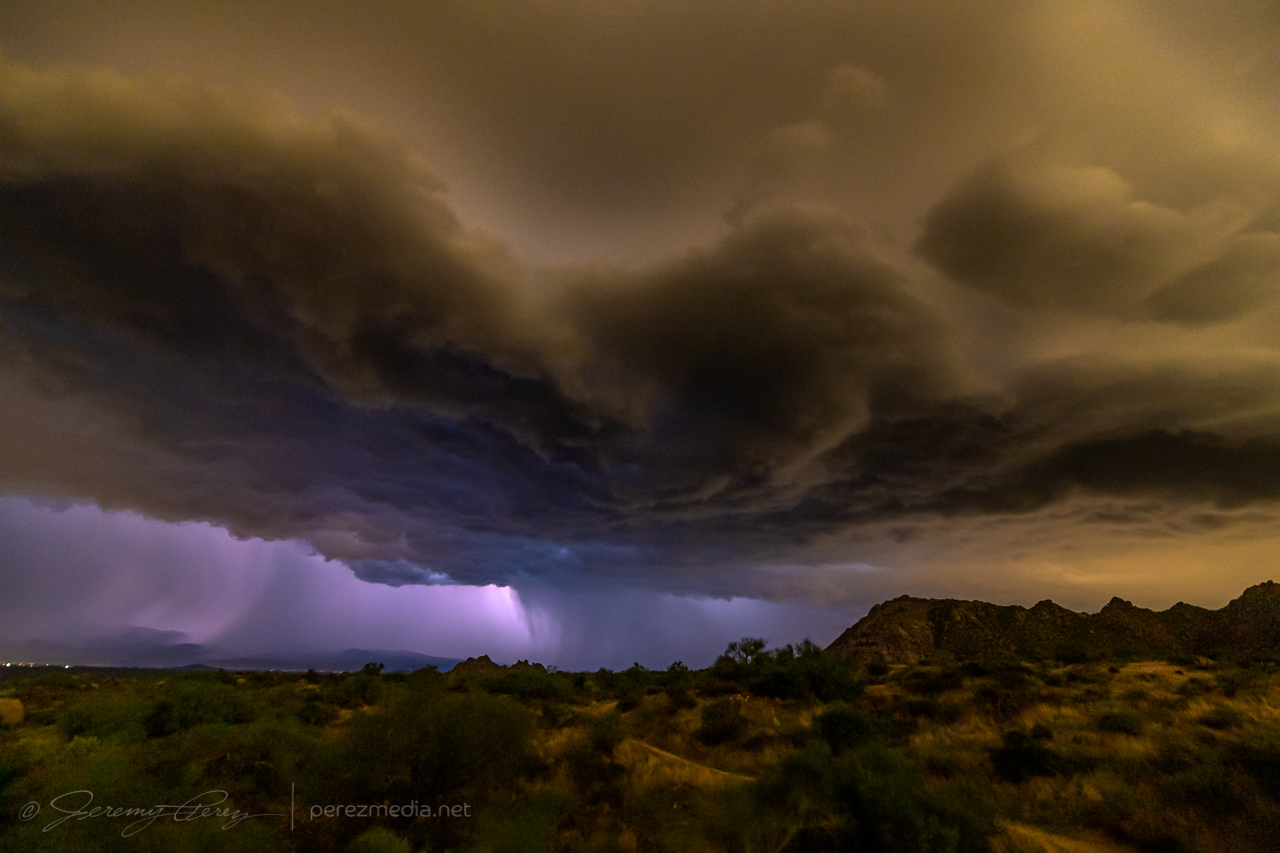
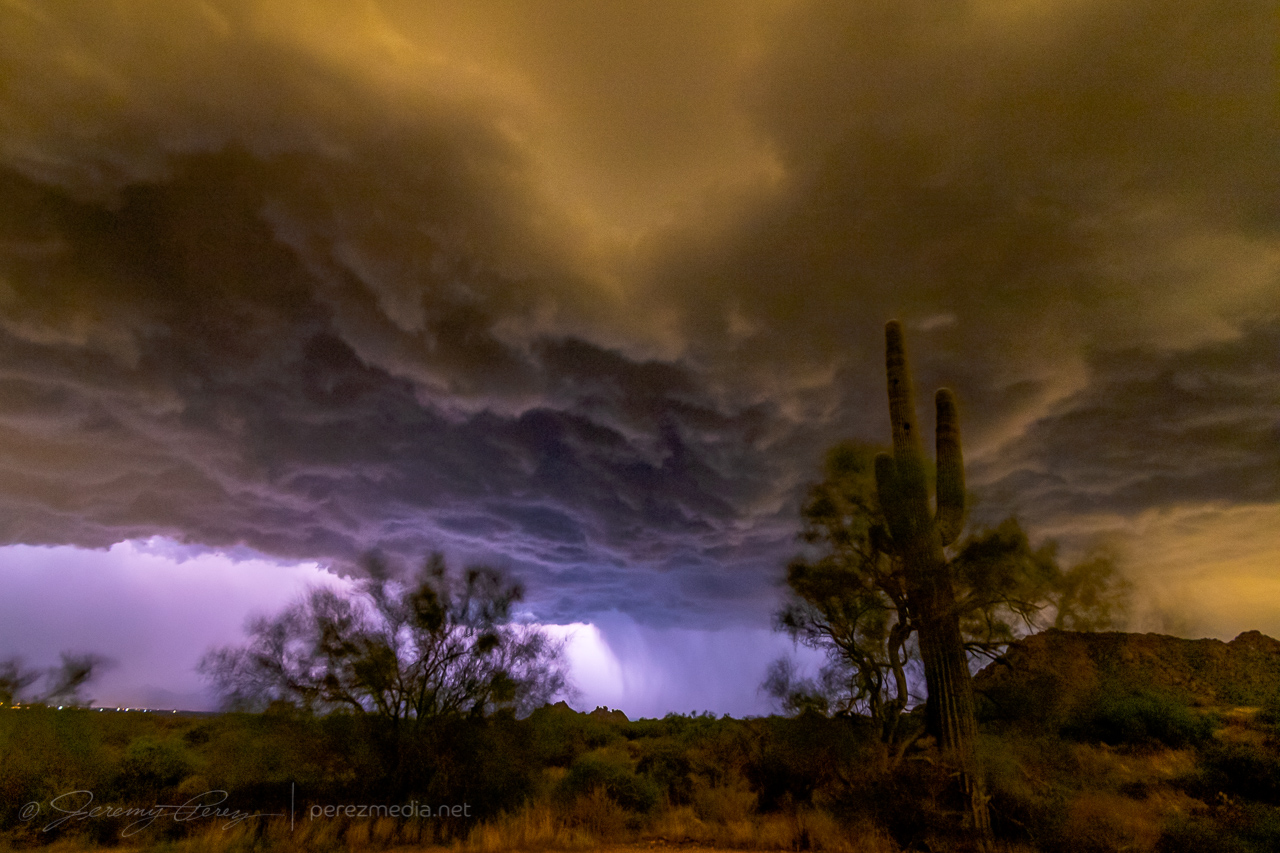
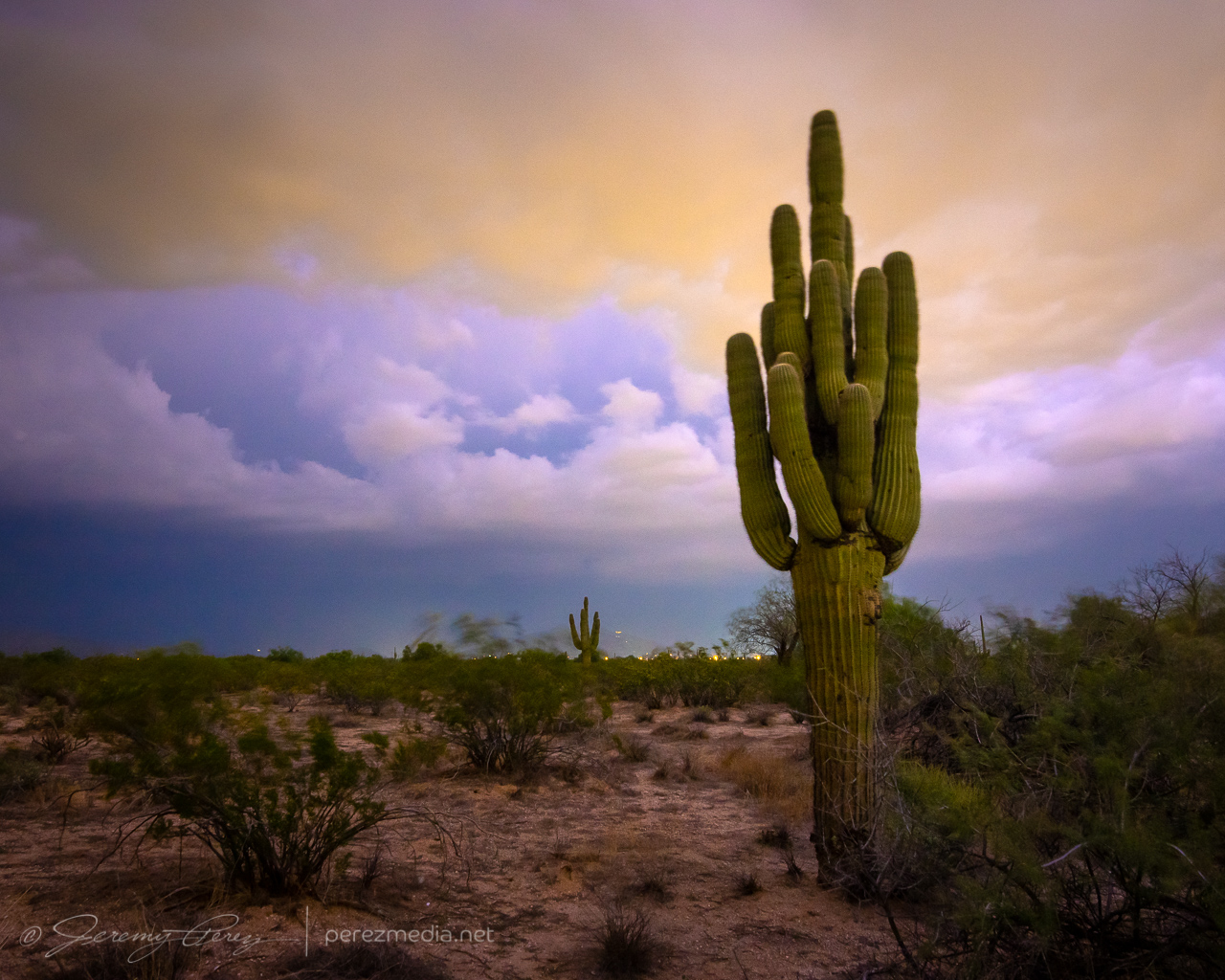
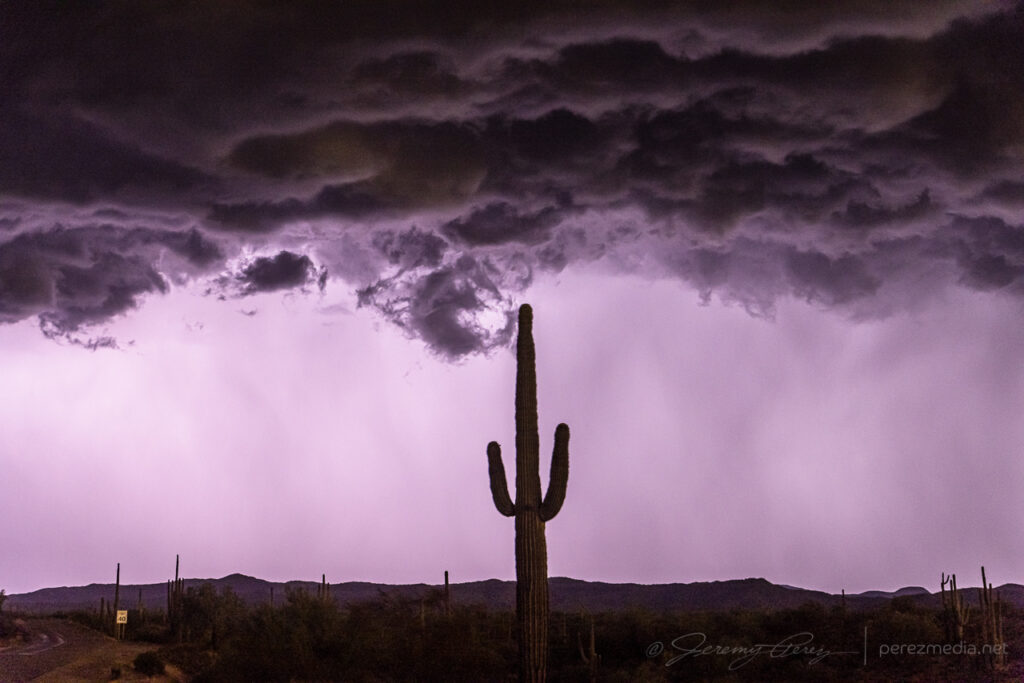
Lightning was constant, but I wasn’t seeing any bolts outside the clouds or rain. The shelf cloud looked pretty good though and I started grabbing shots with the saguaro, palo verde and nearby peak.
Inbound shelf cloud from Tom’s Thumb Trailhead, north of Fountain Hills — 0526Z0527Z0528Z
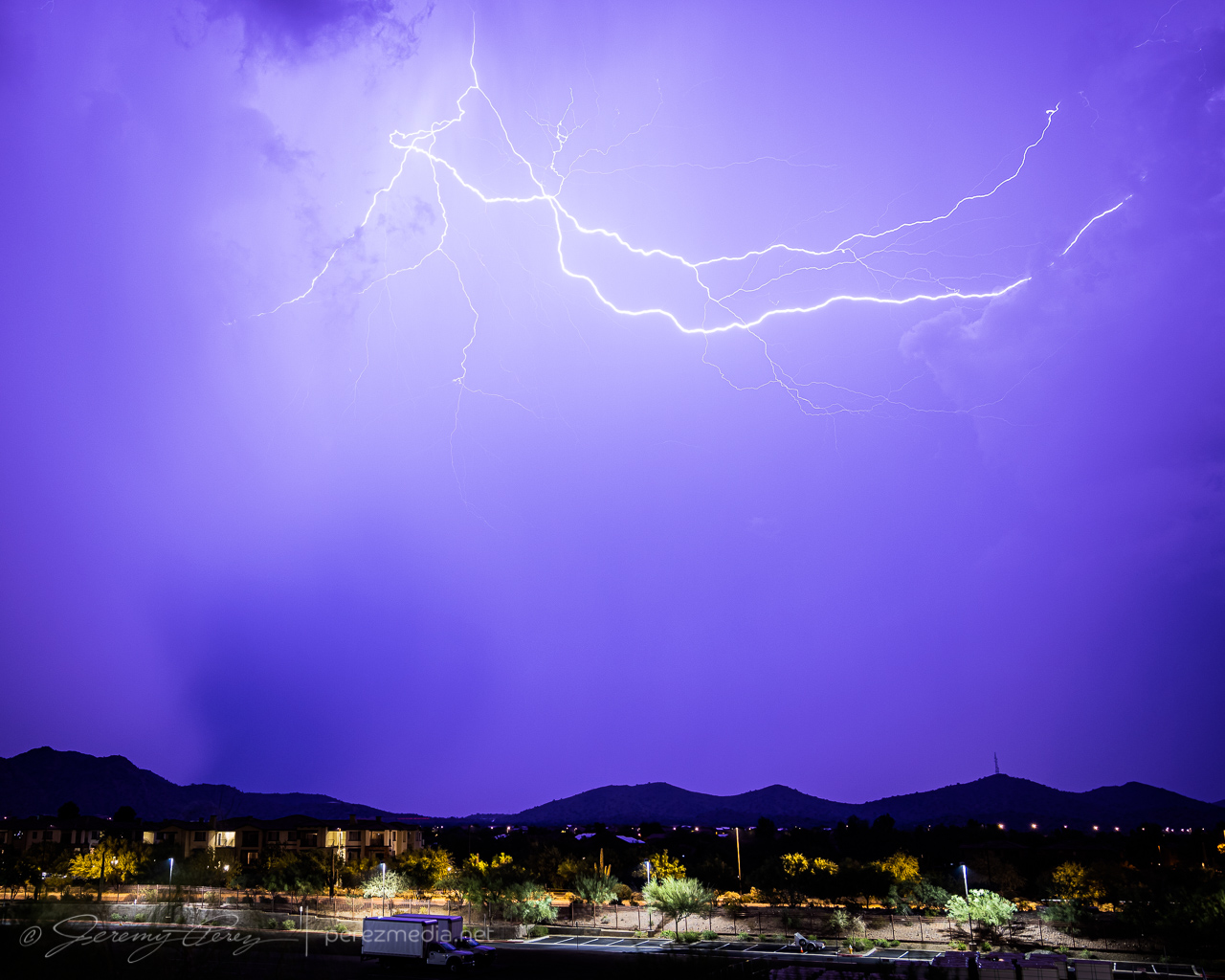
I had about 7 minutes to get those shots before the gust front was on me and rain was growing heavy. I rushed to get off the dirt road leading there before it got swamped, and made my way to the Phoenix Sonoran Preserve to try and get some more shots, but intracloud lightning was the only thing happening.
Intracloud lightning illuminated landscape from Phoenix Sonoran Preserve — 0611Z
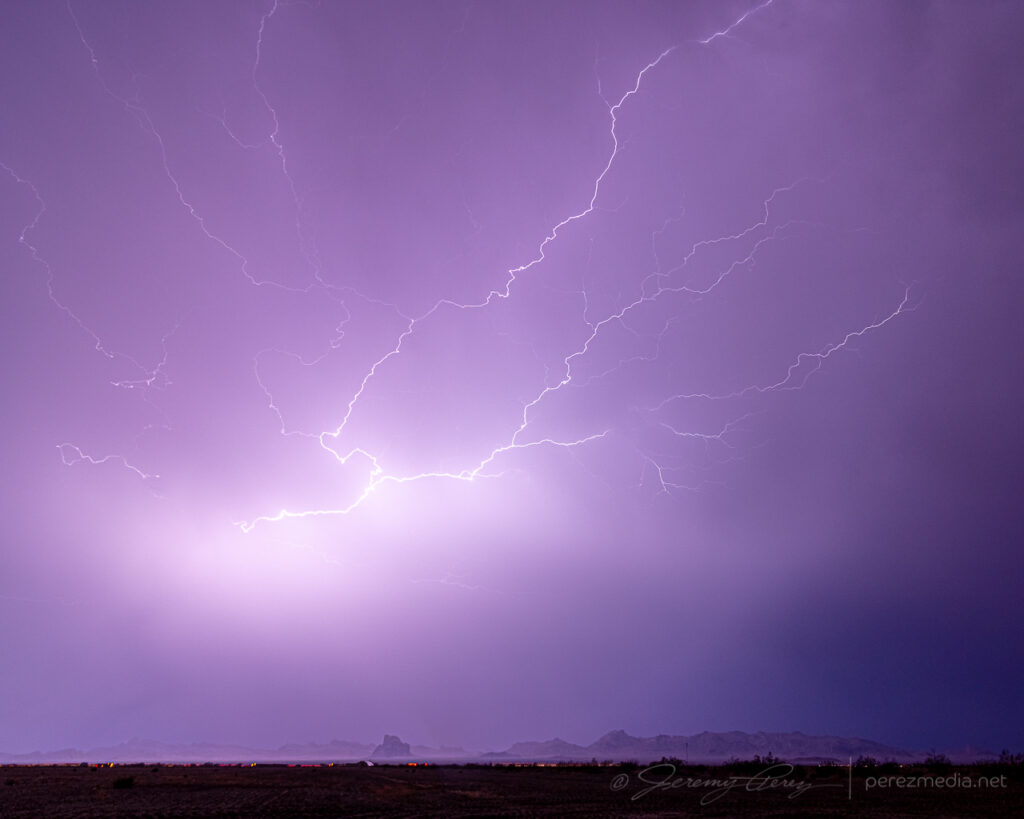
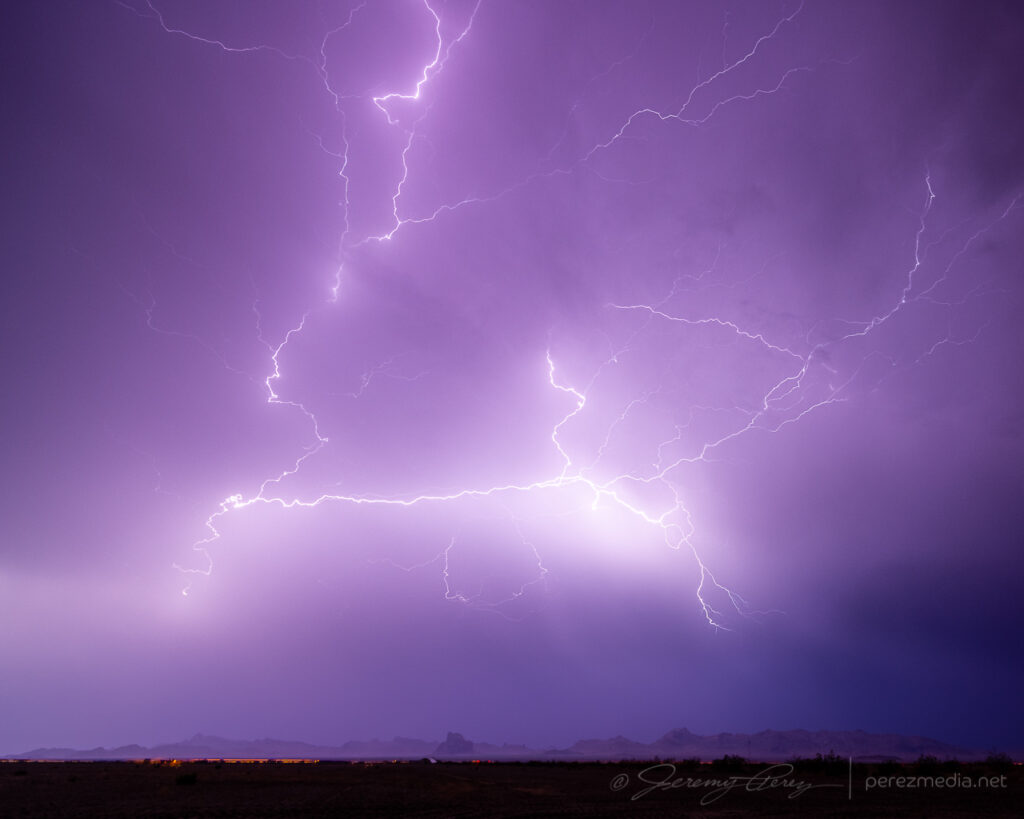
Another couple cells looked like they were firing to the north and I managed a couple cloud-to-cloud bolts out of that before calling off the lightning attempts.
Cloud-to-cloud lightning from north Phoenix — 0705Z
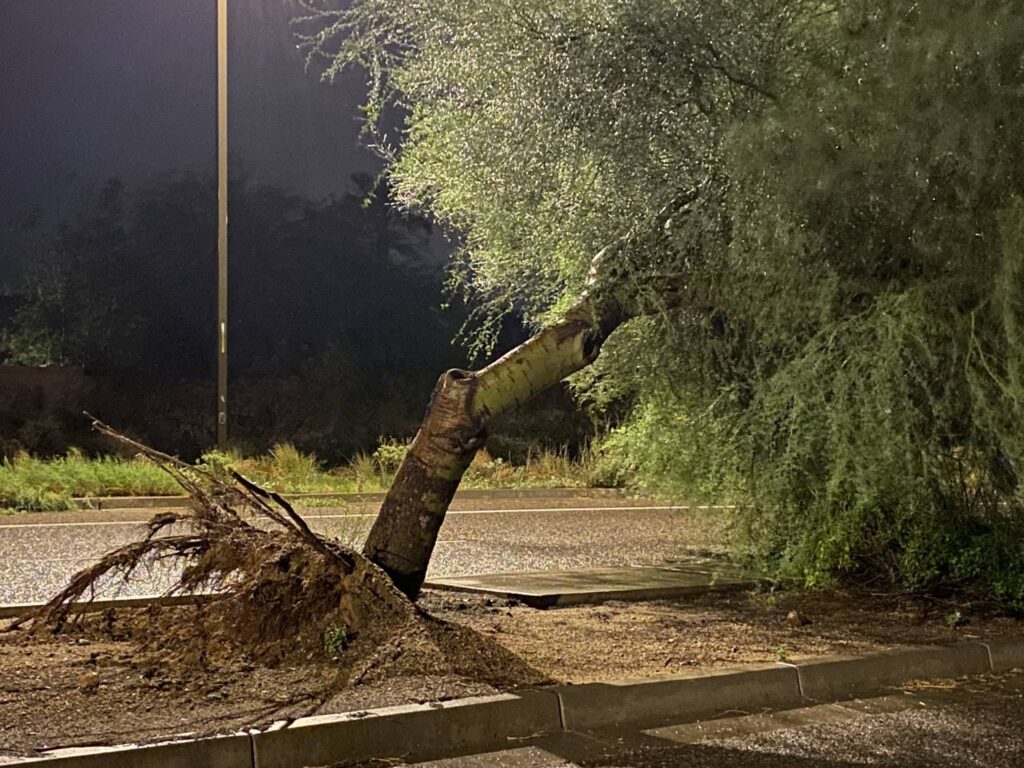
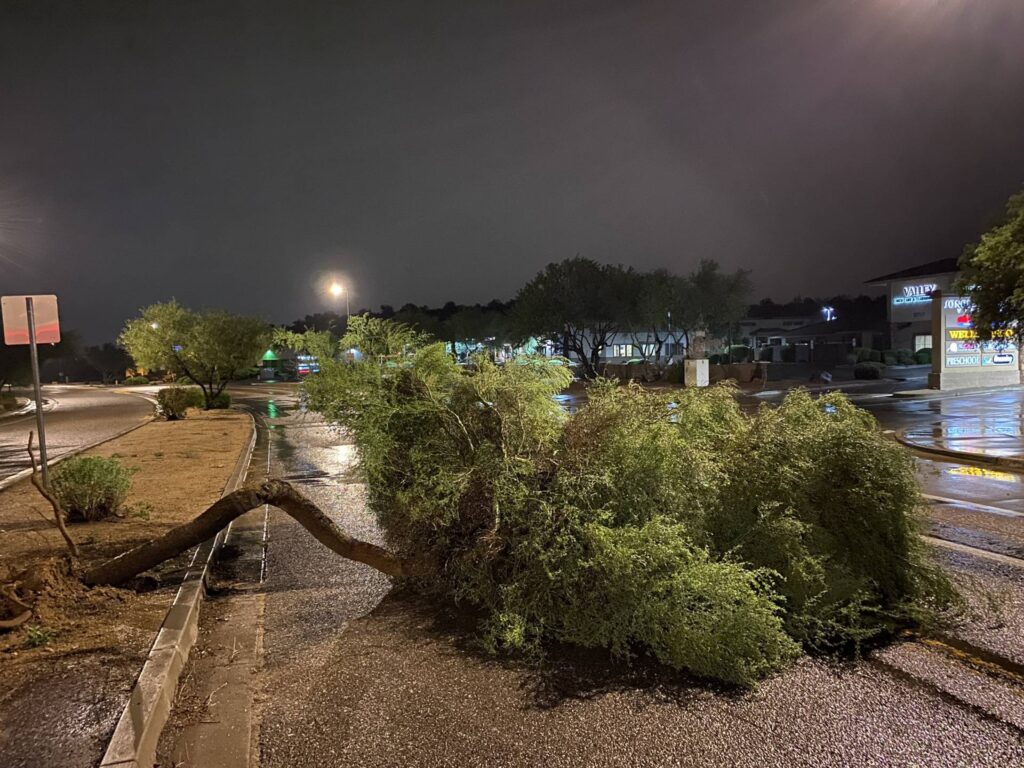
As I headed toward Interstate 17 to head back home to Flagstaff, I had to weave around a few palo verde trees that had been blown down into the road. I stopped to send in a spotter report on those, and then headed home.
Down palo verde trees near Interstate 17 and Carefree Highway
The evening of August 13th looked like a good one to ride a line of storms off the mountains and down into the deserts of central Arizona. I headed south from Flagstaff around 6:30PM as storms were firing along the Mogollon Rim to the southeast. They were beautiful in the setting sun, but I was already behind schedule and didn’t have time to get photographs. I eventually arrived at the Sunset Point rest stop on Interstate 17 north of Black Canyon City. By this time, deep twilight revealed internal lightning strobing in the anvil and cloud tops. Low level stratocumulus was hindering the view a bit, but I hung out and started a time lapse.
As the line of storms grew closer, increased inflow started to take care of the intervening clouds and a shelf at the base of the storms took shape. Lightning was constant, but CG strikes weren’t part of the action. Still, the strengthening line was looking impressive, so I stayed with it up on the plateau instead of repositioning & scouting early for the downhill desert phase.
Cell phone video posted during the chase.
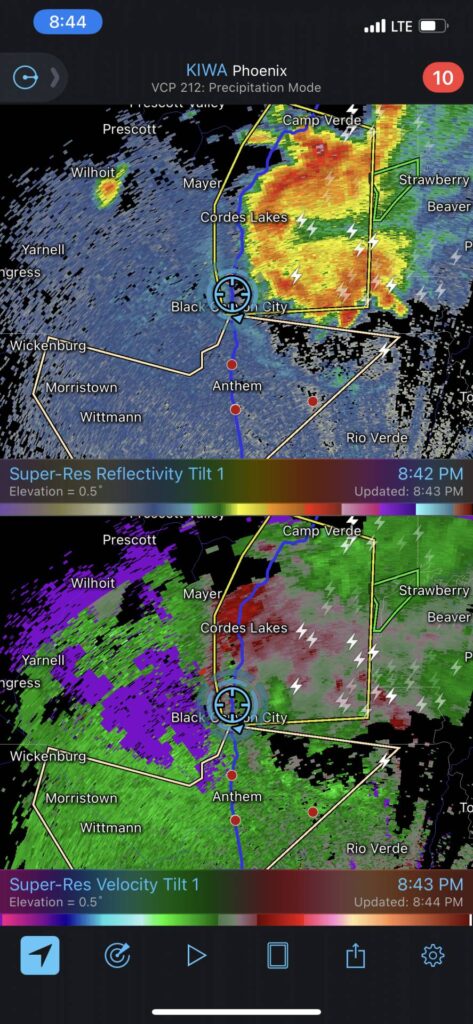
As it drew closer, reflectivity showed a pronounced rear inflow notch developing. I knew it was going to be a rough ride down the hill if I didn’t get moving soon, but really wanted to see what it looked like as it got closer.
Impressive rear inflow jet.
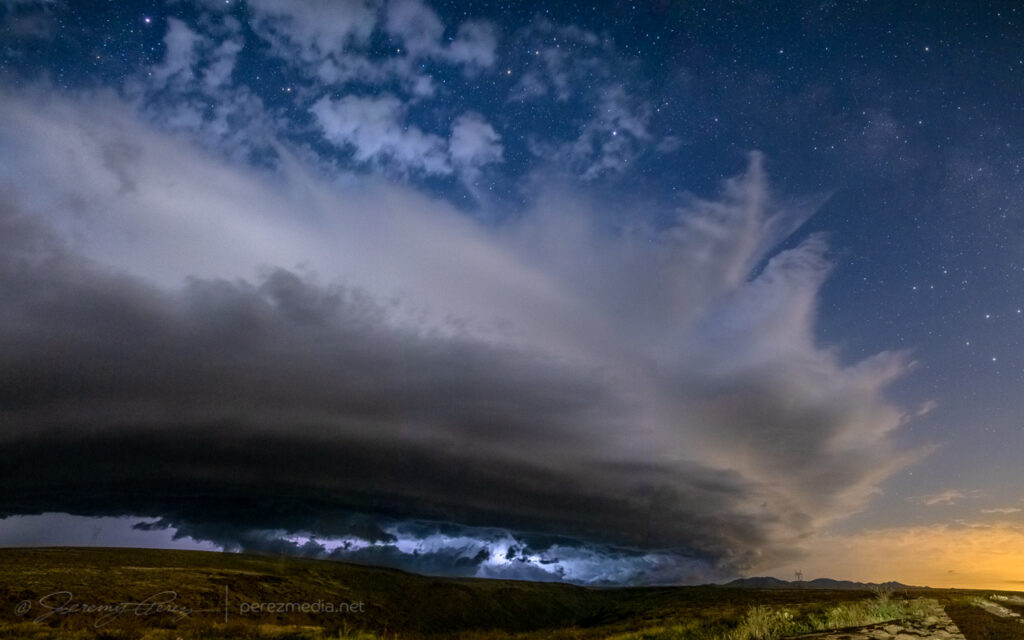
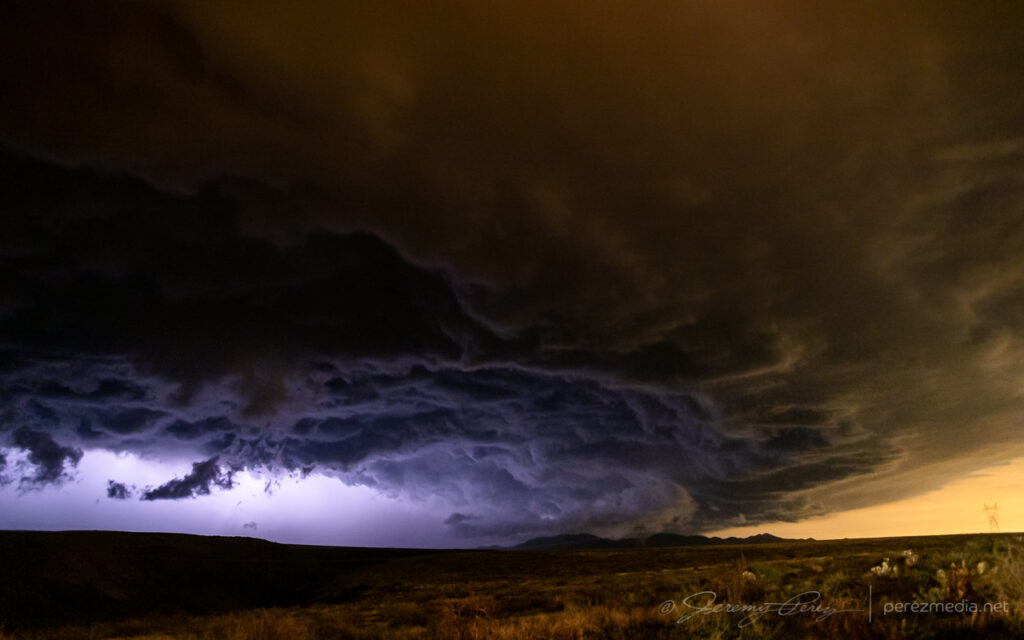
It did not disappoint. Between the orange illumination of the Phoenix sky glow and blueish-purple lightning blazing from within, the storm was otherworldly as it loomed closer.
Moments after that photo, the wind really started kicking up. I tossed everything in the car and surfed an aggressive gust front down to the desert floor. From there, I tried to gain ground on it to the east toward Wickenburg to see if I could catch any decent structure or lightning strikes. But the whole complex was moving too fast to get far enough ahead on available routes. I wanted to hang back and try for perhaps a better chance at lightning behind the line, but needed to get clear of desert washes that were likely to flood and strand me if I hung out in an isolated spot too long. I got down near Interstate 10 about 25 miles west of Tonopah and managed to capture some anvil crawlers. They were okay, but not the CG strikes I was hoping for.
Overall, it was fun to surf my second Arizona bow echo. In hindsight, I could’ve headed home after the Sunset Point encounter and been very happy. But you can’t always tell whether later parts of the show will be worth the extra miles.
At the end of each chase trip to the plains, there is always the question of what taste the last day or two are going leave behind. It’s highly temporal. Several great days early in the chase trip can get lost in the gloomy mood of a busted chase on the last day. It takes time to regain broad perspective after getting back…at least for me. And that was how this chase trip was looking the day before. The last couple days weren’t complete busts — I still intercepted supercells and captured some good photos both days, but they were still underwhelming in terms of visual quality and structural character of the storms I did land on. Some of it was due to poor forecasting choices on my part, but much of it due to messier parameters on those days. In any case, the night before, I was resigned to driving home with a bit of a bummer on my mind.
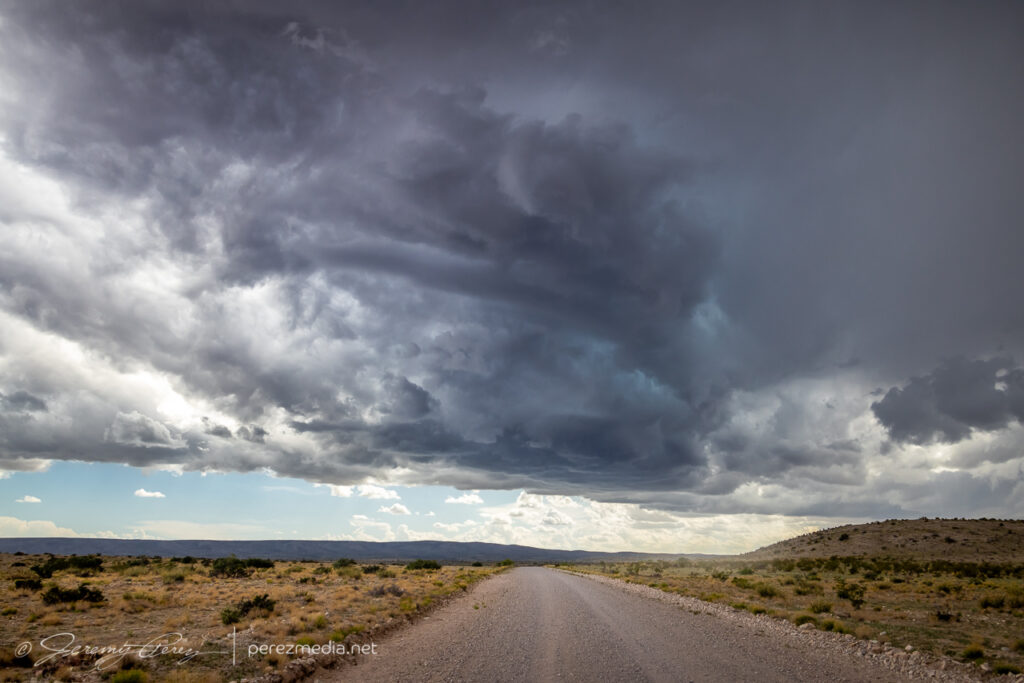
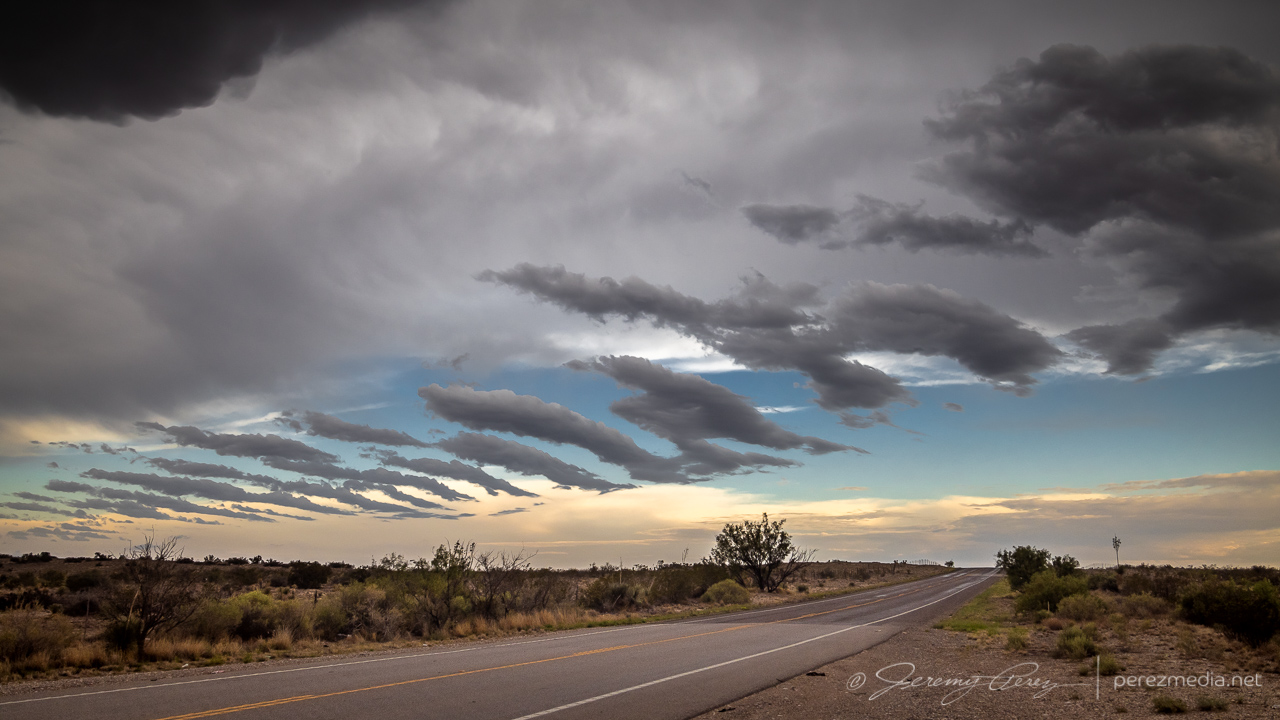
I had stopped for the night a few miles north of Carlsbad, New Mexico, intending to finish my drive home the next day. But when I woke and looked at the forecast for the day, it seemed like there was something worth a look in the immediate area. Enough moisture and shear were in place for a few orographically forced storms to pop up and possibly make their way off into better instability. I figured I’d take a chance on it and maybe end on a slightly higher note especially since I was right next to the target area.
Waking up at the perfect overnight spot just off the highway north of Carlsbad, New Mexico
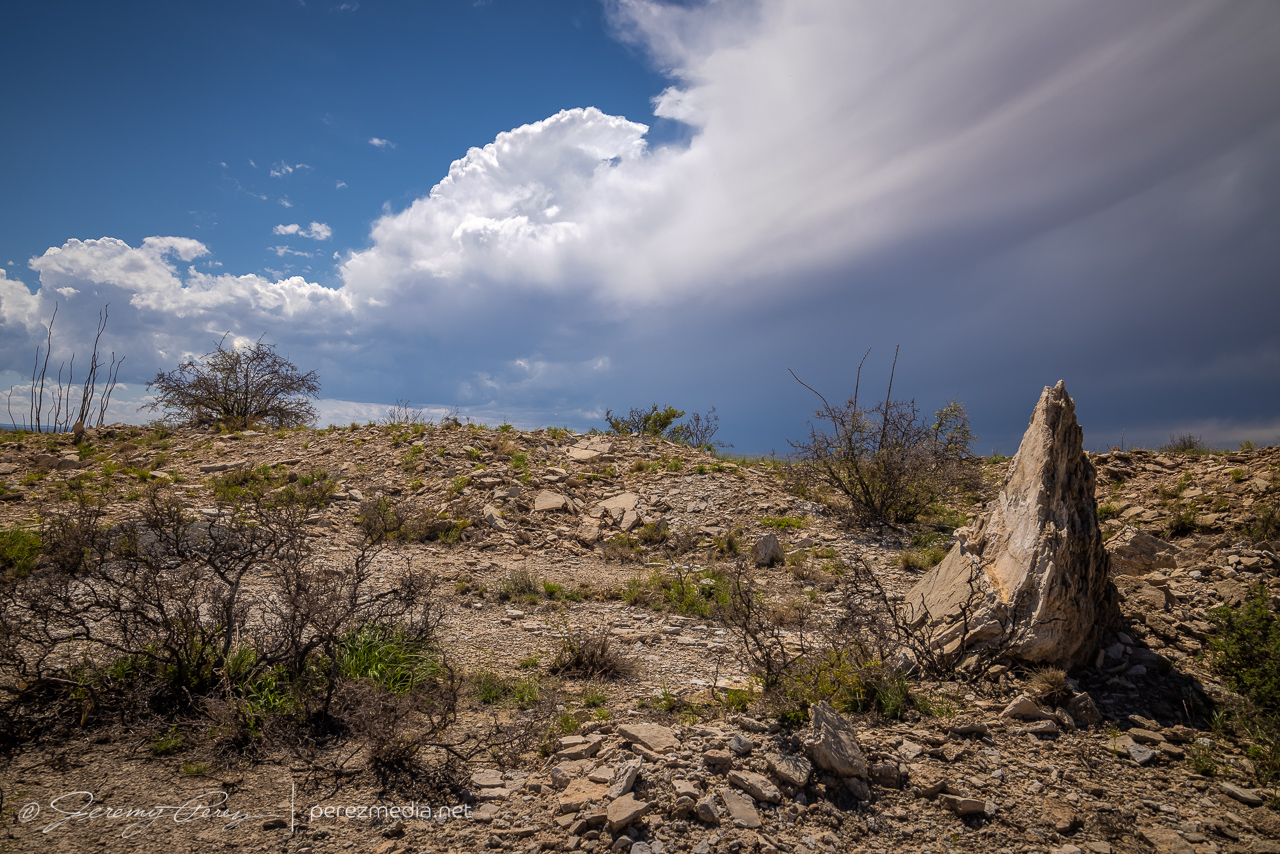
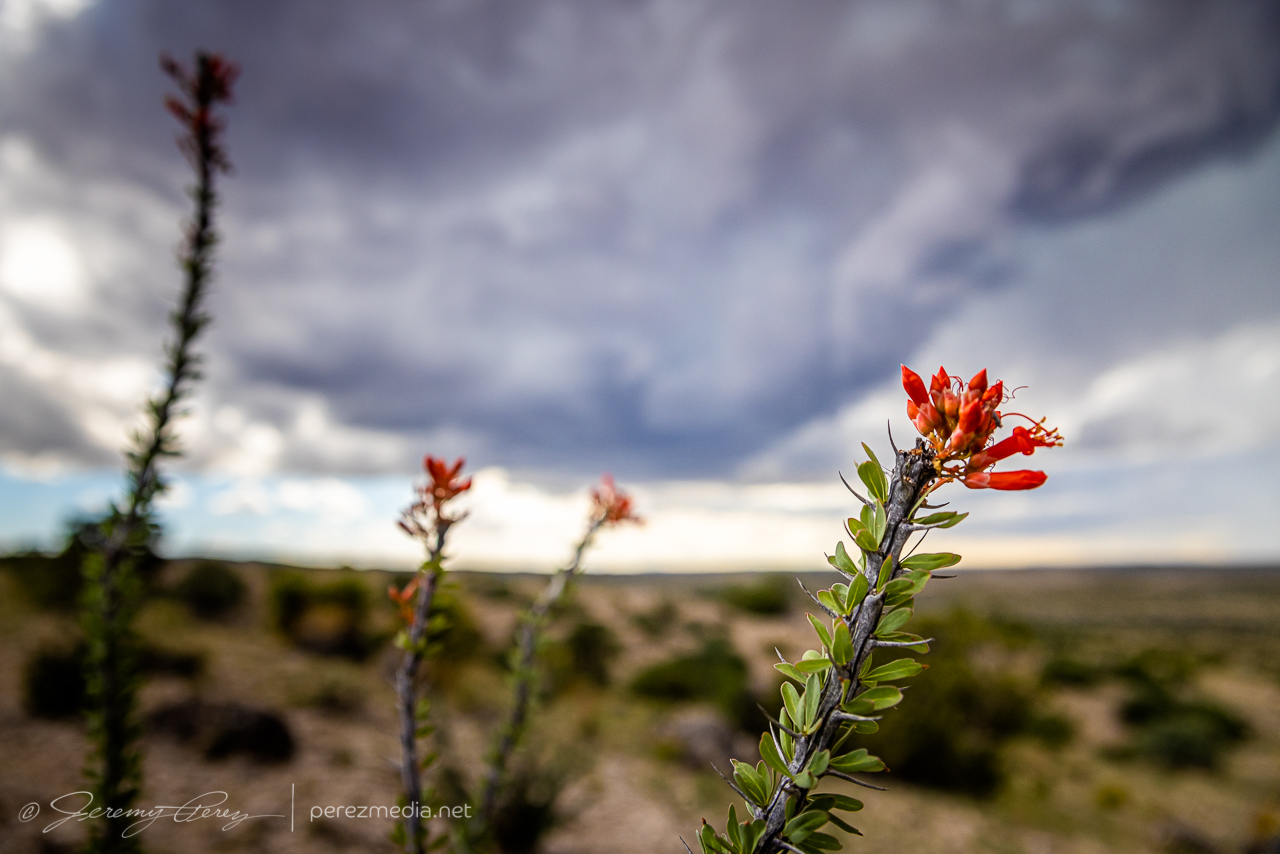
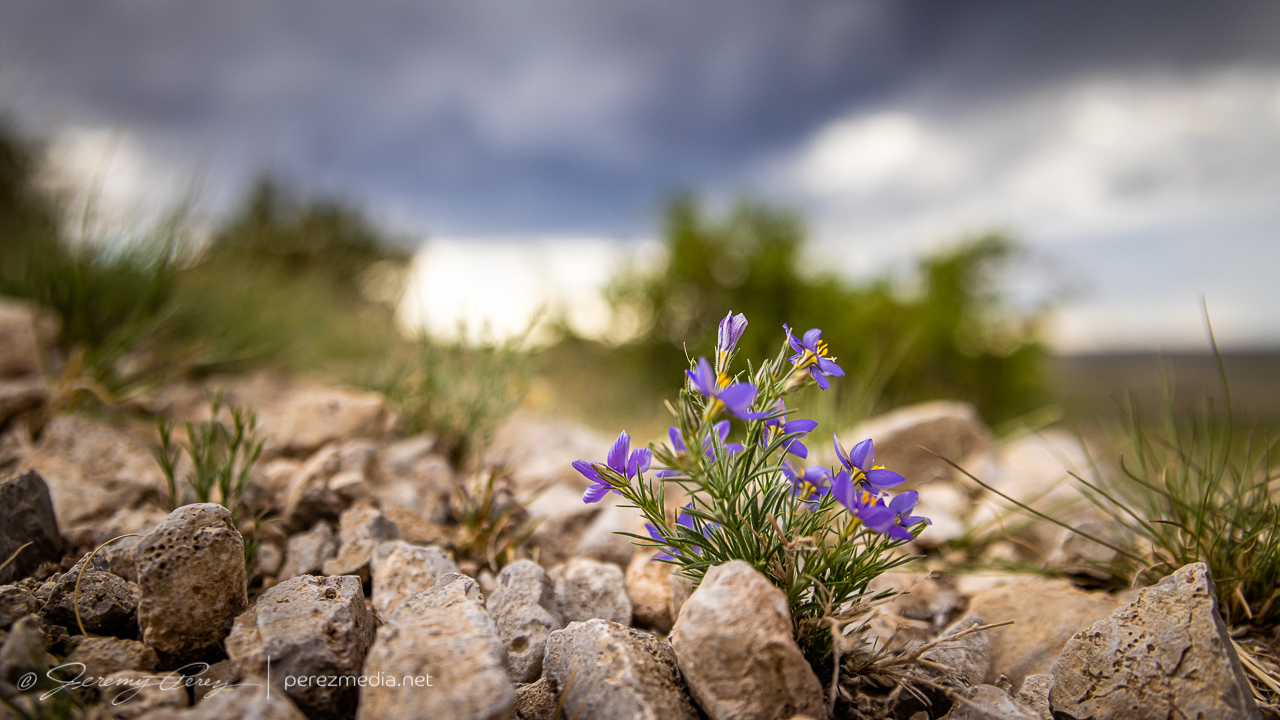
So I cruised back south to Carlsbad, picked up some food & drink for the day, and headed east into the Seven Rivers Hills to get a vantage point to watch convection bubbling over the Guadalupe Mountains to the west. The last few days, I was running behind to get to my target area, so it was a relief and a pleasure to be sitting where I wanted with loads of time to spare. I started running a time lapse of the convection with one camera while hiking around looking for interesting compositions with the cactus and local geology.
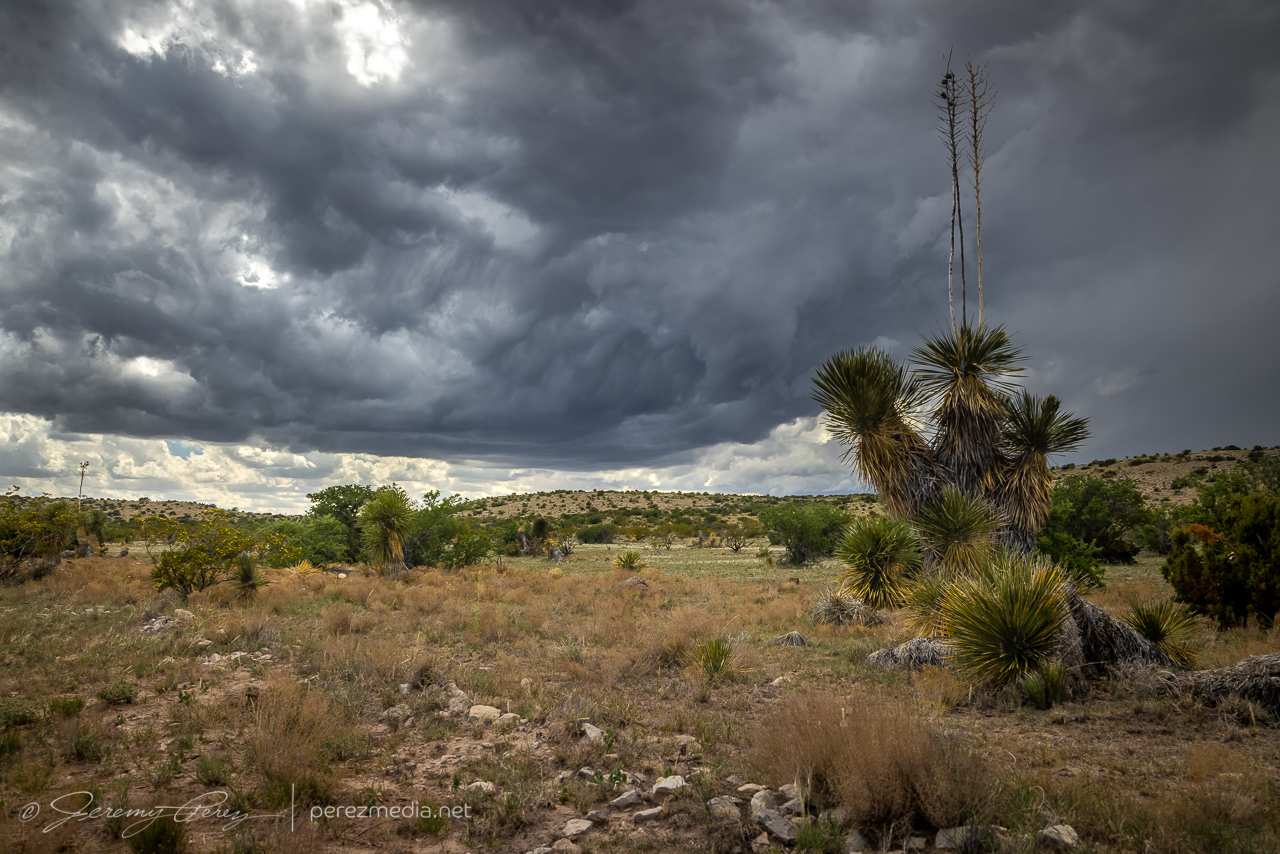
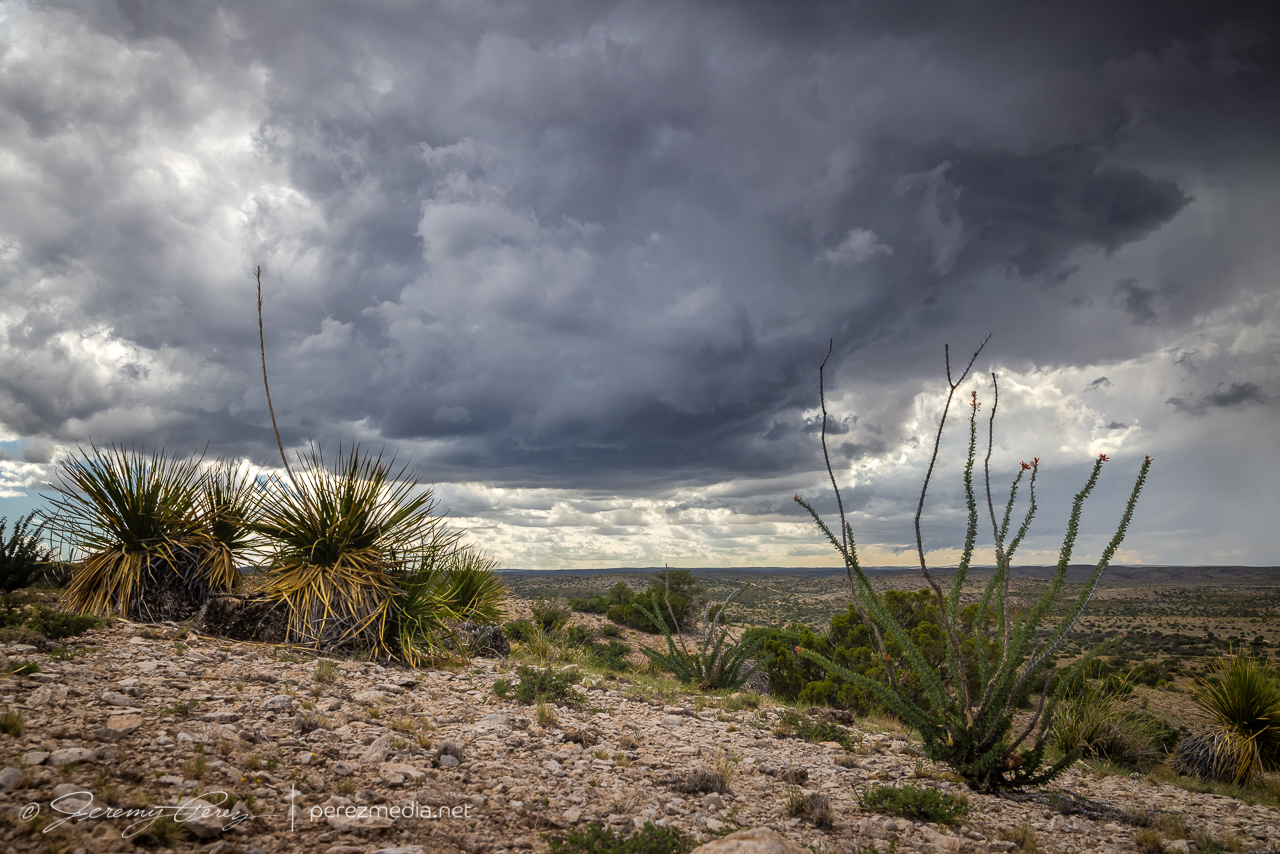
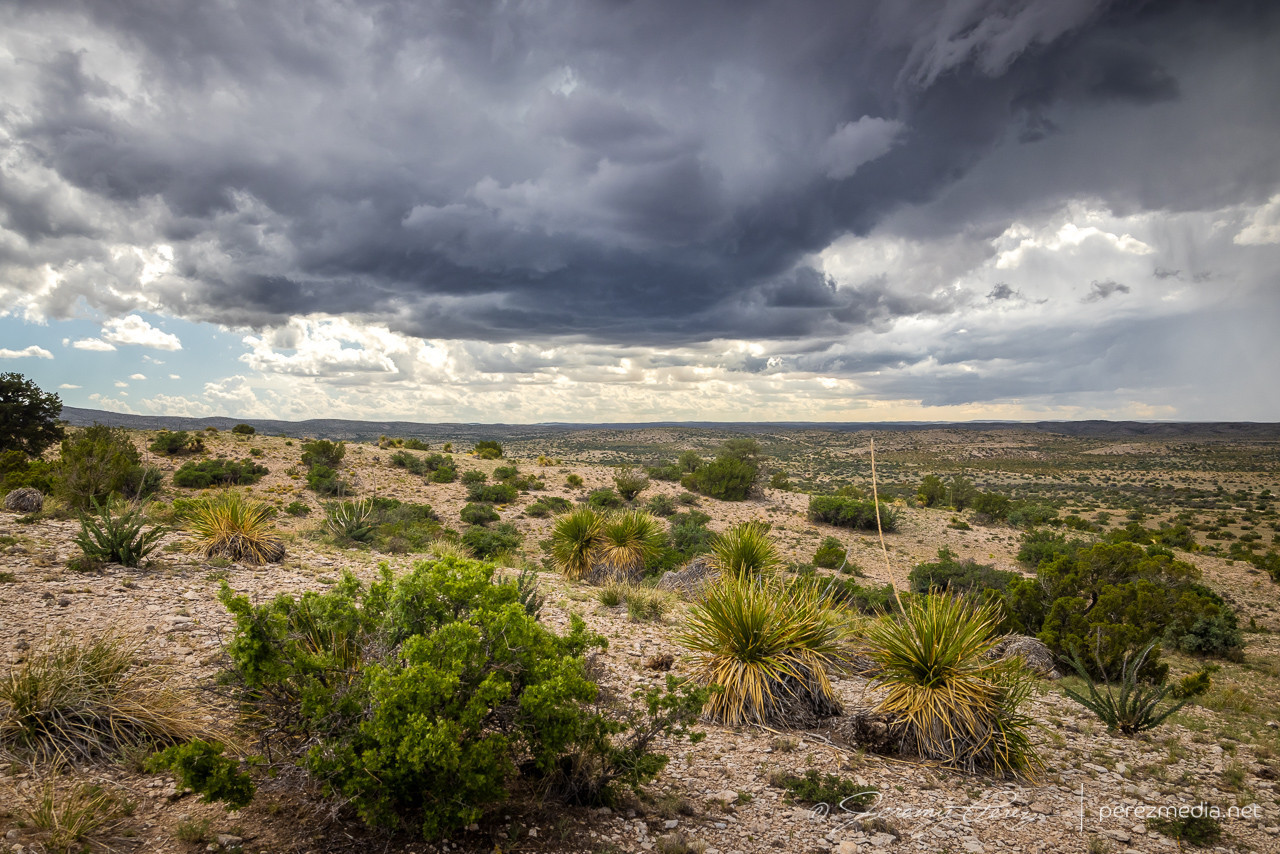
Prickly Pear, Ocotillo and Creasote framing convection over the Guadalupe Mountains — 1905ZChecking out a bold outcrop as convection edges closer — 2103Z
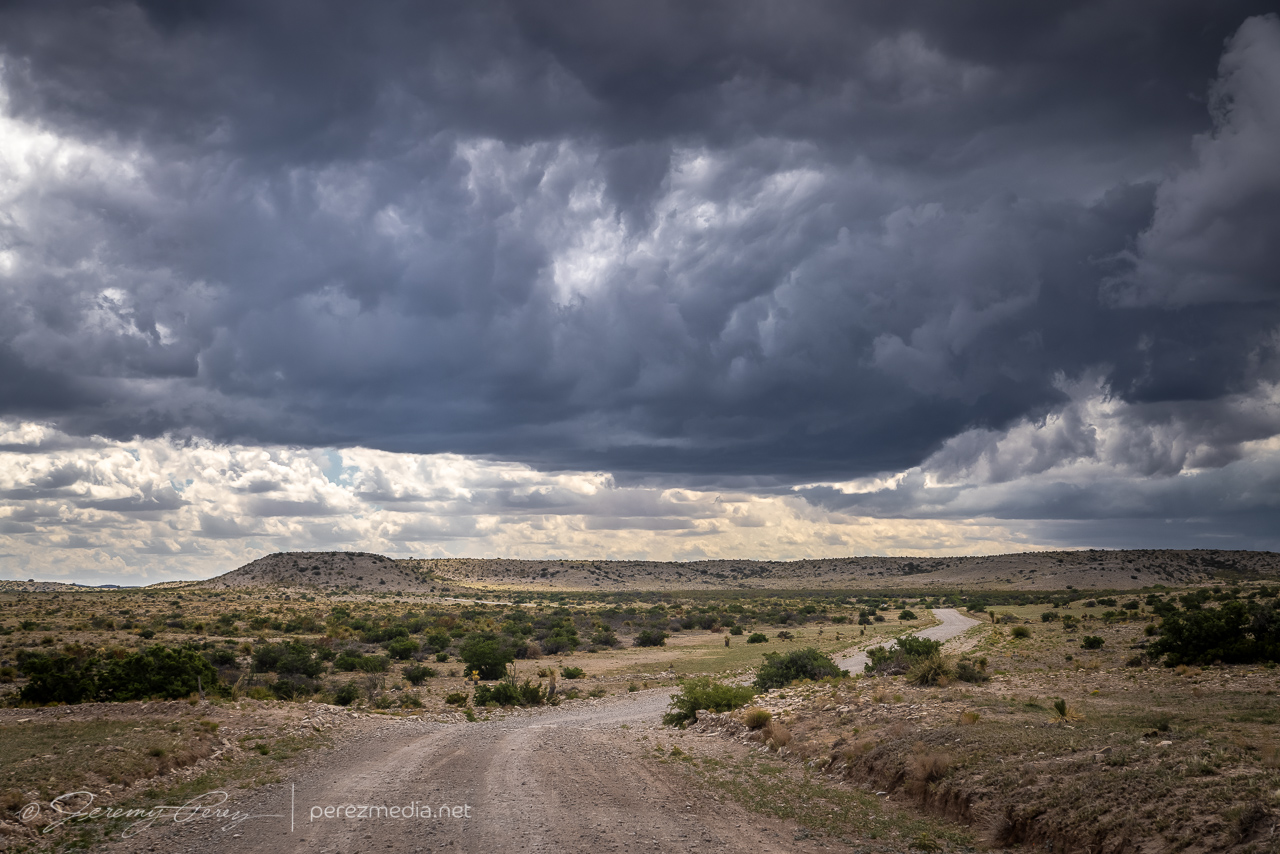
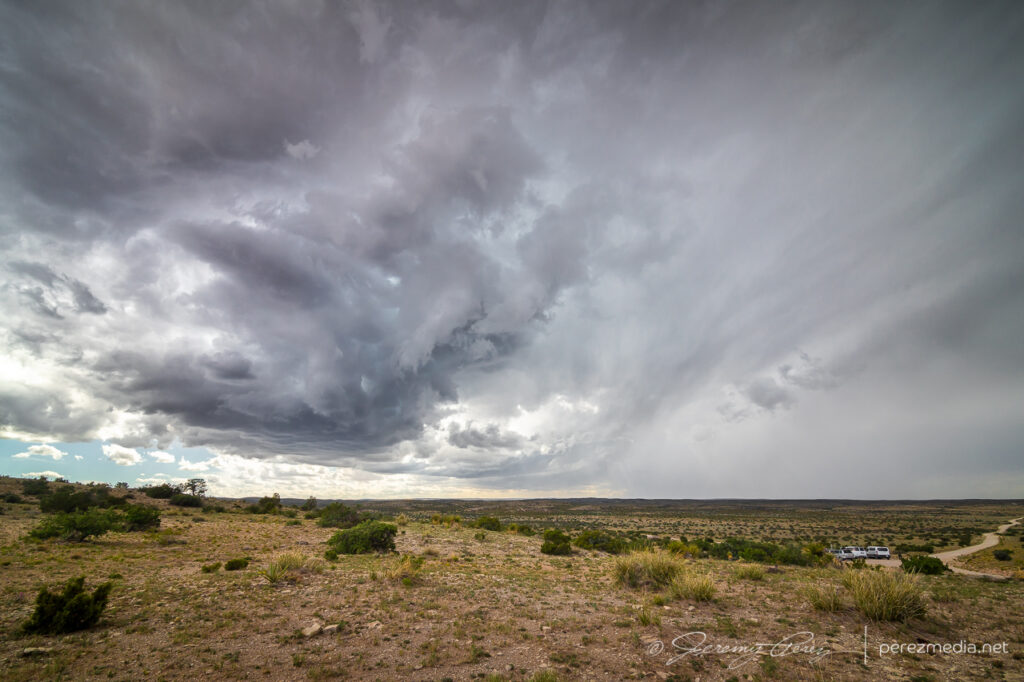
One cell looked like it was going to be successful moving off the higher terrain, so I decided to test the unpaved roads further west.
Testing out unpaved Box Canyon Road westward toward the strengthening base — 2135Z
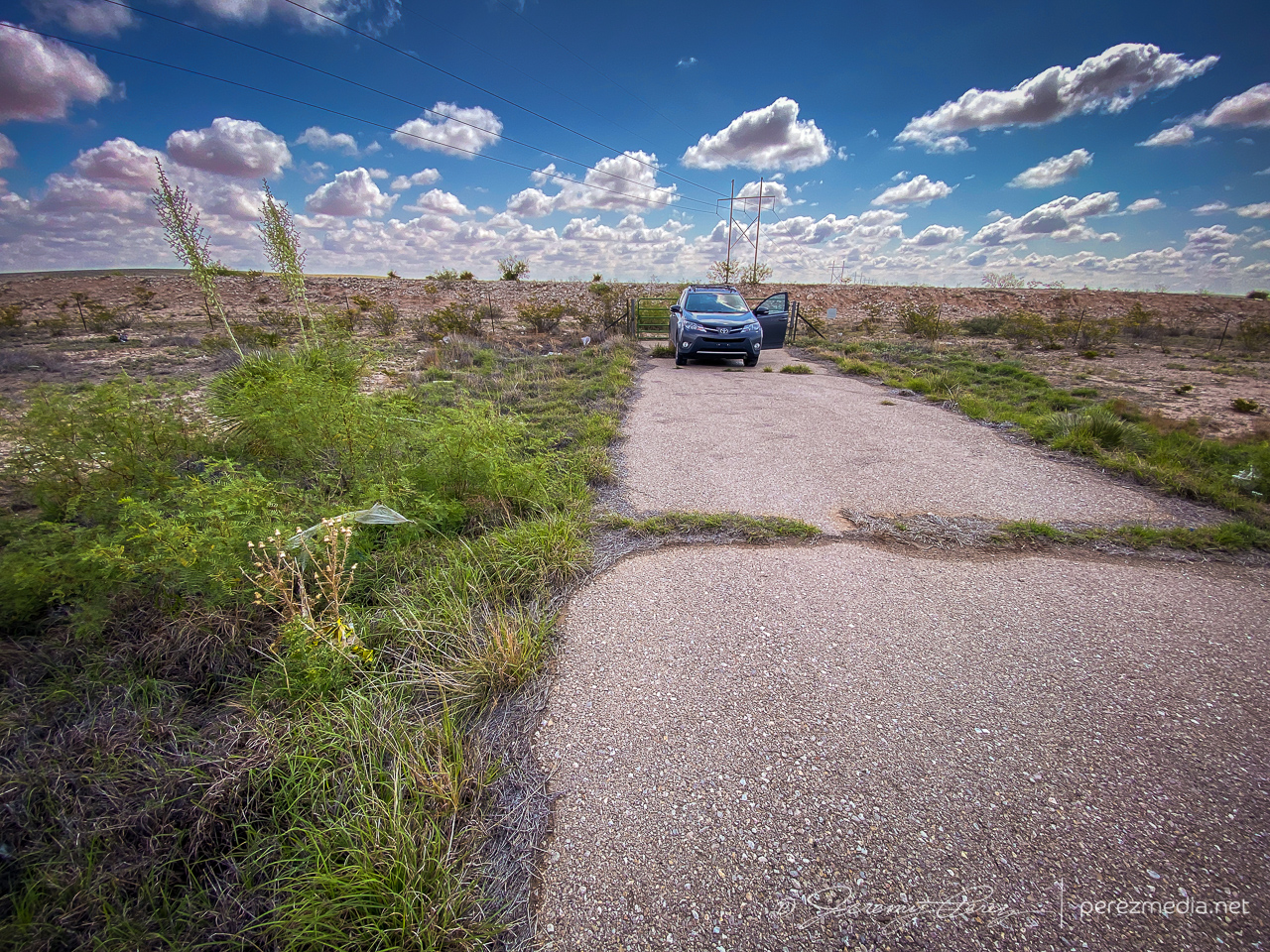
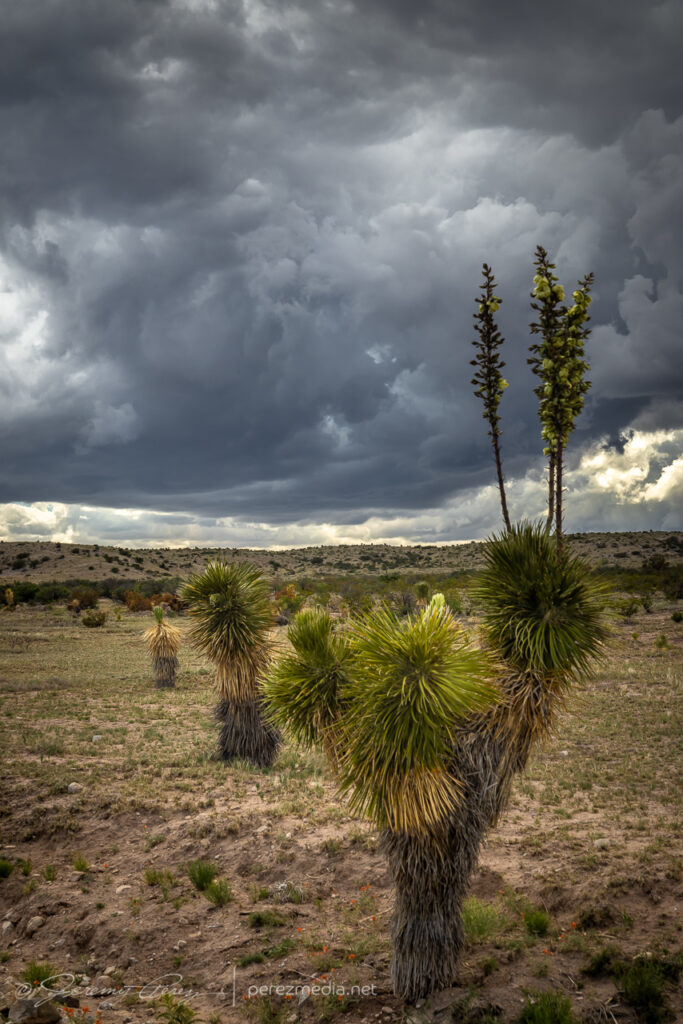
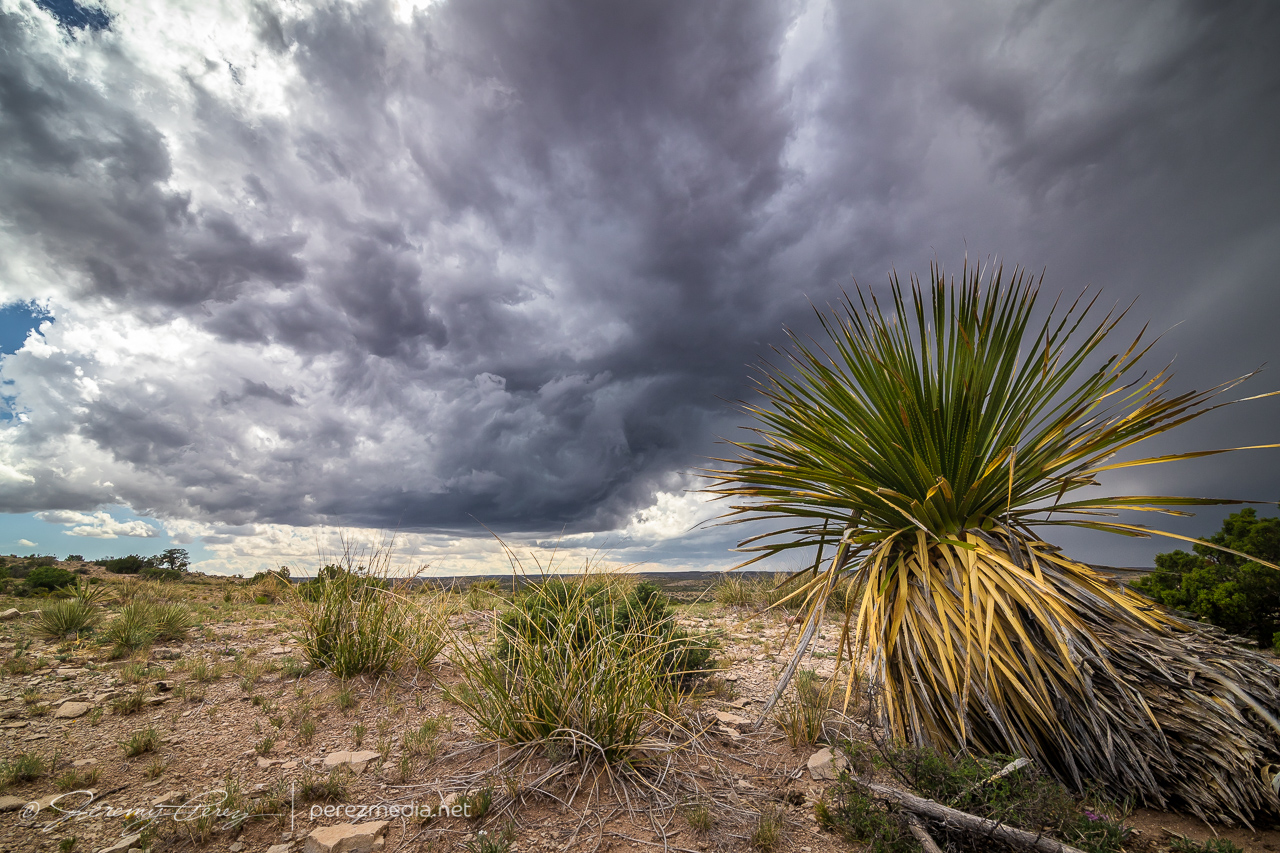
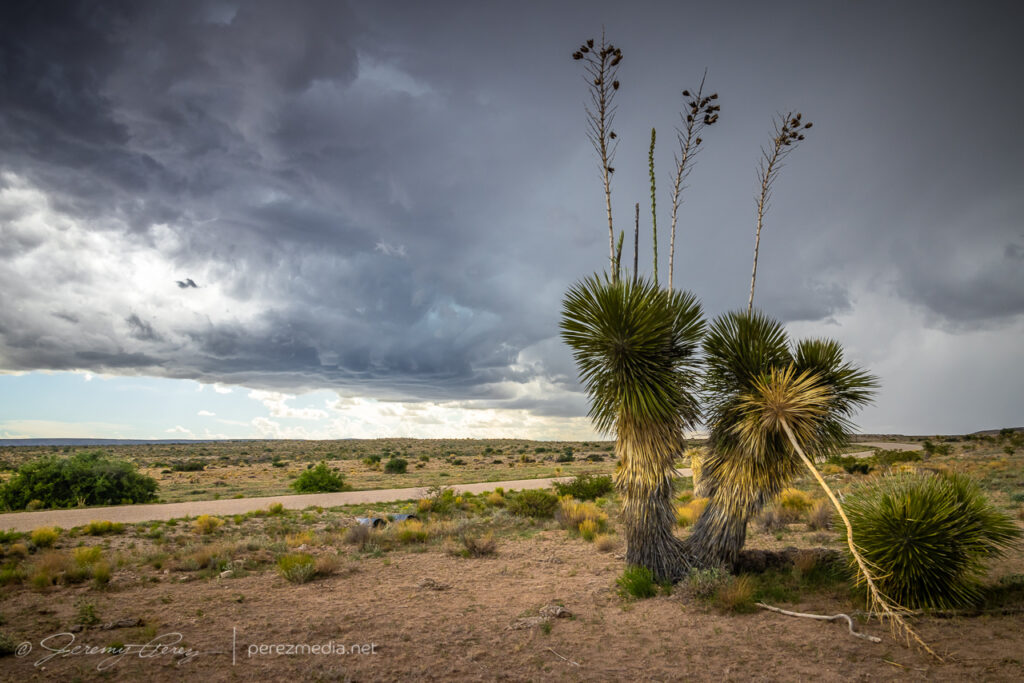
Those roads were really well maintained and in great shape, so I was able to edge closer to the base and take in some more of the terrain and desert plant life. I don’t have loads of yucca like this close to where I live, so I couldn’t help framing them into everything.
2141Z2145Z
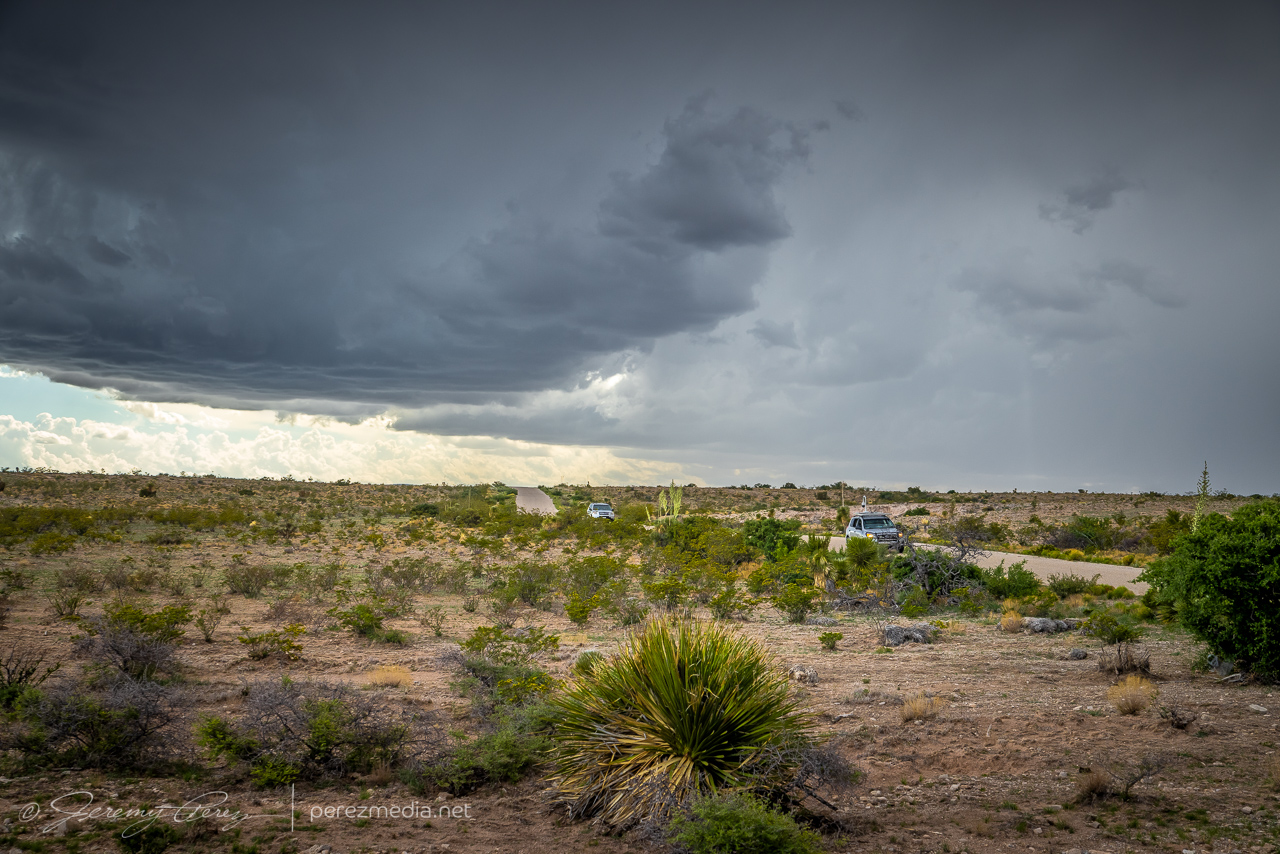
I finally found a great hilltop vantage to watch the cell develop, so I got busy capturing its essence with the surrounding terrain and plant life.
2153Z2158Z2200Z
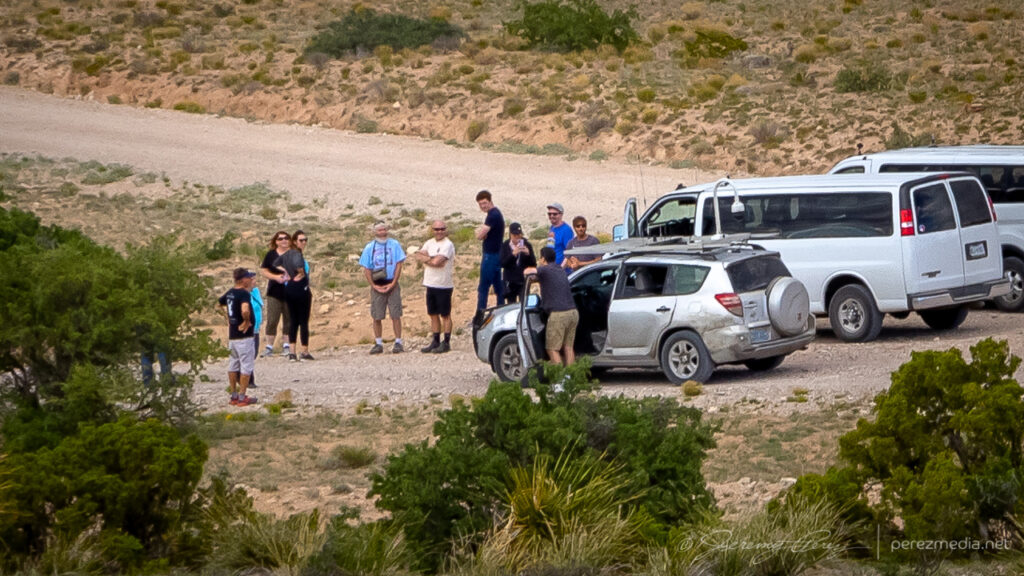
In time, other chasers started to arrive at a fork in the road downhill from there. Before long, Daniel Shaw showed up, and it became a real event down there!
Middle of nowhere chaser convergence on Box Canyon Road — 2200–2209Z
As the storm continued drifting southward, I had to move on and keep pace with it.
2215Z2220ZMoving on down the road to stay in positionDaniel Shaw’s periscopemobile and others making their next moves — 2229ZDeveloping a transient lowering way back at lower right for a few minutes — 2300Z
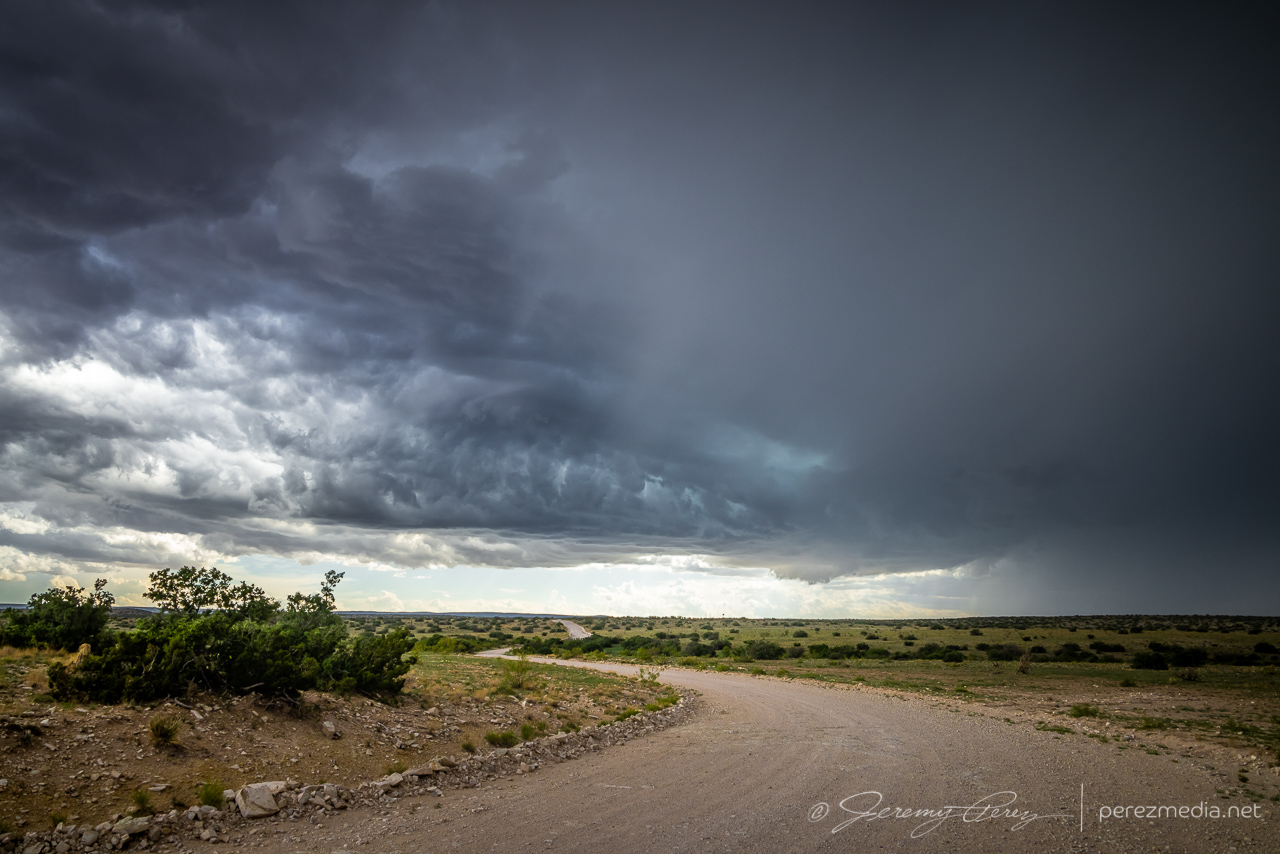
The roads were great, until as usual, they weren’t. I finally reached a branch where my chosen southward route was closed for construction. So I had to break off to the southeast and move back toward Highway 62 and hopefully salvage some more distant vantages. This didn’t turn out too bad because the storm became more outflowish at this point.
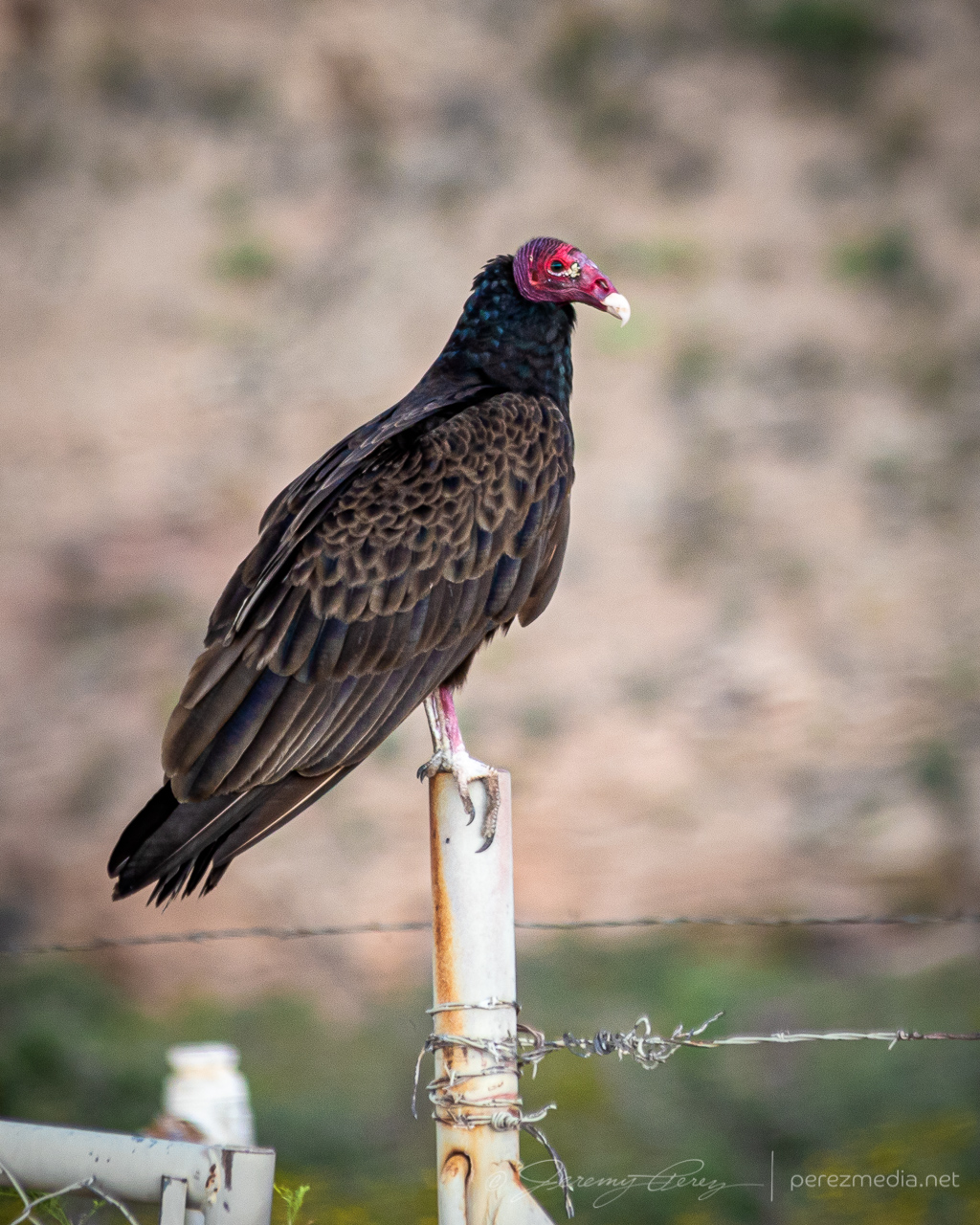
2333Z2336ZOutflow sculpting as I had to break away from out of commission roadsBuzzard keeping an eye on my progress
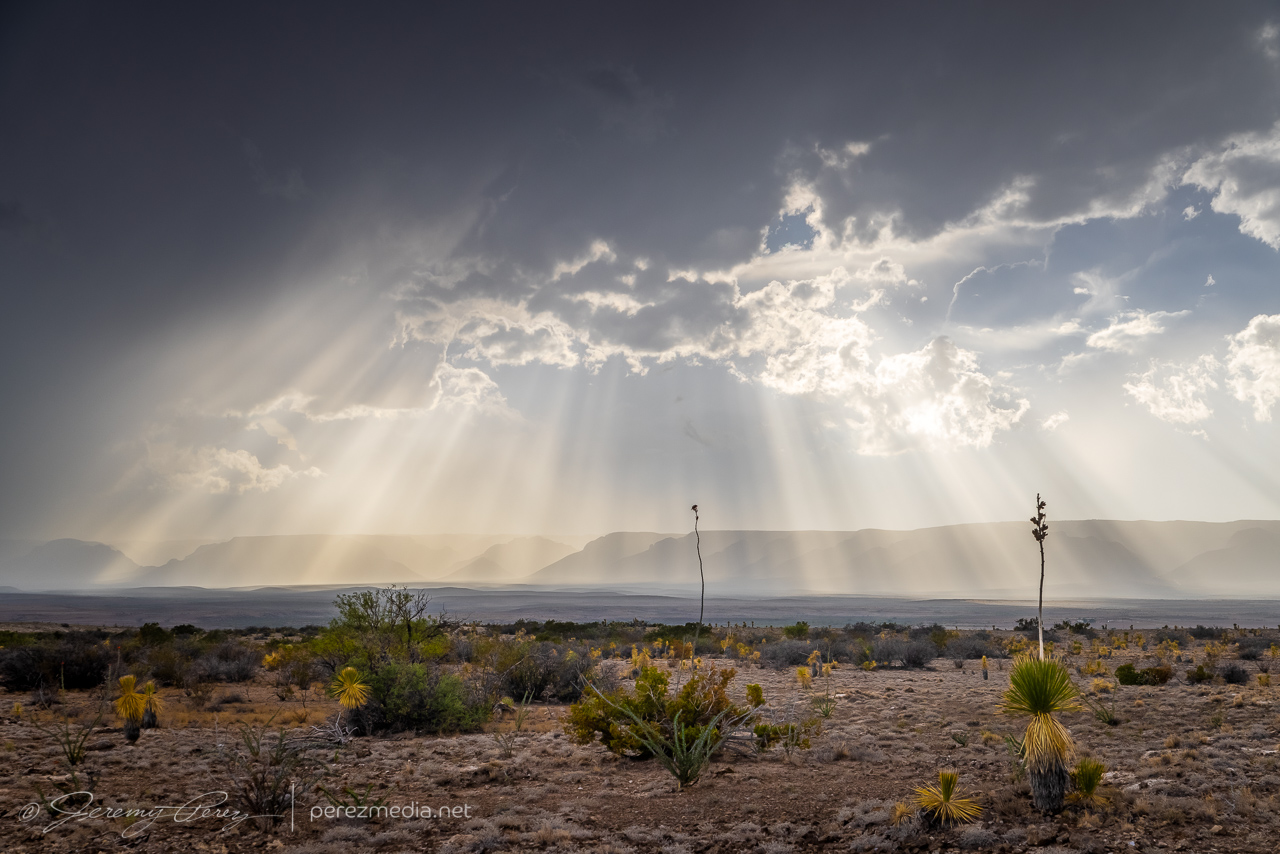
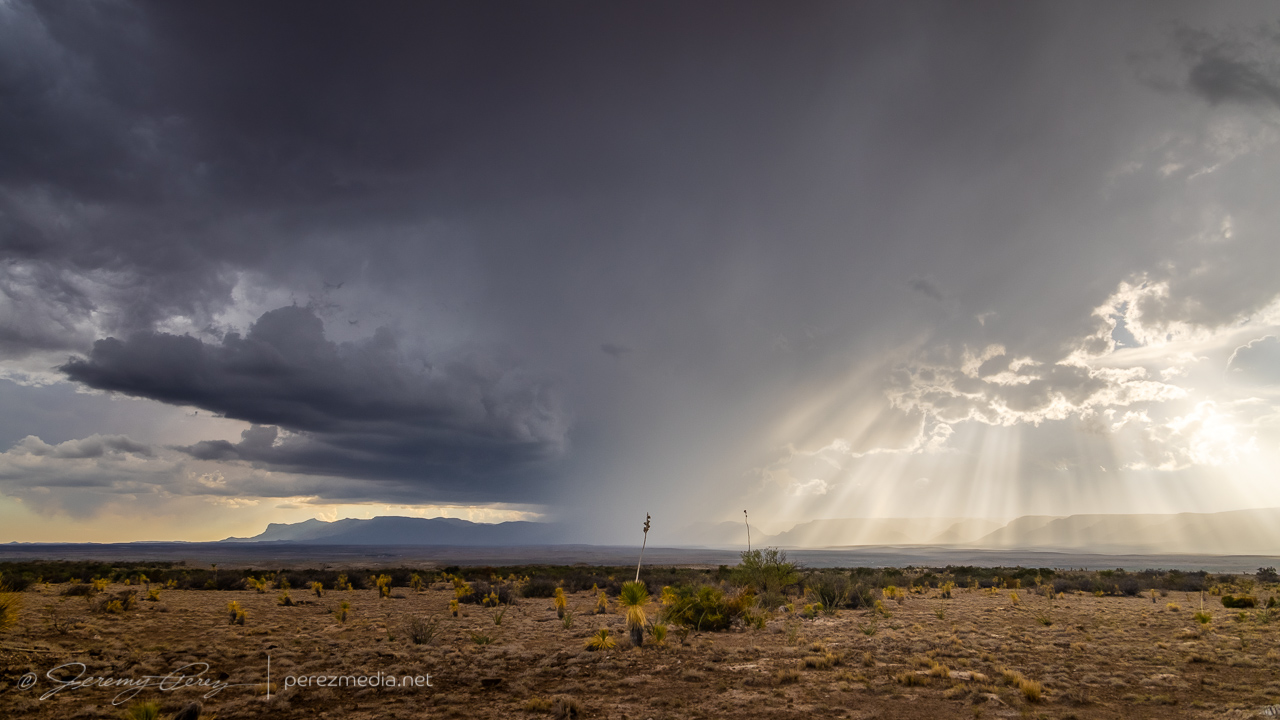
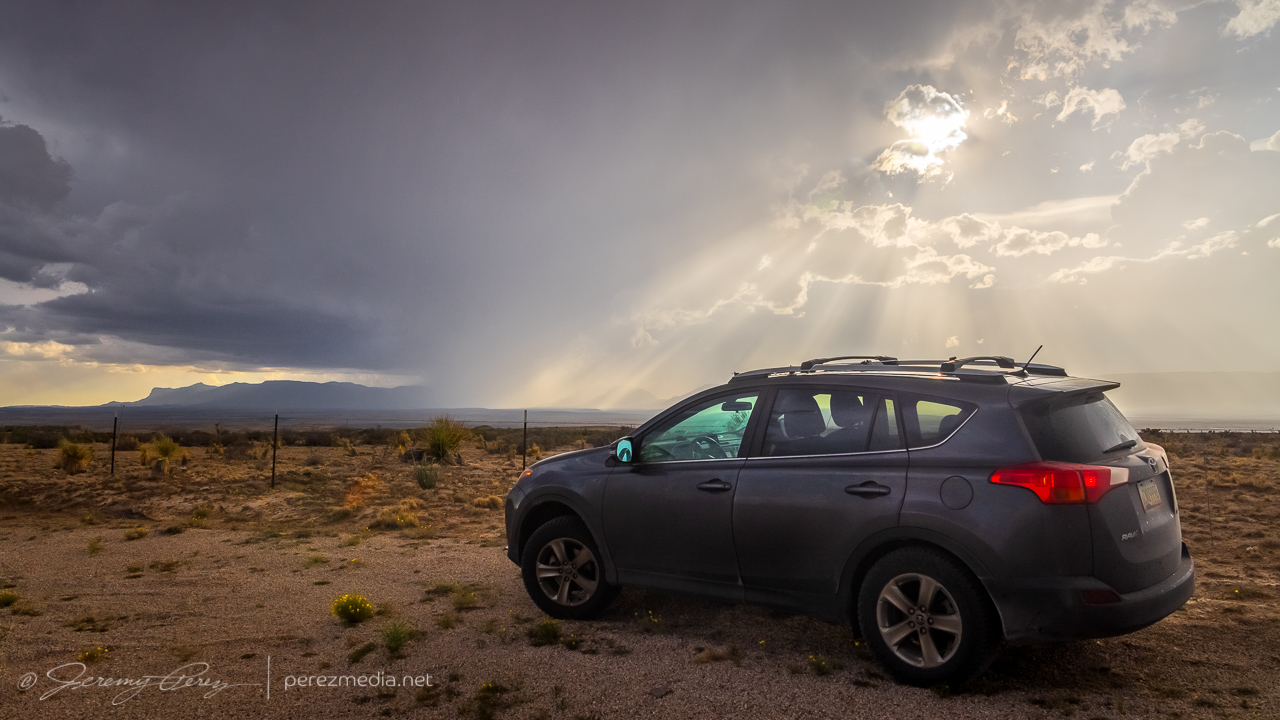
Back on Highway 62, I headed south, watching for vantages as outflow hopefully kicked off more good things off to my west. I eventually found an unpaved service road off the side of the highway that lofted up to a great high vantage point. Convection way off to the west was filtering down a stunning display of crepuscular rays while the southern tip of Guadalupe Mountains National Park anchored the scene on the edge of the precipitation. I hadn’t been here before, and that landmark reminded me a lot of the Superstition Mountains east of Phoenix.
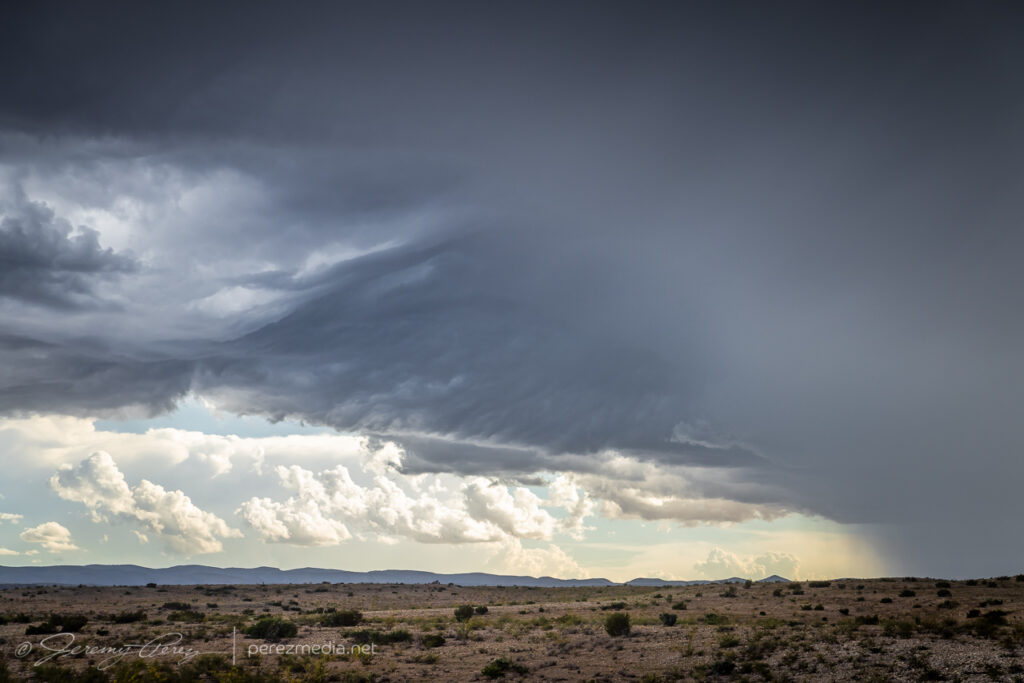
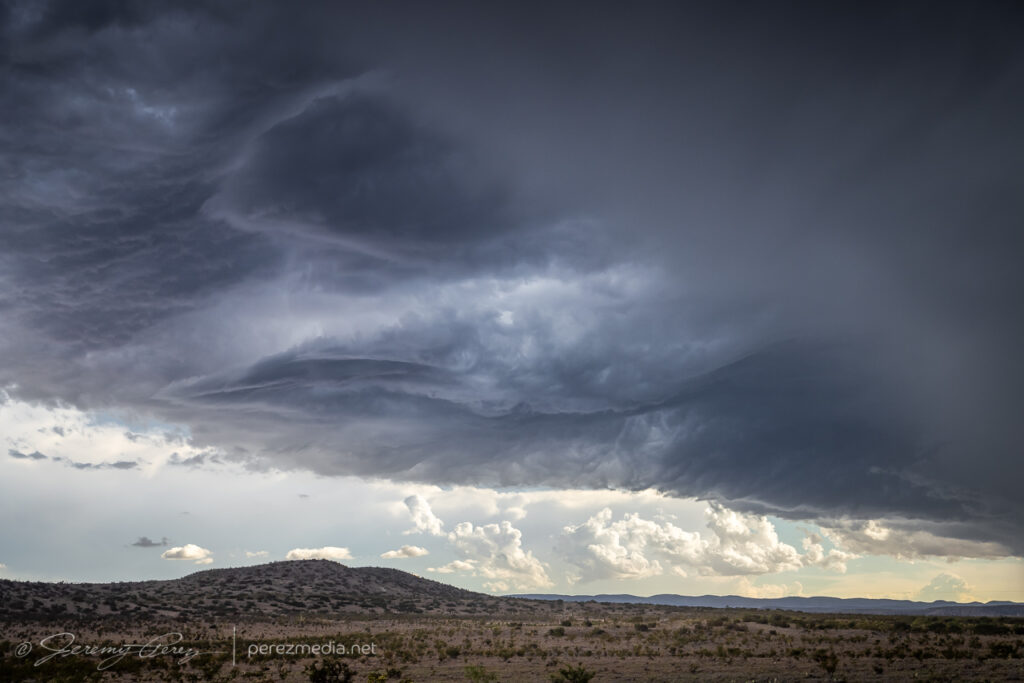
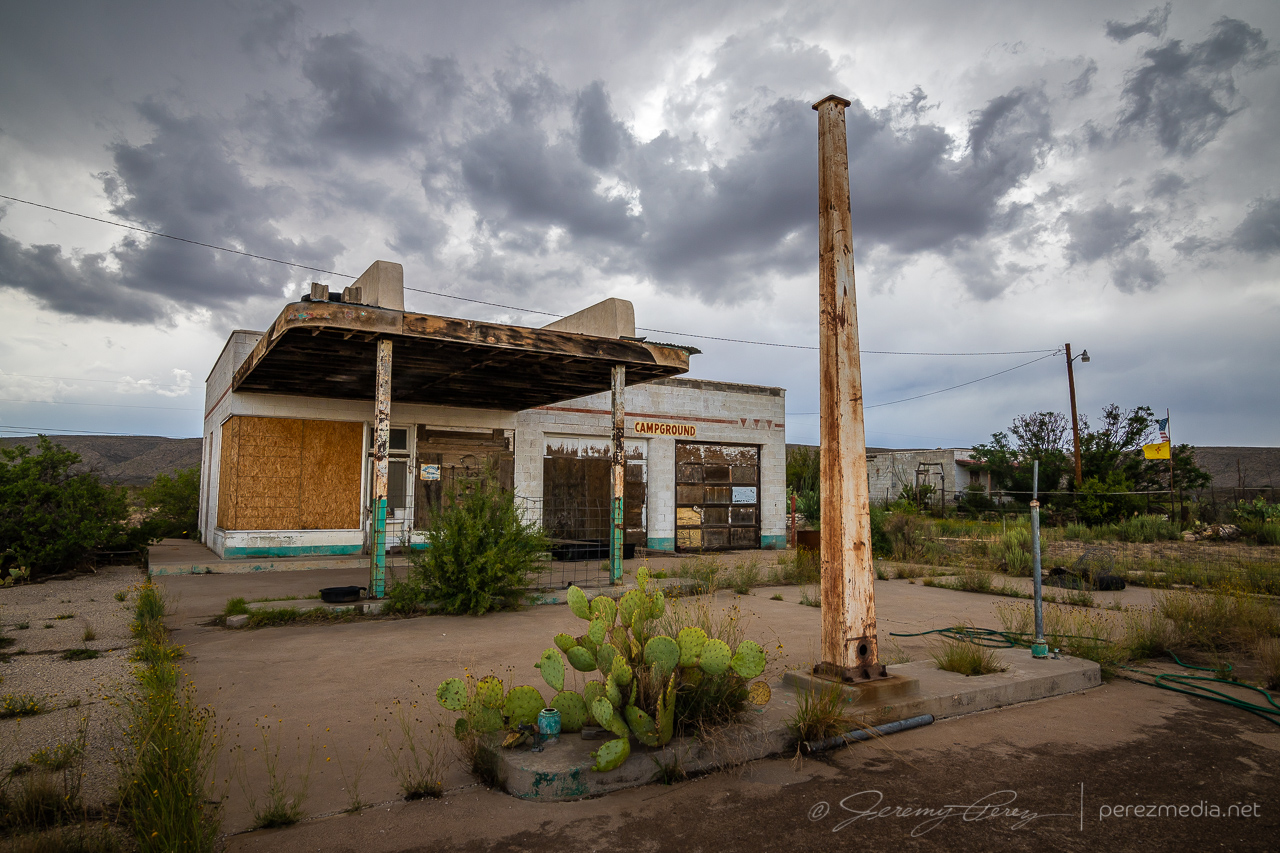
Abandoned fuel stop south of Whites City — 0018ZDisplay of crepuscular rays bathing the Guadalupe Ridge — 0029ZThe sharp edge of Guadalupe Mountains National Park marks the left edge of the view — 0030ZMy dusty ride, Bela, soaking it in before the next leg of our trip — 0035Z
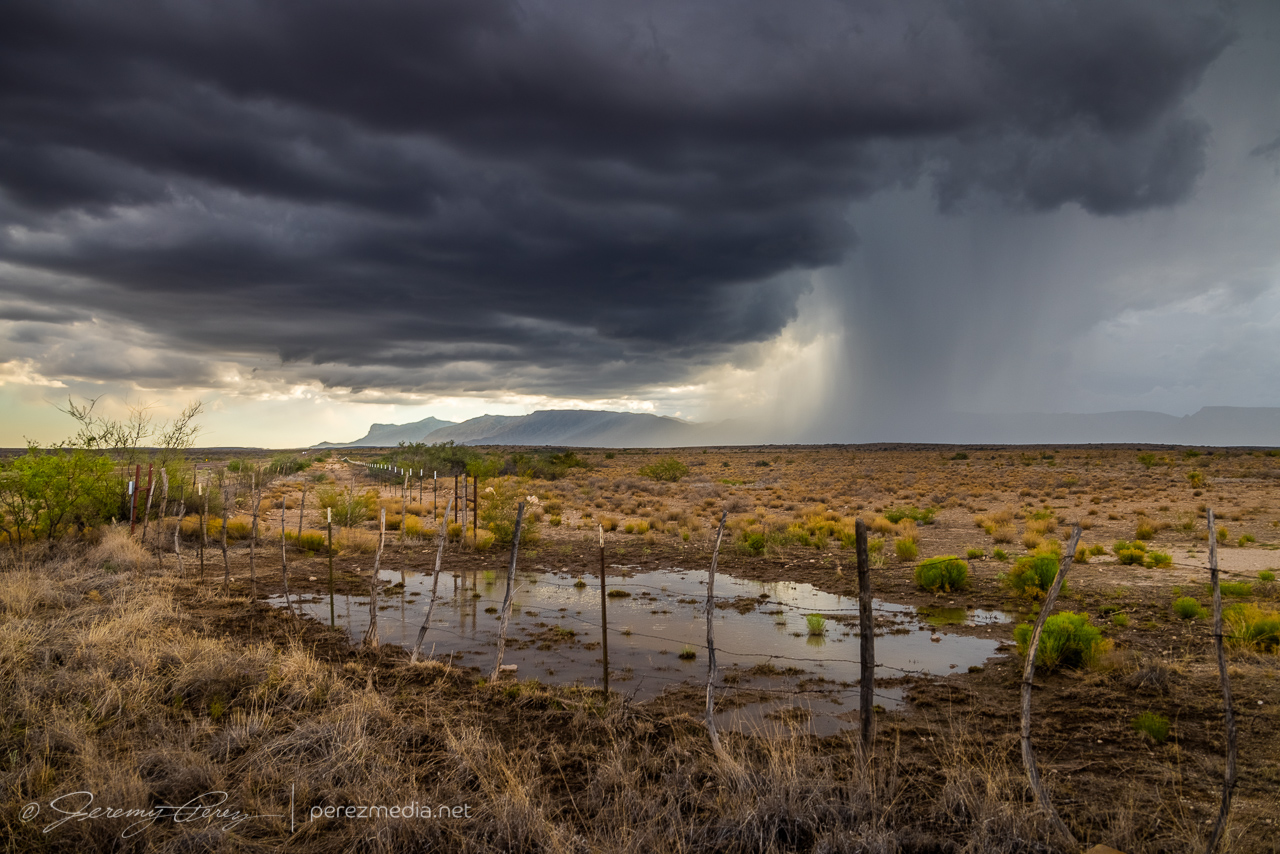
A little further down the road, the storm started unloading a fresh core of precipitation while more landscape opportunities came into view.
0044Z
After this, the storm I was on continued to weaken and gust out. So I hung around for a while, pondering my next move.
Taking a break to figure out my next move and musing on the stratoculumus tracks — 0100Z
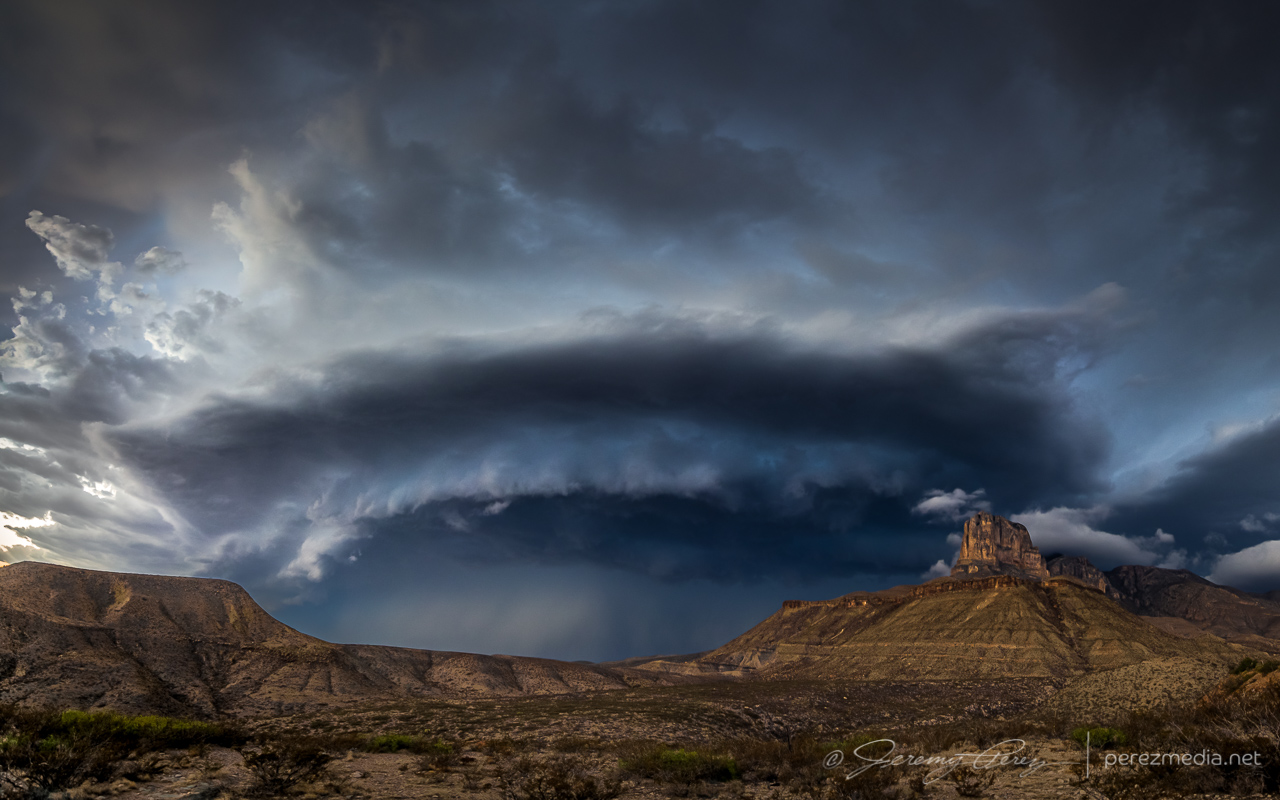
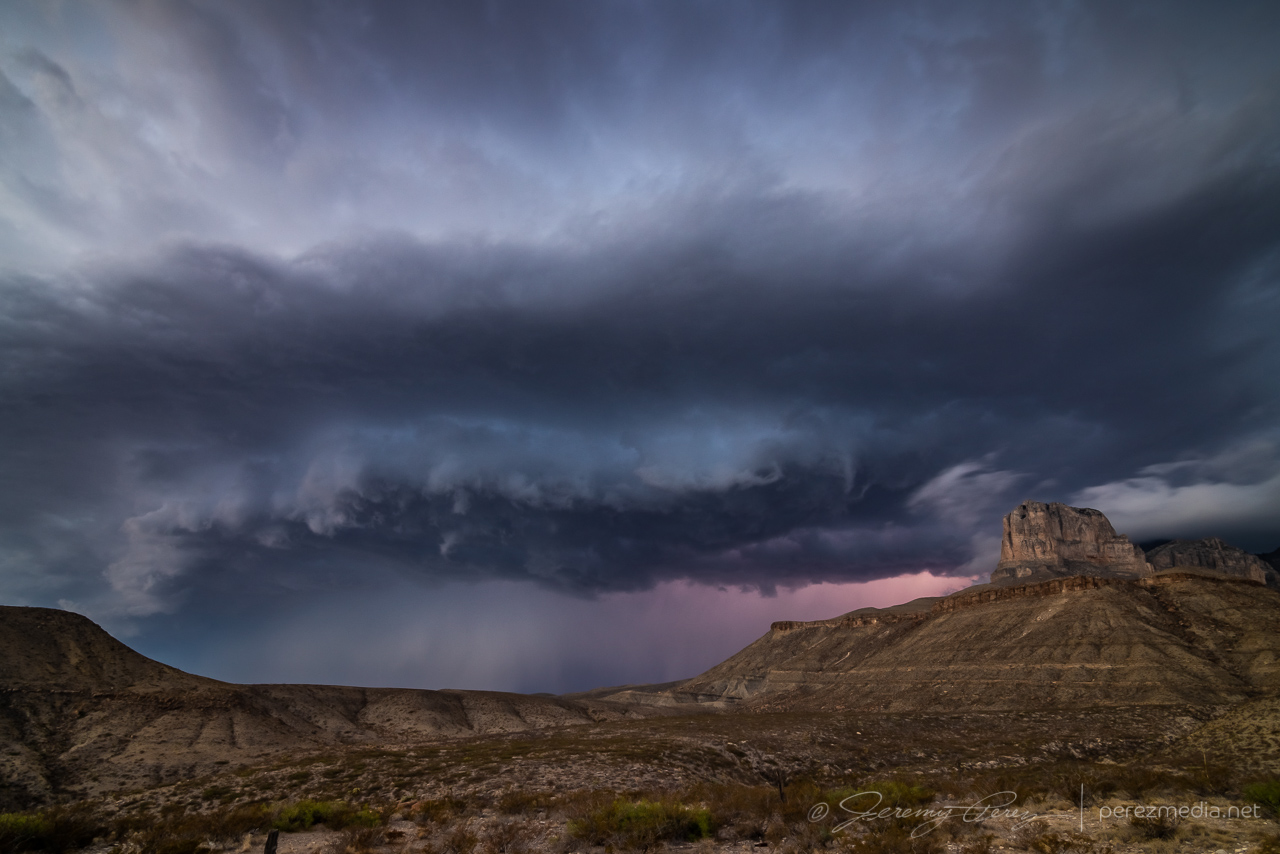
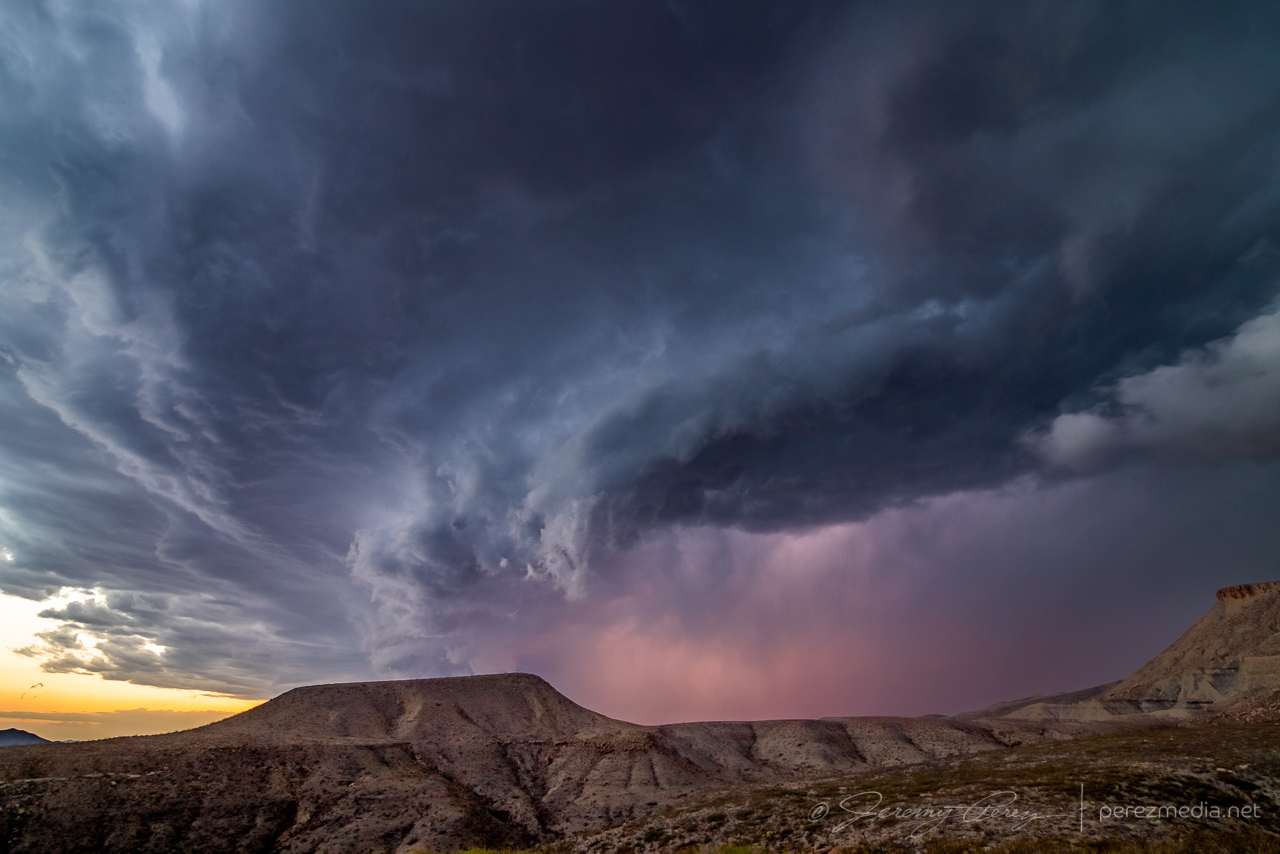
Checking radar showed another cell just northwest of Guadalupe Mountains National Park with a persistent velocity couplet and edging slowly southward. It seemed like a worthy next target, so I got moving and headed southwest on Highway 62. The mountain ridge was obscuring my view of the storm, but it looked dark and heavy and was flickering with lightning on the other side. As soon as I reached the El Capitan Lookout rest stop, the scene just exploded into view with the RFD gust front looming across the mountains and crawling inexorably southward. I set up for a quick time lapse and shot a panorama. I was able to spend about 10 minutes with it, gaping at the stupendous scene before I had to head westward and get out of its way.
Stitched panorama of the storm looming over El Capitan — 0202ZLightning coloring the scene as it edges closer — 0204ZScud fangs reaching down as lightning colors the core — 0210Z
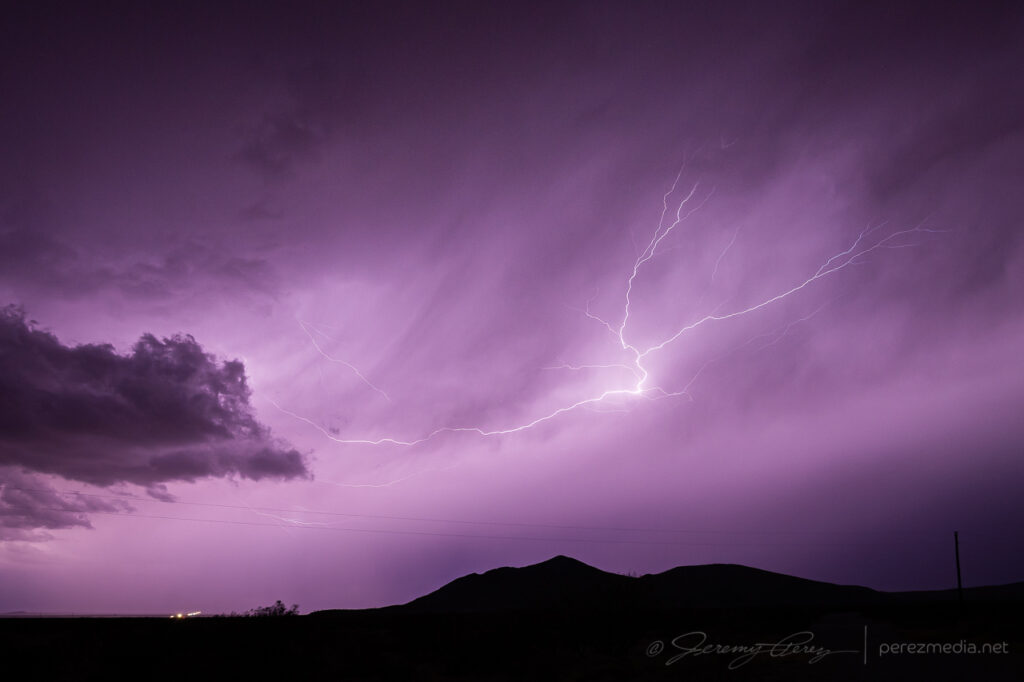
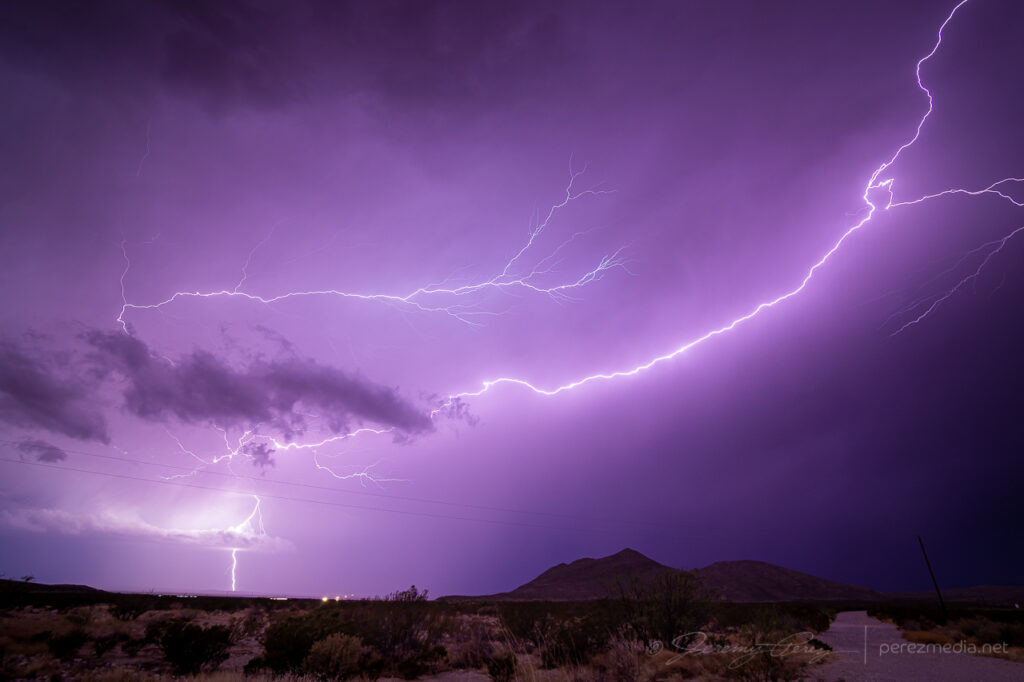
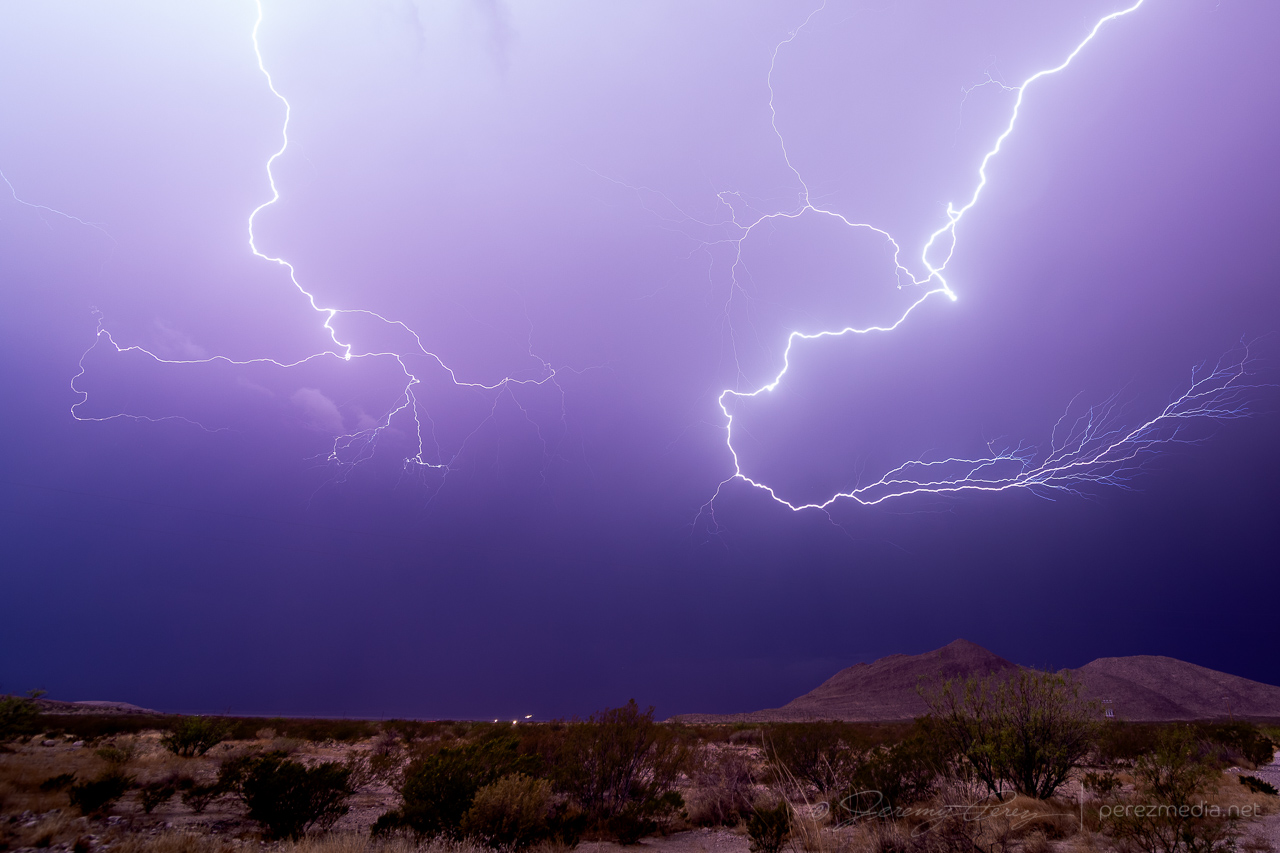
As I headed further west to southeast of Dell City, more convection had fired and put on a great lightning display, which is how I ended the day. Staying for this one extra chase day turned out so well, it sent me home feeling great again. It can’t always work to stack a good bookend on the last day of a chase trip, but I’ll take them where I can get them.
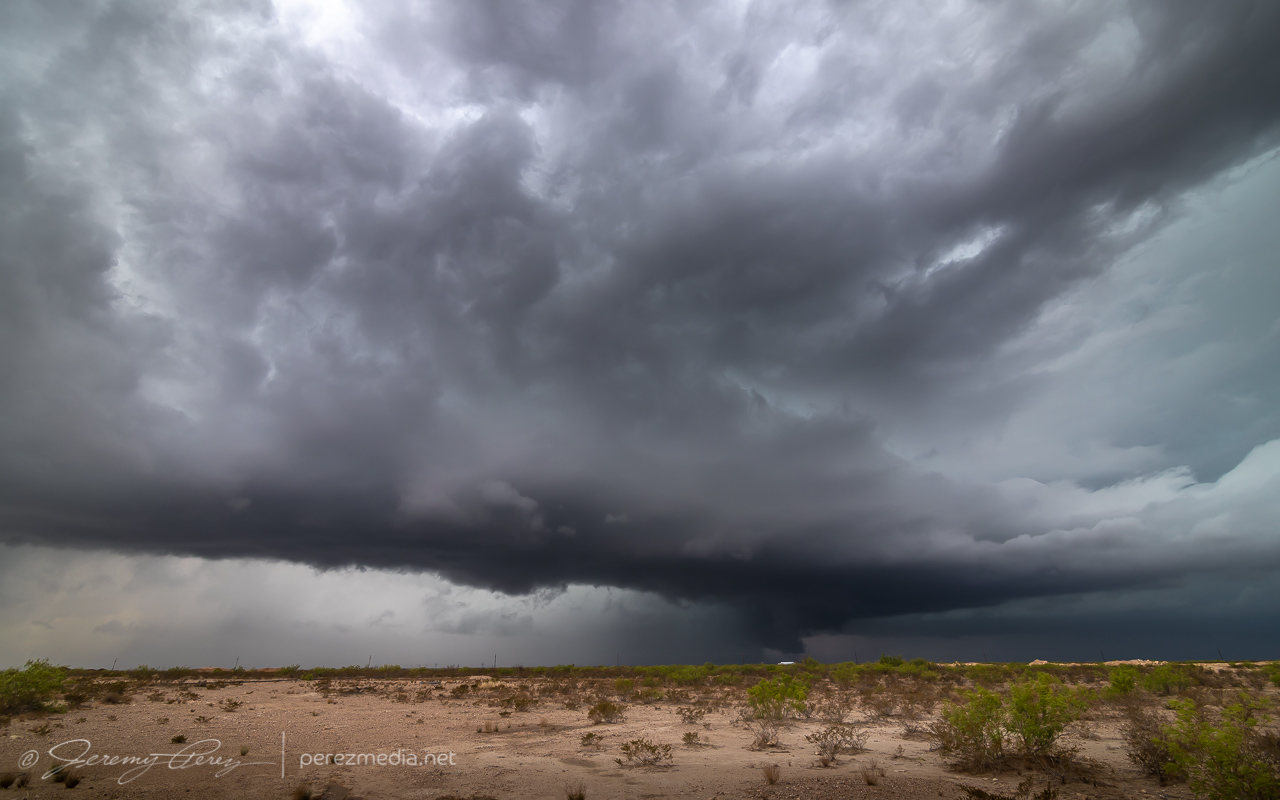
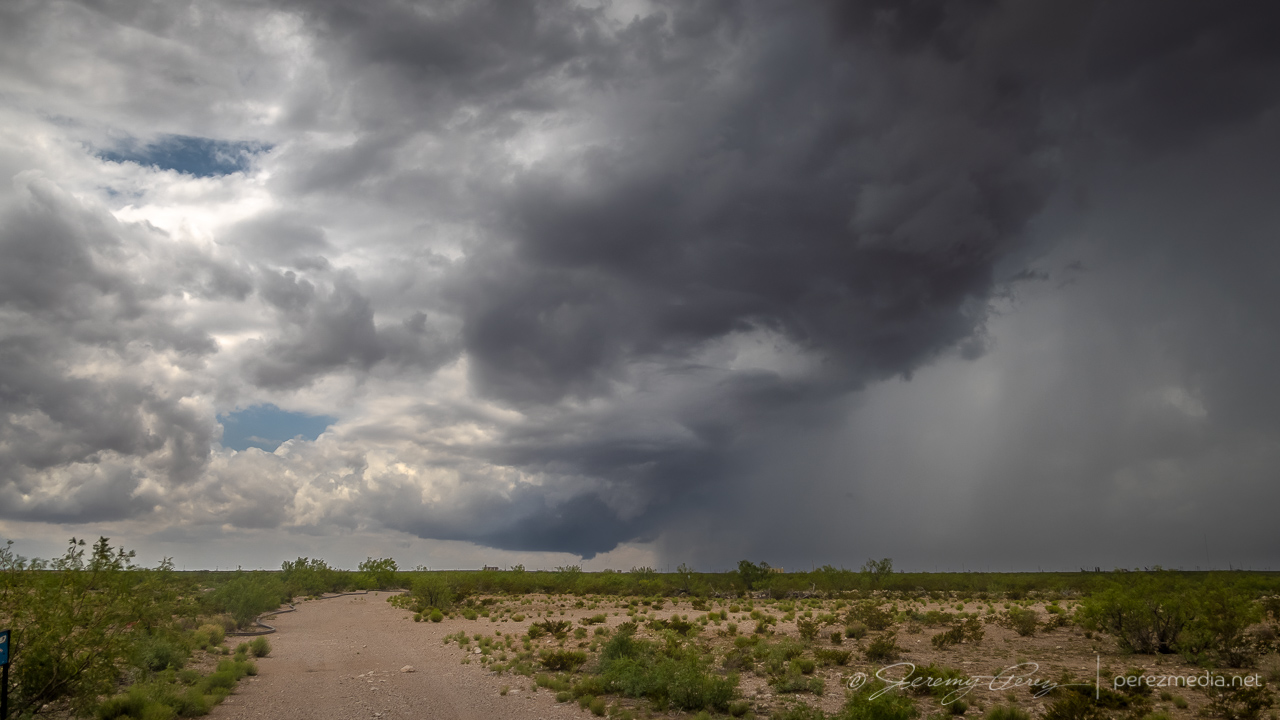
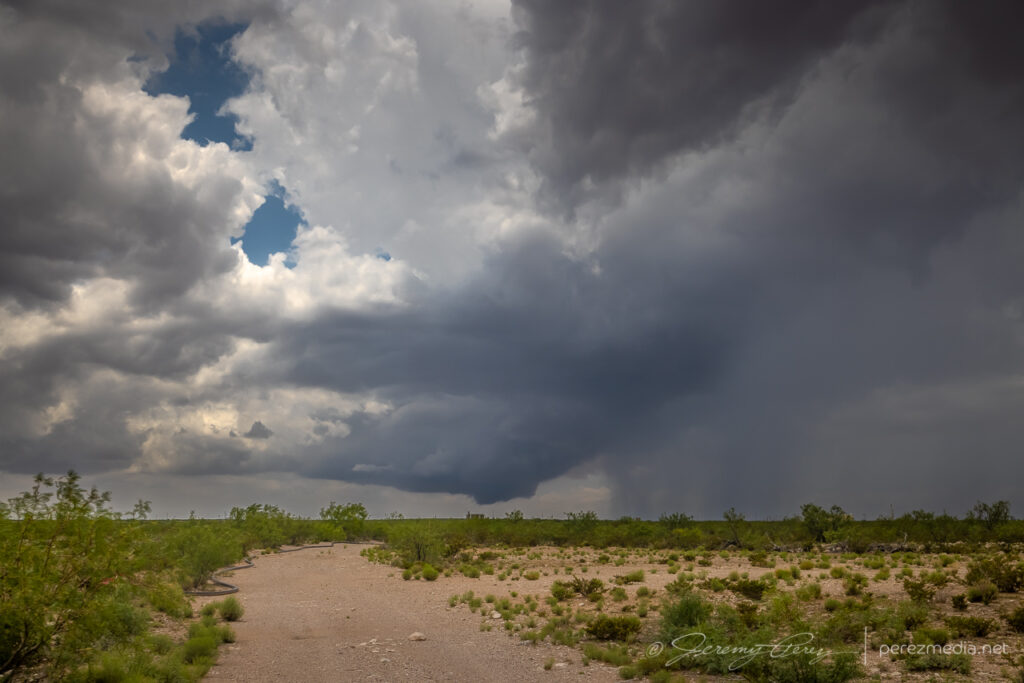
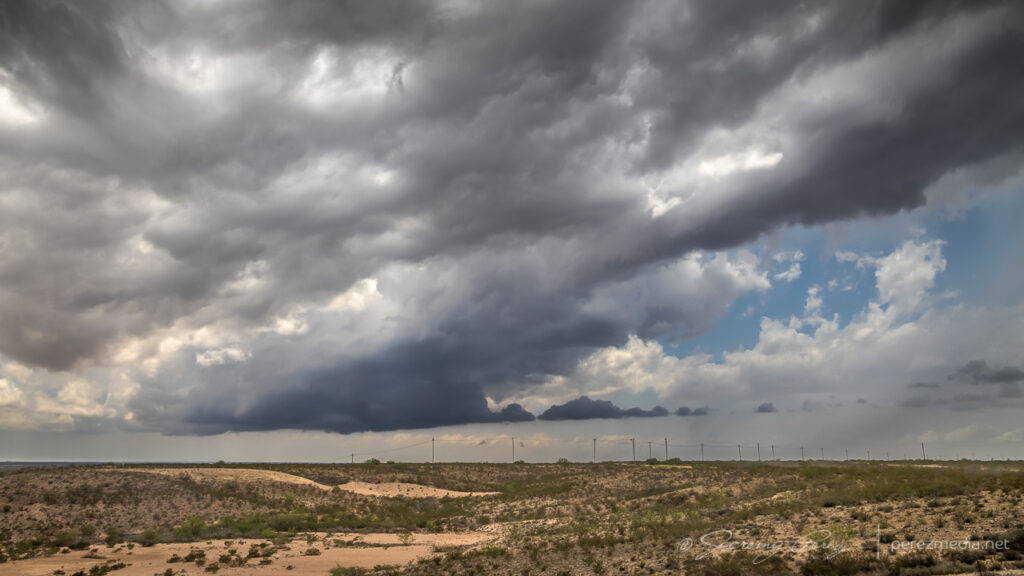
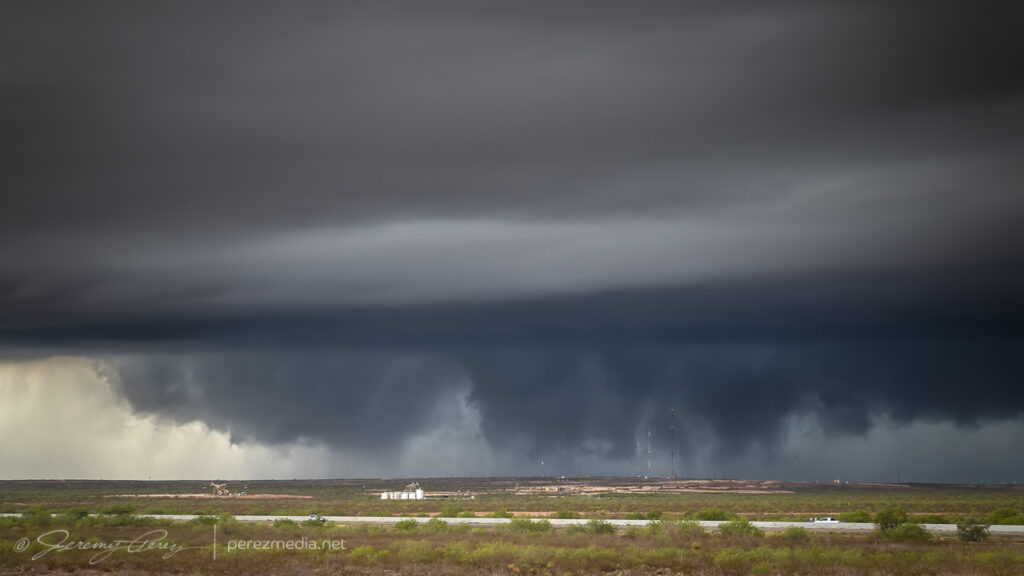
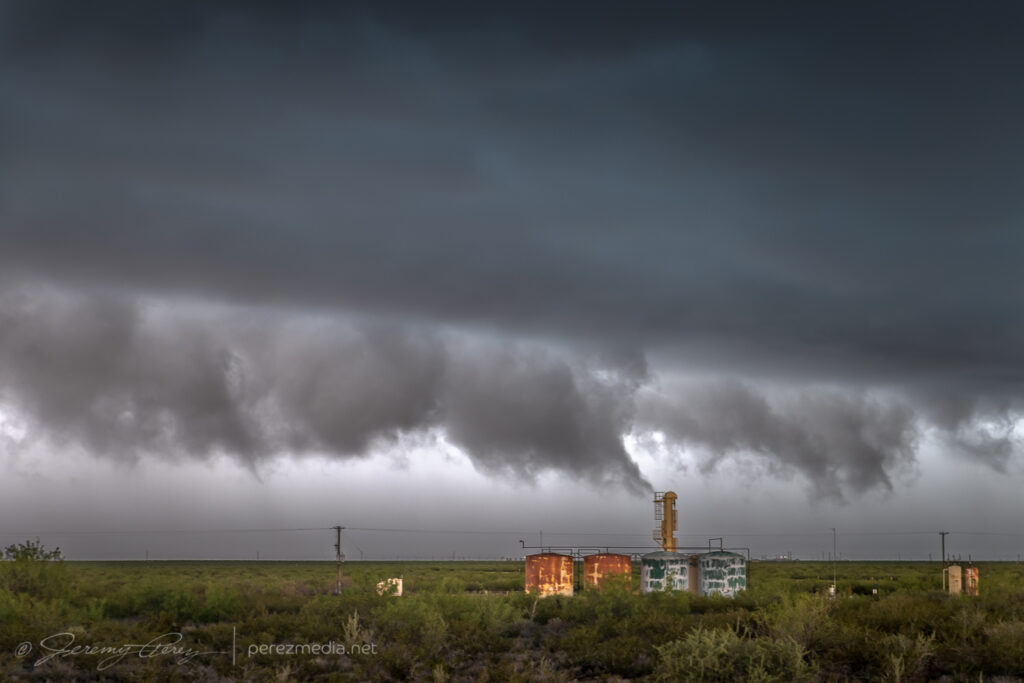
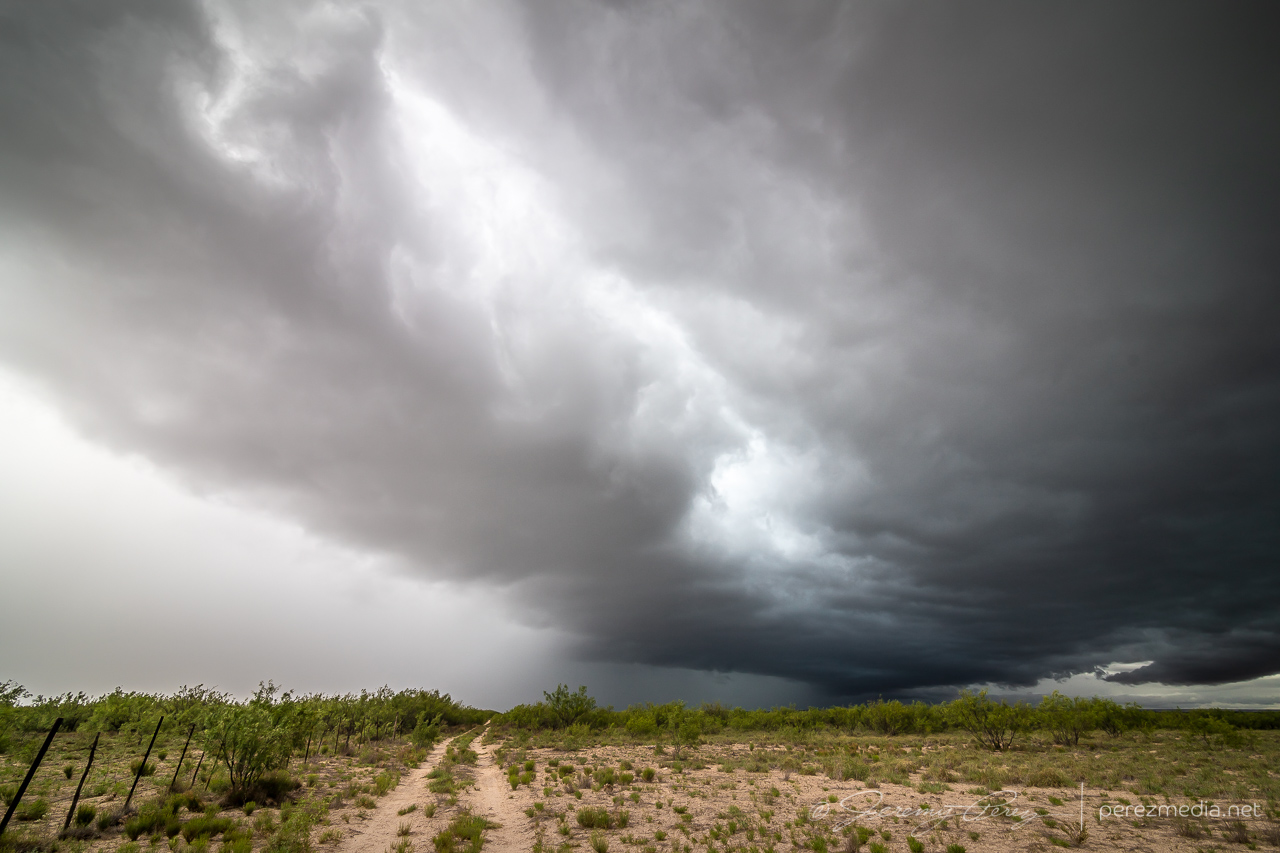
After the forecasting bust the day before, and this my last planned day out, I was hoping to recoup some sloppy decisions and be more focused. I overnighted at a rest stop south of Hale Center, Texas. I got moving in time to reach an outflow boundary near Pyote. I’d chased the area three days earlier, so I already had some vantages in mind. By 19Z, I was at my first hilltop overlook watching as storms began to fire and take on supercell characteristics.
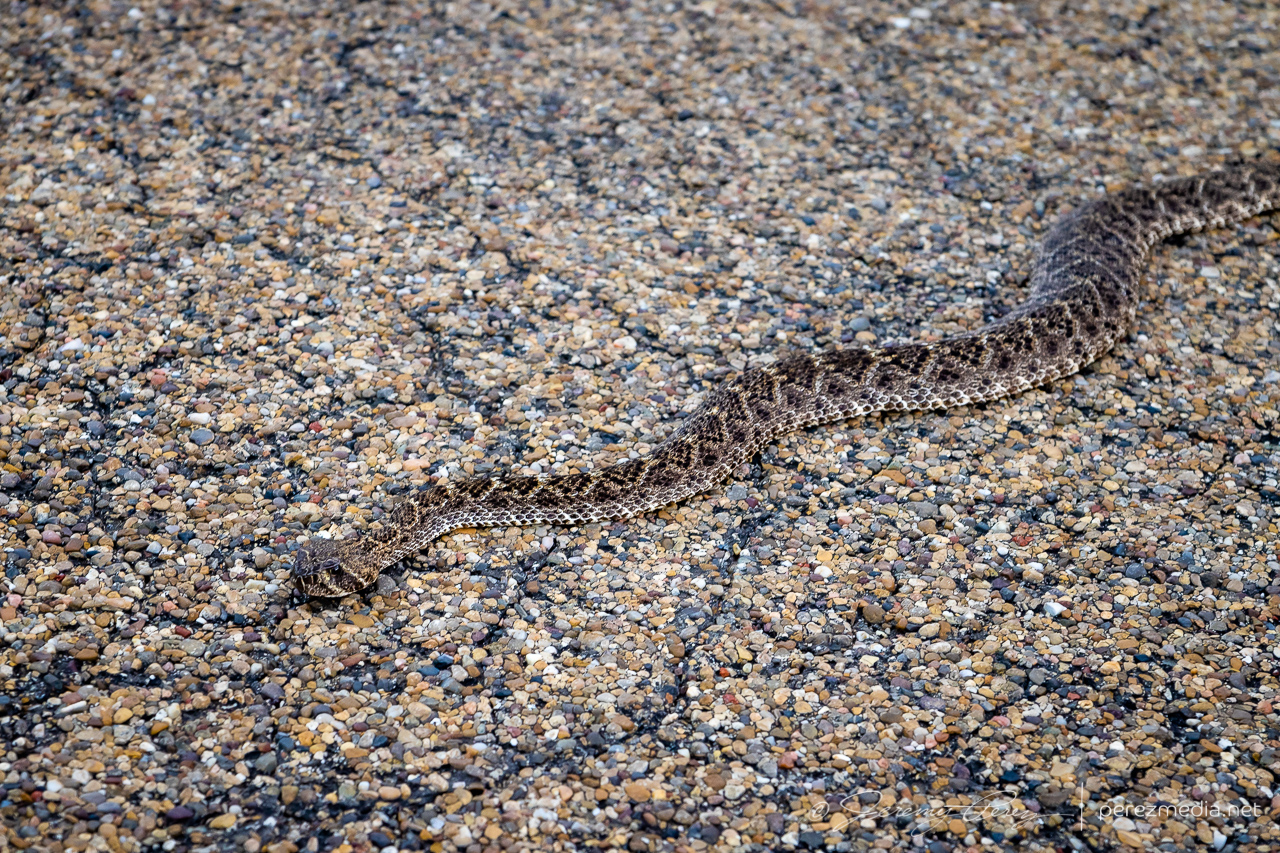
LP supercell from three miles south of Pyote, Texas — 1922Z1929Z1946ZBullsnake warming itself
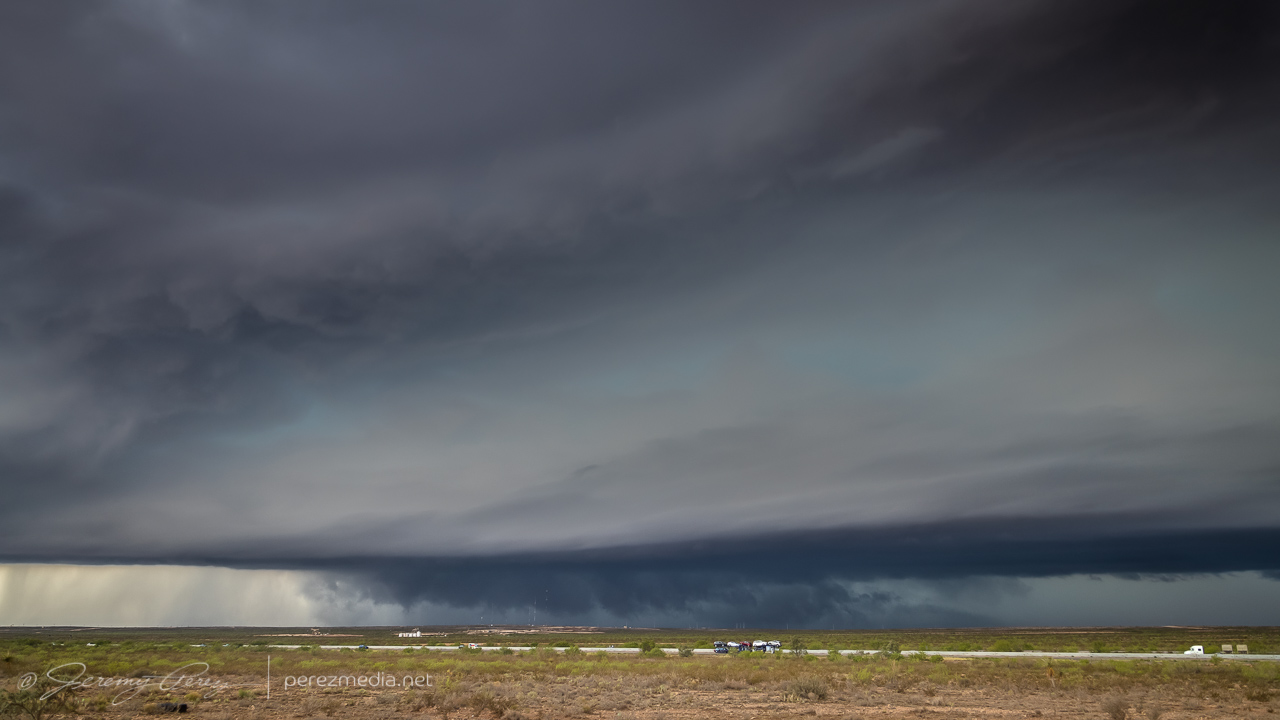
Structure looked decent for a while, but then started to dwindle, while another stronger cell was blowing up further northwest. I bailed on my location and headed north of Barstow to intercept it as at moved southeast. It quickly grew into a huge HP with constant lightning raining down in advance. I wasn’t able to stop for long to get shots and had to stay inside the car for safety the whole time. I wasn’t able to manage any photos of what would have otherwise been some spectacular strikes and instead had to settle for watching scud fingers rise into the base in advance of the onrushing core.
HP supercell north of Barstow — 2044ZLooking north from four miles east of Barstow — 2109Z2111Z2126Z2152Z
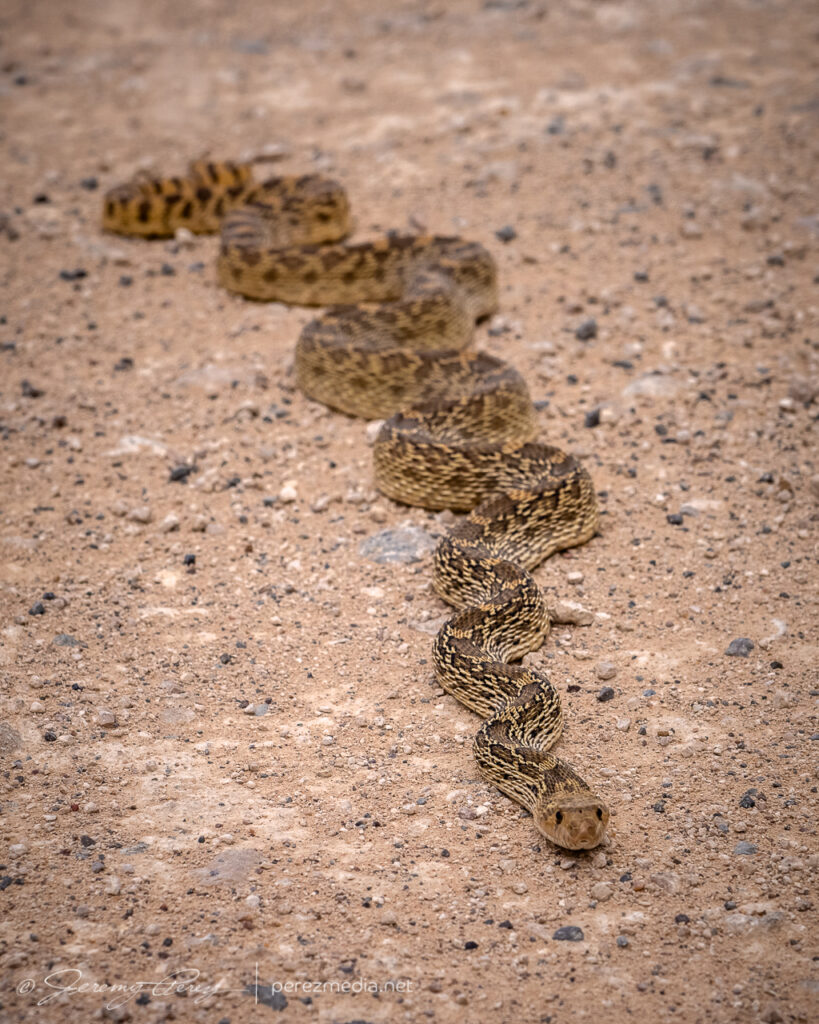
I finally got a bit out ahead of it near Coyanosa and as I was looking for a vantage, I saw another snake in the road. I backed up and prepared to move it off to safer pastures. That’s when I saw it was a Diamondback Rattlesnake. I grabbed a few shots and then went to get the snake hook to goad off into the brush. But it decided that the safest spot would be underneath the car. That quickly got stressful, because it was downright determined to get underneath the car, rattling the entire time. Each time I yanked it away from the car, it faced me down for a second and then hustled back to the shadow of the car. I finally managed to hustle it off into the weeds and made mental note to park much further from unidentified snakes next time.
Crabby and determined Diamondback Rattlesnake near Coyanosa
That lost me more time than I wanted, but there wasn’t much more to see. The storm was still an HP mess and I was pretty much resigned to ending the chase trip with a couple messy days. I started my drive home and parked for the night west of Carlsbad, figuring to continue home the next morning.
Ongoing HP storm near Coyanosa — 2323ZParting sunset shots northwest of Fort Stockton
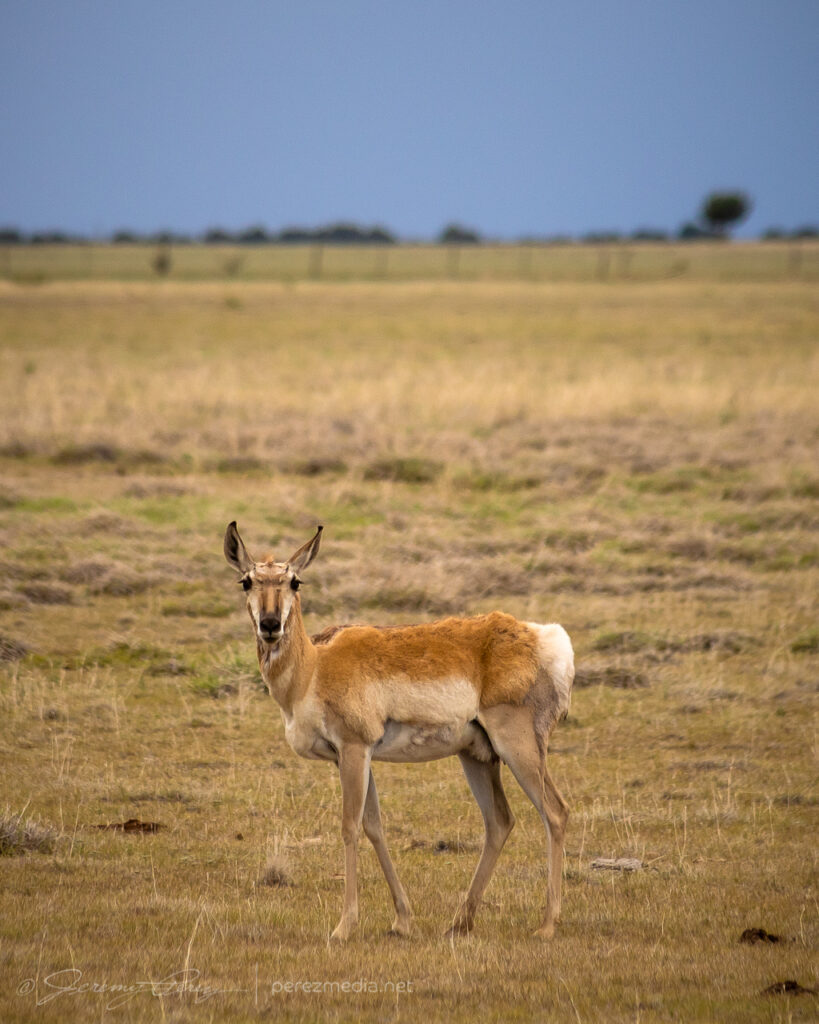
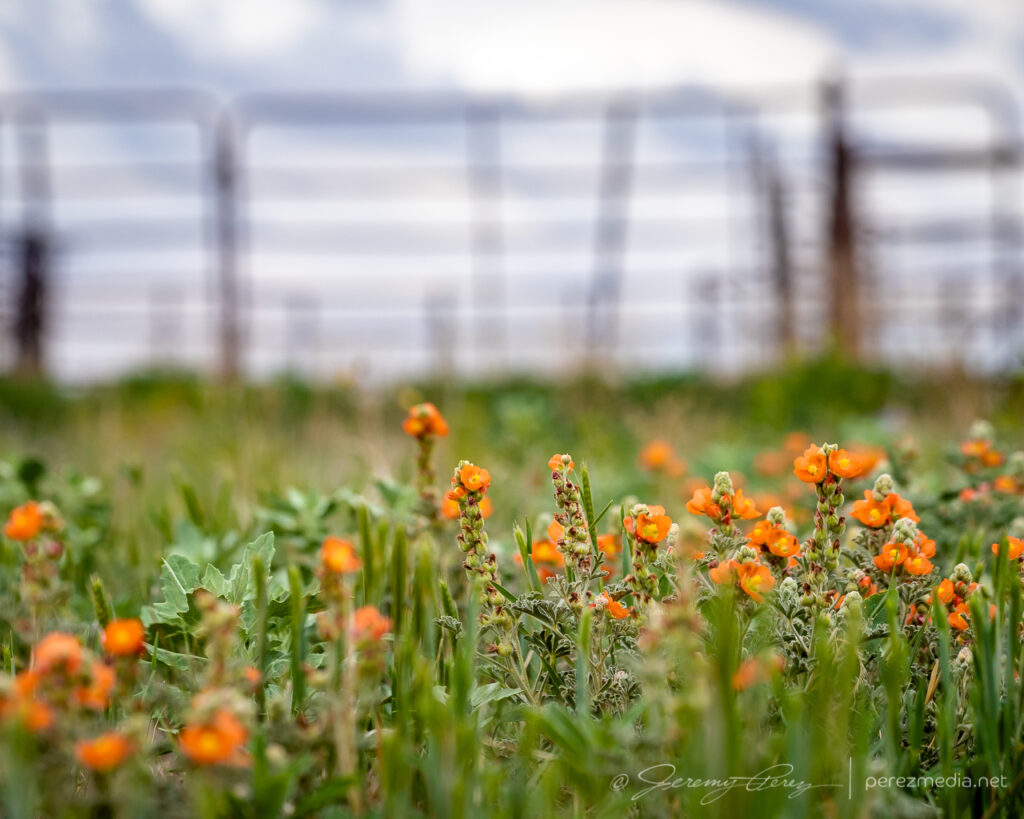
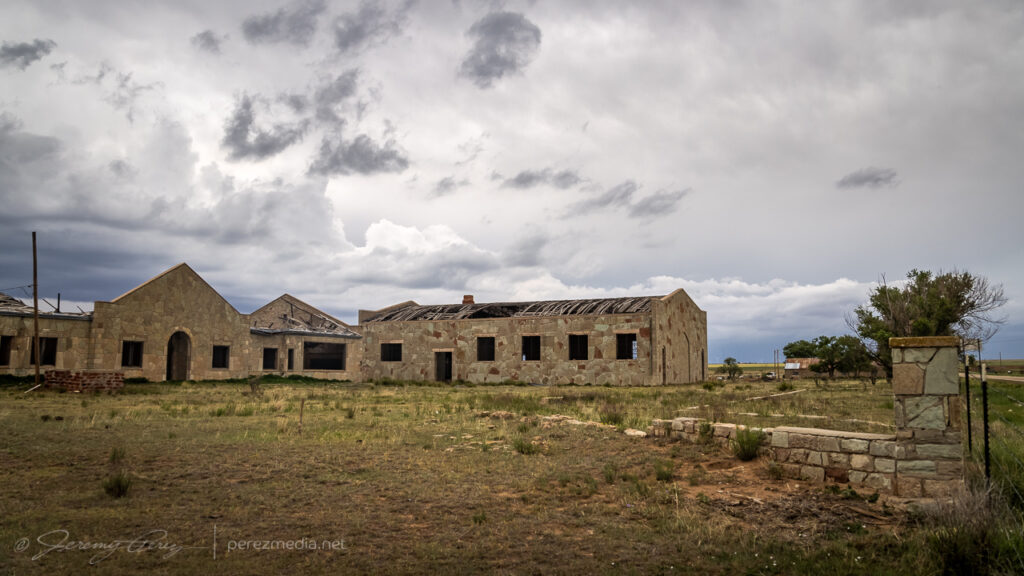
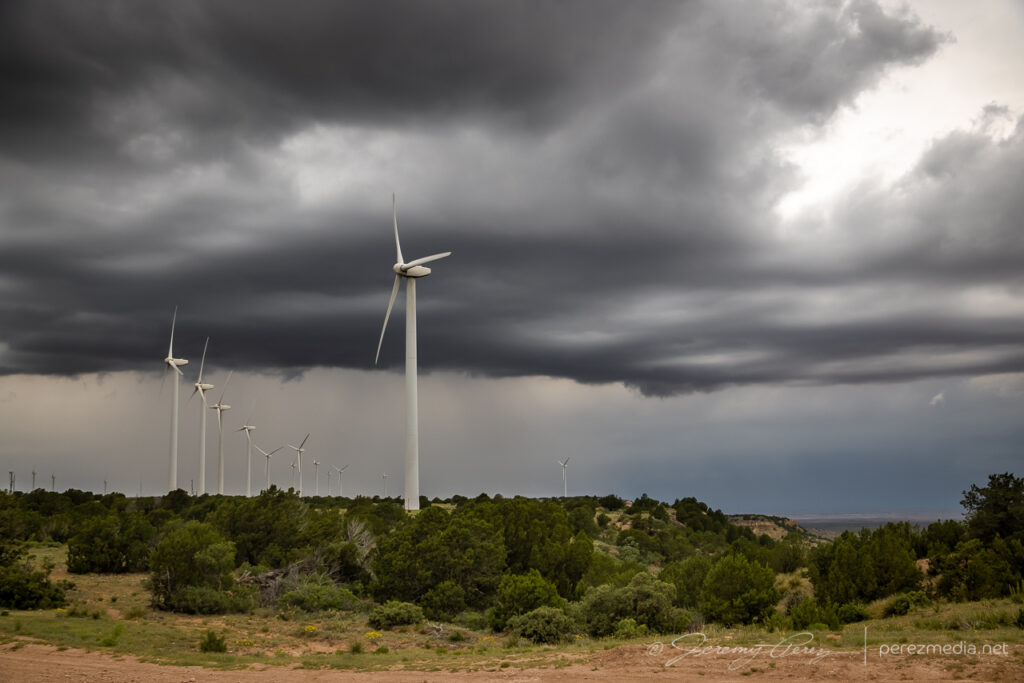
This was a rough chase day. After being on the road for ten days, I was pretty tired and not especially focused or confident in my forecasting. After waking up near Boise City, Oklahoma, I decided I’d treat it like a pop-up storm day and try for storms firing off terrain in New Mexico and catching them as they strengthened into the east part of the state. I heading toward House, New Mexico, and latched onto a mushy storm, flanking it as it moved into a hopefully better environment. Along the way, I took my time, snagging environmental photos of wildflowers, antelope and abandoned, thrashed buildings.
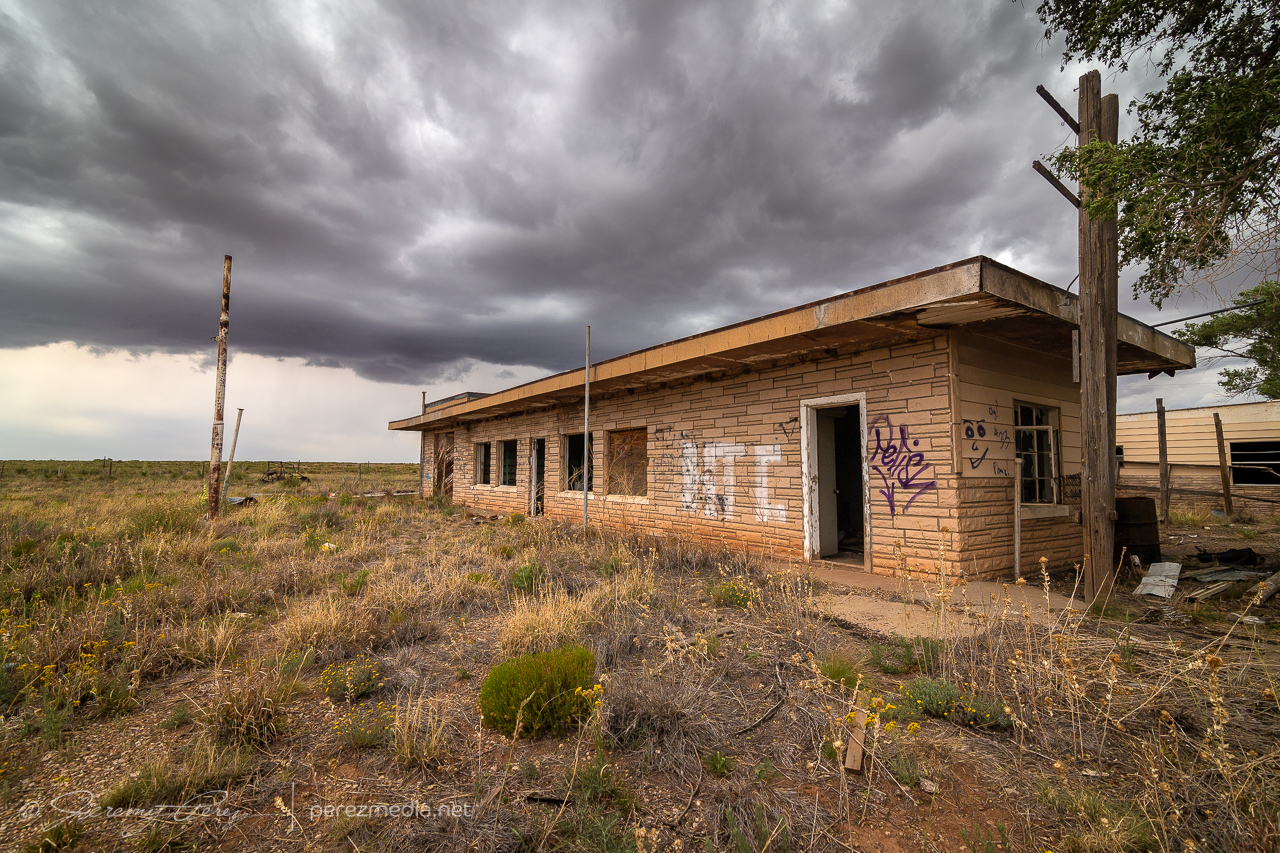
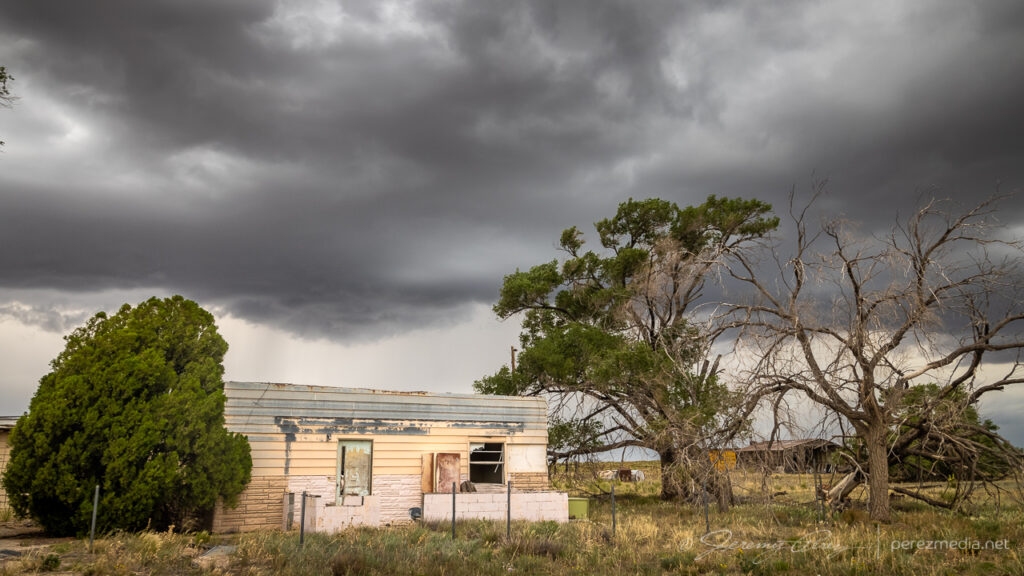
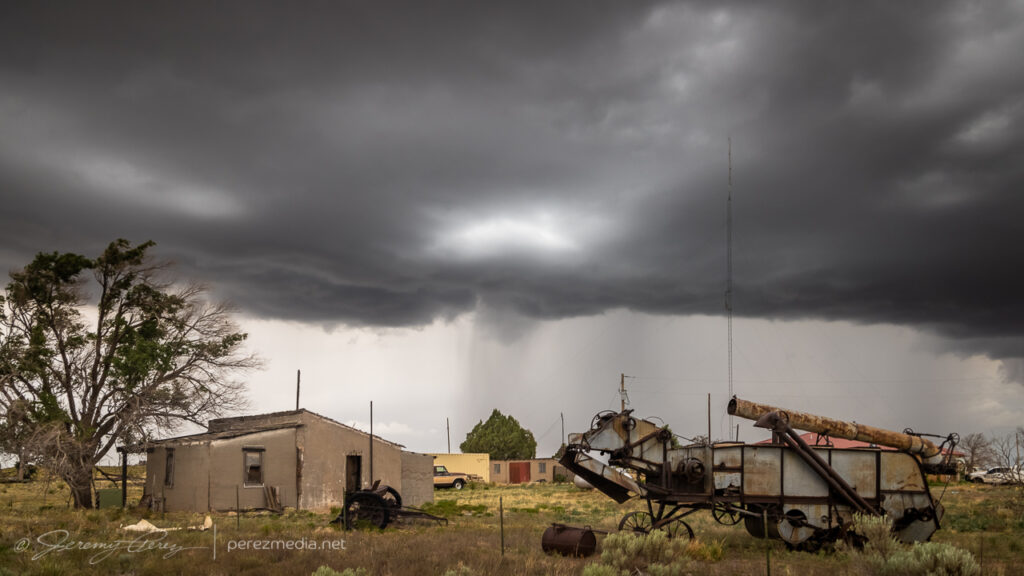
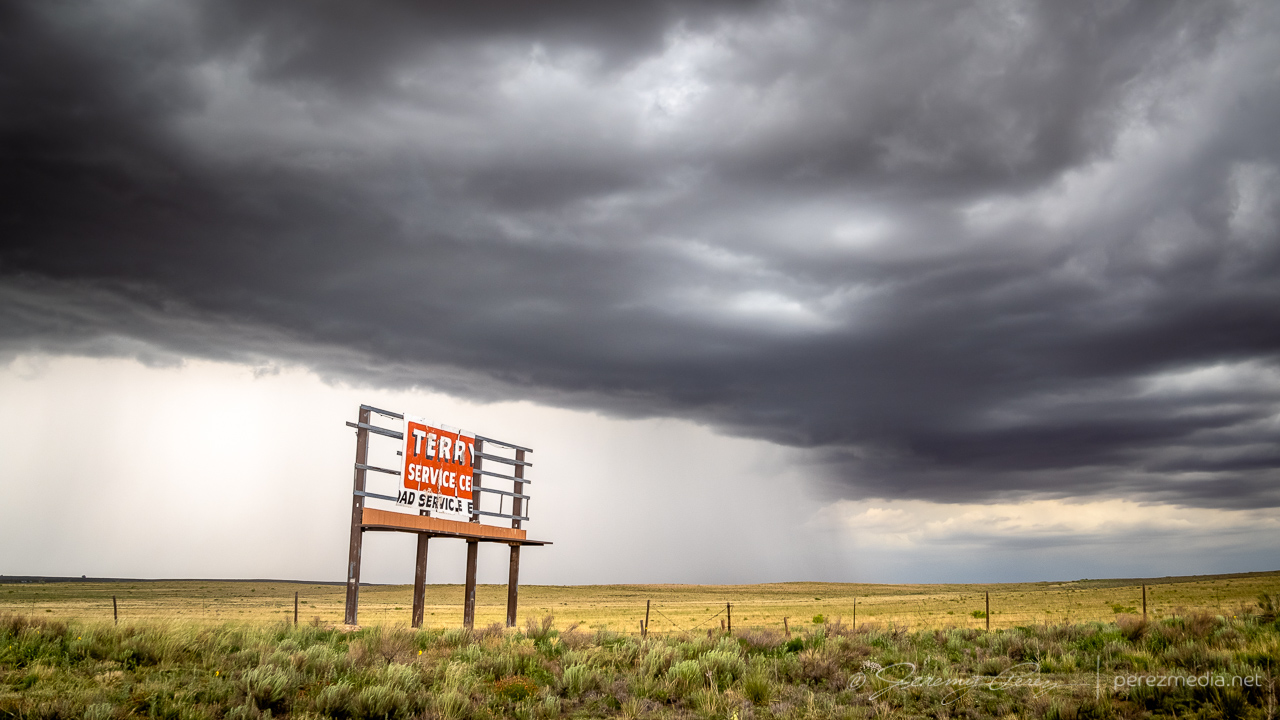
Outflow sculptures 15 miles west of Grady, New Mexico — 2042ZAnd the pretty little windmill, pretty little trees, and pretty little fence — 2045ZAntelope and Globe Mallow flowers 3 miles west of Wheatland — 2115ZMoseying along with a slow to strengthen storm at Wheatland School and turbines south of San Jon — 2130–2139ZAbandoned structure five miles east of San Jon — 2206ZAnd some other nearby dwellings — 2209–2217ZAt least there’s a decent precipitation core on it now, six miles west of Glenrio — 2223ZWildflowers weren’t worried at all about this one — 2238Z
Meanwhile, as I was taking it easy with this go-nowhere storm, other storms had fired and were going tornado warned along the boundary up in the north Texas Panhandle where I woke up. It’s very frustrating to see that happen. Exactly where I started the day, and I just hadn’t put any thought into that area being worth targeting. So I started to hustle my way north and east, trying to salvage anything out of that clearly productive environment.
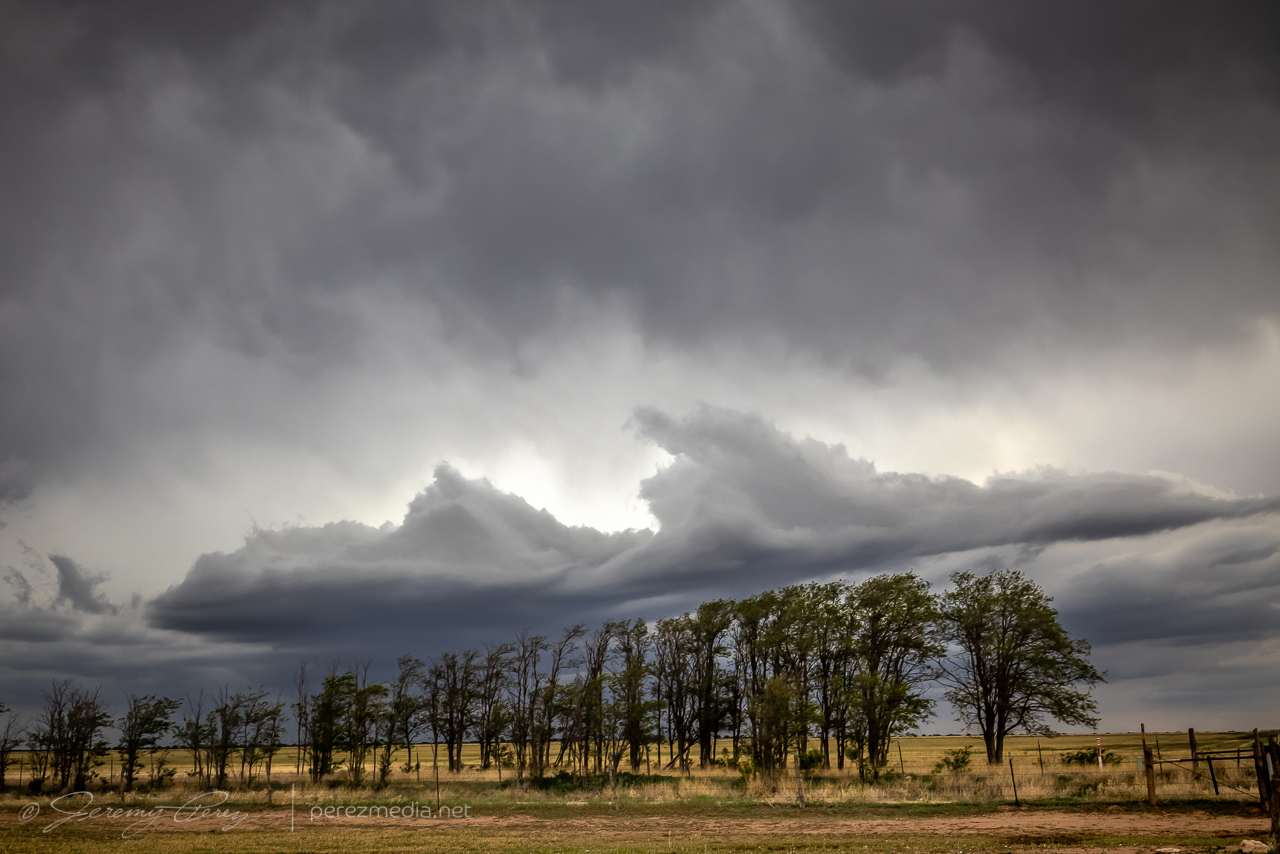
Once I reached Channing, Texas, I was at least able to sight on a supercell, but it was outflow dominant and not especially photogenic.
Outflow dominant supercell near Channing, Texas — 0028Z–0039Z
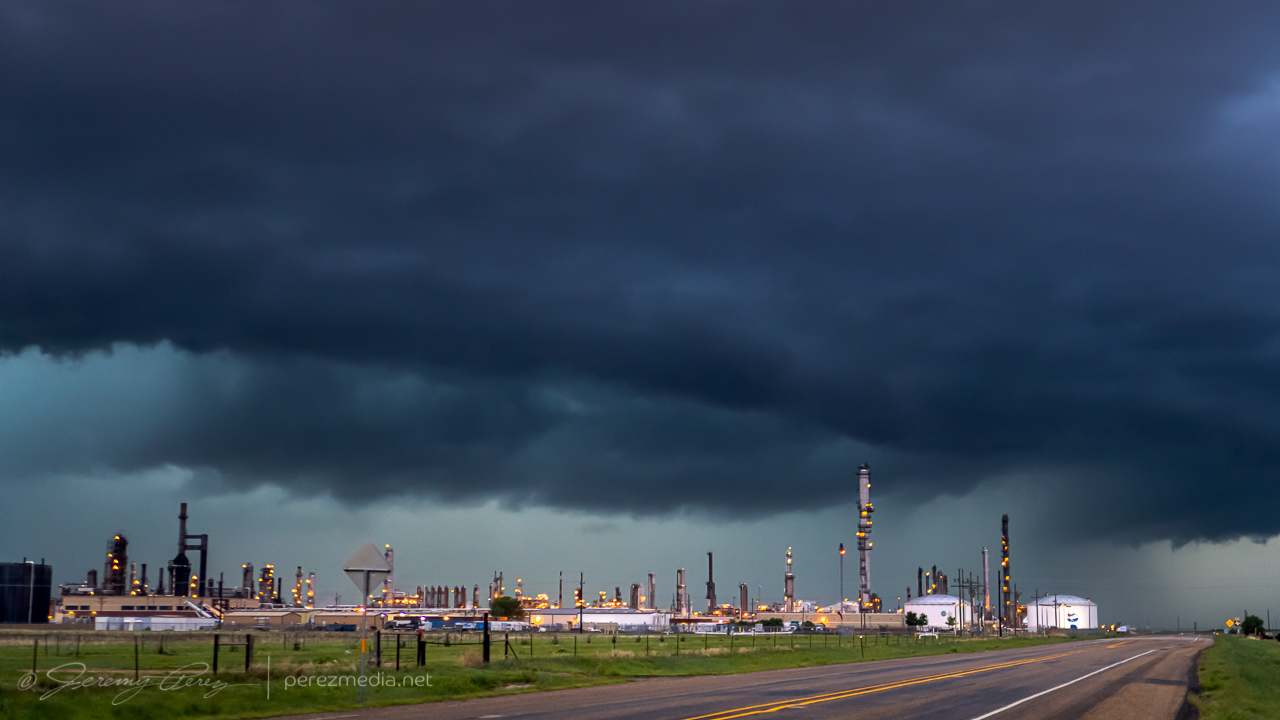
I tried to have a bit of fun with it, surfing it northeast through Dumas, where it looked pretty ominous over the lights and stacks of a refinery. I finally letting it go near Morse.
Deep twilight and the gust front over a refinery north of Dumas — 0125ZLetting it go just south of Morse — 0256Z
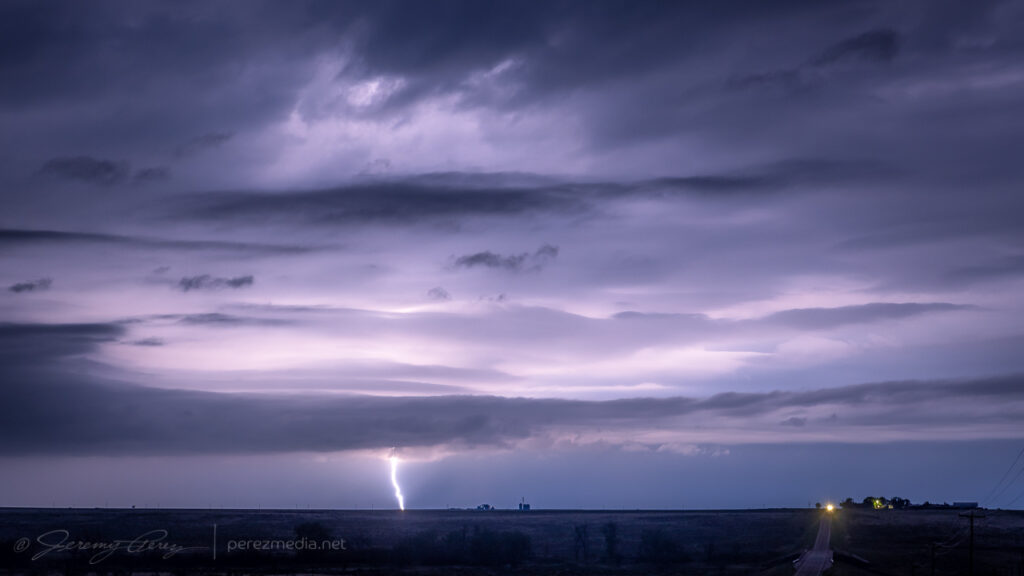
The target for the 29th was very singular — looking for a storm of the day to develop off the higher terrain of southeast Colorado as it feeds off upslope flow, strengthening as it moves southward. I made the 400 mile trip up the Texas Panhandle after a much needed hotel stay in Seminole. By the time I reached Kim, Colorado, the storm was gathering strength, but still had a long way to go.
Storm gathering strength west of Kim, Colorado — 2218Z
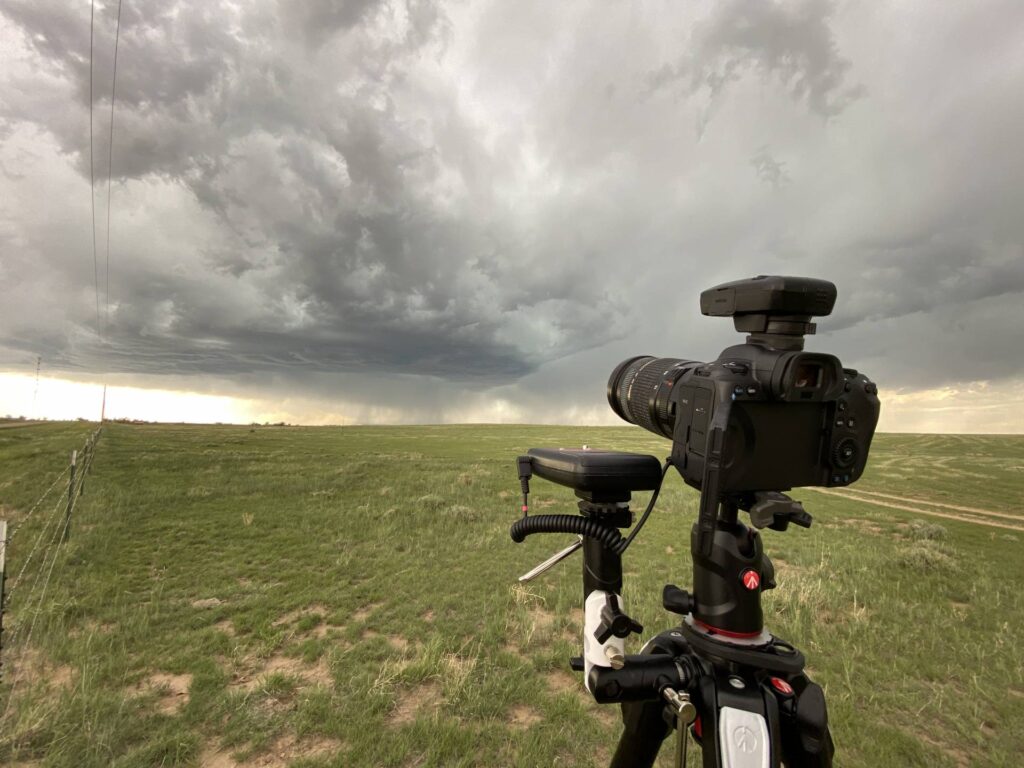
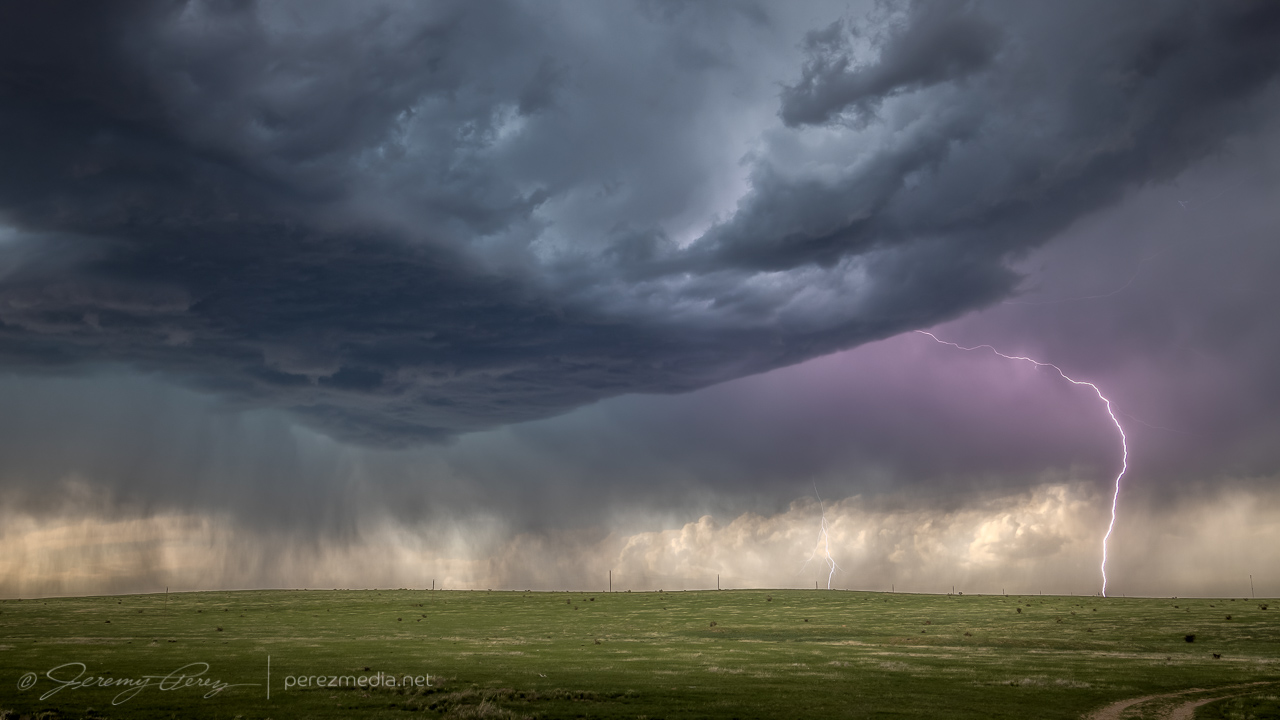
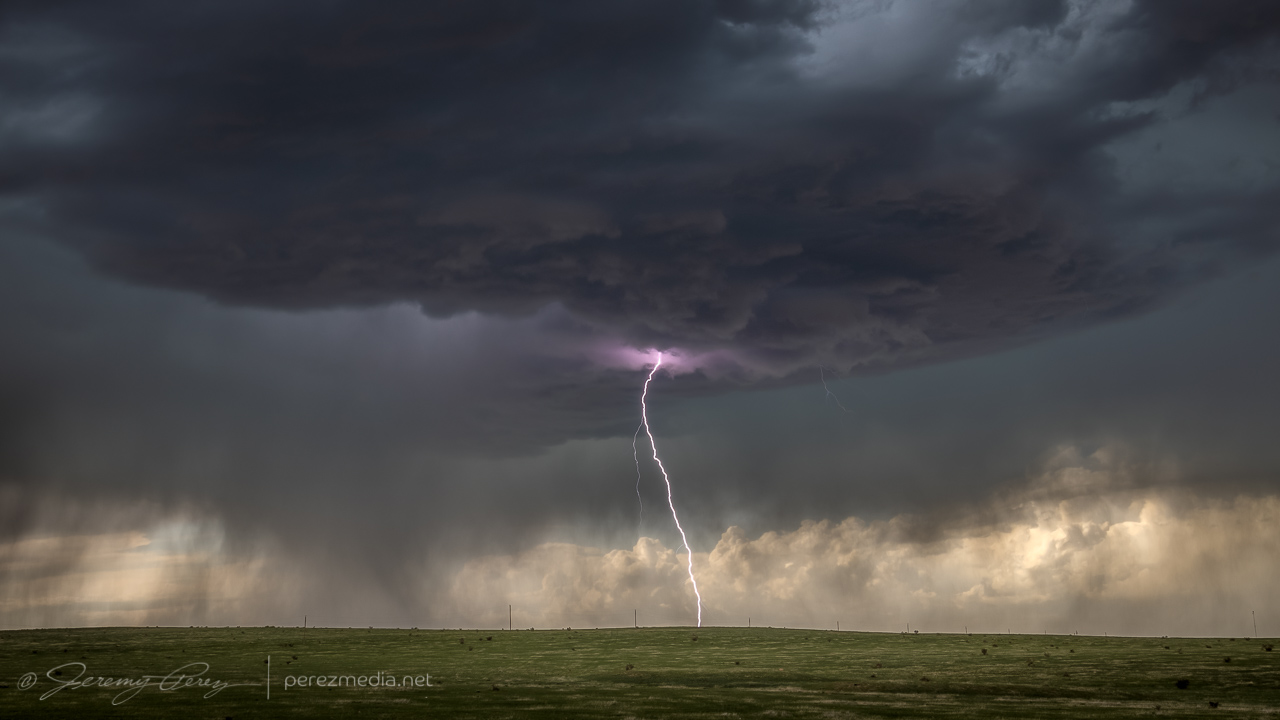
The base was broadening and getting sculpted as it started to spit out purple flares of lightning. The lightning trigger did a great job with that phase.
2226Z2236ZRunning the LT-IV trigger and a GPS receiver2244ZLightning strike as the storm gets better organized — 2251Z
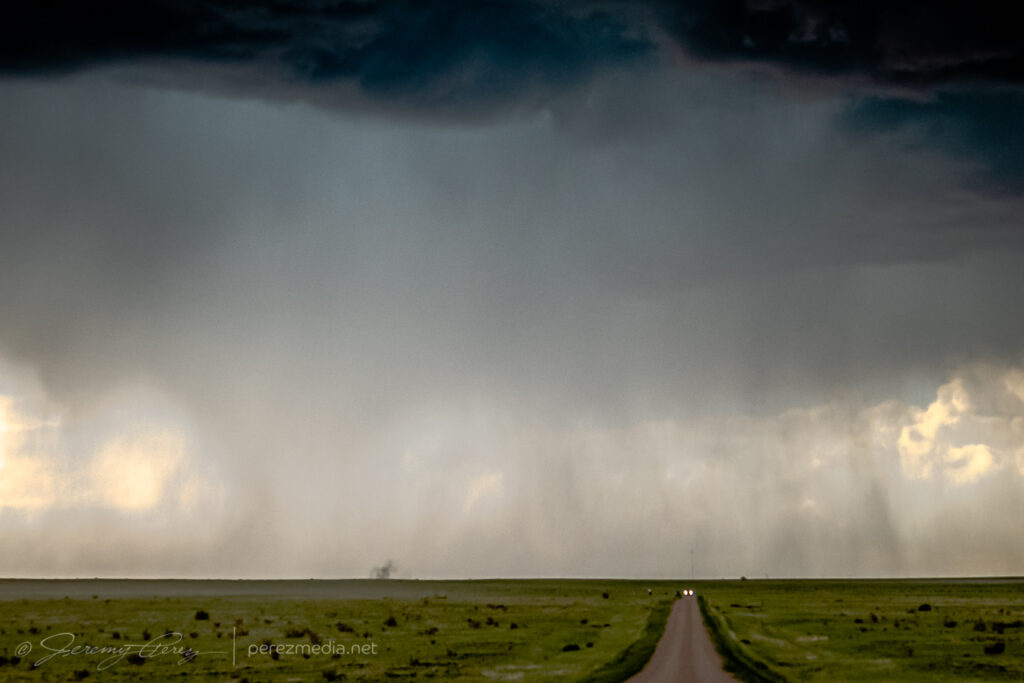
As the storm started to approach and get better organized, I repositioned east-southeast. I made a stop to get a couple shots and noticed a concentrated dust plume at the downdraft interface. I took it for a gustnado, but seems like it got reported as a landspout. The rear dashcam showed it lasting about 30 seconds but I couldn’t see any clear indication that it was connected to anything in the storm base.
Gustnado — 2301ZClose-up
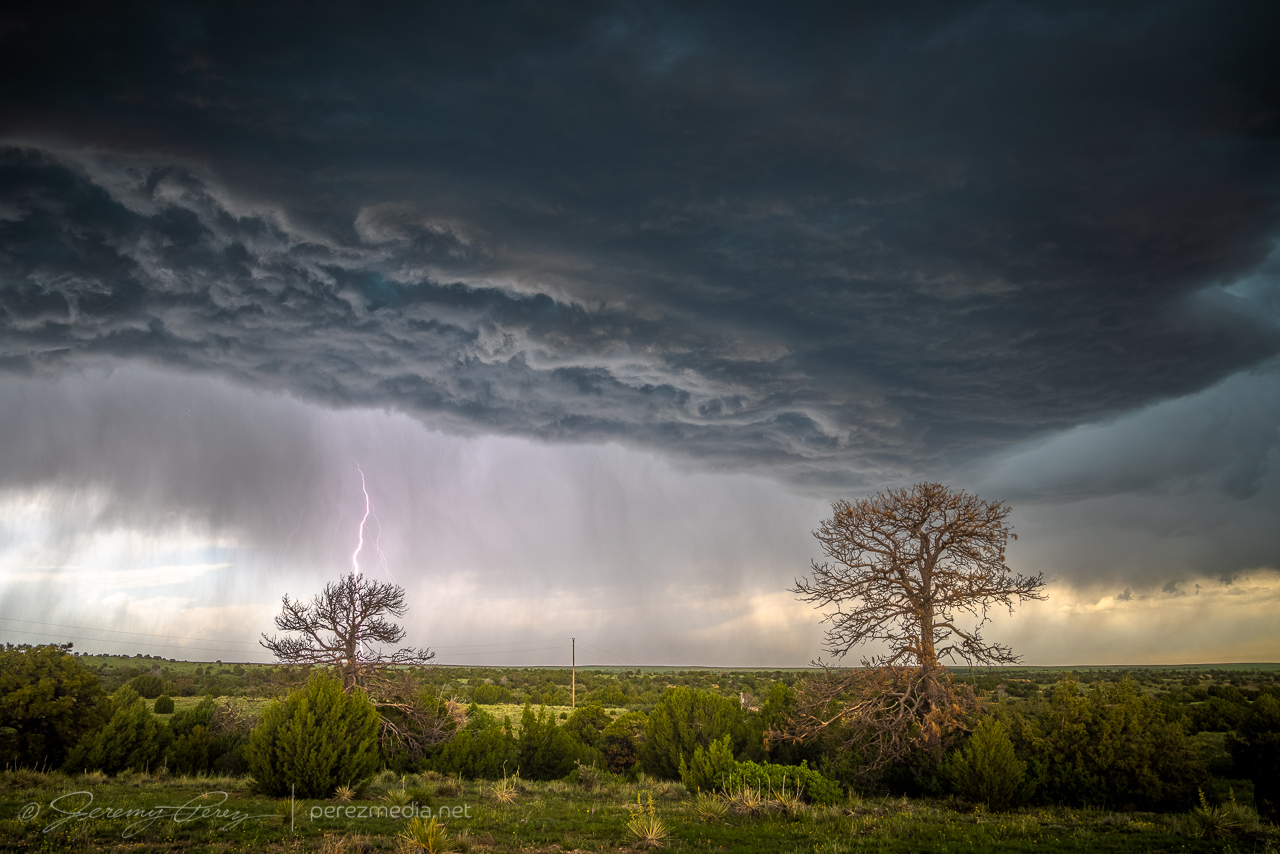
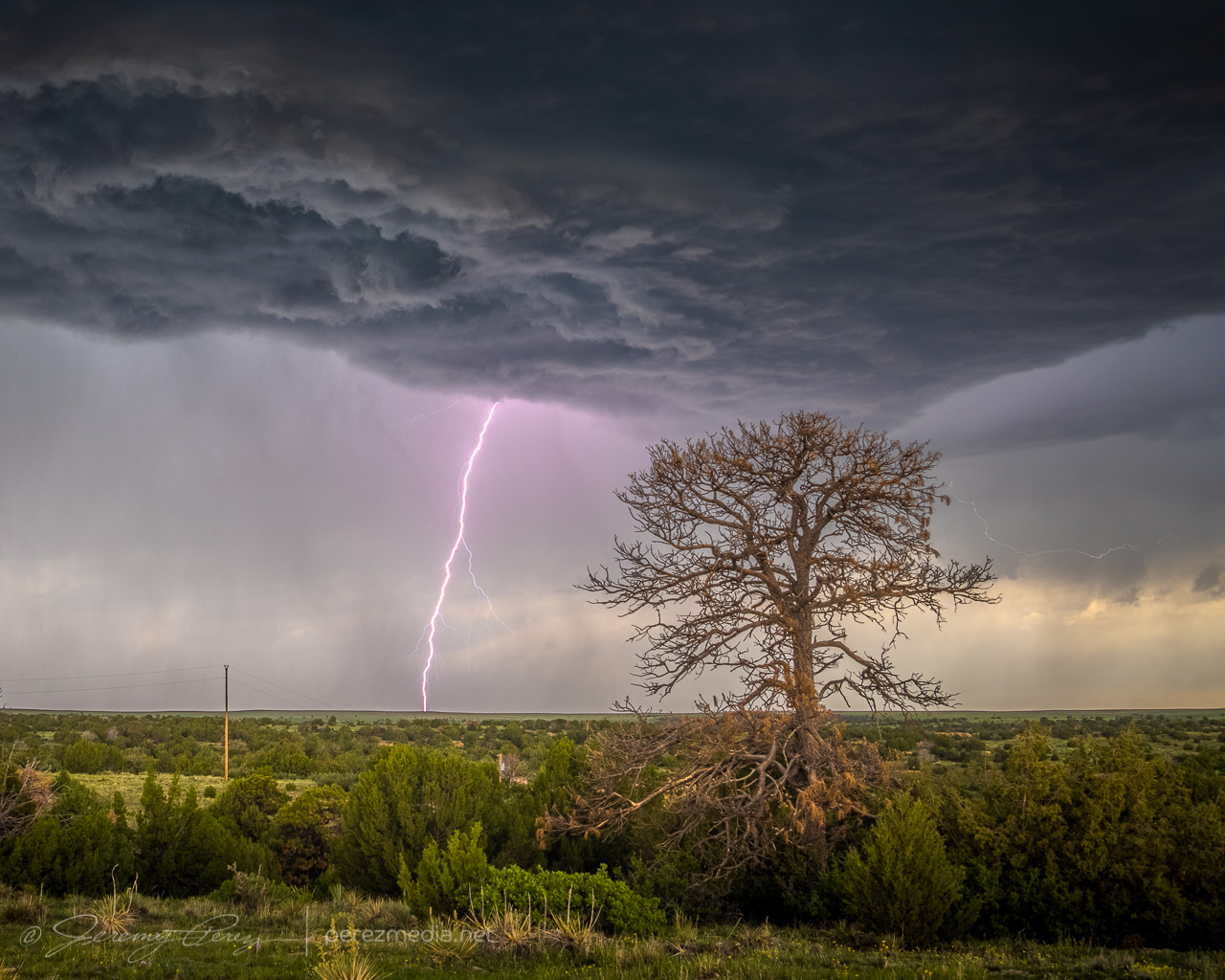
From there, I repositioned further to the east southeast. About 6 miles from Kim, I stopped at a beatiful overlook near a homestead that featured a couple old pine tree snags. The storm was dropping lightning bolts just to the north and kept me seated in the car except to drop and retrieve the camera. It was fascinating and fearsome to listen as each CG caused the barbed wire fence to hiss with induced current.
Six miles east of Kim, Colorado — 2316Z2320Z
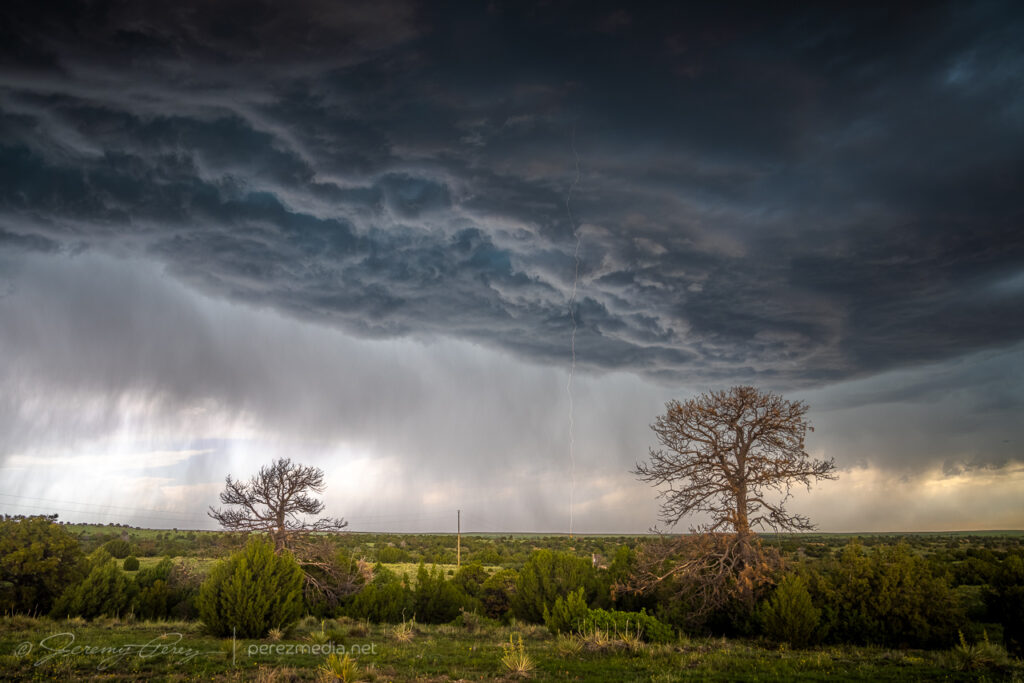
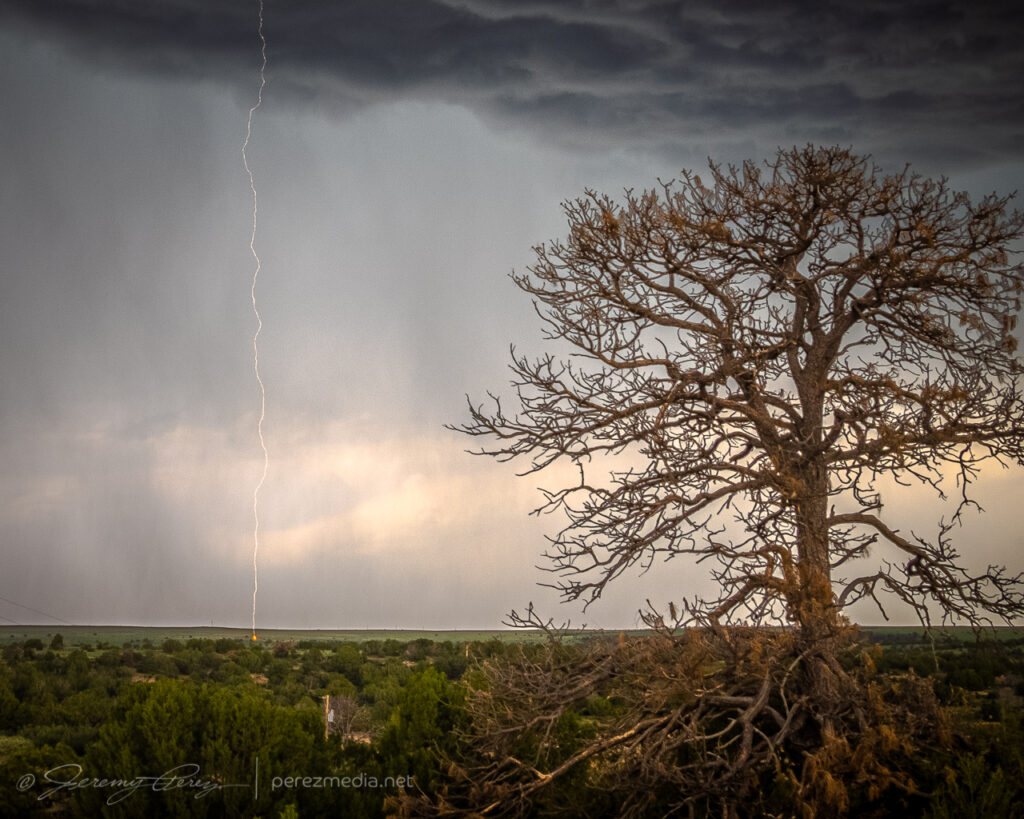
I later found that one of the strikes showed a landing point. The bolt itself is very faint, which makes me think the exposure just caught the dwindling portion of the strike. Looking closer shows an orange plasma plume at the point where it hit the hillside.
2322ZCloser viewTight view of landing point
As I moved further east, the base kept trying stay tight as eddies of vorticity rippled along the downdraft interface, but it wasn’t quite ready yet.
Seven miles east of Kim — 2326Z2330Z
The forward flank wanted to nudge me further south at this point, but there were no reliable road options down into the Carrizo and Tecolate Creek drainages and surrounding mesas. So I hustled an unfortunately long 15 miles further east so I could keep flanking the storm southward. By the time I was back on track, heading southward with it, the storm was much better organized, but my crisp, clear views had grown mushy.
Better organized storm base, looking west from about 22 miles southeast of Kim — 0011Z
Fortunately, back lighting from the sinking sun helped with some silhouetted contrast. By 0014Z, a wall cloud was taking shape beneath the updraft. As RFD precipitation encircled it, the wall cloud dissipated. I took that opportunity to nudge a little further south.
Developing wall cloud, viewed from 22 miles southeast of Kim — 0014Z
After a couple minutes of driving, the wall cloud reappeared behind the curtain of RFD and took on a tight cone shape. I quickly stopped and started snagging photos and video. It certainly looked tornadic, but as far aways as I was, I couldn’t be positive. It was quickly reported as a tornado by several chasers who apparently had better vantages.
As the RFD precipitation grew heavier and contrast more difficult, I moved further south to see if the storm would cycle in the clear again. It lost some organization so I started leading it further, trying to figure out whether I wanted to chance the unpaved road through the Cimmaron River valley, or take the long way around through Campo and Boise City. I opted for the paved route, so I left it earlier than I wanted so I would have a chance to catch it on the other side.
With an abandoned homestead 20 miles west of Campo — 0031ZDwindling as I take the long way around the Cimmaron River valley, 15 miles west of Campo — 0043Z
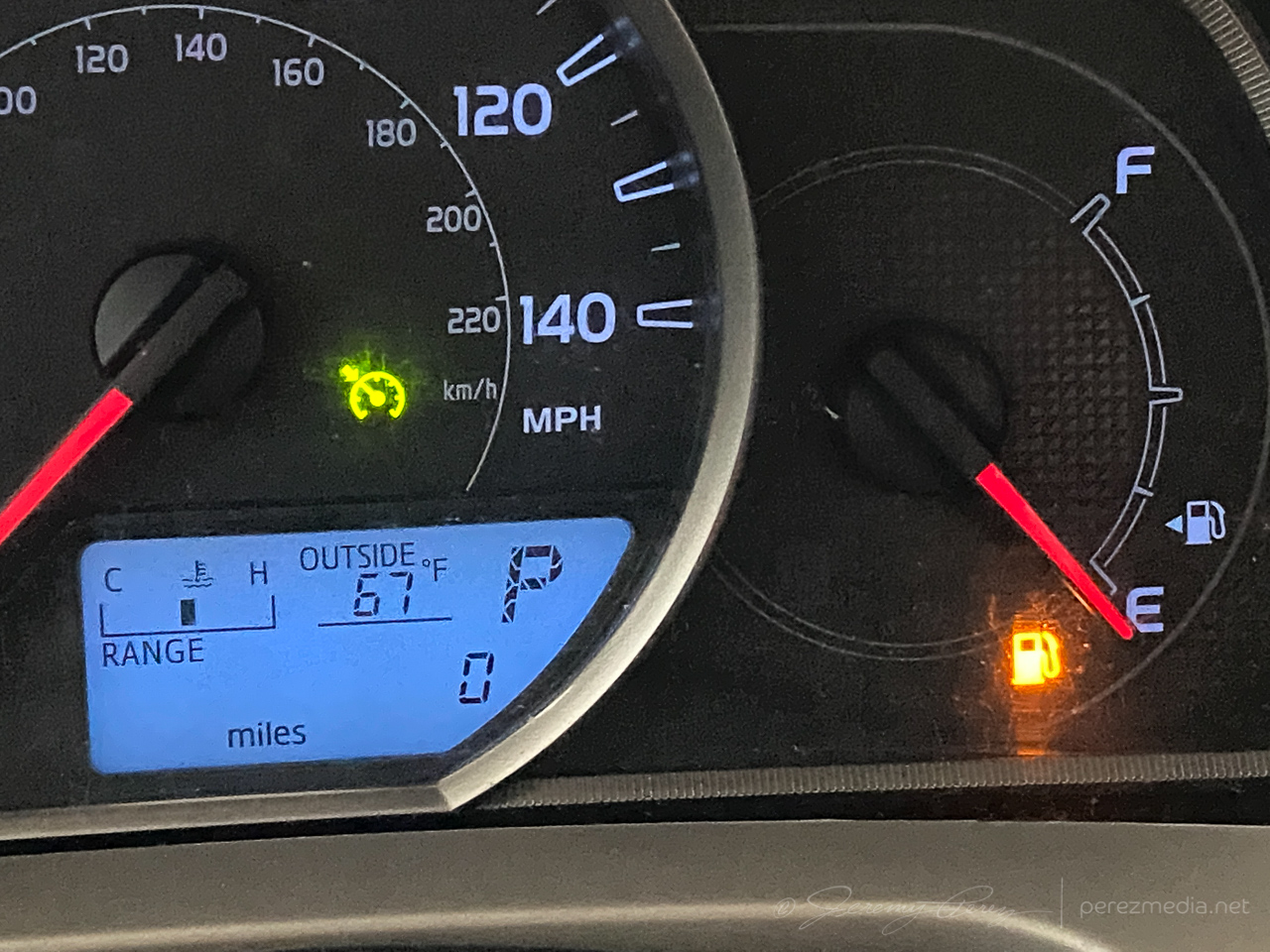
After passing through Campo and heading south, I realized my gas tank was on empty and estimated range falling about 12 miles shy of the next fuel stop in Boise City. What a dumb move. I had completely forgotten to fill up in Campo before heading out to intercept the storm. I slowed to 55 mph to get the best fuel economy possible, occasionally pulling off for others to pass in the double-yellow areas. I managed to pad a few miles into the estimated range as I drew closer, but it hit zero miles about 6 miles outside town. I hoped the computer was being more alarmist than reality. Fortunately, I made it to the gas station without needing to hike to it with my spare gas container.
Don’t let this happen to you, kids.
Once that stressful deal was taken care of, I headed back west to catch the storm as it continued dropping south. Twilight had deepened and it was difficult to get visuals of what was beneath the base by this point.
Watching the approaching storm at twilight, 20 miles west-northwest of Boise City, Oklahoma — 0214Z
As it approached, I backed off to a spot about 15 miles west of Boise City and grabbed time lapse shots, trying to see what was happening beneath the base by way of flickering lightning. Several times, the core thickened up and looked pretty ominous. About that time, spotter reports showed up reporting a tornado. I couldn’t tell if they were from chasers close enough to know for sure, or if it was from overenthusiastic reporting. I figured I’d either wait for a survey, or see what my time lapses picked up.
The time lapse footage didn’t show anything convincing. It was too dark, too far away with too much intervening terrain to have a clue from my vantage. Other chasers later challenged the tornado reports as inaccurate, which is unsurprising. Which helps demonstrate how difficult it is to make a positive tornado ID on a messy storm after dark.
0253Z0256Z0256ZSuspicious but unconvincing lowerings beneath the storm, looking north from 15 miles west of Boise City, Oklahoma
After hanging out with that for a while, I drifted southeast to a point about 6 miles southwest of Boise City, and tried to snag some parting lightning shots before calling of the chase for the night, with learned lessons about checking fuel levels before launching into the heat of the chase.
0247Z0429ZParting lightning shots from six miles southwest of Boise City, Oklahoma